Agency or Freelancein the Age of AI?
- Published
- Episode
- #73
- Guest
- Barry Baris Dogan
- Length
My guest is Barry Baris Dogan, a designer and Webflow partner in Vienna who is starting his own studio after years at a big agency. We talk about AI, agency life, and building Webflow sites with the Webflow MCP.
Barry Baris Dogan
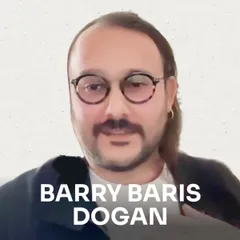
Designer and Webflow partner at Freelance
Barry Baris Dogan is a multidisciplinary designer and Webflow partner based in Vienna. After years at the agency Loop, he is starting his own studio.
Barry Baris Dogan is a multidisciplinary designer and Webflow partner in Vienna. He has worked as a designer for ten years. Most recently he was in the web team at Loop, an agency of over 400 people. Now he is starting his own studio. His work has won awards, and he judges them too. We talked about AI, agency life, building with the Webflow MCP and Source.
AI is an instrument
I asked how long until an AI-generated site wins Site of the Day.
That’s not an easy question to answer. I think it already did.
But AI doesn’t win anything by itself. A person still has to know how to use it.
You have to use it like a instrument, you know. Everyone can play instrument, maybe, but not everyone can be successful or make good songs.
He doesn’t want award sites to limit AI either.
I am not a person who believes in, you know, limits or bans.
In his view, AI is turning designers and developers into directors.
Right now we are more art directors than developers.
The line between designers and developers is getting thin, he said. He named Dennis Snellenberg, Ilja van Eck and Joseph Berry as people who do both.
Developers will become more designers. They have to if they want to kind of survive.
Ran Segall said something similar on Flux Academy’s channel. Pure Webflow development is shrinking, so you add design, or you move towards maintenance and marketing. That’s my feeling too.
From space architecture to Webflow
Barry’s master’s was in space architecture. His master’s project was a moon base, and he did projects for the European Space Agency. He found Webflow in a graphic design course during his studies, around 2016 or 2017. He was paying for his studies with branding work and websites for film festivals. He started on WordPress, and he wasn’t a web developer at all.
Then Webflow just changed my life. It got me from zero to hero because I was able to do whatever I wanted.
He bought books on HTML, CSS and JavaScript and inspected sites he liked. Today he calls himself a designer with a developer background. He is leaving Loop for his own studio, with two partners on some projects.
I have zero doubt, zero fear.
With AI, he can work less and do more.
I don’t like working hard, I like more working smart.
What agency life teaches
Barry recommends starting at an agency. You get big projects and you learn fast. I started at an ad agency too, but I only did Facebook ads. I sometimes wonder what my business and network would look like if I had done web design at an agency. Loop works with brands like Porsche and Puma. Barry’s team did mostly internal tools.
As I said, lots of good experiences, good projects, but you don’t choose the people you work with.
Big agencies are also slow to change. Barry wanted to bring Webflow in, and the developers had their own way of building.
So, I really had to fight for it.
In the end, the Webflow work won awards. I think that’s a real advantage for freelancers. We can try something new, like Astro sites, much faster than a big agency can.
Design in Figma, build with the MCP
His freelance projects start with branding and a design system, because a building needs a strong foundation, and so does a website.
I think Figma is most important tool right now in the world, in my opinion.
He keeps the design system in Figma, with Lumos variables there as in Webflow. Then he builds with Claude and the Webflow MCP.
I don’t change or do anything in Webflow anymore. I just do it with MCP.
AI also takes the work he doesn’t want to do. A football club wanted real league tables and fixtures in the Figma design.
I did everything with AI, you know, I was able to fetch all the data from their current website and put it in Figma with AI.
He doesn’t see his clients needing Astro yet. I’m doing my first Astro project, and I agree. Clients want a stable site they can edit. I don’t want to install Claude Code for them and tell them everything goes through there. Webflow has solved that handoff for years.
Barry has a love-hate relationship with Webflow. Its CMS is still its strongest part.
Like I read it yesterday, they renamed div to box.
One big issue is European servers, you know. They said 5 years ago, I remember that.
I’m in the EU too. I hope Webflow doesn’t think Source solves that, just because Source sites can be hosted anywhere. Classic Webflow sites will still be hosted in the US. From what Barry saw at Webflow Conf, Source is aimed at marketers.
I think Source is not for us.
All the websites you see, even award-winning websites from Webflow, they’re from freelancers.
Still, with Timothy Ricks at Webflow, he has good faith and will try it. I’m hopeful about Timothy and Source too. But Kyle Lambert told me an old Webflow site imported into Source becomes a code base. There is no middle ground for editing classic sites, and that’s a bummer.
Trust your designer
I asked how many options he shows a client.
If you show three things, the client will choose the worst one always.
He explores freely at first, then shows sections and UI elements to see how the client reacts. Sometimes two versions, if the design needs it. His mood boards use album covers and magazines, not only websites. His best project, which won most of its awards, had almost no design feedback.
It’s like fine dining, you know, if you pay for fine dining, you don’t go to the kitchen and cook for yourself.
If you give trust to your designer, everything will be good.
I asked if taste could ever be handed over to AI.
I don’t think AI can have a different taste or any you know, machine can have a different taste or emotions.
Most SaaS websites look the same, he said, and the people deciding are often the reason.
Having 10 buttons on your home page won’t give you more money.
I think big SaaS companies may need to play it safe, so their sites end up close to each other. I’ve talked with designers who hate designing them for exactly that reason.
Links from the episode
- Timothy Ricks (opens in a new tab)
- Dennis Snellenberg (opens in a new tab)
- Ilja van Eck (opens in a new tab)
- Joseph Berry episode (opens in a new tab)
- Jordan Gilroy episode (opens in a new tab)
- Stephen Wise episode (opens in a new tab)
- Kyle Lambert episode (opens in a new tab)
- Osmo (opens in a new tab)
- Source by Webflow (opens in a new tab)
- Spline (opens in a new tab)
Full transcript
Read the full transcript
Janne Parri: Okay, Barry. So, how long do you think until an AI generated site wins the awards site of the day award?
Barry Baris Dogan: That's not an easy question to answer. I think it already did. I mean, if you look at it since two three months, of course you see some AI work. But, you know, AI is not a person. It's not going to win it itself. It's all about the composition, designer, developer, project, you know, and also with what kind of award, you know. If we are talking about site of the day or site of the month or developer awards, they are still a little bit subjective. Arty projects, I mean, I am also doing that time to time.
Barry Baris Dogan: But, AI is already there if you know how to use it. Of course, you cannot just wait for the final input or output from AI. You have to use it like a instrument, you know. Everyone can play instrument, maybe, but not everyone can be successful or make good songs. So, I always compare it like being a chef. AI, maybe you could be your, you know, device or the thing that you cook with. And if you know what to cook, how to combine the ingredients together, you can do it very well.
Barry Baris Dogan: If you use, I don't know, microwave food pizza, you cannot do food, I guess. I mean, sometimes you need it, of course, for yourself, but you are not going to be successful. But, AI makes very very, of course, easier. Even you can do the things that I was not able to do back then. That opened a new dimension for me.
Janne Parri: Yeah, totally totally. And that question is maybe a bit clickbaity, maybe a bit one-sided, like there's so many ways you can use AI with websites. So, you can do the technical stuff, you can do the assets or like images, even videos, and so on. I know that you have been judging those awards sites, too. So, do you get like sites that use too much AI in the submissions? And do you think that there should be some sort of like limit on what you can submit there?
Barry Baris Dogan: Yeah, I am not a person who believes in, you know, limits or bans. So, it should be everything kind of free to use. You know, kind of also a little bit like wild west like the maybe 20 years ago how the internet was. So, I don't believe that there should be a limit to use or how to use. Even right now, you have to label your pictures if it's AI created or edited. I understand the reason, but still it won't bring us further. No, I am fine with AI.
Barry Baris Dogan: I personally use it. You know, I do the same job but in a faster way, efficient way. That's the question how you use AI. I don't think you can finish a project design related just with one click with just AI. You have to put your, you know, sauce in it. Kind of you have to do I mean, right now we are more art directors than developers. So, you know, I think front like the traditional front-end development isn't or it's going to change so much with AI. So, we will be doing more creative directing, art directing.
Barry Baris Dogan: You have to know what to say. You have to know how to direct the AI. AI could be the most stupid person or very intelligent person. So, you have to know how to deal with it, you know, give your maybe orders or be friend with it or be not friend with it. So, it's all up to you. Depends on how tasty your hands are. That's otherwise, I don't think AI is going to make too much difference if you know how to do it. Of course, like technical skills, you don't need it so much anymore, you know.
Barry Baris Dogan: Some people like the King Timothy, he was a person with all the skills, but with AI he also changed his position by joining Webflow. He also explained it in his videos why it was changing. So, technical skills, you don't need it so much. You could do it a little bit with AI, but still you have to know how to use them a little bit, how to explain them, and how to execute them.
Janne Parri: Yeah. Yeah, and obviously, if you have some technical skills, you can do more, and you can explain those things and prompt better. And I'm like thinking, will there be a time where you actually do not benefit from deep technical skills when you use AI? And so, what do you think?
Barry Baris Dogan: It will all change. I mean, the way how we or I work, you know, with any kind of tool, Figma, Webflow, last year, totally different than right now, you know, every day. Even it's going to change even faster than now. So, and I am also learning every day, you know, after working for 10 years. Started working with Webflow in 2016-17 at the university when I was doing my master. Now, like when I compare the Webflow back then and now, it's totally different products even, you know, totally different way of creating website.
Barry Baris Dogan: With AI, it will be not easy, but it will be maybe a little bit more complicated as well if you don't know what to do. The classic era of designing in Figma then hand it into developers and WordPress, Webflow, it doesn't matter actually what you use. It's going to change. I used to say at the agency always the line between designers and developers are getting very thin. That's the thing that actually I'm trying to do, like being a designer with development skills.
Barry Baris Dogan: Developers will become more designers. They have to if they want to kind of survive, and they do. Like the most successful people currently in design area like Dennis Snellenberg from Osmo, Ilja, Federico from OFF+BRAND. So, they are very successful developers, actually, you know, but who knows also how to design. And designers should also become developers. One great example also Joseph Berry. So, he was a great designer, and he also used Webflow and became very successful.
Janne Parri: Totally. Totally. That has been a topic for many conversations. And I believe it was Yeah, Ran Segall did that video on Flux Academy's YouTube channel, where he basically said that the development, especially Webflow development part, is kind of shrinking. And if you do just Webflow development, you need to either do more design with that or move to towards the maintenance marketing stuff. And I believe quite many people agree with that. Obviously, it's a bit blurry where the where the future will go, but that's kind of my feeling also.
Janne Parri: But before we forget, we need to do little intros. So, you are now watching Webflow and Friends podcast. My name is Janne Parri, and my guest today is Barry Dogan, a multidisciplinary designer and Webflow partner based in Vienna, Austria. Barry's background is in architecture. Today, he works between brand, interface, and code. His work has been recognized by awards, the FWA, and CSS Design Awards. And this year, he was also nominated for a Webflow Award in Creative Excellence.
Janne Parri: And on top of receiving awards, he has also been given awards as a awards judge. So, Barry, you mentioned already that you have a background in architecture, and you have a master's in it. And now you do digital design and development. So, how did that happen?
Barry Baris Dogan: But there is not much big difference between architecture or buildings or then design websites. You know, we see lots of bad architecture designs or buildings in our cities. Doesn't matter where in the world, but also very beautiful buildings like in Vienna. If you ever visit Vienna, you see lots of nice buildings. Same for websites. Maybe 90% of the websites are really bad. Compare or consider them as designer websites. But we have also very good websites, you know, very good storytelling or from a really good strong branding.
Barry Baris Dogan: So I started with architecture. I always wanted to do something creative, but also a little bit technical stuff as well. During my master, I got to know Webflow in our graphic design courses. I was also doing a little bit graphic design because in architecture you deal lots of with computers, preparing presentations. Also, 3D building, 3D rendering. So I was also financing my study by working as a graphic designer, doing branding just to get experience and also a little bit websites for film festivals actually.
Barry Baris Dogan: That's how I started. At the beginning I was using WordPress and I don't know what. So I was not a web developer at all, you know. I was the guy who had to move the logo even. Then Webflow just changed my life. It got me from zero to hero because I was able to do whatever I wanted, you know. It's like I always say it, ordering something from internet. You see it, you order it, and at the end you want to actually have it what you order and not something different.
Barry Baris Dogan: Yeah. So that's was the reason I wanted to improve myself and I ordered books about HTML, CSS, JavaScript, you know, first. I was reading that books to understand, and after that, you know, I visited the websites that I like, and I was inspecting them to understand how they are built, you know, how they are working, what is CSS, or how they even use their DOM, how they use CSS to understand how good developers are creating good works.
Barry Baris Dogan: That's after 10 years working as a designer and I wouldn't call myself developer, but you know, designer with a developer background. I am here soon starting my own design studio, fully freelancer, 100% doing a little bit of development and I will be fully focusing on my own studio.
Janne Parri: Yeah, yeah, you had a day job at Loop. Was that right? And now you're like changing towards the studio or fully doing freelance stuff. So, where are you at right now and what's your plan? How are you going to like do that?
Barry Baris Dogan: Yeah, so I started my career always, you know, working for someone, startups, scale-ups, agencies to get experiences. And it was a fun way to do it, but still I always wanted to do my own business, which I do, but maybe three projects per year because I couldn't focus just so much on my freelance projects. Working for agencies is fun, you got lots of different projects, you have lots of stress, short time. By the way, I was working there as a designer.
Barry Baris Dogan: I did some Webflow sites, but my main role was a designer, of course. But now I think it's the right time for me to change stuff, to try out just my own business to see how successful I am going to be. Even if I'm not going to be successful, that's also fine. At least I tried it. Now, yeah, I would suggest everyone, if they are starting with their career, to go to work at agencies to get lots of experiences. But at some point, of course, you do your own business with the people you want to work with, not alone always, of course.
Barry Baris Dogan: Collaborations, I got also two partners to work with for some projects. Even specially with AI right now, I feel even more secure and good and looking the future, more bright for me, to be honest. Most of people are afraid of AI is here, we are losing our website. Webflow was also, you know, kind of having issues with AI and current state of Webflow. I think they are still They did some good movements with Timothy, actually, to be honest. I have zero doubt, zero fear.
Barry Baris Dogan: Even, you know, I can work less right now and do more, because I don't like working hard, I like more working smart. I don't like to do things twice. So, now the future is actually quite nice that I like.
Janne Parri: Yeah, yeah, totally. And we will talk about AI and all the Webflow stuff, for sure, in this conversation. But I want to like comment on that agency thing; like, that is so true that if you start your career, it is super beneficial if you can get a job from an agency, like you work with all sorts of even like big projects. You have people around you from all disciplines and probably from your discipline, too.
Janne Parri: So, it's a very good way to learn, especially at the start. I started in an ad agency, but back then, I did just Facebook ads. And now, after that, I moved to like web design and Webflow and stuff, but I always think that what if I had done this in an agency, what would my business and what would my network look like now? So, I'm kind of like having little bit of FOMO of that, but for someone who is starting out, that's definitely a good choice if you can like secure a place.
Janne Parri: I don't know what the job market is right now, but yeah, if you can get one that would be a good choice.
Barry Baris Dogan: If you can survive with agency salaries as well, because agencies are fun. I didn't mention it, but of course has downsides. You don't get so much salary, but you get lots of cool projects if the agency is big. With small agency back then and also now big agency Loop has over 400 people, so it's not only Oh,
Janne Parri: that's a big one. Yeah.
Barry Baris Dogan: Like they are working with Porsche and Puma, you know, all the Porsche ads and videos are done by Loop. So, it's a very big agency. It's like small agencies under one roof. That's why actually called Loop. Of course it's different. Every team is different. Every branch is different. I did in a web team worked in a web team as a designer there. We did lots of projects also for big names like Montone or Tony's Chocolonely and stuff like that. Or Puma as well, but mostly internal tools, not public tools actually, more UI UX related.
Barry Baris Dogan: As I said, lots of good experiences, good projects, but you don't choose the people you work with. that's a big thing for me. I am a very motivated person. I like to work with motivated people as well, you know. I like I like working because what I do is my hobby and I like doing my hobby a lot. I don't get bored of it. I can spend hours and hours on computer just to work or find out some new stuff, learn new stuff. So, that's definitely worth to have experience in agency, but also don't forget to do your own stuff.
Barry Baris Dogan: You will not die. You will not starve. Don't worry. At the end, if you do what you like, you will earn good money.
Janne Parri: Yeah. Yeah, totally. Totally. That is a sweet spot that everyone is looking for. Finding a job that doesn't feel like a job. So, that's great. But one maybe downside with the agency, at least in my experience, that can be quite hectic at some point. So, you might have more work than you can actually manage, and you will not have any say on the projects that you have to do and so on. So, is that your experience, too?
Barry Baris Dogan: It's like team management, especially resource management, is a big deal for companies, agencies. And most companies or agencies cannot deal with it because they ignore resource management. And bad resource management creates actually, you know, stress and not very well organized or structured projects. Of course, sometimes the clients want everything quick, as soon as possible, you know. They don't understand the time frames or timelines. Or they want to change stuff last minute.
Barry Baris Dogan: And of course, they don't know the difference between design and development. Even after design is signed off, they change stuff just before going online or, you know, before launching. So, you have to do good project management for that. Project managers are the keys. But, a good project manager is also not easy job, I guess. You have to deal with lots of people, especially deal with designers. I think that's not a easy part. I know from project managers dealing with me or with others.
Janne Parri: Yeah. Definitely. Yeah. And even if you are a freelancer or a individual contractor, you might have the same challenges, but you have more power to handle those like with just good communication. You can set the expectation that, "Okay, I will not do like work on Sunday or at night." But, with agency, there might be the client, the agency owner, the project manager, all shouting at you, like, "Please fix this thing." And so.
Barry Baris Dogan: I think agencies are more like that right now because social media is growing bigger and web is actually kind of dying. If we look at the numbers for 3 years or since 3 years actually. I mean, I always have kind of planned work. Yes, sometimes it's stressful. I work on the weekends even if you do, you know, work for agency and work do your own stuff. So, I used to work or still work on the weekends as but it's also important to have free time too. That's something I also would suggest.
Barry Baris Dogan: Doing two things gives you many things but also take many things. So, it's nice to have the balance or find the balance there. Otherwise, you will burn out definitely. And about the stressful work, of course, that depends on the country you are living in agency you are working for. Kind of in Europe here, they don't expect you to work on the weekends unless it's something very urgent, I guess. No one reach me out on the weekend and told me, "Hey, can you do that?"
Barry Baris Dogan: from the agency. It can wait because, you know, it's not end of the world actually. You know, what the client wants. But, of course, making the client happy is a big thing for agencies. That kind of sometimes I don't agree with the mentality there, you know, because first you should do stuff for yourself and then for others. In that case, for clients and not only for clients doing stuff otherwise you will make yourself unhappy. If you do everything for others, that's why I want to do my own way.
Barry Baris Dogan: Agencies or companies, if they're a little bit bigger, it's not easy to change stuff there. That's also one problem. So, you know, like I really want to introduce Webflow to the agency. It was not the easy job, you know, there's a bunch of developers there. There's a structure how they create websites and changing that structure is not easy in big companies. Not using, I don't know, putting a big corporate is not a task, I guess. So, I really had to fight for it, you know, try out, talking with project managers, say, you know, we can't do that in Webflow, I can't do it because developers are busy and they don't have time.
Barry Baris Dogan: And at the end, actually, it just won awards and it became very successful, so. But, it was not a easy challenge, to be honest, you know. Sometimes the stuff you want to do, even using AI is not easy because lots of bureaucratic things are also happening, especially in EU, so it's not that you can do whatever you want. You can use whatever tool you want because we were even not allowed to install whatever we want to our laptops, you know. We have to get approval for that, which I don't like stuff like that.
Barry Baris Dogan: And that's why using AI is also not like so instantly, you have to really fight for what you want always.
Janne Parri: Yeah, yeah, that's the thing. It's hard to change course of a big ship, and that is a benefit for every freelancer. They can try out new stuff like easier, be more nimble, and if they want to, let's say, start offering Astro sites right now, they can do that way faster than agencies. But, I'm a bit curious, like, what does your like work day look like? How much do you do design, how much do you do development?
Janne Parri: Is every project like Webflow project, or are there all sorts of projects? Like, what does your day look like?
Barry Baris Dogan: It used to look like, you know, for the agency, mostly design, of course, 90% design, UI UX design, mostly website web designs. But, my freelance work is which I like to talk more about it, of course, mostly Webflow work. I mean for the development, but of course everything starts with the idea, with the design. I offer full services, you know, I don't just build websites. I like to do it from the scratch, from zero to 100. So, we start first with brainstorming, referencing, benchmarking, little bit branding because not all companies in the world or people have a really good branding that you can do something.
Barry Baris Dogan: So, that's why having a strong foundation, like in architecture, is very important. Otherwise, your building will fall. It won't be as strong. So, I pay more attention to branding and design systems, design elements, and then the rest is now very even easy. Even right now with AI, if you have a really strong design system that you build in Figma, I think Figma is most important tool right now in the world, in my opinion. With AI, you can even do you know, the work that you don't want to do or even see different designs, different ideas from your foundation, from your design system.
Barry Baris Dogan: That's how I work. I pay attention more to design and even development right now. If you have a strong design in Figma, bulletproof, really variables, design system, styles, components, I think you can just right now build it with Webflow MCP with couple of clicks, you know. Of course, you have to do adjustments at the end, but I think the way how I built in Webflow, you know, I used to build everything from scratch. Of course, with Lumos always, but doing every pixel almost by yourself.
Barry Baris Dogan: That changed. I don't change or do anything in Webflow anymore. I just do it with MCP.
Janne Parri: Yeah, yeah. That is that is true, and many people are kind of trying to close that gap, like do you some sort of design system that the AIs and agents can read and then they will be able to do all sorts of stuff. I'm curious about the Figma. I believe Figma has received some feedback that obviously they are a big platform, but they should be more in line or more native to like AI. They are all these smaller competitors like Paper and what was it, Pen or something like that are some somehow easier to handle with AI.
Janne Parri: So, do you think that Figma is doing a good job and do you think that Figma will like have their place in the design workflow even in the future?
Barry Baris Dogan: Not easy to answer because that depends on the person who is working with Figma. Back then Figma was for designers. Now Figma is for almost everyone, you know, also for developers with the dev mode. Even they are playing more for illustrations right now to get more, I think, market share from Adobe. So, Figma, I mean, I'm a loyal person when it comes to the tool. So, Figma and Webflow, two tools that I built my business since already 10 years or my career with, you know, so I'm not going to change it so easily unless I see a big potential, I will try it.
Barry Baris Dogan: But Figma right now for me the tool that I spent main manual labor in it, you know, I do the design, everything, also kind of documentation. Also, I do my own stuff, all my contracts, proposals. This I use Figma for everything to be honest because I have my design system there. I can use that foundation for everything. That's a very easy way for me to be structured. And same for websites, as I said, you do your work in Figma and everything will come easier with AI.
Barry Baris Dogan: How does it work Figma AI right now? I didn't try out Figma AI agent so much because all the time when I tried they are really not good and don't do what I And I'm not a person who is going to say, "Yeah, please create a homepage for me for this brand." I won't do that actually. Maybe I will try out one section or one design element, but not the whole page. So, that's why I didn't try it yet. But, the way how I work is with Claude actually. It works pretty good to be honest, but I don't create design systems.
Barry Baris Dogan: So, I use design systems with AI that to do the page. What great is that you can do real content or you can paste real content with AI right now. So, that actually saves lots of time, you know, of using real pictures, real content. My last project at the agency was redesigning a football club website that I cannot mention right now maybe, but big football club from Austria. And the client wanted to see everything in Figma, you know, not placeholders, all the league tables, fixtures.
Barry Baris Dogan: They wanted to see real football club names, real football club logos, all the scores, you know, one season. So, it's a lot of manual work if you think about it just to show that in your design. So, I did everything with AI, you know, I was able to fetch all the data from their current website and put it in Figma with AI. So, I Got it. Yeah. That's a one really good use case to use not only creating it, but also for content management. That the work that you don't actually want to do. So, that's why I love using AI.
Barry Baris Dogan: But, for design I am still here more responsible. When it comes to that point that it can do better design than I do, then I will be even more happier than because then I don't have to work.
Janne Parri: Yeah, we'll see when we get there. I feel like nowadays like the developers get like more value out of the LLMs. But, I want to visit that design system thing. Like, you mentioned that you have your design system in Figma. And, I hear a lot of talk about people building design systems in, let's say, GitHub or a place where it's easy for the LLM to read. So, in your experience, has Claude or any other LLM been able to easily read your design system in Figma?
Janne Parri: Do you think that there are any, like, benefits if it lives somewhere else?
Barry Baris Dogan: That's a question of if you're a designer or developer. Of course, I wish I was a really, you know, learned developer that I could use other stacks, GitHub, and other stuff to create or to store my design systems. But, I'm still a designer person. Not I mean, I know technical stuff, but still I don't offer myself as a developer. That's why everything lives in Figma. But, it doesn't have to be, of course. If you know how to use VS Code and GitHub, you don't have to use Figma.
Barry Baris Dogan: Figma is just easier for me to use. It's same for designing a website. You don't have to use Figma to design a website. Back then, we used to do it in Photoshop. I am maybe old. You know, I still remember that age that doing websites in Photoshop. Is Photoshop for web? Not at all, you know. Actually, even right now, I cannot imagine any designer doing a website in Photoshop. They will just give up in 5 minutes.
Janne Parri: Sorry. Yeah, it's all right.
Barry Baris Dogan: And, if you're a designer or developer, it doesn't matter which stack you are using. Even with WordPress, I mean, I hate WordPress personally, but with WordPress, if you know how to do it, you can do exactly the same design, you know, create websites in WordPress. Right now, of course, Sanity and Astro are kind of the trend topics that most people, agencies going in that direction. I mean, it's interesting also try a little bit, but I don't see right now that my clients need that. Personally, I like it, but I don't see right now so much benefits out of it, but for some people, I'm sure it's more beneficial than Webflow.
Barry Baris Dogan: I'm glad that that's also happening. Maybe it's jumping to other topics, but Webflow is also seeing what they are doing wrong, maybe.
Janne Parri: Oh, totally. Yeah, with the Source and stuff. But, I had Stephen Wise on the last episode and we talked about the Astro things and who is it good for? Like, I have been doing my first Astro project and I'm totally with you. Like, it's not there yet, at least for me that I would be giving handing that to my client because the clients want a stable editable system and the handoff, like, how is the client able to edit the site? I do not want to install Claude Code for them and say that, "Okay, everything goes through here."
Janne Parri: Like, it needs some sort of layer. There are like solutions, but they are quite new and you need to kind of stitch everything together and Webflow, it has done that for so many years for every one of us. So, I believe that people are just excited because there are some benefits on using Astro and such, but the downsides for the clients are actually quite big still. So, maybe in the future, maybe even Source will like solve those things, but it's right now, I feel like it's not there yet.
Barry Baris Dogan: No, I totally agree. And I talked to a client, you know, even my neighbor, I made a website for him because he has a rock band, you know, that I also like. You know, they don't ask for "Can you do it in WordPress or Webflow?" I, as a designer, suggest them what to use, which stack is the best for them. Not every website should be in Webflow not at all, you know. If you are going to use Webflow CMS, that's the strongest part of Webflow still after 10 years actually, you know. Webflow ignores it. I think they shouldn't, you know, that's the strongest part of Webflow or the But that's what I suggest them if they need Webflow CMS, you know.
Barry Baris Dogan: If they don't need Webflow CMS or CMS at all, then I wouldn't suggest Webflow, you know, it could be also hosted somewhere else or other platform as well. Of course, I cannot offer Squarespace or Framer that I have no experience with, but I offer the services that I know and I can deal with it as well. Yes, right now we offer or I'm going to offer even for one project to use Astro and one other CMS, but I still believe that the important thing is for the clients if they want they want to edit the website do their stuff as easy as possible.
Barry Baris Dogan: And Webflow offers that, you know, Webflow CMS and user interface is very easy to understand compared to others, I guess. Sure there are better ones or worse ones, that's not the topic here, but that works very well for me and what nice is that everything is under one platform or you don't have plugin updates or security updates. Or right now we are here with PHP things like one client of mine and business from Germany, they ask if we have to do PHP patch for that security issue.
Barry Baris Dogan: I said, "No, not at all. Webflow doesn't run on PHP or our website doesn't run on PHP, so all good to me actually."
Janne Parri: I got few of those emails, too, worried clients and yeah, it's kind of annoying to get that sort of emails, but when you are on Webflow, like it's so easy to answer that, that's handled, no need to do anything. So it's a good thing in that case. And you mentioned Webflow CMS, I believe Webflow is doing their own headless CMS that will be launching with Source. So, there might be some updates to the Webflow classic, maybe, or that might be the new architecture there.
Janne Parri: I don't know how that plays out, but yeah.
Barry Baris Dogan: I have been in Webflow community for a long time, you know, it started with Facebook groups, if you know, back then. Years ago. That was the community there, and of course it changed because social media changed. I have been in community for a long time, right? I'm also in Osmo, which is I think the best community for Webflow users, as well. And I see Webflow how they are changing, what they are doing, and what they are not doing. It's kind of a love and hate relationship. I even, you know, talked to people from Webflow just to suggest or show the problem to them.
Barry Baris Dogan: Some things Webflow are doing great, but then they do something that and you ask yourself, why are you doing that? Or limiting that. Hopefully, with the Source and the new way of web, it will get better and not worse, because right now, like I read it yesterday, they renamed div to box.
Janne Parri: I think for what? Yeah, yeah. I just today edited a Webflow site, and I was like, what is this? And why is it box? Like, what?
Barry Baris Dogan: Yeah, like, that won't solve the problem, in my opinion, you know, that name of the day. Renaming div to box, because you I don't know, in my opinion, Webflow is strong with freelancers, you know, designers, developers, that's their base community. That's why Webflow is here, because big names, you know, and renaming div to box, I don't know what they think about it. I'm sure they thought about it a lot, otherwise, I would be working for Webflow, but I am not.
Barry Baris Dogan: they are trying different ways of, of course, surviving, I guess, expanding. I don't know so much about it, but I also would like to see improvements how I use Webflow as a designer and developer as well, you know. Things are requested or wished already for a long time. One big issue is European servers, you know. They said 5 years ago, I remember that. Still nothing happening here. Some clients don't want to host their websites in the states.
Barry Baris Dogan: I understand that, I also don't understand that, but, you know, also practically, some websites should stay in Europe. All the information should stay in Europe. Such things are also very important. Webflow has lots of European users, by the way. All the people I know actually from the community is European or also other continent users, not only European, but also big base in Europe, definitely.
Janne Parri: Totally, totally. Okay, two things. Firstly, about the box thing. I haven't read the announcements or anything. I just saw that change, and I'm wondering if it has something to do with the new campaign add-on or feature and assets feature, so that are geared towards like marketers. So, if it's like easier for them to understand a box, maybe they try to keep it like same on the designer side. I don't know, that might be one reason.
Janne Parri: And on the GDPR or European thing, that is totally something that I would like to see also. Obviously, I'm in EU also. I'm just hoping that Webflow doesn't think that Source and doing all those Astro sites that you can host wherever you want. I'm hoping that they don't think that that solves the problem because obviously the Webflow traditional Webflow sites will still be hosted in the states. Yeah.
Barry Baris Dogan: So it was a thing to discuss a little bit also in Osmo community. Will Source be a new Webflow because that was people were expecting actually a kind of new Webflow, you know, Webflow 2.
Janne Parri: Yeah, yeah. Me too.
Barry Baris Dogan: And when they announced Source, we thought, "Okay, this is it. This is going to be it." But I mean, I didn't do my work or didn't analyze Source yet. That's why things that I'm going to say are just my opinion. What I saw from the, you know, conference, I think Source is not for us. They also targeted for marketers. I remember one person said, "Source is Cursor for marketers." I am not a marketer person. I don't do marketing stuff so much, you know.
Barry Baris Dogan: So I'm not sure if I can or I will use Source. If it will benefit me at all, not sure. I will see it when it comes there, when it's, you know, out there that I can use. That's one downside for us, but maybe plus, for marketers that they want to use Webflow. Webflow is more focusing on enterprise clients, big clients. I understand that, but they kind of sincerely ignore small, designers that we made Webflow right now, you know.
Barry Baris Dogan: All the websites you see, even award-winning websites from Webflow, they're from freelancers. They are not from big names. You know?
Janne Parri: Yeah, that is true.
Barry Baris Dogan: Jordan, the winner, actually, you know, that's one guy doing everything. Agency of the year, also they are like four, five people, and not big names. Webflow shouldn't forget that at all.
Janne Parri: Yeah, totally. And about Source, I believe there's just a handful of people who have been testing it out, and I believe they have strong NDA so there is nothing like leaking about what the Source is actually about what it feels like but there is coming this live stream. By the time this goes live this episode goes live that might have been aired so we might see something more but as you said it was definitely like marketed or like geared towards marketers but every Webflow employee that I have talked with they all say there will be place for like developers and designers.
Barry Baris Dogan: I hope they prove me all wrong that I can't say about everything I thought or I said about it was wrong. I really wish that because then I will be more happy. I will be using a better tool then if they prove me or prove others kind of little bit wrong. Yes, there should be a place also for us for freelancers for designers and developers to use Source. I talked bad about Webflow but you know Webflow is my business. Also talked very good about Webflow. If Webflow paid me for marketing that I did over 10 years.
Barry Baris Dogan: I would have been rich, you know. I love Webflow. I also talked bad about it so you know all the tools that they abandoned memberships, Logic and stuff like that. So I hope it won't be like that in the future. Because no one even used it. Webflow as I said had some bad times used to have some bad times not because of Webflow but because of the current status of Web and they did one big move. They got Timothy in their team. And if he is involved I have good faith in Source to be honest because he knows actually what he is also doing and that's why of course I will give it a try.
Barry Baris Dogan: I will use it. Try to see if it benefits me, you know, if I can do my work better and easier or not. Otherwise, I will just stay with my current setup.
Janne Parri: Yeah. Yeah, I'm also hopeful for Timothy and Source. I feel like that's a good idea, good kind of like gap in the market to produce some something new. But the thing is that I had Kyle Lambert here and he confirmed that if you import a Webflow project, like an old Webflow project into Source, it will basically create the site in some code base. So, it will migrate it to Astro or something like that.
Janne Parri: So, there is not like this middle ground like editing old or Webflow classic sites with Source. So, that's kind of a bummer. But yeah, any thoughts on that?
Barry Baris Dogan: I cannot say so much without testing it by myself. You know, I don't do so much marketing, growth, analytics, which I should and I will in the future kind of but more about growth. So, that's going to be a good reason for me also try that out how it's going to work with old websites or not old but current websites that built in Webflow. Because as I said, the way how we work in Webflow, it changed so fast. You know, even the structures with the new features, components.
Barry Baris Dogan: If I would open a Webflow project from last year, it will look definitely different. Even just from Lumos, you know, Lumos also changed. So, that's why I'm looking forward to see how it's going to work with previous projects as well. And yeah, I'm sure it will work somehow, but how is the question and will be beneficial for others, not only for marketers, actually.
Janne Parri: Yeah. And Lumos for Webflow, Timothy said that it will be getting less updates and just maintenance from this point forward. So, smooth sailing for Lumos for Webflow. Some had been pretty critiquing that it changes so fast that they cannot keep up. So, so that's one thing.
Barry Baris Dogan: I think Lumos is a good foundation for everyone or most people because I also use little bit different Lumos, you know, I also add my sauce or the things that I use that Lumos doesn't have. I use Lumos also for Figma to be honest, you know, for all projects.
Janne Parri: How does that work?
Barry Baris Dogan: Like he also has a template in Figma but not updated. Just for variables actually. That's why I use Lumos in Figma because I want to have my projects in Figma and Webflow aligned and synced. That's what I like to do it. That if there's a change done then it's in Figma first then in Webflow. What I wanted to say is Lumos is a great foundation. You can kind of change it and improve it the way how you like to work.
Barry Baris Dogan: Especially with the one of the biggest update from Webflow conditional visibility is that they introduced. That's a great work how you can change Lumos little bit, add your stuff to it. I think it's fine the current status and I'm sure people will make it just better and have it. I'm sure I mean just saw an update from Timothy that he also made a kind of a plugin that you can copy, paste Oh, Sites. I didn't try it yet but, you know, he's still cooking and I'm sure he's not going to give up and he will just make Webflow better place for the future.
Janne Parri: I saw that same update and I was I was like, well, not laughing but cheering out loud alone in my office. So, that's great. I haven't tried it out either, but that has been a big thing. It's so irritating when you have to bring in the old components and like link all those fields again and do all those things. So, it's a lot of work. Yeah. I'm kind of curious also about your like workflow.
Janne Parri: So, do you, when we talk about more like the design side, do you have any like favorite things to do with the client? Like, let's say empathy maps or stakeholder maps or what are those blueprints or site maps or anything concrete? Do you have any like favorite tools of that or in general, what do you do with the client if you need to do design for them?
Barry Baris Dogan: So, first thing is so, I one thing I forgot to mention also a little bit related to that. You don't have you don't see my work a lot online. I don't have a fancy website. I even don't have one. I mean, I used to have, but now I'm working on a new one as well because for the work I did for the agency, it was always under the agency name. I was not allowed to show my stuff. I share some of my work definitely, but it's going to be more in the future as well that I can share it.
Barry Baris Dogan: So, the way how I also work with clients is I mean, I don't I try to understand actually why they need a website. That's the first question, you know. Like, what will a website bring to you or make your business better? I don't work with very big names that need needs lots of, you know, marketing ads or whatever. I kind of try to work with smaller clients personally because I think the smaller the name is easier to communicate and you know, understand each other and be more creative.
Barry Baris Dogan: I am a more creative person. I don't want to maybe do websites for 100k. I mean, why not? Sure, it's nice good money, but I still like to do a little bit creative artistic work as well that you know, all websites, all SaaS websites look the same, you know, there is no personality. There is no branding so much in it. Some of them do a great job definitely, but most of them don't. With the client, I just try to understand what they want. Also, it's not only about creating a site map or information architecture, it's all about what they want from the design and what they like as a design, you know.
Barry Baris Dogan: When I do my preparations or kind of mood boards, I don't do it with websites. I do it with every kind of design. It could be something in the newspaper or in the magazines, you know. Could be a logo or album cover. I also ask that, "Hey, how do you find this album cover or whatever, you know?" Because design, if you want to be a good designer, it's not only making websites, it's actually discovering different stuff, you know. Visiting museums will make you a good designer, but reading books will make you a good designer, but not making good websites will make you good designer.
Barry Baris Dogan: Also, try to understand what this clients want and try to solve a problem and not doing only fancy shit because that but only, I mean, I wish we could do just abstract art that no, but it's not how websites are or buildings are, so it should function, but it could be also very beautiful as well. So, not repetitive like all the websites currently. Especially with AI, you see directly if it's kind of AI involved in design or not because if it's involved in development, it doesn't matter so much, but if it's involved in design, you see it a little bit.
Barry Baris Dogan: Okay, that was not from a designer. And that's the biggest problem. Most websites are not from designers. From developers, but not from designers, definitely.
Janne Parri: Yeah, yeah, totally, totally. And some companies are just fine with super generic site. They might be just fine. It would be cool if like designers would have more work for them, but you cannot like solve every problem. But you mentioned the mood boards, and I'm still curious about all the little details of the workflow. You will show your client a mood board. What are the next steps? And what are kind of like the things you show for the client, like visual stuff?
Janne Parri: And is there a point where you show just one like concept or one a finalized thing? Or do you still like give options? Because this is the thing that if you give options, client has a hard time deciding what they pick and so on. So, how do you handle that?
Barry Baris Dogan: Well, that's a very strategical thing to do what you show to client. If you show many things, the client will become If you show three things, the client will choose the worst one always. So, you have you know, manipulate the client, but of course, it should be benefit for the client and not benefit for you. When I start with design projects at the beginning, it's kind of the discovery and look and feel phase. It's saying, you know, no variables, no design systems, no components.
Barry Baris Dogan: It's just design, you know. I work on a design 5 minute minutes. Could be 5 seconds, then move to another idea. And Figma, that page looks kind of, you know, black hole that everything is inside without any structure, organization. That's for me. That's Sometimes I show it to the client or in the agency, you know, you show it to your colleagues or your team lead how you started, how it evolved the current state. And then when I am happy with kind of the some sections or the language, then I create more solid structures.
Barry Baris Dogan: It'll be a section, be a UI element, you know, it could be a button as well. And then I show that to a client to see how they are reacting if it's working or not, if it's off design or not, if they like it or not. And at the end maybe yes, I come up maybe with two versions. But it depends on the design, you know, some things don't have to have two options, you know. I think footers doesn't have to be two different designs. You can do whatever you want and if something is not good or missing, you can always just fix it as well.
Barry Baris Dogan: The big problem is that they forget maybe they pay designers for their job and not other way around, you know, if you pay you are paying lots of money, especially for agencies, you know, you know, it cost almost over 50k to make a website at the agency. So if you are paying so much let the people do it because they are the expert kind of they try to fix your problem. It's like fine dining, you know, if you pay for fine dining, you don't go to the kitchen and cook for yourself or ask the chef or olive oil.
Barry Baris Dogan: Actually, you know, you just eat what you get. It's up to you if you like it or not. If you don't like it, you don't go there. If you like it, you go there all the time. It could be also your Chinese restaurant that you visit and the cheapest one maybe. If it's good food, you eat it. It doesn't matter actually how much you paid there. So designers' work also should be a little bit trusted and respected and it is if you are doing your work nice. But if you are not doing your work good enough, then of course client would like to see different options.
Barry Baris Dogan: And lastly, there are some clients that broken big red flags. No one can help them actually. So it's just they want to I don't know have fun or make your life maybe miserable a little bit like theirs. But there's a very small of not everyone of course. But if you understand, if you can communicate, I think this most important with the client, then everything will be good. My best project was, you know, without almost a feedback.
Barry Baris Dogan: The Paris project last year won most of awards and recognitions. The client was happy. They didn't have any feedback at all. Maybe we did some feedback rounds for the functions of it functions, order of the stuff, site map, but not about the design cuz they knew that it was going to be good from the beginning kind of because they gave me the trust. If you give trust to your designer, everything will be good. Don't worry about it.
Janne Parri: Yeah. Yeah, that fine dining metaphor, that's actually very good.
Barry Baris Dogan: I personally like to cook a lot, you know, I like eating good food. I think good designers like eating good food in my opinion. So cooking and designing is the same, you know, if you have ingredients to cook with, you make a good thing of course. But sometimes you just cook whatever you got in your fridge. It's a little bit also same for design. You design whatever you have on your hand. Not everyone has the best opportunities even using AI, but they can still do good designs, you know.
Barry Baris Dogan: I know designers from our way low. He's a great designer. He doesn't know about AI so much, but he can design stuff, you know. That's also important thing.
Janne Parri: Yeah. So, if cooking is kind of like designing and designing is kind of like architecture, so is architecture kind of like cooking?
Barry Baris Dogan: Yes, we can have that three relationship together there. That's why I started with design because design is in everything. Like I started with, let's say, web because design is in architecture and web. If you are building a hospital, it should work, you know, kind of it should have a function. It should have a site map, actually, you know, we do site maps for architecture as well. How the rooms are located, what is in the first floor, you know, hotel designs are a different thing you do for hotels.
Barry Baris Dogan: So, it's the same for architecture you use concrete, wood, and, you know, all the expensive stuff. And for web you use just lines and pixels and typography, which is more cheaper on the other side, kind of. I like doing more digital. I am a digital person. I always did digital also stuff models. I did my architecture master, by the way, for space architecture, you know. Yeah, like I did projects for European Space Agency as well. So, I like kind of crazy digital stuff.
Barry Baris Dogan: I don't like typical traditional stuff so much. So, because I was able to do everything digitally and not that you can because there is no any buildings on the moon, you know, my master was for the moon project. So, it was everything on the computer to show and how it's going to function.
Janne Parri: Yeah. And since we are on this architecture topic, do you do like 3D designs or 3D for websites?
Barry Baris Dogan: I wish. If I had more time, if the day was 36 hours, I guess I would. 3D was something I mean, for architecture I did, of course, but this is not something you use on the websites. It's not that organic and the tool you use for architecture is different than you what you use in web. I always wanted to learn more about Three.js, WebGL definitely, and I also started with it, but I didn't have time to use it on my work because not every work really needs a 3D, actually.
Barry Baris Dogan: It does. You have to really make it work and nicely. Also, the branding should have also, you know, that language that you can use 3D. But for my own personal website, because I'm the client, I will definitely use it. 3D
Janne Parri: Okay, that's cool.
Barry Baris Dogan: I'm working on it currently, but modeling 3D, that's also changed a lot with AI right now. I see it from Spline, actually. Back then you had to do it, of course, everything in Blender or other tools by yourself, and it's not that easy to do 3D modeling. It's really difficult than front-end development, in my opinion. But it's also changing with AI just now. With a prompt, you can really do 3D stuff. Yeah.
Janne Parri: And the 3D 3D thing is also on my to-do list, but the same challenge. I do not have time to really look into it. But since you mentioned Spline, I just saw that they have an MCP server also, and I was wondering if that is a actually useful thing. If there is someone who doesn't know how to use those software like actually do something manually in 3D environment, can they do at least something with the help of AI? What's your experience?
Barry Baris Dogan: I don't have so much experience in that, but of course, they can do more. It's like being a developer, but using AI. I think if you're a developer and using AI, you can really push your boundaries, limits. Same for if you are doing 3D design with AI, I think the world is changing for you in a good way because you don't have to do manual labor. That's the best part from the AI. You don't need technical skills anymore, you know? Learning 3D building takes years.
Barry Baris Dogan: Learning front-end development takes really years, but with AI you know it already. So, everything not only for Even if you're a chef, I'm sure you can use AI, you know, to see a different maybe recipes how they are going to work. So, AI, if you know how to use it, that's a game-changer. But, don't expect to give you final results without knowing anything. It's like, you know, if you have the best meat in the world, I'm always giving examples from cooking, but you know, if you have a five-star gourmet meat, if you don't know how to cook it, you will ruin the meat.
Barry Baris Dogan: If you have the fish, if you don't know how to cook it, you will ruin the fish. So, it's all up to your experiences, your directing, design directing, and art directing kind of
Janne Parri: Yeah. Yeah, the art directing thing, I'm totally with you that we are moving towards that. But, do you think that even that part, like the taste and the decisions, at some point can be outsourced to AI?
Barry Baris Dogan: No. I mean, that's the thing that makes difference that humans us that we have a different taste. I don't think AI can have a different taste or any you know, machine can have a different taste or emotions. So, we are the only right now with emotions, and last touch will come from you. If I don't want to say it, if you have a taste you're a good or bad, but if you know little bit, understand language, and of course have a taste, you know, little bit, will make the difference.
Barry Baris Dogan: It will be more personal, more brandy, or like let's say, you will have your branding. Otherwise, things will look the same as it does for SaaS websites, for example. You know, There are some SaaS tools that they are really good, you know, very different. I just saw one tool, I don't remember the name, but most of the SaaS projects websites looking the same, boring, you know.
Janne Parri: Yeah, about those SaaS things. Obviously, those might be like big companies and they kind of need to be safe in a way that they need to be somewhat similar or not too different. But yeah, I know the feeling that they all look the same and I have also talked with designers who just hate designing those sites because they well, end up looking same every time. So yeah, that's something.
Barry Baris Dogan: That's about SaaS. It's not only about designers, it's about the people that you are working with. You cannot do always whatever you want. There are lots of people talking about it, you know, give decisions, meetings. It's the problem actually, you know, not that designers doing bad work, but people who decide are decide they a little bit take it maybe too serious, you know, having 10 buttons on your home page won't give you more money. That won't make more profit actually, but it's like making the logo bigger won't make your brand bigger actually, you know, doesn't matter how big your logo is actually.
Barry Baris Dogan: I mean, yeah, stuff kind of like that. Otherwise, you can do a great SaaS website if you have a strong foundation actually.
Janne Parri: Yeah. Yeah. Did you see that Salesforce, was it the CEO who posted some AI generated logo for their product?
Barry Baris Dogan: No, no, I didn't see it.
Janne Parri: Yeah, that was something. I just saw a video about that. A huge company and I would imagine that they have a bunch of designers working and some higher-up just skipped all of those designers and posted something on the socials.
Barry Baris Dogan: That's exactly the what's happening to Webflow or companies you see currently and especially on LinkedIn. They say, "Yeah, we don't need Webflow anymore. We don't need designers, developers. We can do everything with AI." And they try. You know, I think Mem X did you know the same thing. They left Webflow. At the end, they were kind of, "Yeah, we shouldn't have done that." Kind of Maybe I'm wrong. Maybe I read it wrong, but you know, they are trying with AI, but at the end, it's a kind of wild west.
Barry Baris Dogan: You know, you will lose the control or you will not know how to control it, you know. If you do websites in Astro and Sanity right now, yes, it's a great way to do it, but only developers will understand and will be able to actually do changes there. Kind of, you know. That's why Webflow is strong. Same for the AI. Yes, you can make a logo with AI. I'm sure about it, definitely. But it's still about the taste how you do it, you know. How you give the prompts. Kind of making the limitations is important especially when I start with a project, when I get briefings, I tell them, "Please give me some limitations because having no any limits is a big deal, you know."
Barry Baris Dogan: I need to know where I should stop. Otherwise, I can work on a website for years and it will never be finished, you know.
Janne Parri: That is true. Yeah.
Barry Baris Dogan: To give AI limitations where to stop and where to start, that's the point actually you should know.
Janne Parri: Yeah, yeah. That's a beautiful place to end this episode in a way. There's one weird section at the end, but before we go there, Barry, if someone wants to check you out or contact you, where should they go?
Barry Baris Dogan: I wish I could say to my address in Vienna. Happy to have a friendly coffee, but
Barry Baris Dogan: also over. I don't remember visiting any customer personally. You know, I think back then people used to do that, but the way how they reach me is always on LinkedIn or if we are in the any community like Osmo, Slack community or Webflow. Feel free to write me. My email is also always public and somewhere. You can also reach out to me via my email, my website, Webflow, but mostly on LinkedIn. That's where I'm active right now.
Janne Parri: Beautiful. And I will obviously put all the links in the description. Okay, Barry, do you have any idea what the last section is about? No, no idea. Beautiful. This will be a surprise. So, this is a thing that I do in every episode. It's this funny little Finnish section. Finnish as the language of Finland. And what follows is that I will give you a Finnish saying or a metaphor. I will translate that to English, and your job is to figure out or guess what it actually means. Is that clear?
Barry Baris Dogan: Let's try out. Then I will see if it's clear or not. Not sure about it. Let's see.
Janne Parri: The actual saying it will not be probably clear because these are weird. So, firstly, your saying is in Finnish Oma lehmä ojassa. And in English, it basically means that someone's own cow as the animal is in a ditch like the place that is next to a road to that flows the water and so on. So, what does it mean if I say that I had my own cow in a ditch?
Barry Baris Dogan: I think that means that you experience enough shit that you don't want to see it anymore. Maybe that's what I understand. A little bit. It's actually what I think that you know, like if you want to be a sushi chef master, you have to wash rice for 3 years. That's what I understand from that kind of
Janne Parri: That's a good kind of logic, but it's totally wrong. But that's a good logic because this do not have like any logic. Sometimes they are super clear. But yeah, it basically it's kind of similar to having a horse in a race. So, you have stakes in this matter basically. You have your own cow in the ditch. It's kind of backwards in a sense that it would work if like I would have some sort of 3D assets that I need to make and I just recommend you like trying out let's say Spline and by the way, you could also do this 3D asset for me.
Janne Parri: So, you could also get my cow out of the ditch while you are getting yours out of it. So, That's probably the logic.
Barry Baris Dogan: Okay, logic was for me cows and they do lots of shits.
Janne Parri: That's a good guess. Don't feel bad. There has been probably five people who have gotten it right. So, these are these are really difficult. But okay Barry, thanks so much for being on the show. This was awesome. And for all the listeners and the watchers, we'll see you in the next one. Bye. Bye.
About Webflow and Friends
A podcast about building websites with Webflow and the tools around it. Janne Parri talks with designers, developers and marketers about how they design, build and run sites for fast-moving teams.
Hosted by Janne Parri. Janne designs and builds design-led websites and design systems for fast-moving marketing teams, in Webflow or Astro, and is a Webflow Certified Partner.