Building a FreelanceCareer That Lasts
- Published
- Episode
- #26
- Guest
- Ethan Suero
- Length
My guest is Ethan Suero, a freelance web designer who has worked with clients on both sides of the Atlantic. We talk about cultural differences in web projects, understanding high-ticket clients, and building a freelance career that lasts.
Ethan Suero
Web designer at Freelance
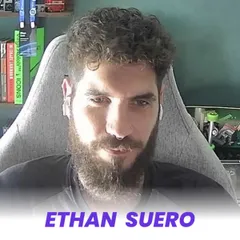
Ethan Suero is a freelance web designer who has worked with clients in Europe and the US.
Ethan Suero is a freelance web designer in Manchester. Most of his clients are in the US and the UK. He has coached for Flux Academy, runs a mentorship for designers, and ran a design subscription called Onit. We talked about what big clients want. And about the network and the funnel that bring his work in.
The less risky option
I asked if clients on the two sides of the Atlantic work differently. Ethan said it depends more on the company’s size and industry than on where it is. Time zones are the bigger difference. With local clients in Manchester, he can work in their office. Then I asked what high-ticket clients are looking for.
You have to be seeing as the less risky option because at the end of the day if a client is to spend 10 20 30 whatever on a project or a solution they are mostly looking for security.
Cool animations and awards help, but they are not what sells. A client recently asked to see what a 10k site looks like next to a 20k one, expecting more animation.
A website, might have zero animation and perform amazingly for your use case.
He uses GSAP for almost everything, through code.
I’m still doing everything in code.
He describes the animation in a prompt and gets the code. For him that is faster than the new interface, and changing the page doesn’t break anything. I’ve only done small interactions with the interface. For small stuff, I always wonder if a simple CSS animation would do.
Growing with Webflow
Ethan joined the Webflow Partner program when it launched.
So it was like a dozen of us.
Demand for Webflow was mostly in the US then. One American client led to the next. He ranks well in US searches, even with a one-page site.
I’m not like an SEO expert and my website is just one page.
He asks every client for a credit in the footer. Over the years, those backlinks add up. “Webflow” is a niche keyword, so it is easier to compete for. I grew with Webflow too, on a smaller scale. My Finnish site went straight to the top of Google. Now I want international clients, and my portfolio is never ready.
A network that buys
Ethan started on Instagram.
I got almost to 10k followers but I had no clients whatsoever.
The audience was designers, and designers don’t buy design. So he moved to LinkedIn and connected with people he wanted to work with.
I’m not looking for quantity of numbers, but quality.
He keeps track of every client and lead. After a project he sends a questionnaire, and two or three months later he follows up. A close relationship brings more work and referrals. His content shows his process and mini case studies. Then he connects with people in the industry he wants. His girlfriend once asked why his business account didn’t follow her. It is for work.
When he shares a project, he writes about the value, not only the visuals.
Every animation or everything that you do on your design, it should have a purpose, not just because it looks cool.
A SaaS site may need fewer animations, because they distract. A creative agency’s site can be more playful. Enterprise clients want a site their marketing team can scale and maintain. That’s why he uses Lumos, with components inside components, down to every icon.
It’s kind of like building Legos in a way.
A funnel you track
He started the mentorship for friends who were great designers with no clients.
They didn’t know how to market themselves.
He shares everything with them, down to his contracts and proposals. I have a marketing background, and I still don’t have a proper funnel. Search sends me enough clients in Finland. Ethan works with his partner now, and all their marketing is inbound.
I’ve never done like outreach.
Sharing your work is only the start. You need to know where you lose clients. Maybe it was the call, or the proposal. He also keeps in touch with leads who said no.
Last year, I sent a proposal to a client. They kind of ghosted us. And last week, they reached out as well.
He had checked in a few weeks before. Their website hadn’t changed. Most of the time, a lost lead is about timing, not your work.
Freelance, but bigger
Ethan still doesn’t want an agency.
You start becoming more like an art director compared to the actual designer.
He does all the design himself and works with a network of developers. Clients come for his name. Some people move to courses, products or SaaS to get out of client work.
I enjoy client work, that’s the thing that keeps me going.
For him, growing means bigger brands and more freedom. They travelled for a few weeks this year and came back to their clients.
It’s kind of like a snowball effect.
I agree that the quality of the work can be the progression. Client work pays the bills, and you don’t wait for the money. Onit was his subscription service. It was profitable for a year and a half. But people thought it was his agency, and fixed projects took all his time. Now the business is Suero Studio, a new site with retainers, resources and the mentorship. I said my own site always comes after client work. Ethan disagreed.
When you’re working on client work, you’re actually working on other people’s business.
If you only do client work, you stay at the same level of client. That resonated hard with me. The clients I’m aiming for and my current site don’t match. As long as client work always comes first, my site won’t level up, and neither will my clients.
Full transcript
Read the full transcript
Janne Parri: Okay, Ethan, so you have worked with people and clients on both sides of the Atlantic. I'm curious, have you spotted any differences on how people approach website projects like culturally or maybe work culturally, if one can say that?
Ethan Suero: To be fair, not really. Most of my clients are based in the UK and also in the States. Probably mostly in the States. And I don't think that it really depends mostly on their location, but mostly about the type of clients that they are, the size of the company, the industry that they are working on as well. So if we have also time, sometimes it's a big one. So if we have like to have like different meetings at the evening, so early in the morning. But not really, like when we work with, know, clients based in America or the United States, I would say they are mostly more direct, but because they are more like big companies, you know, like they have like high ticket clients, the scopes are like more.
Ethan Suero: Complicated as well. And those are like the typical clients that they just like, you know, pay and let you do your thing. We just sync once a week or so. And then with more local clients, especially when they are in the UK, I'm currently working with some clients that they are based here in Manchester. The cool thing about it is like we can often go to their offices and we can work, you know, in person, which is cool to say, you know, to do nowadays because it's mostly like all digital. But other than that, I don't see any differences between if they are based in new York or London, it's pretty much the same dynamic or the same process when we work with clients based on those different locations.
Janne Parri: What are the high ticket clients looking for if we talk about website, webflow freelancers?
Ethan Suero: So, I mean, I always say the same thing and it's a potentially you have to be seeing as the less risky option because at the end of the day if a client is to spend 10 20 30 Whatever case on a project or a solution they are mostly looking for security. So it's not really about creating cool animations or having awards or you know like a really cool or spectacular portfolio, although those things help it's mostly about communicating and understanding what's their problem that they are trying to solve and then just trying to follow up with a solution. Because I recently had a call with a client and they were asking if I could add, along with the proposal, some references for the website, because they wanted to see the website with some level of animations and the visuals that they will get for the manual. So if you pay, let's say, 10k, this is going to be the reference that we get. And then if you pay 20k,
Ethan Suero: They will be like different visuals. And I explained to them that wasn't really the case because a website, might have zero animation and perform amazingly for your use case. Because if you're looking for lead generation of conversions, that might work even better than a crazy animation that it's maybe be underperforming and not getting the work that you need to be doing. Because it depends on the creative or the industry that you're working on or that you're targeting. Because if you're a creative agency, maybe those animations have helped. But at the same time, if you're more like SaaS company or something that is not really related to creative, there might be something more related to communicating your messaging or a B2B or something that there might be a really complicated service that you provide.
Ethan Suero: It's complicated to communicate that to your audience. So we have to understand how we can simplify that messaging. And maybe it's not about creating cool animations or crazy layouts and a lot of GSAP and Lottie and all those things. So yeah, I hope that maybe that answers the question.
Janne Parri: Yeah, Definitely. Understanding the end user is always important. Yeah, I'm already getting excited about this talk because there are so many things that I wanna dive deep. But before diving any deeper, we of course have to talk about a little about ourselves. Who are we? My name is of course, Janne Parri. I'm your host today and I'm... Also a web designer from Finland, that one country way up north in Europe. And you're here for this guy. He is of course, Ethan Suero. And Ethan, I know that you have lots of experience. You have done freelancing for a long time. You have done projects with the playlist studio. You have won awards. You have done coaching. You have done side projects.
Janne Parri: But I'm curious what fills your calendar and your days like right now.
Ethan Suero: Well, first of all, thank you for having me. I was looking forward today. Yeah, mean, when you say it loud, it's weird because it sounds like a lot of the things that I've done in the past, especially with coaching and all those things. Sometimes I forget that I've done things, you know, because I'm constantly working on projects. So it kind of slipped my mind. But yeah, nowadays it's mostly client work. So collaborating on more like... Complicated projects, especially in 2025 compared to last year, for example, when I had a lot of things going on with the subscription model, like the coaching. And every year I try to try different things. Yeah, nowadays it's working with direct companies, like direct clients. I used to collaborate a lot with agencies, which I still do, but maybe not as often as we did it in the past.
Ethan Suero: So yeah, like working with local clients, we're currently working with a hotel here in Manchester. We have a couple of clients in the United States. So yeah, it's a little bit of everything. Usually more demanding projects, like maybe it's not about the pages or the amount of pages that we have, but like I said before, like maybe they have a complicated product or service that we have to find a way to communicate in a simple and creative way.
Ethan Suero: There's more requirements for custom things, even though we do everything with no code as much as possible in Webflow. More and more the projects that I'm working, they require more coding. Thankfully, we have ChatGPT. And I use G-Sub for pretty much everything as well. Yeah, I would say that's bigger projects that they have more complicated problems that we need to solve. But at the same time, those are the most fun to do, right? Because it's not just building a website that it's simple and it just works. Which from time to time, if I'm one of those, I appreciate it because it's a work that is more straightforward. But when we work on this bigger project, it's more demanding. So yeah, that's what I'm doing for the most part nowadays.
Janne Parri: Yeah, that's cool. I'm gonna bite on that GSAP thing. What do you think of the Webflow GSAP updates?
Ethan Suero: The UI, so to be fair, I'm still doing everything in code. Because the way that I see G-Sub is thinking about the time and the animation that I want to create. So just communicate that in a prompt with ChatGPT or pretty much any AI will work. And if you're clear with your prompts, so me, it's faster to do it that way. And then I can just move the code around and it's straight to the point. When I've been testing the UI in Webflow, it felt to me pretty fragile. Like if you make an edit that it... If you like testing things or something, or maybe you make an edit that is not supposed to happen, it will break the whole animation. And sometimes it's still buggy because I suppose it's still quite recent. It might work in the... When you are editing the animation, but then when you preview work, but when you are editing it doesn't work, or vice versa. So...
Ethan Suero: When I've done that in the past, it was kind of frustrating when I was trying to get a simple animation. Even though the UI is pretty cool and it's pretty self-explanatory, especially if you know how GSAP works, I still do everything in code because maybe my workflow with the way that I build animations in that way, it's faster and it's less risky to commit mistakes and I don't have to recreate the whole animation from the ground up every time if it breaks or something.
Ethan Suero: Yeah, that's my thoughts for now.
Janne Parri: Yeah, yeah, I'm with you. It's exact. It is exciting. And I'm hopeful that they get that rolling on a smooth way, let's say. And I've done some like small interactions with that. And yeah, it's a cool, like interface. But then if you just use it for like small stuff, there's always the question, could I do it? Some way easier or lighter like just a CSS animation or something like that. But yeah, okay, let's not go any deeper on that because that's a kind of like deep and endless hole. You mentioned that you work mostly with UK clients and clients from the States. I wonder how did you
Janne Parri: Get to that position you are based in UK, but how did you get like, break the border, so to speak, so get the international clients.
Ethan Suero: I mean, I think nowadays it's like pretty easy to get like global because we have social media and we have so many platforms that it's easy to, you know, just be out there. And I think it was maybe back then when the Webflow Partner program launched, I think it was back in 2020. I got in pretty much like at the beginning. Very few guys joined in the beginning.
Ethan Suero: So it was like a dozen of us. And the thing with that is maybe it was good timing because it helped me to get... Like, Webflow was kind of growing back then. That was already five years ago, which is crazy. And a lot of people were demanding Webflow, even now it's even more. But back then it was easier to get work through Webflow and most of the clients, were in the States because... Maybe in Europe it wasn't that popular as it is nowadays, or maybe it's becoming now. So just working with clients that were in the US because they were more familiar with Webflow and they were just looking for people who provided that. I got my few first clients through Webflow in the partner programs, with the expert program or whatever it's called nowadays.
Ethan Suero: Yeah, suppose that maybe when we start working with clients in the States, it's like if you work with one, it's easy to get your second one because maybe there will be like referrals or, you know, if they are familiar with the companies that they are based in there, they just reach out. And even now today, like most of my of the demand that clients or companies that reach out, they are based in the... In the United States. It seems to be also organic because most of the traffic that we get is through Google. So when people search for a Webflow expert or Webflow partner or Webflow designer, my website is one of the top. So we are pretty high in the list. So that's helpful to get people. Even if they search for that in the United States, we will get there in the results. So that's how we bring traffic.
Ethan Suero: So yeah, potentially like most of the people back in the day or maybe the demand was higher in the United States, that's when they are looking for web for developers. We were there and then that's why we started becoming more global. But at the same time, when we post on socials, we have times that work for us. If we post really early in Europe time, it must still not be the right time to put it in front of your audience in the United States. So we have... Different posts for in the morning in Europe, but also in the morning, which it will be for afternoon for us, but in the morning for the US. And that's how we always try to be on their feet, to show on their socials, like LinkedIn or Twitter or whatever the platform that we are creating our marketing.
Janne Parri: Yeah, yeah, beautiful. So you kind of grew with the Webflow. I, in a way have a similar story, but in a way smaller scale. Back here in Finland, when Webflow was a new platform, I got straight to the Google first place with my side, which obviously was in Finnish. So it was quite easy to start. Build my business and get clients. And I also got into the workflow partner program quite early. But yeah, my problem of course was that I did not have a proper like English, yeah, English sites. And actually I believe that I do not have that yet either. There's of course a lot to.
Janne Parri: Work on as you know your portfolio is never ready. So that's probably my problem right now. But you mentioned that you got on a good stage or good position in US searches. So that's quite awesome. I wonder how hard it would be for a new site nowadays to rank in those general Webflow terms. Do you have any ideas about that?
Ethan Suero: Yeah, I mean because I'm not like an SEO expert and my website is just one page so it's not like I have a ton of content. Yeah, I don't have like a ton of content you know to bring in traffic but every time that we work with clients we ask permissions to have our you know set by e-concerto or whatever in the footer and that's like a backlink so over the years we've been doing that with a lot of websites that can help your
Ethan Suero: Domain reputation to just rank up in the list, but also having the keywords on your site, like Webflow expert or Webflow or digital Designer, whatever it's going to be for that. The good thing about it is because it's so niche, because it's Webflow, if it will be like Framer, Webflow, WordPress, or in general web Designer, that might be higher to compete because there might be so many options within there. But because it's more niche, it's just Webflow and it's like a digital design and it's brand identity, but specifically for Webflow, usually it's easy to rank up there. And that's the case for us in Google with our website, but also on LinkedIn. So yeah, it's just using a couple of keywords that work for a use case. But at the same time, having a healthy and good reputation with your domain, it will help you out to rank up in there.
Ethan Suero: That being said, I don't know what I did in order to be there.
Janne Parri: To be fair, your website is very cool. So that has to play in it. And now there's of course, the SEO world is like, everything is connected and there's AI overviews and it's blowing up and it's hard to keep up with it. Some say that like strong social profiles are a big deal also in the search results. So that would like
Janne Parri: Be like on the same argument that you made about the social media is linkedin like your main channel or do you do other stuff
Ethan Suero: Yeah, I started with Instagram when I started my career in design and I got to a point where I got almost to 10k followers but I had no clients whatsoever. Because I think in some platforms you start to build an audience with designers but you don't really bring in business, right? Which is something that I just shifted my mind back in the day because I was like so worried like... I'm having a lot of followers, but I'm not getting any clients. And on the contrary, we have some designers that maybe they have like 200, 300 followers, and they were really, really busy with clients. So, yeah, I moved to LinkedIn, and I started to post everything there. I started to connect with relevant people because that's the thing. In LinkedIn, I don't accept everyone who wants to create a connection.
Ethan Suero: I always try to create a relevant network. So I'm not looking for quantity of numbers, but quality. Like if I'm connecting with a bunch of junior designers, let's say, that's cool for engagement. But at the end of the day, they are not going to buy from you because they are providing the same service, right? So what they are looking for is to learn from you, which is cool. But especially if you're looking to sell a digital product or courses or things like that. But in my case, I wanted to target a specific client. So that's why I started to reach out to connect with decision makers or stakeholders who will do the hire, or essentially were looking for the services that I was provided back in the day. And over the years, we've been creating a good networking at LinkedIn, but at the same time, nurturing those relationships with your clients, like every time that we work with a project or with a client.
Ethan Suero: I send a questionnaire to get some feedback about the experience. And then we follow them up after two or three months to see if we can get another questionnaire for case studies or to see how they are going on. Just keeping track of your leads, like past leads, current leads, or even the leads in the future. You just need to keep tracking them to see where they are in the funnel that you are getting. Because when I started, I was just chasing clients all of the time.
Ethan Suero: But then when it started revisiting clients, it's not like you work with a client and then when the website is done, you just do a handshake and then just move on. If you give a close relationship with them, you might have extra work from them or even referrals and things like this. So that's how you can actually create a relevant network, not just on social, but also with referrals and with other clients. Then those... They will refer you to other people which might be like a new connection on LinkedIn. And it's just like building a relevant network that might bring you more business. It's not about like building an audience which it was never my intention. But it took me a while until I had to realize that's how it works, at least for us.
Janne Parri: Yeah, yeah. It's kind of so obvious. So simple, but not easy as usually like the main things, the best things are simple, but easy. Let's drill, or focus on that a bit. You started to build your network. Did you do like cold outreach or did you just, look for people who were like,
Janne Parri: What is it like a second tier connections or like natural connections? Or what did you actually do when you started focusing on LinkedIn?
Ethan Suero: So it was mostly about creating content. But again, the target to clients, like maybe showing your process or the fast project or something. We can do a mini case study that we can share on social and say, hey, this is client A. They have those problems. And we created those solutions for them. And nowadays, it's a little bit of that, also personal life, because that always helps as well. And recording or scrolling. So it's showing the work in progress, the end result as well, but also the results that we... The impact that you cause for your clients, or a quote or something like this. And then at the same time, we try to connect with people that are relevant. So if I'm looking for a connection, let's say a creative director or an agency that I really like to collaborate, maybe I will connect with them and we can start a conversation. Or...
Ethan Suero: Maybe like a stakeholder on a company that I'm interested to work because I'm looking to work with people that it's in the AI space or something, right? So whatever the industry that you're interested in, if you keep connecting with people in the same niche, at some point your content is going to be noticed and then that's how you can start a conversation. Because I get a ton of requests from designers and random people as well, not just in the design space. That they might not be relevant. So when I started in LinkedIn, I was just accepting everyone. But nowadays, I'm more like picking with the people that I like to connect. Because otherwise, you might just get in a network with people that it's not really relevant or might not bring business. Because that's the thing. It's not like building an audience. If you want to build an audience, that's cool. But we have to think that we're just building a business, so you have to connect with people that it's relevant.
Ethan Suero: It was pretty funny because when I shifted my mind on Instagram, my girlfriend was like, why don't you follow me on Instagram? And I'm your girlfriend, right? So even friends are thinking of this. It's like, because this is for work. So I don't have to follow. If you want to do those things, just create a personal account. But if you have your business account, you have to follow the people that it's relevant. And even if it's within your circle or your family. It's not about friends or family. It's just building a business, which is like.
Janne Parri: Yeah, hopefully that was not a big issue. And I believe nowadays LinkedIn has like your connections and followers. So you can kind of like follow some sort of influencer if you just want to follow and then the connections are a different thing. But yeah, you got to be mindful on how or for who you do your content. I've been thinking of that too. It's quite common to on basically every field where you have like people who know stuff. You like doing the content for your peers or for the customers? And it's of course easy to show your work and it quite easily goes towards the like juniors and your peers.
Janne Parri: So yeah, that's a good thing to keep in mind, but yeah, go on.
Ethan Suero: That's something that we also teach in the mentorship. That was one of the key questions that a lot of the students ask. When we create content, you can create the same piece of content, but the way that you post it might have a different impact. Because if you have a hero animation, but you have the scrolling section of your new website that you've done for your client, it looks amazing. If you just show the scrolling... Say something like, is like the new work. It might not bring you new business if you just show that unless that is a resonate or maybe a potential client they see it and they like what they see and they just want to reach out. But if you kind of like switch your mind or reverse engineer it a little bit and then just take the opportunity to also provide the context like, what was the impact of this or how fast it was the turnaround for that project or what was the experience of the client collaborating with you.
Ethan Suero: Along with the visuals, that's kind of like more things that you are also communicating and that might be the value that a client might see. So, all right, so these guys know how to design and the animation is cool and everything, but I can also see that the client enjoyed working with them or they actually did this really fast because they have an event or something in a few weeks or I don't know, whatever the value that you're going to be providing or maybe the conversion rating improved like 20 % after two three weeks or something like this. That's where the real value is. It's not like, again, crazy animations and cool websites and things like this. Because even some clients, don't really care about those things. I'm currently working with a client, and it's pretty easy because it's just approving everything. And he's like, just fully trust you to you and just focusing on the results. And other clients, are more like, but we want this animation because it looks cool.
Ethan Suero: Maybe it's not the right animation for you because it's just animated for the sake of it. Every animation or everything that you do on your design, it should have a purpose, not just because it looks cool. So, yeah, when we create content, we also try to communicate the value of the collaboration or the impact that the deliverables... Because it's not just about the deliverable, it's about the whole experience. So if you combine that with good work, it's going to create a bigger impact compared to just showing...
Ethan Suero: Hey, look how good this looks or how cool this is, right? So yeah, that's kind of like a little nuance that I also mention on the mentorship to these guys.
Janne Parri: Yeah, we're going to circle back to the coaching things, but that's a very helpful tip. And I should, I should do that more myself just to like think of who are you writing this? And if you, if I have a good visual, the text party with the text part, I can like actually focus on the actual client. And of course, LinkedIn is way better for that than let's say Instagram. But you mentioned the age old, let's say fight between like conversions and the visuality. So could you elaborate on how do you find the balance? I know that you do like, you do also this very cool, very interaction heavy side. So where do you find the balance on the results or hard?
Janne Parri: Numbers and the cool stuff you want to put on a site.
Ethan Suero: So I think it depends on what's the goal of the website. So if you're working with, let's say, on a website for Typeform or a SaaS company in a similar way, maybe a lot of animations, might be not the right goal because you're creating a distraction. So that's why you have to measure it. Is this animation providing any value or is it just a distraction? So the other websites where you have more simple layouts and it's mostly focused about the product, clarifying how it works, what are the benefits of those, and then you have a bunch of strategies for call to actions and how to increase conversions, like models positioning your buttons in the right way. You have social proof reviews and things like this, kind of like the structural way as well for the landing page. And those are more oriented for conversions.
Ethan Suero: But on the other hand, you have also creative agencies. So even now, which I'm working on my portfolio, it might be more creative because that's part of my personality and you want to show animations and cool design and things like this. So those projects, they might be more focused on cool stuff and cool work. So you want to highlight your work in a cool way because... It's going to be making the people, the users that are navigating your website, like, this is pretty cool. I would like to have that because it looks great and my brand, it's not there. So I want to highlight everything or kind of level up to that point. So that's where you kind of measure. It's not the same if you're working with a creative agency or a media company or another freelancer or something. Maybe the photographer, say, or architecture.
Ethan Suero: They are different projects that allow for more creativity and you can have more fun and create cool things. But on the other side, if you're working with more enterprise level of clients, it's not about creating an awards type of animation website. It's mostly about a website that is scalable, that it's easy to maintain for their marketing team. That's one of the reasons that we use Lumos, which is something that we talked with Corey because I listened to that episode in the morning. And so yeah, those are the things. Like every time that we work on a client project, the first step is to do a discovery session so we understand what we need to do here, right? So it's a highlight in everything and then creating something that it's really appealing and really engaging and interactive. Or is it something that it needs to perform really well?
Ethan Suero: That is going to perform well for conversion rates and we have models and social proof and things like this? Or do we have to communicate a really complicated message in a simple way? Those are the things that we have to consider and then based on the problems of the goals that we want to achieve, you cannot make a decision in the sense of the design. So, yeah, it really depends on the client. It's not really up to me. I'm afraid every time.
Janne Parri: Yeah. Do you prefer one or the other or do you like to like the change? Do some projects with more interaction heavy stuff and then those maybe enterprise projects.
Ethan Suero: I mean, it's always more fun to work on projects that are more creative because you can have cool things and then you can explore and really have fun with design. Enterprise projects are like really, I wouldn't say boring, but it's more maybe straightforward and it's more like safe in a way that, you know, it's a website that it needs to perform. It needs to be easy to scale, you know, so people can keep adding. Pages and components on their own. Maybe you kind of work with them more as a consultant level, while if you're just working on a website that it might be a portfolio, photographer, or architecture, things like this, it's more like creative, right? So yeah, I kind of like to have a little bit of both, because if I want to switch, I just work with creative and then exploring, fun with animations. But at the same time, you have like...
Ethan Suero: More conversion in data and matrix, like you can just focus on those things. And I'm like really geeky, especially working now with Lumos where you have components. So I am like always trying to get a component that it's, you know, a system that it's easy for them to maintain. So I always like to work with components in that way so I can create. It's kind of like building Legos in a way. So you have to define everything on your own and the simplest way for them, because you just have to think that... They might be non-technical people or maybe not really good versatile with Webflow. So creating a system that is easy to scale, even though it might not have really spectacular, but something that you can just drag and drop and create a whole page in five minutes, that's really cool as well. So yeah, I kind of like both ends when I'm working on projects.
Janne Parri: Yeah, I definitely know those nerdy kicks one gets when they build something cool, something cool with components or something like really scalable or of course get some like high conversions. That's always nice to hear when a client says that, yeah, this is working pretty well. So those are awesome things. About, I gotta ask a small... Geeky question about components. Do you aim for all your components to be like one component that can do everything or do you find yourself doing like a small little versions of the same component, but in, different instances or in different components.
Ethan Suero: I think it depends on the use case. So yeah, if you have a section that might be unique, we just have this section, it's going to be a component that maybe they want to reuse at some point in another page. So I would sort of a component. But then you have maybe a component where you have your typical header, paragraph, a couple of buttons that is more global. And it's something that you're going to be using a lot of times, or even cards. So it's something that you can just have your grid. And then you put your cards in the slot so you can keep adding more. Also thinking about how it works with the CMS. So there are really different, many different levels of components, more like big components where you have maybe a full section of things like your footer or navigation and things like this. But then you have also micro components, I would say, those things that you can track and drop. And I like to also have...
Ethan Suero: Or even go a step deeper. If you have your card, that it might be a component that it will go into a slot, which is a grid. But then even inside the card, I will put another slot, let's say, for your icon. So if we have 20 icons, I will turn all 20 icons into a component as SVG so they can actually drag and drop. So you can keep building. It's like micro components and components within components, which is something that I learned from the... Design system when I was building those as well. So it's like, yeah, just building little pieces that you can just keep putting inside of each other and then just keep building more bigger components. And it's all about flexibility.
Janne Parri: Yeah, it's that kind of like component inception component in a component. Yeah, that definitely gets you the component kicks. Okay, let's change this up subject a bit. You mentioned that you talked, you have talked about the content with your coaching clients. And I know that you have a past with Flux Academy. I wonder what are the biggest or most common things that come up in those coaching sessions.
Ethan Suero: It's pretty different when I was doing Flux coach, because it was more like technical questions about their courses and Webflow in particular. And most of the question, like, it might be pretty basic for some people, because it's like, at the end of the day, there was like people learning wet float. So you might usually get like typical questions over and over, like, why this is not working, or should I use the Flux or grid or why my... Section is not working on mobile. So it was more like technical questions compared to what we do in the mentorship. I wouldn't say that people are my mentorship. It's our clients. Maybe it's more like because I never refer to them as the clients of units. Students or, you know, just like all the freelancers that we just build a team and then just try to provide value. Because I've only done like two rounds. And this is something that I just started this year.
Ethan Suero: But yeah, the questions that we do on the mentorship, it's mostly about creating a funnel because the reason that I decided to do the mentorship was because so many friends as well, they were great at design and other craft, but they didn't know how to market themselves. And it's like, sometimes they are even better than me in the level of skills. But they don't have any clients. And the thing is maybe they don't know how to sell themselves, so how to jump on a call with a client and be comfortable selling, right? Because one of the things that us creatives, we are really good at creating things, but we're really stuck at selling. We don't really know how to sell. That's something that I've been learning for the last few years. And based on my experience and the things that work with me, all for me.
Ethan Suero: Those are the things that I can show on the mentorship. Also, I try to give everything, like giving my contracts or proposals, so everything that I do that I can do to help them out. That's what I usually do. And it's something that I started kind of like a test. Because it wasn't really about the money. I tried to make it as deeper as possible, but worth it as well for the time that I'm investing in it. But it's really, you know. Really cool to see when you, after a mentorship or something, they kind of like shared a quote on or review something on LinkedIn and they shared the experience. So even they got a client. Like some of the guys, were like, this is like my biggest client that I have in my life. Like it's like 5K or 6K or whatever. And you're going to help me. And so I'm not taking the full credit for that, but I like to think that, you know, I helped them in a way a little bit to get there. So it's always great to see like.
Ethan Suero: It's working for them and I'm always happy to see people grow, especially when you're a little bit of part of their journey.
Janne Parri: Yeah, that sounds awesome. And about the funnel. Yeah, I have a marketing background, but although or despite of that, I do not have like proper funnel to set up. Luckily, I get my clients enough clients for myself from, well, they probably come from the search results on a finish. Search results, but now I'm thinking of like trying to get some, well, of course, bigger clients and maybe more like international clients. But I totally know that a funnel, a proper funnel would bring of course clients, but so much peace of mind. If you know that you have a machine that if you put something in it, like try to get some leads on a certain
Janne Parri: Percentage something goes out or comes out so that would be a huge asset to have and yeah for some reason quite a few people know that but as I said before those easy not easy those simple things are not easy so I wonder when I'm gonna be able to say that I have one proper funnel but yeah, how's your funnel doing? Is the LinkedIn, well, you mentioned the SEO results and LinkedIn. Are there any other inputs to your funnel?
Ethan Suero: Yeah, so we don't, or I don't really do, I say we because now I work with my partner as well. So it's kind of like we, because we are too. But yeah, it's, I've never done like outreach. Most of the marketing that we do is inbound. So pretty much like sharing your work. And that's something that a lot of people say, like share your work and then you will get clients, which is true in a way. But at the same time, it's not just that, because if you just share your work, you just like... Setting work and then maybe nobody's knocking, all right? Or even when you get a call, what do you do on the call? What do you do after the call? If you lost a client, where do you lost it? Because they booked the call, so maybe your work is great, but maybe the call wasn't great, or it's the proposal not great. Those are the things that we've been refining over the last couple of years, because if you lost a client but you don't know where they were lost...
Ethan Suero: It's kind of like with an e-commerce, right? Like the checkout experience, where it's like the abandonment of the client is happening. So this is the same thing. And then you can iterate and then refine that step in the funnel to keep increasing your win rate for client acquisition. So those are the things that we usually barely track as designers or freelancers in general. But once you start doing that, you will see like a massive spike because if you know where your problem is or what it's like you're losing your clients, if you just fix that, maybe you might be getting a ton of work. But if you're just like, I'm not getting clients because I'm just having the call with them, and then just disappear. So maybe the problem is with your call, maybe it's with the proposal. So what's the stage that you're losing them? Try to find them and then iterate or just try to refine as well.
Ethan Suero: And something that we've been doing apart from that is keeping track of even clients that we don't get. Last year, I sent a proposal to a client. They of ghosted us. And last week, they reached out as well. Because we kind of reached out to them a few weeks ago to see how they were doing. The website was still the same, so I thought maybe they didn't work with anybody. Maybe it wasn't us. Because that's the thing. 99 % of the time, they are not saying no. To us, it's mostly because something changed or maybe the timing is not right or it's not like, it's not about the quality. Because if they reach out in the first place, they already like your work. So it's not about your work or the things that they see, it's something else. Or maybe about the feeling that they got on the call or the offer or whatever it is. But if you kind of like, even the clients that you lost or they cost you something, you can reach out to them a few months later or something to see how they're getting on.
Ethan Suero: And maybe you can recover that conversation. And that happened with this client, which it's now a client. So those are the things that we often don't do. It's not just sharing your work. It's also meaning having a funnel and steps that you can keep track and then keep improving and see where you're actually losing clients so you can refine and then improve your process to increase your win rate.
Janne Parri: Yeah, like follow up is obviously important and there might be some smaller other smaller opportunities like responding quickly to inquiries or something like that. But let's say that we got our funnel working and we get a ton of clients and then we are tempted to go from freelancing to agency model and I remember listening to one early webflail podcast where you said that you probably don't want to go for the agency model because of course the work, the style of work differs so much so you like to do the design, you like to push the pixels
Janne Parri: That's course way in the past probably about three years. What do you think of the freelance versus agency?
Ethan Suero: I would say more. Yeah, I think that episode is like 2018 or so, 2020. It's like, it's really, really old because I was like just starting. But yeah, it's still the same. It's just me. Well, now me and my partner. So we're going to like be rebranding some things, even though I'm going to still position myself as freelance. Because the branding or the positioning that we have, it's usually my name and people go with us because they like my work and they like to work with me.
Ethan Suero: So I would say that's going to be the same thing. And I don't really like, even though I try to build a team, I don't really like the hiring process or manage other people because you start becoming more like an art director compared to the actual designer. And I still like to be involved in those things. If you want to grow, probably that's the route. Because you can only take as much, right? If you can take five projects to projects, depending on how much how many you can take in order to take more you need a team. That's the only kind of like way to grow. But then you have to make a sacrifice, right? So you're not going to be as involved in projects because you don't have the capacity. So you're working more kind of like dealing with clients and directing your projects and supervising things. But that's something that I don't really like. And I tried in the past that didn't go well. So for now,
Ethan Suero: It's just me, sometimes I'm building a thing with contractors that we usually rely on to support with projects when the demand is really high. But for the most part, when I work with clients, it's going to be me. For design, 100%. And then for development, it's when I'm starting to build some network with other developers, which I've done for the last couple of years and it went well. That's the thing, still freelancing, kind of growing in a way, because we have kind of like a team. It's not full-time, but working with other people. Maybe rebranding from freelancing or just even sort of to more kind like a small studio, boutique studio, because now we have of have a team in a way. And even though kind of like the face of the brand still me, not to be a narcissist or anything, but it's because people, it's like usually...
Ethan Suero: Reaching out because of the name and that's kind of the positioning that I've been building over the years. So yeah, they are like different models. Like there are a lot of agencies that it's like one single man or woman, you know, and they present themselves as an agency because a lot of clients, like to work with agencies because it's like, it's more safe. Freelancers are like cheaper or more, you know, easier to get or the word is not going to be as great, but that's not usually the case now. I would say that most freelancers nowadays, they perform even better than many agencies for half the price because we don't have to pay for offices or a huge team or something. So I like to, I think that the future of the creative space is going to be more like collective of people who do good work. And that's been the principle with forming and
Ethan Suero: Good friends of mine like Julian Rotondo, Frankie Margata as well, like it's like Pentagram, right? So they're kind of like resemble an agency, but at the end of the day, they are like a collective or creative. And then you get a client, you need like developers, motion designers, graphic designers. You just assemble the team, get the scope and then to cover the scope. And then you just work with that, with these people. So you don't really have to have people in house. Just, it's a good network that you can just rely on and then just assemble your team to. To collaborate on that project.
Janne Parri: Yeah, yeah, I've seen, I've also seen a few people, a few friends like trying to progress to the studio level or kind of create some sort of a group of people. And I think that is in a way wise if you do not want the like to build a full agency. And I for one, I... Yeah, I'm with you. I do not like to hire people and manage people and all the stuff that comes with it. But at the same time, I'm wondering what is if I want to stay a freelancer, what is like the career progression? We are both like young guys, although you have a beautiful beard, we have a lot of career ahead of us. So of course,
Janne Parri: People wanna see some sort of like progression. I do not wanna do same sort of stuff 10 years from now. But if I'm a freelancer, what could be like the end goal or end goals for my career? Maybe a bit of mentorship or something like that. What is like the senior designer role for freelancer? Any thoughts on that?
Ethan Suero: Thank yeah, so I think that really depends on what you like to do. Because a lot of people, just stop doing client work, and they do courses or digital products. A lot of people, are moving now to SaaS and building software, because they don't want to be doing anymore client work. I enjoy client work, that's the thing that keeps me going.
Ethan Suero: And I'm realizing that mentoring is also something that I like. It's not something that I will do full time, because I like to, again, keep missing things a little bit. But yeah, and then in the sense of quality or the projects that you do, maybe it's like you're going to be collaborating with more complicated projects. Because when I started, I was just doing a website for a local business or maybe a freelancer that I was just starting out or... You know, a small photographer or something like this. As you grow or as you keep working with clients, your skills are going to better because you're going to be delivering better work, your prices are going to be raising as well. You're going to be working on more complicated projects. And it's just like getting bigger and bigger and your work is going to look better as well. And that usually attracts like bigger clients, like you're going to be collaborating maybe with agencies.
Ethan Suero: You might get a role with them full-time if you wanted to. I know. I think for me it's like getting freedom in the sense that I can work on projects that I really enjoy and then working with bigger brands. Because if you've been in the game for a long time and your positioning is there, you kind of have a brand positioning as well there, a reputation or whatever it is called.
Ethan Suero: You're to be attracting people there to you because if you're just in the freelancing for like a few days, you're not going to be working with Nike or something like that, right? But at the same time, if you're like five, six, seven years working with big brands, it's just going to be getting like bigger and bigger. It's kind of like a snowball effect, right? So like I said before, if you get your first client, the second client is easier. So after five or six years, if you keep refining your processes like getting a better process, getting a better portfolio, bigger projects, more complicated projects, collaborating with other people as well, not just doing yourself everything, but also delegating the tasks that you don't like to do or know how to do, you're going to be creating better work. And then that's how you attract bigger clients, bigger budgets, and deciding who you want to work with as well. So yeah, I think that's
Ethan Suero: That's what I like to be. I will say that I'm currently there. You know, always try to improve and to work with more exciting brands and collaborate with other people. But yeah, I love that I can decide when I like to work because we've been traveling this year for a few weeks. Then we came back. We managed to get all of, you know, clients back again. So that's kind of like the freedom in the life that I really enjoy because I can decide. Whenever I want to work on or what I want to work and that's kind of like the goals that I wanted to have.
Janne Parri: Yeah, yeah. And that's like true. It does not make your role does not have to change your, the quality of work can be the like progression. And that is fine too. And I believe when people jump onto the agency bandwagon or try to build their own app or something like that, they are usually not like looking for the style of work that they like to do. They are looking for something easier or something that they can not attach like unattach themselves or like they are looking for something passive or easier to do. And of course of course it's not always easy. You when you're doing an agency you have to manage when you're
Janne Parri: Building an app, there's a lot of stuff to do, like developing and marketing the app and who knows, will it work and so on. So maybe it would be just wise to like focus on the client work because it is actually quite good. It pays the bills. Like you can get new clients, the clients change, I mean, and yeah, you do not have to wait for the money if you are building, let's say some sort of influence business or app business, the money comes, if it comes way down the line. So actually client work might be quite good choice. Okay. But of course, when you do things long enough, you try, you are tempted to try and you should try new things.
Janne Parri: Could you tell a little bit about Onit and what kind of project was that?
Ethan Suero: Sure. So, Onit was last year when the subscriptions kind of like took off because a lot of people were doing subscriptions and things like this. So we wanted to give it a go. I think it's been on for like a year and a half or so. And it went really well. The reason that I was like Onit and it was not like just me offering a subscription service is because I wanted to... Separated in a way, like it was kind of like a branded service by Ethan Suero. It wasn't an agency. But then I realized a lot of people, they were like thinking Ethan Suero is the owner of Onit, which is an agency. So there was like a lot of confusion in that sense, right? So it was like, are not a freelancer, but you also have this agency, right? And it wasn't the case. So I wanted to separate things and it didn't go as I expected. So, but other than that, like it went really well.
Ethan Suero: Really profitable for like a year and a half. The problem is like at some point I was getting so much demand for fixed projects that I didn't have the capacity to onboard and any anybody else and on it. At some point we have like three people subscribed because that was like the limit. I started with five and then I had to go down to three and then when I got two because you know people kind of like paused and then they cancelled because the project is finished. I decided to not onboard anybody else other than the tool that I had. And then the moment that those finished, I decided, I was thinking, should I take on it to the next level and maybe focus more on that? Or should I just focus on fixed projects? So I had to think what I enjoy the most. Subscriptions are great because it's secure. Sometimes it's easy work. But you're working on the same project.
Ethan Suero: For a long time because it's mostly like maintenance and adding more pages and things like this, right? So it might be repetitive at some point, although it's, kind of builds security. So the goal for like a year and a half, was like, I'm going to focus on one to three projects fixed, and then I have the subscriptions as well. But yeah, it wasn't like as a plan. I was getting so many projects, demand projects that I had, so I couldn't take on. Because I was having also subscriptions. So when everybody like paused, I just decided to shut it down because it's like, this is cool and everything, but I wasn't promoting anything for Onit. I didn't have the time to manage it anymore and to scale it. So yeah, I just decided to shut it down. With the rebrand with the website that we're doing, I might offer subscriptions as a service, which is always being a retainer in a way. So subscription is more like a...
Ethan Suero: Fancy word now for retainer. So we might still do those things in a different way, because you can work with a client, build a website for them, and then you can create a package to keep working with them. Maybe not as the way I was doing with Onit, but under the umbrella of steal my name, Ethan Suero, whatever it's going to be. And then not just separate both services, it's just like another service that I do, and it doesn't have to have... A different website or different service or anything. So yeah, I just decided to let it go and then maybe we just wrap everything under one name, one website or whatever, which could be also like including the mentorship. So yeah, that's one of the goals that we're working on the new website. It's not going to be just one page anymore because it's just focused on the projects. The new website will have an area for the mentorship, for retainers or for other areas as well because it's going to be more...
Ethan Suero: Like a bigger site. So that's one of the reasons that we wanted to switch to a studio because over the years I've been trying so many things and now that I know what I like on this site I'm gonna just package everything into one website and then I can just have pages for every section or every area or services that I'm gonna be doing. So yeah.
Janne Parri: Okay, yeah. That's interesting because you mentioned about Onit, there was some sort of like misunderstanding on is it an agency and your name was attached to that and I hear that you have thought a lot about your personal brand and could you elaborate on how you're gonna
Janne Parri: Use it or more fits into this new brand, the studio brand. Any thoughts on that?
Ethan Suero: You mean on it or the subscription level or what in particular?
Janne Parri: No, your like personal brand and the studio brand what are your plans with those?
Ethan Suero: Yeah, it's always been Ethan Suero. Even legally, the business was Ethan Suero limited at some point, but we decided to change it to Suero Studio last year. And now from whenever it's ready. So I started working on the site, but it might take a while. So it will be like Suero, and it might be more like branded as a studio. And that's... That's one of the reasons that I wanted to do it this way, because we are more like a collective now, but at the same time offering more things. It's not just client work. It might be also the packages for the retainers, which might be what it was on it. It's going to be now this area on the website. Also creating resources for designers, as well as the mentorship. So it's going to grow into more like a...
Ethan Suero: Different things that we're going to be doing on there that I'm going to be doing in that sense. And it's not just purely client work, even though that's going to be the main focus, but also having other areas for other things as well that I enjoy doing, you know, other offers as well, like the packages for clients as retainers or resources for designers, the mentorship and other things as well. Maybe in the future, I know it might be... Courses or something, which I don't know if I would do, but you know, we never know. Because I'm constantly trying things. Don't really know if I like something. I would just give it a go, see how it goes. It might work, but maybe I don't enjoy it, so I don't do it. And that's the thing. Even if something works, like on it was working, but it was like a lot. So I just decided to let it go because I didn't want to, you know, dust trash of everything. So yeah, I always prefer to pick the things that I really like and that I...
Ethan Suero: Think that I really want to keep pushing forward compared to something that it just works. But if I don't really like it, I'm not going to spend more time on it.
Janne Parri: Yeah, one has to be quite ruthless for other things that and it's also good for the visitor or the client that you are not known for everything you specialize in something or at least a limited thing. But yeah, that's like clever. You keep your name in the studio brand. I know that some people think think or wonder if they should do a completely separate brand and try to like detach themselves from the brand completely. But obviously you have a strong personal brand. So, that is also an asset to be used, for the new brand. Yeah, that is.
Janne Parri: That is awesome. Would you like some accountability? When will the new site be out?
Ethan Suero: Hopefully, end of the year or early 2026, potentially early 2026 because if I have some projects but I'm not booking anything else, I'm booking some projects for September so that might be the last project for the rest of the year so that way I have some time to work on the site and then just plan for 2026 because... Yeah, in terms of the profit and everything, the business is going well, so I don't want to be super busy for the Christmas time. So that way we have some time to take some time off, think about what are going to be the plans for the next year, working on my site, and then other things as well. So yeah, if everything goes well and I have the time, hopefully it will be around that time, like Christmas time, maybe launching on early 2026.
Janne Parri: Yeah, would be awesome. And I know, I know the struggle. Yeah. I'm in the process of updating my sites, but for some reason, client work always goes ahead. And, even if I schedule some time for myself to work on the sites, there's always something more urgent and of course it's a good problem to have. You get, have clients coming in.
Janne Parri: But at some point you have to do your own side too. Yeah. What were you about to say?
Ethan Suero: Yeah, yeah, I actually disagree with you because when you're working on client work, you're actually working on other people's business. So you always have to find for whatever little time that you have time to work on your business because that's the thing. When you have like the you always have the feeling that if you have clients, you're growing, which in a way is true because you're getting paid and everything. But in order to grow, you have to keep working on your business as well. And that will be like creating content for your social media, connecting with people, improving your funnel or getting a funnel, sucking your leads, finishing your portfolio, improving your portfolio. So those things, they had to be done as well. And it's not just client work, client work, client work, because otherwise you will get stuck. And sometimes we have the feeling that because we are working on projects and then we have the feeling that we are busy, we are growing, where in reality we just like...
Ethan Suero: Running in circles, working on the same type of level of clients and things like this. So that's the reason that many people, get stuck in a sticker. Like I'm only working with clients of 500, 1000, 5,000, and they don't really know how to take it to the next level. It's because we just stuck on client work, but we don't really work in our own business, which is something that we also need to do.
Janne Parri: Yeah, that resonates so hard with me. I know there's a conflict on the level of client I'm aiming for and the level of my current site. And as long as I keep on doing the client work, I will not level up my site and I will have less of an opportunity or something else to get the actual... Actual bigger clients.
Janne Parri: Okay, there's one topic that I have to ask from you, at least one topic, let's say. And that is about all the awards. Of course, there are million awards for web designers, even developers. Where did you get your first award and how was that experience?
Ethan Suero: I don't remember actually because I've sent a few years ago probably CSS awards and awards as well like a triple awards we never really had like a site of the day or something like this it was most like honors or recognitions and things like this and I mean I worked on our cool we all know how you get like awards nowadays. So it's not something that it's a natural unless that you get like a Webby or something. But I don't think that should be like the main focus. It's always cool to have like recognition because at the end of the day, not all of the websites are like awards type of level. Like if you're like working in conversions, it needs to be like a cool website in order to have an award, right? Because at the end of the day, they focus on Thursday and things.
Ethan Suero: So not every project is going to qualify. That was the word that I was looking for, to submit for an award. But that being said, it helps to get awards because clients, like to have that. And if you're like an award-winning designer, you should be good. So that's going to help to build some trust and decline as well. But I don't think that should be the ultimate goal. I think that I send some... Maybe three, four years ago, I haven't sent any awards since then, and we're still getting a ton of calls every week, every month, getting healthy clients, so the business is healthy, and we haven't sent any awards. I might send some, that being said, might send some this year or early next year, because mostly because the projects that I've done recently, I'm quite proud of a few of them, and I wanted to just use them to submit it.
Ethan Suero: And it's cool when you post on an award or something like that, like over the first couple of weeks or something, you might get some traffic. So it's always good to get some traffic onto your site. But apart from that, I don't think that they don't really add a lot of value, at least that you are already in a really good position, like Ilya or Denis, which every time that they have a website, they are in awards on the outside of the day, or developer of the day, or whatever. And they are always top of their site. And that brings a ton of traffic. Because they are already owning the platform in that sense. So yeah, it's cool to have awards. It helps in a way. But if you don't have awards or something, you can still do amazing work. I know that amazing designers that they do crazy work, and they don't have really an award because they didn't submit it. Yeah, I don't think that should be the focus.
Janne Parri: Yeah, yeah, it's one of those well, not maybe not small things, but those things that are not crucial, but they help probably the yeah, probably the first one will be like most helpful when you get to put on put your logo on your website, but you mentioned at the start of the episode, big clients are searching for
Janne Parri: For safety or trust. Of course, if you have awards logo, that might not mean trust for them, but for certain type of client that could be an indicator of that person knowing what they are doing. The same thing kind of with the Webflow Partner program. When I talk to people, I have never heard that they get a ton of clients from the partner program or get like good clients from that, but it probably helps to have the badge on your site at least some amount. No one knows exactly how much, but it is nice to have there. Same with the awards. So,
Janne Parri: If you would advise me or some like junior designer how should they like approach? If they wanna have a award of some sort do they just like submit a bunch of websites or a fine-tune one good sites and then submit that yeah, any thoughts?
Ethan Suero: Yeah, I would say it's not like sending a bunch of them and they're just hoping to get an award. It's better to just properly spend some time on a website that, you know, it qualifies for an award, like maybe more creative type of projects or, you know, cool navigation. And it has to have some visual appealing because it's not like... If it's a typical marketing site, it might not get an award. You need to have some level of use in it in order to get there. Typography, good design, not just animations, also colors and things. So really good design as well. But also performed really well, works on mobile, basically checking all of the boxes and then just making sure that it's really well built in design. And then maybe getting, or packaging everything into a really cool presentation. Because when you submit to many of those awards websites, you can also send
Ethan Suero: Mock-ups and a cool presentation that you can just show in order to showcase your work. So yeah, if you really spend the time on a site, that will help in the right way to be recognized. But other than that, I would say it's also about connections. Because a lot of the people who get most votes, it's also like, at the end of the day, a lot of the designers, vote for people that they know of. Because they are already like rock stars in the game and things like this. So if you're like pretty new and then you just send an award, if it's amazing, you're probably going to be doing well. But I've seen some websites that they go on awards and they are really good websites. Don't get me wrong. But maybe it's not like a groundbreaking website or something. It's a solid website, but maybe not like, in my opinion, like a huge, you know, like an award type of level site.
Ethan Suero: And they still get awards maybe because who did it or something like this. Yeah, because awards to me, it's kind of like a topic that it's a little bit. I don't know, yeah, maybe it's not something that I would say is completely fair in a way. Like I said, we all know how people get awards nowadays and there's a lot of things involved and it's not always just because of the work or the quality of the site. There are other things involved in it. Yeah, don't focus on awards too much.
Janne Parri: Yeah. Yeah. And especially if you have like smaller awards competitions, I feel, that I believe that I have been approached with a, sort of competition and they say that everyone gets some sort of award out of that. Is, it is a business basically to help. Yeah. Yeah. That is
Ethan Suero: Yeah, if you pay, I will give you this award.
Janne Parri: Yeah, that is bit weird, but yeah, we do we do we do get by Okay Those were those were like my biggest questions but there are I said that at least top one topic was the awards but I think that I still have at least two questions for you. One is that
Janne Parri: What do you like to like geek on nowadays? Lumos is probably one thing you mentioned before, but do you have any other stuff that you are looking into right now?
Ethan Suero: I've been like word related or something that it's not word related
Janne Parri: It can be non-related to work, so anything goes.
Ethan Suero: Okay, so if it's work related, would say typography. It's been a big one this year. I've been investing a lot of time in it. Also getting courses as well, and books. Maybe you can see some of them there. Because I really wanted to level up my typography game. So I've been consuming a lot of editorial design, like reads, typography. It's something that I do every single week nowadays. That's like kind of like work related or more like design related. And then another thing is that like no work related, which is just kind of like a hobby. It's been seen racing. So I've been getting more serious into it like this year and I got like a new setup and everything. Yeah, I've been like focusing on that as well.
Janne Parri: Okay, so sim racing is like simulator racing with pedals and turning what is the wheel? Yeah, the wheel.
Ethan Suero: Yeah, because I'm Yeah, exactly. So I'm a big fan of F1 and racing in general because I think like a few years ago, was like potentially like four years ago, we've done the website for Hunter Gini. He was back then an F3 driver, Formula 3 driver. So because of him, I had to do like a lot of research looking into the drive to survive type of, you know, show in Netflix about Formula 1. I got into Formula 1 again.
Ethan Suero: And then from there it was like playing video games with cars and stuff. Yeah, just racing, but in a simulator essentially. And it was everything because of this client that I got into the sport. And then since then I've been just on all-in. We've been to the Formula One Grand Prix in the UK a couple of times already. I went this year with my brother. So yeah, that's when I'm not designing, I'm racing on my race.
Janne Parri: That's so cool that's so cool a formula one is quite big in Finland too but nowadays we do not have a Finnish driver there so it's kind of like a downturn
Ethan Suero: Well, next year Valtteri Bottas, potentially next year I think he's going to be back in the grid. So yeah, yeah, yeah, yeah, I'm pretty sure he's going to be there. Yeah, I like him.
Janne Parri: Yeah, potentially, hopefully. Yeah, yeah, I still watch some old Kimi Raikkonen clips from YouTube because he's just funny. Yeah, yeah. Speaking of Finnish, I'm not sure if you noticed, but I have this small section at the end of every episode where I tell a Finnish saying, I translated to English, of course.
Janne Parri: And you have to guess what it is about, what does it mean, if it's a metaphor or what does it mean. So your saying or idiom is, it's in Finnish, lähteä lapasesta. In English it is to leave from mitten. Something leaves the mitten like a glove or something. What do you think that means?
Ethan Suero: I have no idea. I have no clue. How do you say finish again?
Ethan Suero: Lots of love, sister. And in English means again, can you repeat it?
Janne Parri: To leave from a mitten. So let's say this party left the mitten. I gave a little bit of a hint. Why could party? You give a guess? If you, if you answer correctly, you would be the first one. Yeah.
Ethan Suero: So no, I it's... Okay, so nobody did it right. I don't know, it sounds like... I have no idea, I have no clue.
Janne Parri: Okay. I'll release you from the agony. It means to get out of control, like get out of hand. It is basically the same thing. Get out of hand. But it's for some reason it is mitten like these gloves. It's finished. I gotta do a little finish for every episode. Okay. So Ethan, we're about to land this plane.
Janne Parri: If people want to hear from you, where can they go?
Ethan Suero: My website, it's where I have my work, so ethansuero.com. I'm pretty active on LinkedIn and Twitter as well. Same thing, ethansuero underscore something. But yeah, ethansuero, no. And yeah, that's what I'm hanging out. So yeah.
Janne Parri: Yeah, I'll make sure to leave every link in the description and we'll be waiting for the studio sides at the end of this year or at start of the next year. Ain't that right? Yeah, yeah. Yeah, thanks Ethan.
About Webflow and Friends
A podcast about building websites with Webflow and the tools around it. Janne Parri talks with designers, developers and marketers about how they design, build and run sites for fast-moving teams.
Hosted by Janne Parri. Janne designs and builds design-led websites and design systems for fast-moving marketing teams, in Webflow or Astro, and is a Webflow Certified Partner.