Between Code and Creativity
- Published
- Episode
- #30
- Guest
- Maria Karavá
- Length
My guest is Maria Karavá, a front-end developer and animator. We talk about the balance between creativity and development, why creative freedom matters, and how community and hobbies help keep a healthy balance.
Maria Karavá
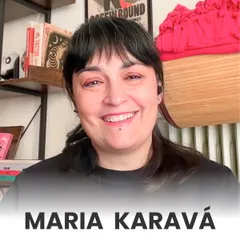
Front-end developer and animator at Freelance
Maria Karavá is a front-end developer and animator who works with Webflow.
Maria Karavá is a front-end developer and animator in Greece. Her background is in design, animation and 3D, and she has been in Webflow for a long time. She is a mentor at Flux Academy and one of the first members of Floxies. She warned me she goes off topic easily. She did, and it was a lot of fun.
Not a people pleaser
Her LinkedIn title says front-end developer, so I asked why she doesn’t do much design.
Honestly, I don’t like to please people. And design is about pleasing people and be like editing yourself and stuff.
She only designs for people who trust her and like her style. I know the feeling. Technical work is simpler, because it either works or it doesn’t. Her longest project is her sister’s e-commerce site.
Literally every year there’s a new iteration of the project, never published.
To be fair, her sister had a baby, so they paused for a year and a half.
Animation, and the web
Animation is her focus now. She knows After Effects, and she is diving into Rive and Spline.
I realized I had probably more animation clients than web development clients in the years.
She would rather do the build and the animation both. For GSAP or CSS animation, the structure is important, so she needs to be able to change it. Her latest client asked for GSAP on a WordPress site. Rive made more sense, so she set it up in Webflow to show their developers how. It was responsive and very light.
People that just come from animation, not understanding web, they might be amazing, but sometimes they won’t be able to do a good job for the web.
She usually works as a contractor for an agency, so she rarely deals with the client directly. That is her favourite part. She likes busy, but not too busy. A deadline keeps her going, but she still needs her nap.
Do what you enjoy
I asked if people should specialise.
I think people should do what makes them not want to jump out the window.
She doesn’t enjoy SEO, content or APIs.
It’s like pulling teeth.
She knows she could learn them. She would rather find someone who loves that part, learn enough to guide them, and hand it over. She doesn’t think a niche is something you decide.
I think you kind of like you find your niche through doing stuff.
On the web you can always pivot. Notice what kind of work keeps coming back.
It’s a double edged sword, no? Like if you niche and you cannot find clients there, you’re stuck.
A generalist who can’t do everything well is stuck too. I have felt the pressure to niche down for a long time. But Webflow in Finland is already a small niche. And there are clients for generalists too. Some need one person who knows three specific things.
Communities and meeting up
Maria recommends Floxies, a community mostly of women in tech, UX and Webflow. She misses things like the Global Open House. It is how she met most of the people she knows around Webflow. Communities take a lot of work, and they need someone who keeps them going.
It’s this weird situation where it’s almost like fame. You need to show up.
She can’t network. She has fun at events and talks about work later, when they help each other on a project. I’m not a networker either. There are only about four Webflow people in Greece that she knows of. She met the one she knows personally at Webflow Conf, not in Greece. In Finland, Félix Meens arranged a meetup, and three of us showed up.
I think it needs to be kind of built up first so then you’re excited to go and see the people.
Once she posted that she would be in Milan on a Saturday. People came from Rome and Tuscany, and the day went from coffee to an Eritrean restaurant. She speaks Greek, English, Italian and Spanish. She did Welsh on Duolingo every morning, just for fun. She has almost never had a Greek client. Her clients come from being active in international communities. I hear that from many guests. I have to update my English site.
Conf and the wishlist
This year was her fourth Webflow Conf in a row.
I live alone, I work alone, I don’t have a community here. So, other people go to the beach, I go to confs.
She was in a lot of the betas, so she already knew most of the news. Her top wish is e-commerce. She loves it, and she hopes the new CMS lets Webflow rebuild it.
How e-commerce and Webflow is built, it’s old, it’s clunky.
E-commerce is one of my biggest wishes too. In Finland, people expect local payment options like Klarna and bank transfers, and Stripe and PayPal don’t offer them. She is not a big AI fan. But she likes AI that fills in the boring parts.
The one that takes up the boring and fills up the gaps.
She likes Client-First and spacers, and keeps her CSS lean. She thinks Lumos is a bit too complicated, though she hasn’t really used it.
I’m judging you by the framework.
For 3D on the web, she says to start with Spline. If you make a model in Blender, import it into Spline. The code route is for the few people who are great at it.
Use the correct tool for the job and the easiest to implement.
Her newest passion is ceramics. Three hours a week, phone off.
And I was like, I don’t know. The clay will tell me.
I’d encourage everybody to have an off-screen hobby. I went to a woodworking class the day before. I’m quite bad at it, and that doesn’t matter. It washes your brain from everything you see online, and an idea might even come back into your work.
Full transcript
Read the full transcript
Maria Karavá: I think people should do what makes them not want to jump out the window. I was in a lot of the betas so I already kind of knew what was going to be announced
Janne Parri: Client-First, I think that it needs some sort of rebranding
Maria Karavá: But honestly, I don't like to please people.
Janne Parri: Okay, Maria. So you have a strong creative background, but in LinkedIn, your title says front end developer. So do you do like any design work nowadays? And why is that?
Maria Karavá: I do a little bit, but honestly, I don't like to please people. And design is about pleasing people and be like editing yourself and stuff. So I'm not a good match, although my background is in that. So the times I do design, it's with people like that I know that they trust me, they like my style, like they give me the option to do whatever I want. So it's as simple as that. I'm not like that much of a people pleaser, I guess.
Janne Parri: Yeah, yeah. I feel that many people like have this dream of becoming some sort of creative or creator and doing creative stuff for people. But I kind of have the same experience that it is usually like pleasing people and it's so much simpler to do something technical because it either works or it doesn't. So yeah, what kind of works or projects do you have going on nowadays?
Maria Karavá: In that many things, I have a virtual project with my sister trying to set up her e-commerce. It was the first thing I did, it will probably be last thing I will keep doing until I die.
Janne Parri: Have heard about this project before in some former podcast episodes and I was planning or wondering if I should ask about it but I thought that might not be like cool thing to bring up the...
Maria Karavá: It's completely fine. Literally every year there's a new iteration of the project, never published. The client is not strict enough. And I'm like,
Janne Parri: Okay, so could you give us an... Yeah.
Maria Karavá: Give me content, let's do this. Literally me and my sister yesterday, like every day, you know, like chasing her down to like give me stuff to do that.
Janne Parri: Okay, could you give us a bit more detailed update on this project? So what platform are you like using? And do you have a deadline?
Maria Karavá: Oh, webflow. A webflow. A webflow.
Maria Karavá: Obviously, A webflower here. With the love for the platform, guess. But I've been in the platform for so long now that I feel it's part of me, you know? So what can I do? I need them to fix a couple of things, but we'll do it. What else? The project is still the same. So... To be fair, my sister had a kid, so we took like a year, a year and a half for not working. So now we're trying to get back to it. Like, you know, come on, like I need to project. Come on, woman. But also because I don't want to think about it because again, not great. It's not that I'm not great in design. Well, I'm not great. I'm good, but I don't enjoy design because it's again, even if you don't have to.
Maria Karavá: Please the client, you kind of still need to please people looking at it, right? And you see my things around me, they're all kind of like not mainstream. So I'm like, I struggle with that. I will do my thing, you know?
Janne Parri: Yeah, it's sometimes hard to do something normal and it's the thing with all clients that you design something awesome and then they are like, is a bit too much. Could we do something a little less bold maybe? Okay. We're already talking about your sister. So probably we should do little intros. So my name is Janne Parri. I'm a general Webflow dude from Finland and also your host today. And with me today, all the way on the other side of Europe on the southern side is Maria Karavá. So Maria, I know that you are known to be an active community member on several Webflow related communities. You are also a
Janne Parri: Mentor in Flux Academy and you have your freelance business going. So besides your sister's projects what keeps you busy and maybe also what gets you excited nowadays work-wise.
Maria Karavá: So part of my background is animation and I let it be. So currently that's my focus. I find that animation always excited me. That's why I started animation. So currently I'm in the situation where I'm trying to get good with all the new tools we have ⁓ for web animations. Because why not leverage what I know I can do? So I'm trying to dive into Rive. Okay, after Effects, I got that, I'm good. A little bit more of Spline. Again, I did study 3D, so I would like to kind of leverage that also at some point. So I'm like in that situation trying Hana, like...
Maria Karavá: And also create, I realized I had probably more animation clients than web development clients in the years, which I did not realize until I actually started collecting them. Was like, Ooh, that tells me something. Let's go. And actually it gets me very excited. Like I can spend so many hours if I'm animating something. It my calling? We'll find out maybe next year I'll change again. I'm self-diagnosed ADHD, probably not wrong
Janne Parri: That's, that is, that is beautiful. Yeah, that is, that is awesome when you kind of find something that you really, really like, and, you can spend like hours doing, but I'm curious, are you like, able to do like both, like the development and all the three D assets, or do you find that you you have projects that you kind of have to like choose one or the other and let someone else do the other part.
Maria Karavá: Well, ideally I would like to do both because I get annoyed when I see other people's builds. ⁓ You know, ⁓ I want to change everything and then something is like, and honestly, if you do animation like GSAP or CSS animation, the structure is important. So you kind of need to be either give the, get... My brain forgot the word right now. But be able to, they allow you to actually edit the structure and things to make it work for animations to work or build it myself. Because I've seen so many people struggle with animations where if you reorder things and restructure how they're set up, the animation will work. All your issues are going to be solved by rethinking like the HTML.
Maria Karavá: So I don't know if that answers the question. It's not tracked a little bit, but yeah. Also, I like to be not super busy. I to be busy enough, but not.
Janne Parri: Like to be busy. I believe that's the first time I've heard that someone likes to be busy, but that's cool. Okay, so.
Maria Karavá: No, no, no, I don't like to be too busy. I like to be a little bit busy, so I'm not lazy. But I don't want to be super busy, you know, like working all the time or like I can cannot like work the projects or have time to learn stuff. Like I need a little bit of. OK, chill, you know, like. Yes.
Janne Parri: Yeah, yeah, yeah, that clears it out. You need a little bit of pressure, but too much is of course too much. So yeah.
Maria Karavá: Yes. I need the pressure of you know we have a deadline, we have to do this thing because it keeps gets me going but if it's too much I'm like give me a break like I'm a Drenian I have my I need my nap you know I need to like breathe so
Janne Parri: Yeah, back to the GSAP and 3D ⁓ stuff. Yeah, ⁓ with GSAP ⁓ and let's say Webflow, it's quite clear it helps if one brain is doing ⁓ both of those, but maybe with Spline or something else, ⁓ can kind of alter just the 3D assets and embed it in Webflow. But I gotta say like Spline and Rive, they are on my to-do list. Well, I do not have a background in 3D, but I feel that know them somehow to do at least basic stuff. But I kind of find it hard to find like time for that.
Maria Karavá: It's fine, you know me now.
Janne Parri: And yeah, yeah. I feel
Maria Karavá: Do the other stuff.
Janne Parri: Like quite many of us has that problem that there is so many platforms and you started that you are learning all the stuff like all the new and exciting platforms that I feel that some of us feel quite a big pressure to learn everything and sometimes we like to just have one good platform. You get what I'm like saying? You?
Maria Karavá: Absolutely. But I think the difference is I'm trying to just do animation most of the time and not do everything. I don't like, I like to know how to do everything because well, helps, but I prefer to do smaller projects that are very like more specific. So it's more exciting to me, you know, like, and I don't, if it drags too much again, so that not a DT, I get bored. So smaller things, tight, maybe a little bit tighter deadlines or collaboration with people helps me because they can stop me also from going like overthinking things or overcomplicating them, you know, like I like this.
Maria Karavá: Hey, you set up your project, let's go in, let's see how we can make, I don't know, this animation work. Like my latest animation client, was a background for some sections. And it was supposed to be in WordPress, which it didn't matter to me. The initial ask was for G-Sub. But it did not make sense. This app did not make sense for the specific project. So we ended up with Rive. And I was like, okay, guys, I think Rive is a better option. I implemented it in Webflow to show them the setup because it was important how you would implement that thing for the web. Obviously, I don't know how to do WordPress. I don't want to. Probably I do
Maria Karavá: Know how to because I know it's the amount of success. But I don't want to get there, you know, I don't want to set up project for you and it's easier to do it in Webflow. So I set up everything. I was like, check my CSS. If you set everything the way I set them, it's going to be responsive. It's going to look amazing. It's going to be like on point and it was super lightweight. So then it was like, it was done, you know? So that's why I'm like, yeah, you know, it's not a one answer kind of thing. Like sometimes
Maria Karavá: You will need to be able to do that. Also, I think some
Maria Karavá: People that just come from animation, not understanding web, they might be amazing, but sometimes they won't be able to do a good job for the web.
Janne Parri: Yeah, yeah, that is, that's kind of like a challenge. So you kind of have to know both. And, even if you know a little bit of animation, it's easy to, fall into like just putting some like a simple assets on one place. But if you kind of know bit more about both, you can like, you can like imagine or design all this more creative things, not just like putting something on a background or embedding in one place. And yeah, it's sometimes same with like just web design. You kind of have to know what you are capable of in order to actually do something cool. So how do you, how do you like
Janne Parri: This might be a weird, like open-ended question, but how do you like manage that with your clients? Because there are probably usually like some sort of website or foundation already being created and you add the animation and you might want to do something that affects everything else and so on. So do you bump into that problem or challenge? Any time.
Maria Karavá: In case it depends... Usually I'll be contacted by not directly the client. It will be maybe an agency, you know? So I will be like a contractor. So I have nothing to do with the clients. That's my favorite part. Again, it's the people pleasing type of thing. So if you have a good PM or the creative director or whoever is in charge of also communicating with the client, they might be able to give them examples and ideas or suggestions. Sometimes they have very clear visions of what they want with like things you can optimize. So it will depend on how open-ended it is, you know? Some people will be like, I want to add something. Okay.
Maria Karavá: That's a little bit top-end it maybe for me. I like to have like a direction and then I can add like some flair, add like the proper maybe timing, maybe have an idea and be like what about you know and that it's easier to build up, it's easier to remove if needed, it's easier to anything.
Janne Parri: That is, that is definitely a challenge for many of us. So just like emphasizing that usually those things like affect like many different, well, maybe people, many different parts of the project, but it's good if you have a team and a project that like, is open for. Changing kind of like everything, but we have talked about these animation projects. So I could ask you that is kind of quite special, specialized thing to do. Of course you can do all sorts of animations, but I'm curious. What do you think of this, age old question should people, say, should webflow folks or web designers specialize?
Janne Parri: Or be more like generalists know a little bit of everything.
Maria Karavá: I think people should do what makes them not want to jump out the window.
Janne Parri: That's one way to put it.
Maria Karavá: Don't enjoy SEO stuff. I don't enjoy content. Literally, it's like pulling teeth. I really don't want to do that. I don't want to learn how to do APIs. Can I do it? Probably. Can I learn it? Yes, I know I'm smart enough. Do I find it extremely boring? Also, yes. So why would I have to do that? I prefer to find someone that is excited about doing that, give that part of the job there, and I can do the things that make me have fun and enjoy the work. Now, obviously, sometimes you will have to do it, but it also has to do with how good can I be on everything? I can't. I don't think anyone can be amazing on everything. If they do, my God, good for you, but I'm not that person.
Maria Karavá: Choose your battles, you know? Learn how to have more idea, how things work so you can guide the person that will help you. Set up the best way possible and then call the API guy and be like, hey, connect this, go. Do your thing, you know?
Janne Parri: Yeah, yeah, I totally agree.
Maria Karavá: Because I don't know if you know Pierre, but he does a lot of this type of things. And he enjoys it. It's like a puzzle. And I would probably enjoy that part of the work, that it's a puzzle and solve the connections and things. I like that. But on the other hand, like, you know what? I would do it for a couple of projects and I would be like, yeah, and now I know how to do this, go away. I'm not enjoying it. He does it's his thing it's his amazing thing so
Janne Parri: Yeah, yeah. And as, I kind of said before, it's great when you find something like that. Maybe the problem is that people are like thinking this to like, functionally, or maybe like thinking that where I could get the most money out of. So maybe one should think it more like what you said, find what you like and then specialize in that. But if you're thinking that, okay, the classic example, dentists websites, and let's say SEO for those, and you're thinking that, okay, this is gonna be a very profitable niche, that might be a wrong way to think of it, or would you agree?
Maria Karavá: I don't think it's something you have to decide honestly. I think you kind of like you find your niche through doing stuff. If you make it is like deciding what you're going to study in the university. Yes, you have to obviously make take a decision and like be I'm gonna be I don't know a dentist since you mentioned it and
Maria Karavá: Obviously you invest a lot more when you do that. But you should be able, especially on the web, to pivot. Like, yes, I tried this thing, it doesn't work out. Or I'm not good enough. Or I'm not excited enough to get good enough. Maybe I like doing everything. Maybe I hate it. I realize that I keep doing kind of similar work. So people, get more work of that kind because obviously I like it or maybe I don't like it and I should stop because I keep getting the same type of clients and work that I don't want. But because I keep doing that, I'm like stuck in that loop.
Maria Karavá: So I think it's more organic and like listening to yourself and be like, and obviously knowing how to do most things, it will give the opportunity to get like projects when you cannot niche or like. It's a double edged sword, no? Like if you niche and you cannot find clients there, you're stuck. If you want to be a generalist, but also you cannot do everything well, you're also kind of stuck because you're not getting better. You're not providing better service. So you need to like see how it's going and adjust.
Janne Parri: Yeah, you're dropping some wisdom right here. So maybe again. I wouldn't say so.
Maria Karavá: I'm old. Honestly, I'm one of the oldest people in the space.
Janne Parri: I'm not that sure about that, but, again,
Maria Karavá: I know I don't look it, but I am.
Janne Parri: Again, the problem that people might have is that they go on YouTube and everybody says that you should niche. And then there is a pressure to do some sort of decision and not like just try out something. I'll look where it leads you. So I actually think myself. And I, for the longest time I have had this pressure to niche down a bit more, but I haven't, but of course I do kind of already have a niche. I do Webflow sites. I live in Finland, so that is quite small niche already. And yeah, maybe we could, we all could ease a bit on that and let the niche find us if.
Janne Parri: If one should appear.
Maria Karavá: You said, we tend to be missed out anyway somehow. Like if I'm Greek and I want to work only with Greek clients, I'm already like limited. So I cannot be so picky. If I work with the world, obviously then I can like start narrowing down the things, the projects, whatever I want to take. If I go animation or whatever other part of web development I decide, but become better and I show more work of that and people trust me because I'm good, I'm fast, whatever. Why not? I think a great example is Jeff McAvoy, the Rive guy.
Maria Karavá: That he did a lot of rive he works for rive now which makes sense he was very focused on that he was working on it a lot you know sometimes things will take you where you need to be taken and that's life like you cannot control anything anyway so
Janne Parri: There are kind of like clients for generalists and specialists too. You specialize, of course, you usually find bigger projects with bigger budgets that have the resources to allocate the budget throughout all the specific things for all the specialists. But that doesn't necessarily mean that you should like to or everybody should just be specialists. So there might be a good gap for certain type of generalists who can do like everything. Some people are in the need of that one guy who knows
Janne Parri: Let's say three specific things. And that way he's kind of the specialized generalist for that role. Yeah, this is going quite on a abstract level, but that's fine. Okay. So let's move on to the community topic. So I know that you have been quite active on communities. So are you still like active member in which communities and would you recommend any of those to the listeners?
Maria Karavá: So for my girlies, my women identifying people, but also men supporters, Fluxes, with this Cloudy Cafe started, I think was 2021, 2020? I can't remember, it was so long ago. Which is a very uplifting, nice, very active community, mostly women in tech and UX and Webflow. But... We have all supporters. It's a really nice place to be in, if you're admitted. I don't know if you heard of ACES, I kind of have also this, I mean that Webflow started initiative in Webflow, which is also nice. Less community, more developer feedback.
Maria Karavá: It's also nice. I'm sad to see a lot of things that kind of like dropped off. Cause when I entered, we had global open house. We had, at some point, the flow party was there. Now a lot of this are not there. The global open house. It was how I ended up meeting most of the people I know in the and around workflow. And it's sad that it's not happening anymore. Also, it's not a pandemic though. People have lives. So I guess that's also grew a lot. It's things shifted, I think.
Janne Parri: What's going on with the flow party? Ain't that up and running still?
Maria Karavá: The discourse server still exists. The thing is, communities take a lot of work. There is a reason why, Webflow has community people. Mary Feedly, for example, Claudia, if Claudia was not as active as she is on floxes, I don't know how floxes would have survived. It needs like that one constant that kind of like drives you, but it's a lot of work. You need to find things, you need to keep people engaged. It's... I know. I love being in communities. I love not being the one heading the community.
Janne Parri: Is it Claudia at Zapier doing kind of like the same thing? So yeah, that's awesome. And I know the feeling. I'm usually the one who gets excited about the community, logs in and total silence after the first introduction. That's on me. I know that there's like big opportunities there and one could help people and meet people. So do you think that...
Janne Parri: Everybody should be more active on communities and how could we how could we like make the community better from the grassroots? That small kind of question.
Maria Karavá: Honestly, I don't know. The thing is I'm not that active in communities anymore. Even for me, I will lurk, but the more communities grow, either you're always there and very active, or then you kind of fade away. There are people, they don't know me in Fluxies anymore. ⁓ and I'm like one of the first probably 10 people that joined. So it's like, it's this weird situation where it's almost like fame. You need to show up. It's great to be part of it, but to be included fully, you need to be active. You need to help people. And my take on communities is you need to do it because it comes from inside and something you want to do. Because if you do it for cloud, if you do it for, I don't know, the connections, it doesn't work that well. It's the more genuine.
Maria Karavá: It is the more genuine connections you'll get. It's like life.
Janne Parri: Yeah, yeah, it's kind of, yeah, and it's the same thing with the word networking. So people talk about networking, which is a kind of cold word. How about just meeting people and having a good time? And maybe you find friends, maybe at some point those friends can help you and you definitely can probably help them at some point. Yeah, I totally get what you're saying. Where are you going to add to that?
Maria Karavá: No, I think it also has to do with the person. Again, nothing is black or white at end of the day. Like, I cannot network. If I try to talk to you, networkingly, I like... It's kind of fake, it's not me, you know? Like, every Webflow Conf I've been, every Flowfest, I'm like a, aaaayyyy! Kind of person you know like if I vibe I vibe we spend time we have drinks whatever I'm probably not talking work ever you will see me talking about work later on when we help each other on a project when we discuss things like this but i will not be like hey this is my i don't know my card webflow developer or something i tried to do it and it comes out of my mouth and it feels so pushy and weird i kind of hate it you know but there are other people they're amazing at it and
Maria Karavá: Good for them honestly like and that's why we have networking events because that's the point to meet other people in your field to get connections for work but yeah not all of us are like that so
Janne Parri: Yeah, I'm totally with you. I, there's not a networker inside me. It's, feels weird. And yeah, I would say the majority of us is that way. Of course, if you have a role and you kind of like practice that might get easier, but usually it's a bit bushy, but that said, about communities still do you have a active Webflow community in Greece? You
Maria Karavá: Another four people here.
Maria Karavá: I only know one personally that we met. And actually we haven't managed to meet here. We met at the Webflow Conf. Which is wild. We've never met in Greece. It's insane. We don't live that far away from each other. We never met in Greece. Which is like crazy. You know? So.
Janne Parri: Yeah, we kind of have the same problem in here in Finland. So I know that there are about six like Webflow partners in Finland. And I know. Yeah, Felix. Yeah.
Maria Karavá: Felix? Felix is there, no?
Janne Parri: Yeah, he is. And he's been on this podcast, too. So Felix is.
Maria Karavá: How it was then? Can you tell?
Janne Parri: Felix is, yeah, Felix is the one I know personally, but there are others and we tried to arrange this live meetup or actually Felix was the one arranging that, but the show up was just me, Felix and one other guy. So that was not great. Although there were like, people who were like signed up for the event just didn't show up. So maybe we could have done more to advertise that, but yeah, it's hard to get people to like actual events, like in real life physical location.
Maria Karavá: I think... So I have a group of friends that would travel together. We will get Airbnbs and stay together, live together. And the thing is though, this happened after we spent way too much time online together. I think it needs to be kind of built up first so then you're excited to go and see the people. Because otherwise like, people will go, it's fine, you know, and then no one appears. I think it's easier if you have like a day a week, a day a month where you're like, okay,
Maria Karavá: At this time we meet. And probably in the beginning, and this is also how Flux is started. In the beginning it was like three of us, you know, and people will fluctuate and there will be 20, there will be five, I don't know, like again, I haven't been there for so long, a shame. But now there more events happening with different like parts of the world, time zones. Smaller like things that you can join and they grew up organically because of different interests of people but i do believe like consistency is a big thing like every monday i
Maria Karavá: Know i have a call with those friends like you know always if i'm not there i'm somewhere like something else came with it's fine obviously but
Janne Parri: Yeah, that's actually a
Janne Parri: Quite good idea. Even maybe not a online meeting, but just like start a Slack channel or discord or something and build the, some sort of foundation before asking people to come to an actual location. Of course there might be another way if you have some sort of like, key person of influence, some sort of like talker, an actual like interesting program in the events, then people might just come after that. But I do not feel that is the like community of way. So I like the way you, where you like said that there should be some sort of foundation and consistency
Maria Karavá: But now I just remembered something. Also in Proplu things also work. So a couple of years ago, I think it was 2023, I wanted to travel back to Milan. I studied there. So I was like, haven't been there in a while. I wanted to have a quick trip. And I just sent like in the FLEX community and oh, I'm also in FLEX.
Maria Karavá: And I sent like, I told people, I said on Twitter, I'm gonna be in Milan. Whoever wants to meet, let's meet up. Drinks, it was like a casual thing. Let's grab a coffee and then we go from. Whatever happens. So there were a couple of people that were in the area, a of people that traveled there. There was a girl from Rome that she came and left the same day. Another one from Tuscany, she came up, spent the night like we did. Federico was already there. So it was this random thing where we met in the park, had a coffee, and then some of us ended up 14 hours later still having drinks.
Maria Karavá: And went through the park coffee and drinks because Italy to having lunch to some people leaving because they had things to do. We went for another coffee. We walked through Milan. Went somewhere else cocktails and it was like this multi-layer happening. And it was, Hey, what do you want to do now? We ended up in an Eritrean restaurant which was amazing. It was very chill. It was nothing. It was like, hi guys, I'm gonna be there. It's a Saturday. Who wants to come? And that also takes away a little bit of the pressure of like, I need to be there or SVP or you're booking something. I was like,
Maria Karavá: Let's go grab a beer.
Janne Parri: Yeah, I'm gonna be
Janne Parri: There drinking, whether you come or not, so...
Maria Karavá: If it's something you can do it by yourself, one person will probably... I knew that a couple of people were coming anyway. So, okay, let's go. Will it last three hours? Fine. Will it last forever? Let's go.
Janne Parri: Yeah, that's a beautiful story. I hope that happens all around the world, more often than we think. But you mentioned Milan and that you studied there and I know that you speak quite many languages. So could you, could you just do a casual list of the languages you speak and maybe also the languages you like use? In your work.
Maria Karavá: So obviously I speak Greek, native. Obviously I'm speaking English, so English. Studied in Italy. So I'm also fluent, although sometimes a little bit rusty since I don't speak it anymore. I... I did a three year school in Italian, so I'm confident on my Italian. And also I learned Spanish at some point and then I ended up meeting also like a Spanish guy and I spent seven years with him. He was fluent in Greek, never had to speak Spanish, but his family, his mom from the South. If the moment I could understand her, communicate, I was like, let's Fluency, baby. So it was like, and I tend to kind of
Maria Karavá: I like languages. I realized after a long time in my life that I kind of love learning them. So I've studied many languages. I understand a little bit of Welsh. Thank you duolingo. A little bit of Dutch. Now I'm doing Czech because I'm going for a trip. Was like, okay, I need to a little bit like pick five words or something. Find it interesting. It's fun. Then my area has like a specific dialect that is more close to different language than dialect of Greek. So I speak a little bit of JavaScript.
Janne Parri: Yeah, those languages. Yeah. But there's a little less vocabulary in those languages. And yeah, do you feel that it kind of helps you with your business or freelancing stuff, or do you just end up using English or Greece? There's a Greek customer client.
Maria Karavá: Never had like most of my clients were English speaking because mostly they're like mixed teams but it is it's helpful because sometimes you some will struggle find the words I'm like okay say it say it in Italian say it in Spanish I will understand it's fine So it makes it also easier to kind of joke. Like in Flux, we're also people from different places or, you know, Francesco, Italian. We have our manager, she's Czech, but now she's in Spain. We have Stan, he's in Spain. So it's so kind of fun often to throw like Francesco's birthdays today, for example. And
Maria Karavá: Yes, I just saw it. Yes. So
Maria Karavá: I did send him like wishes in both English and Italian. Because why not you know it's like so if ever it's I was working with the friends like send me the phone to do the thing and he responded to me in Italian he was very confused I think he was speaking with people in Italian I was like dude it's fine he was like oops I was like yeah from all the people in the group I'm the one you can do that it's fine you know like
Maria Karavá: I did not even flinch, you know, was like, okay, cool. I know what you're saying, like, you know, it's like easy. It makes life easier. And I think it also helps you connect with people a little bit more. I think that's probably the part, yeah.
Janne Parri: Even if you like just you use English, but if the client like knows that you know at least a little bit of their native language, it kind of brings in some like maybe not trust, but like comfort that there might if I need to say something in that language that could be understood. Don't you think?
Maria Karavá: Think also a little bit of the culture. Like you can understand maybe how people say things. Like are they joking? Are they serious? Like if you know the vibe, if obviously you need to be more involved in the language. You can pick if someone is joking or if the joke they're making is translated and it doesn't land as it should but you know the thinking behind it because learning languages is not like speaking the words, you know? It's the context. It's like how people use things, how they see things. Takes a... It's very important. Which is also reversing, right? Like me and Turkish people have this friend from Romania, Djurdjana. We...
Maria Karavá: We share so much in common because of our location, because of Balkans, because of history, that even if our languages are different, well, we have a lot of things in common language-wise also. So it's a different way of connecting with them because it's more localized, more like, it gets closer. But still, we all speak in English all the time. It's a very, I love languages. You
Janne Parri: Yeah, yeah it's a fascinating topic and of course nowadays like AI makes it easier to translate everything, but I believe that there is still value on actually learning yeah, actually learning the language is just for you and for your mind and the cultural stuff too that is totally different when you can like actually speak the language and you also also like communicate that you like find it valuable to communicate with the same language than the other person. So it feels a bit like cheating if you use some sort of translation tool, if you know what I mean.
Maria Karavá: Yeah, it does but also I think it's also the part like translating is just translating. You don't know if like a culture or people from a specific place are more reserved. So you cannot swear for example or other people are more open to that and they don't care. The Spanish are very like bad mouth like everything and it doesn't matter because it's not important like they... I don't know maybe Americans or someone else would be like they're cussing all the time or whatever but for the Spanish is like literally means nothing unless you're seriously like cursing at someone.
Maria Karavá: So you adjust also the way you speak in English when you know like, okay, I don't know. It's like traveling, you know? If you go to India, you're not going to go and search for a beef burger kind of thing.
Maria Karavá: It's this type of thing, you know? It's like you adjust to the situation.
Janne Parri: Yeah, and by the way, you can curse on this podcast if you want. Go ahead.
Maria Karavá: It's morning, I'm not pissed yet. Was I controlling myself? That was surprising.
Janne Parri: But yeah, that reminds me that it's so, I find it too that I curse way more when I'm like tired, which means afternoon and in the evening. So morning, I'm just so delicate with my words, but in the afternoon there might be some slips. But we're going to get back to the language, actually I've... One little detail I have to ask. Do you have a duolingo streak going on and on which day are you at?
Maria Karavá: Well, I had a fantastic one with Welsh that I lost in Spain because I couldn't get internet on my phone. The wifi was not working. Which was like 500 something. If it wasn't for that tiny like two days that I couldn't get connected, I think it would have been like a few years in a row.
Janne Parri: That's quite long.
Maria Karavá: Yeah, it was annoying that I lost the streak. Right now I'm like at four days. I just restarted just for the trip to Prague. So. But I had I was very serious with my Welsh every day. Would mean like with my morning coffee, I would do Welsh and it was just for fun. Was not nothing like it was not important to me to learn the language. It was just fun and to like. Clear my head from all the Latin origin languages, I wanted something completely different. And Wells is amazing for that.
Janne Parri: So you just checked a list of non-Latin related languages and picked one?
Maria Karavá: To be fair I tried first Irish I opened it and then I closed it because I was like no I was scared like literally opened to a lingo first thing I was like Gaelic? No thank you. Now we'll probably go back to it because Wels has like similar things. Wels was I don't know if it was also a little bit influenced by Lord of the Rings and Elvish and like I don't know if that was an influence that took part. Also, I'm a huge Doctor Who fan. I want to go to Cardiff at some point. So I think it was also like a little bit of cultural something, but also I found it kind of fun. I don't think it's a very difficult language also.
Maria Karavá: Obviously I haven't been there, so... But I found it fun, it's interesting, I love how weird they are. I love how different it is from English, like...
Janne Parri: Yeah, yeah, that's...
Maria Karavá: I should get back to wealth. I got quite advanced.
Maria Karavá: I cannot go back to wealth now because I stopped for a couple of years and I was too good and I have to go back because I don't remember.
Janne Parri: Yeah. Ler re learn everything. Yeah. But that is like fascinating. The duolingo streak, how it like hooks you. And I broke one quite long streak, probably something like 600 days. And yeah, just because I like got frustrated how tight grip the duolingo had of me. Like it it was becoming a burden. But now I'm learning at this time I'm trying to learn Spanish. I'm yeah,
Maria Karavá: How you can do it.
Janne Parri: I'm probably 200 days in. My Spanish is quite simple at this point. Donde esta la biblioteca. And that's about it.
Maria Karavá: To right, to the right!
Janne Parri: Yeah, no idea. Do you see? Yeah.
Maria Karavá: To the right, to the right. Actually, I did it wrong. To right.
Janne Parri: That's why I got confused.
Maria Karavá: It would be very funny if I confused my left and right now and translated it wrong.
Janne Parri: But yeah, it's, it is fascinating. And you kind of like, as you mentioned, you, when you learn languages, you kind of learn more than just the words and the grammar, you kind of learn the culture. And especially if you get to use that in a native like country, or you go to that place where it's spoken, then you get like the most out of it. But kind of relating to this topic, I want to take it back a bit to the website stuff and freelancing. So, I'm trying to get more international clients and, this podcast is kind of one part of it, but would you have any advice for people wanting to break from the local borders and get more
Janne Parri: More international clients.
Maria Karavá: I don't think I'm the best person because I don't think I ever had a Greek client.
Janne Parri: Well that might be your advice just... Yeah, yeah.
Maria Karavá: My sister doesn't count, obviously. But yeah, I don't think I... I think it has to do also where you're more active. Like if you're more active on an international community kind of sense or I don't know, contra or something. You're exposed to more people from the world. Like I have no connections, almost no connections in Greece, like work wise. So... That's probably part of it. I don't know. Sorry.
Janne Parri: That is actually fascinating because I've asked this question from a couple of guests and they all kind of have the same answer that I actually do not have local clients. So I do not have that problem. Yeah, they have been more global. They have just started their business with this. International mindset or they have already been in some sort of community or group which contains people from all around the world and they're just probably using English and working they are working in this English speaking Well sphere bubble community, whatever so they kind of do not have that problem but yeah
Maria Karavá: I just realized I did have a Greek client, but it's a very random way of how I found him and he found me. Was following him. He does videos and templates and stuff like that. I used to have his course a long time ago and he launched something and I got the, again, it's like templates for after Effects or something like that. And I did sign up for the lifetime one and went to, the email about it. And I saw it was building Webflow and I found errors.
Maria Karavá: I was like okay guys no no it was like link issues there were a couple of things and I wanted them to know because it was taking us to the staging domain not the actual one yeah so Memberstack was not working stuff like that so I was like hey this thing is not working just like if I why I
Maria Karavá: FYI yes for your information call yeah
Janne Parri: Yeah, for your information. Yeah.
Maria Karavá: And I was like and jokingly in the end I was like if you need any help I'm a Webflow developer let me know and I helped him like fix a couple of things but it was not I did not approach him to sell anything it was literally letting him know that there were a couple of issues that they were important to fix but it was like, he does not work in Greece. He works with foreigners. His company's base is in new York. So it doesn't even count, you know, like my invoice was not in a Greek invoice. So it's still...
Janne Parri: It's an international clients and the project person just happens to be Creek. Yeah.
Maria Karavá: So living in Greece.
Maria Karavá: So it's even that it's not like, you know, I responded to him in English because obviously I don't know if he's a team or it's him, you know? So at some point it's like, do you speak Greek? He's like, yes, let's go. And we had
Maria Karavá: A call in Greek, but it started out in English. So it was a very different experience.
Janne Parri: Yeah, yeah. I'm starting to think
Maria Karavá: So I don't know.
Janne Parri: That, yeah, this is just like a maybe me problem. Obviously I have my site in Finnish. I also have an English site, but I need to update that. For everyone else who is out there thinking of this, just probably obviously need to have your materials, your site in English and then be active. In whatever platform you choose in English and that way you get to see all the conversation and hopefully all the clients all around the world.
Janne Parri: Yeah, okay, there's at least one topic that I'd like to go through.
Maria Karavá: I told you I'm gonna go off topic easy You've been warned
Janne Parri: That these are, I would say that these have been great topics and kind of going again back to Webflow and yeah, you probably watched the Webflow Conf and you were there, right? You were actually there.
Maria Karavá: Fourth in a row. I'm so happy, yeah.
Janne Parri: Fourth in the row, that's amazing. I have been just dreaming of going there, yeah, what was your...
Maria Karavá: I spent all my money on my vlog.
Janne Parri: You're like working your ass off through the year and then spend it all in San Francisco.
Maria Karavá: You know what? I-I-I- I live alone, I work alone, I don't have a community here. I don't have a community in the country. So, in the end of the day, the events like that Webflow Conf, it's a good opportunity for me to meet people, be with people that do the same thing. So, other people go to the beach, I go to confs.
Janne Parri: Yeah, I should do the same to be honest. Last year when there was, or was it the year before that when there was a London event, were thinking with Felix that we might go, but then it was paid and life gets in the way and all those excuses, but yeah, maybe next year. But what was your experience this year?
Maria Karavá: Okay, I knew the things that were coming already
Janne Parri: You heard some spoilers, man.
Maria Karavá: I was in a lot of the betas so I already kind of knew what was going to be announced like... And some... No, one thing I did not know about it was the... How's it called? The variant thing Variant canvas? You know where you have the component like...
Janne Parri: Component canvas.
Maria Karavá: Yes, that one. I don't remember the names. That was, for example, it was a surprise, a very welcome one, but I kind of knew most of the things, you know, it's like, it's the downside of being in the bettas and like, in like these parts of product. There's no surprise. Surprise can be really like the first year, I think the first two years I was like, G-Sub, it was a surprise last year. Which I kind of guessed when they started talking, I was like, they're both G-Sub, they're both G-Sub, they're both G-Sub. You know, were like here when they announced it in San Francisco. But in weblog, were reading you in London, so yeah, we know it's fine. But yeah, so I don't know if I have like, I might know things that they're working on.
Maria Karavá: Although I don't think I do, it's too early. Like after the conf, usually we know what's happening. I know what I'm asking them. Look, complaining, look.
Janne Parri: Yeah, what's your
Janne Parri: Number one wish from Webflow?
Maria Karavá: I will take you back to the niche part now. I realized I love doing e-commerce. I don't know, might have to do with me shopping too much. I enjoy the e-commerce side of things. No,
Janne Parri: Yes. Or your sister's projects?
Maria Karavá: It was funny. I did another thing with a friend in Shopify. The first thing I tried to build before my sisters was an e-commerce. I kind of like it. I don't know. It makes sense. It's something I shop a lot online. Also window shop online if the shop is close to me. So I love e-commerce. I think it's amazing because I can go through everything while laying on my couch or my bed be like, okay, I like this one and then I can go and check it out in real life because I don't like shopping. So and I
Maria Karavá: I got distracted. What was the question?
Janne Parri: The number one wish and you were talking about e-commerce probably some updates for that
Maria Karavá: Yes, e-commerce. Want e-commerce to... Yes, I hope that now with the announcement of the new CMS, like restructure on the whole thing, rebuilding basically, I hope they can leverage the new CMS to use... Because how e-commerce and Webflow is built, it's old, it's clunky, and cannot be updated right now. So it's stuck. It hasn't been updated in like... Five years, I don't know how long, nothing. But also I have no expectation of them creating a new Shopify. If you need Shopify features, go to Shopify. My clients are smaller, they make the products, they want something that works easily but also looks nice, you know? Like this smaller niche of like, Shopify is too much for a lot of clients.
Maria Karavá: And I would like that for like just a quick checkout. Give me leverage of the CMS. Don't separate products. Let me have the fields I need. Let me edit the freaking card button. You know, very basic things that in theory they could, I hope I'm like hope and praying.
Janne Parri: Yeah, I'm hoping to and I have discussed this with actually Felix and e-commerce is one of my biggest wishes for Webflow because it's kind of like missed opportunity because with a couple of updates, quite simple ones, it could be quite viable. And we in Finland, we have a couple of payments options. That are quite mandatory. Every consumer wants to use them. And the Stripe PayPal things do not provide those options. So it's kind of like a
Maria Karavá: Pay of delivery?
Janne Parri: That one too, Klarna is from Sweden, but we use it also. And then just,
Maria Karavá: We have it also now here everywhere.
Janne Parri: Yeah, yeah. And also those like local banks, bank transfers just, but yeah, the stripes and papels do not provide those and it's a huge turn off. So people just basically do not use Webflow e-commerce. Go on.
Maria Karavá: And you know what? E-commerce in Greece I could sell that. Right now it's still a limitation. Localization does not work. Again, it has to do with the old
Janne Parri: Hope you enjoyed that.
Maria Karavá: Structure. You know that. EU, it's a requirement. Like two languages, your language plus English. Like if you get paid from the European whatever thing is to do your website, you have to have both languages. Accessibility has to be there. So it's like, come on. I could have like started selling so many I have a friend also in Cyprus she has an e-commerce like my two things in Greece are e-commerce it's not the price is not extreme they get with the editor they could edit things they you
Janne Parri: But I'm not holding my breath. They haven't updated that and there's other platforms that do well, like Spotify, Shopify, ecommerce is obviously their thing.
Maria Karavá: To be fair I always call Shopify Spotify and Spotify Shopify
Maria Karavá: I'm sorry whoever did those two names
Janne Parri: There might be some sort of some sort of benefit that they both get when one is mentioned both are like thoughts but yeah again e-commerce is a is a lost opportunity for webflow in my opinion but back to the like wishlist items i feel that in webflowconf we got like you mentioned the cms updates and there were some other limits I believe and some quite handy small AI things too so although you weren't surprised by the announcement were you happy with those
Maria Karavá: Well, I'm not a huge AI fan. So yeah, I like AI when it can help me. Like I love the generating items, for example, in CMS. I like filling up content, like the things you would mind, like, because it's more realistic to have like instead of lorem ipsum, for example. ⁓ But otherwise I'm kind of like, as you can see, I have also lot of art from like, have illustrator friends. Have like ⁓ things. So I'm on that side of the web where yeah, like local artists and stuff. ⁓ So I like ⁓ my take on AI. It's a little bit there. Okay, fine. ⁓ You know, it can be a tool, but also like, yeah. ⁓
Janne Parri: And at the start of the workflow conf there was this announcement about the AI builder and everybody was like a little bit cringing that might not be the thing that we most hoped for and that is fair but I believe yeah, go on
Maria Karavá: I think it's for different... I think it's a different audience though. I think it's different audience. Not us. The builder.
Janne Parri: Probably. Yeah. At least for now, the builder that they have right now, it's kind of like this template based thing, but hopefully maybe with all the MCP stuff and maybe lay native AI builder, it could be like, at least somewhat helpful for us to maybe, but I'm actually more.
Maria Karavá: To be fair, more tools, better.
Janne Parri: But I'm actually more like excited about the little things like the alt text generators and the SEO meta title things because I do not like those or doing those. So yeah, hopefully.
Maria Karavá: That one I knew for example, I forgot that it was an artist. Because I
Maria Karavá: Was like, when they were discussing, like we had some product calls, we had a couple of calls with the product team about that. And I was like, yeah, you know what? Even if I can, like alt text I kind of don't mind doing because accessibility things I don't mind doing. Like, I'm like, I'm blind. Now I have lenses on and that's why I can see. But otherwise I'm like, I think I'm considered legally blind without them. So accessibility is a big thing. I was before, this is a newer thing. I was before very like into accessibility. So alt text makes sense to me. I want to do that. Like I like.
Maria Karavá: But SEO my God, yes, please ⁓ fill that up. Like, I don't want to ever think about that. Then that's the thing. Like that's the type of AI I like. The one that takes up the boring and fills up the gaps, you know? So at least it's not empty. So then if you have a specialist, they can do the thing. I disrupted you. Please go on.
Janne Parri: I don't remember what I was saying but...
Maria Karavá: No, the announcements, it was the smaller things that they were announced, like the AI and stuff. Tell me, tell me, let's discuss, let's
Janne Parri: Yeah, I was just rambling on the same question.
Janne Parri: But the one thing about the announcements I would like to ponder with you is the one that you mentioned, the component canvas. Well, I haven't been on a beta and actually that was a surprise for you too. So I'm like excited. It's not like out yet. It has been announced, but I haven't, at least I haven't tried it. But I'm wondering like, will that be a good tool in a, in a way I didn't like suspect anything like that, but it would be quite handy to have a place where you get like handle all the components. What do you think about the feature?
Maria Karavá: So I don't think it will be all components. I think it will be just the variants. So... You know how, so my workflow was I would duplicate, would throw the component in one page, like playground or whatever, like three times. And then the first will be version one, the second will be version two, so you can see. Basically that's what it's going to be. So you can see all your edits separately instead of like switching modes or variants. So it's not going to be a new Figma or a new, like, I don't know,
Maria Karavá: Framer Draw? No, Framer Canvas. Framer canvas actually is quite cool. It's a Figma button framer. So you separate developments. It's kind of nice actually, but irrelevant. It's not going to be that. It's not a design tool. It's more a better visual way to be having like... I think of it as like exploded components. So you can see all the versions of the components in one go, which is fantastic because then you don't have to remember what was happened there or there. I'm really excited for that. Like let's go people. Make it happen.
Janne Parri: Yeah, that is true. Now that I think of it's exactly that. But on top of that, like there's a push towards using more and more components with the component slots and, build a builder role or mode. And I find I have one project going on right now and I have built a bunch of components and the list. The components panel is the list is so long that I find it hard to find anything there. Of course, there's a search field and that, but it's not like optimal. And if you do like many component properties, the list from those properties can be quite long and not that easy to use. So
Janne Parri: I wish that they could also improve that but as he said the component cannabis is very helpful and I wish to see it quite soon.
Maria Karavá: Be nice I think. Also about the components I think it depends on the client. If your client is not planning to build a new page you don't need slots. You create components for your own use case so you can edit things massively, create less things. I like components, I always like that. I also like nesting components. And they were thinking what you can change, you know, like, and now with variants, it can be very complicated, also really nice. It's like the puzzle thing I said before, it's like, think about it, how do you do this? If you can, now you can change the background, which is great, before it was a pain, you can expose it basically, so they can choose like versions.
Janne Parri: Oh yeah, that and CMS item selection, like manual selection, beautiful things. But as you said, it depends on the clients, but also the developer. If the developer just wants to do everything with the world, the components, or they might use some components, heavy framework like Lumos. Of course, usually the aim is to do a system that the clients can then use and build much or more sites and so on. But actually I gotta ask, this is one of my favorite topics, which is quite nuanced about the frameworks. Do you use any of those? Do you have any opinions?
Maria Karavá: Well, when they came out, I found that client First was closer to the way I like to set things up. Obviously, that was like three years ago. Way too many things changed. And I know they're updating the framework. To because like you don't need necessarily all the classes because we have variables now, you know, so it needs to be thought, but I don't like stacking too many classes. That's one of my things. Also, before I went into Webflow, I did learn how to write CSS and HTML properly.
Maria Karavá: And I like to have control and I like to reuse elements. So my CSS tends to be lean and I like to make it as lean as possible. So Client-First, if, and a lot of people, think use it wrong. Can be very lean if you know what you're going for from the beginning. So you reuse things, if something is too different, you create a new class, separate it, things like that. And I like spacers, that's my thing. Now I like spacers because I found also with people editing them, it's easier to be like, you know, I have components with spacers, just throw it in.
Maria Karavá: And they can give the space without messing with the classes or the combo classes. Cause you know what I mean? It's like a head, like you go in and it's like, why this is pink? Why do there is like a margin here? Like don't, you know? So spacers, like you tell them, you know, if you need spacers, I have the small one, I have the big one. Like just throw it in. It's going to be fine. So. So yeah, I'm a simple girl with no stacking and a little bit of fresh dish.
Janne Parri: Yeah, yeah ⁓ Client-First is interesting because it's probably the most used. But now there's now there's more talk about Lumos because it's so technical and it utilizes all the ⁓ features from css. And so on ⁓ go on
Maria Karavá: I think it's a little bit too complicated. The whole point of having Webflow is to have less. You know? Like if I need to add code, if I need to do... And obviously I haven't really used it so if I ever say anything that's completely wrong I'm owning it. And it's like I like things to be as simple as possible. You know, smart, like smart, easy. If I need to try to find where something is edited from, or, this goes for everything, you know, like it's not Lumos necessarily. One example are the defaults that Webflow adds in things. My God, like don't. Like
Maria Karavá: Like the 75 on the right and the bottom why are you doing this to me you know i need to reset it like i like that inclined first because you have the starter which removes all the defaults like if i like with all the advances with custom properties in Webflow, you shouldn't really need to have any embed with code in there, unless you're doing something very specific, like some CSS animation, something more specific that you cannot do. Like, I don't feel like you need that. Like, you know.
Janne Parri: Yeah, yeah, totally and... I believe that quite many
Maria Karavá: What do you think?
Janne Parri: Many people including me agree with that who Moses get towards like quite big sites and like Scalable sites, but if you are doing like one page or that's a total overkill but again, I haven't used it extensively, but there's a lot a lot in there but on the other hand the client-First, I think that it needs some sort of rebranding because of course the name Client-First implies that the client is going to use like the framework and the classes and so on. But I don't think that is a good idea. And nowadays as we talked, the component thing is meant for the clients, the slots and the build mode.
Janne Parri: So maybe the clients should not go and edit the classes. Hopefully. So yeah. But I'm excited about the Client-First update. Hopefully they get it soon. Actually, I saw that there is a Finsweet stream at the end of this month it is the monthly product updates and there was a Client-First logo. So I'm expecting something about the topic because the beta cloneable has been there for a while.
Janne Parri: You can do cool stuff with all the frameworks and without a framework. But this gets people like almost emotional sometimes. So I find it, I find myself coming back to this topic again and again. So yeah.
Maria Karavá: To be fair, I've met people in what's Up conf and I was like, okay, what's your favorite framework? I'm judging you by the framework. Because I think it's like also how you think, you know? Almost like politics. Like, what's your framework? Like, how will you respond to this question? But I think in the end of the day, frameworks make sense if you work with other people. So if I build it, if I maintain it, if no one's adding anything ever, at end of the day, who cares? But if it's in a company with multiple developers, if someone will take over, obviously you need a structure that has documentation and everything. So yeah, use case.
Janne Parri: Yeah, yeah, that's totally true and some people think that Client-First is good just because so many people know that and on the other hand, I talked with well francesco and igor from super saizo and they have their kind of own framework and well they work in japan and everybody that they work with know that framework, but they do that kind of have to like know anything outside of that market. So it makes sense to have their own and they have their own like logic and reasons for that framework. So yeah.
Maria Karavá: Thing if someone can like, I forgot the name, refocus they also have their own way of doing things. In the end of the day you need to be able to get into the documentation, understand how it works and use it. Like obviously we all for our own things will do the one that is easier and makes sense to our like how we think but if you are also too stuck in one framework, you limit yourself. It's almost like a niche. If I only use Mast and I'm looking only for Mast projects, I'm missing. Like, do I have to though? Should I? Maybe yes. Maybe it's enough work that I'm specialized, you know, but maybe it's like, okay. It's...
Maria Karavá: Similar back in the day in school, we would learn 3D Studio Max, Maya, Softimage. You usually select a tool, it's a tool. But in the end of the day, if you know the basics, you should be able to catch up and learn Blender eventually because the principles are there. So people don't get to stack their tools and frameworks and... Be open minded.
Janne Parri: Yeah, yeah, and you can if one has used one framework a long time there's a major benefit checking out the other ones because you can learn a bunch of stuff from those but you mentioned blender and I remember was it your talk with Ran maybe you mentioned that you're learning blender. So how's your blender skills right now?
Maria Karavá: Still kind of there. My brain after I haven't used, so my specialization was Maya. And I was really good with Maya. Really good. Was decently good for something that happened in 2003. A lot of change. And while I haven't used Maya in 20 years, I still have, how's it called? Like, I remember the shortcuts. It's so ingrained in me that it's the thing that's stopping me from actually... Now I go to a point where I start to confuse also a couple of things because I edited also Blender to look like Maya a little bit more. I'm like, I need to use Blender more? No. You know what? It was not Blender. It was 3DS.
Maria Karavá: It was, ⁓ the discussion was three.js, that I want to learn three.js. No, I have not advanced at all.
Janne Parri: Would it be impossible that there was, you were learning both Blender and 3.8s?
Maria Karavá: I learned a trillion things at the same time always no but i remember like the whole blender is always there blender i can pick up though like if i need to because it's 3d i know the principles i can go but i'm fine like i'm not that fast but i already have like some of the shortcuts down you know 3js though
Janne Parri: Yeah, yeah, I haven't, I do not have any experience with three.js, but isn't that more like a JavaScript library and you have to code it, or am I right?
Maria Karavá: Yeah, and that's where my outs coming from. ⁓ Spline is basically... Spline is to three.js what Webflow is to HTML, CSS, and JavaScript. ⁓
Janne Parri: Okay, yeah, beautiful, actually, I was about to ask you if there is a Webflow user who wants to learn maybe 3D, maybe animation, what would you recommend for them to check out or learn software-wise? Not to too...
Maria Karavá: Blender, all the way. Blender all the way, it's free
Maria Karavá: Until, you know what, it's free until you make a million out of your Blender projects or whatever. It's open source, I love open source. It's actually getting really good. Actually it's good, like for the things we need, it's amazing. And. It's like there are trillion tutorials there are so many courses why not like Maya yes I love the tool but honestly if you're not in post-production and VFX if you're not Hollywood type of doing things and pay enough money and make money to pay like I think it's a couple of grand a year
Maria Karavá: Why blender was not really there when i was learning it you know it was but it was like no but blender is fantastic i'm like one of the reasons i want to get better at it's like i can do everything one thing it's missing that it annoys me i will bugger i will annoy them too and probably get it at some point but they had a they will ask the users what they want. I got one of my wishes with blender, which was light binding. I was like, come on. And then they did it next thing. I haven't seen number five. I think it's coming out. Come on. Like they're so much. They're amazing.
Janne Parri: Okay, if I learned Blender and made a cool 3D asset.
Maria Karavá: But if you want it for the web, start with spline and Womp. They're fun.
Janne Parri: What was it? Womp?
Maria Karavá: Womp, can 3D print them. It's kind of cute. It's a very different way of doing stuff with blobs, but you can 3D print them. A little bit of different use cases. One is more web, one is more printing. They're kind of nice. They're really like... I have... Struggle I had a call with Spline last week and like a product team and I was like okay my background is stopping me because I'm used to more advanced like tooling and how things work you know all dogs type of thing
Maria Karavá: But for a new user, learn how to model a couple of things in Spline or in Womp. Why not? Go for it. You don't have a, I don't think you have as much control as you can to like, it's a beginning. Start easy. You don't have to start with.
Janne Parri: And it makes it easier to maybe later learn Blender or other more serious software. But okay.
Maria Karavá: If you're building for the web, you don't have to go too advanced yet. Like, look, do you like it? Does your brain work in 3D? Not everyone can think in 3D and do the thing in 3D. When I found out that it's the case, I was very surprised. My brain works in 3D. I see things from everywhere, 360. Not everyone is like that. So maybe it's not for you. Don't invest time to learn Blender, for example. You will know in a couple of hours if it's something that's interesting to you or not.
Janne Parri: Yeah. Yeah. Okay. I still ask one quite detailed question. Spline is cool. It has a integration with Webflow, but what if I have a blender assets and I want to put that in my workflow sides? What is the, what are my options? What is the process of getting that into web?
Maria Karavá: First of all, you can import it in Spline.
Janne Parri: So I just put it in slide.
Maria Karavá: You can export a model and import ⁓ it. If you don't want to go complicated, why not? Because again, importing anything like WebGL in your project, you need to know a lot of stuff. I tried when I was following ⁓ Bruno Simon's course, the three.js Journey. It's a lot of work, it's a lot of code, you need to know what you're doing, you need to be proficient. Spline, literally taking all that out of, like it gives you an interface, it does it for you know? So if you...
Maria Karavá: Create your model in Blender, you optimize it, you do your texturing, whatever, or your UVs, probably your UVs. And you need to do the UVs. That's the one thing, UVs need to be ready for spline. Whoever doesn't know, look it up, you're gonna hate me. I love doing that, by the way. It's like the thing that most people hate, I love it. It's like, I don't know, meditation for me. Anyway. But then you use like the lights in there, you can use the, you can import lights probably also in Spline. You can texture in Spline. You can animate in Spline. You have a timeline now. You can do states, you can do hovers. So you can decide what needs to be done in Spline, what needs to be in Blender, what needs to be in Webflow.
Maria Karavá: So it's, if you're Federico, you can, you probably want to do it with your code because you're amazing and that's your thing. But who's Federico? Like, there are like five of them in the world. And it will take me 10 years to get there, you know? So, like, just use the tool. That's why I like to learn tools. Use the correct tool for the job and the easiest to implement and if they're paying you like a million, go and do everything fancy and amazing. If they pay you a little, find the path of less resistance and less work with the best result.
Janne Parri: Obviously a final path of less resistance. Yeah, that is a good advice. Of course, there's always the temptation to find the biggest, the most expensive and hardest tool. And for some reason learned that, but you don't always have to do that.
Maria Karavá: That's amazing to know. It's amazing to know too how to... I don't think there are two tools that do exactly the same thing for all cases anyway. It's again, back to the discussion about e-commerce. Like not all e-commerce projects should be built in Shopify or Webflow should not support all types of e-commerce. Like it's not an e-commerce platform, you know, but, and then you have to be like, okay, do I specialize in e-commerce? Well, I need to know how to do my way like in Shopify. I got sucked into that for a little bit.
Maria Karavá: Where I was editing liquid themes and like trying to learn liquid. And I have an understanding, I'm like crap at it, but at least I know how this works, you know. New theming, do you use Liquify to design and workflow and like create a theme for yourself? It's so many things, but you need to kind of be exposed to all of them to decide what's the best option for the project. And by best it can be matching for the results. It could be easier. It could be, I need to edit it? It's like, there's so many things that there's not like, there's no one solution. You know, so.
Janne Parri: Yeah, yeah, it's just a human tendency to look at the other side, I wonder if the grass is greener there. So, but luckily nowadays, it's quite easy to just try out software. Every software has a free trial at least. And on top of that, there's huge amounts of knowledge and videos about us. So that's great.
Maria Karavá: Was on Monday, I was in my ceramics course on Monday and I was discussing about something and a friend, she has like a 16 year old there and I was like, yeah, kids today, they have everything on their feet, but they don't like, they know two things. I was like complaining like a boomer here. And then I was like, you know who I would be if I had all this when I was 20? I wouldn't know everything. Would be freaking genius but when I was 20 we had books for software if were lucky we would find someone to find the lessons the video tutorials from Gnomon
Maria Karavá: Fuck, I know it's in Italian anyway it's an amazing school about animation in California that we will try and learn extra things and struggle with like three written tutorials that they were like five years old and like and now you have like so much free we paid a lot of money to learn anything and now you open YouTube and you have anything in your feed you can learn languages you can learn tools I learned how to scream by myself. I obviously had to try things but I built my screen printing machine by myself. You can do so many things like come on try it out like if you don't have to invest money on it invest a week. You like it? Amazing.
Maria Karavá: You don't like it? Throw it away. It's easy. And now I'm done.
Janne Parri: Yeah, for the youngsters today, it's a funny idea that they are like written like physical manual books for software. It's of course, there's like professional software that are harder to use, but like all the SaaS application, those just are expected to be so easy that everyone can just open them and start using. It's a, it's a funny thing from the past, the books. But you mentioned
Maria Karavá: I miss them though.
Janne Parri: Ceramics and screen printing. So are those like the things you are kicking
Janne Parri: Out outside of work or are there any other things?
Maria Karavá: Yeah, I don't know. Right now my newest passion is ceramics. I'm having a lot of fun.
Maria Karavá: To think about it. I like it because, first of all I'm not on the screen. It's manual. So I turn off my phone. The course, think I go to a workshop like three hours a week or something. And your mind, and because with multiple people, we chat, we drink, we often have like beers or wine and chips. You know, like we it's, fun, but it's like so easy to disconnect. You disconnect from everything. I don't think about work. I don't think about development. I don't.
Maria Karavá: Surprisingly, I managed not to overthink projects because I was like, ⁓ what are you going to do today, Maria? And I was like, I don't know. The clay will tell me ⁓ and I will start doing something like, most successful projects were just, this bends OK, ⁓ maybe I can stick, like, I don't know, ⁓ a horn on it or something ⁓ like randomness. It's nice. Hobbies are nice.
Janne Parri: Yeah, yeah. I didn't know that improvising is a thing in ceramics, but yeah, obviously, why not?
Maria Karavá: Not for everyone. There will be people who very like, I need to do this, I have the idea in my head, go for it. I'm kind of like the intuitive type of whatever happens and we'll do whatever and also I'm like this doesn't work and I will just destroy it. I'm not invested you know? I don't need a result, it's a relaxing thing so it's... It's nice.
Janne Parri: Yeah, totally. And I would encourage everybody to have some sort of off screen hobby. Yesterday I went to a woodworking class. So although I'm quite bad at it doesn't matter. I just do something. Yeah. And it doesn't
Maria Karavá: That's the thing.
Janne Parri: Have to be perfect. And you might come up. With an idea that somehow comes into life in your actual work, like maybe in Webflow. So it might be a good idea to like wash your brain, so to speak, from all the stuff you see on the internet. But okay, we have to wind this down. There's still one section. I'm not sure if you have seen
Maria Karavá: Another hour, let's go. Got you.
Janne Parri: Just one minor topic. No, it's just this funny little Finnish section at the end of every episode. So the way it goes, I'm going to tell you a idiom or metaphor or saying in Finnish and translated word for word in English. And you have to know or guess. What that means. Is it clear?
Maria Karavá: I love this. It's probably one of my favorite things in the world to like, hey, do you say this? Do you have a similar thing? Let's go. Hit me.
Janne Parri: Yeah, this is quite simple and well, maybe a funny one. Okay, in Finnish it is sillä sipuli and translated in English it is that's an onion. So what does it mean when I say to you that's an onion?
Maria Karavá: So honestly if that would be Greek it would be like yeah that's not a good one. It's kind of like... Let me think how I would say it. So in Greek we have a saying with like this is a potato and it means like it's a fail or I did a potato, which is like, I did like stuff, it's like... So I'm gonna go with that.
Janne Parri: Yeah, it's almost like the opposite not exactly it's not a success but if
Maria Karavá: It gives flavor.
Janne Parri: I know no if something is all done I could say Sillä sipuli so if my project is all done, I kind of can say that's it's all done and instead of that I say Sillä sipuli
Maria Karavá: No, nice. Okay, I'm going to send you a weird one that we have where you're almost done with the project, but you're not. A tiny part is missing to be done. I'm not going to say it. But the translation is you ate the donkey and now only what's
Janne Parri: You ate the donkey.
Maria Karavá: Left is the tail. Like, you did the whole thing. And you just made this tiny thing with the tail. And I think it's the funniest thing ever.
Janne Parri: It weirdly makes sense. That's the thing with these things.
Janne Parri: But sometimes, like, that's an onion.
Janne Parri: Yeah, I cannot find the logic in that. Yeah,
Maria Karavá: It's wrapped up. Come on, it's like wrapped up.
Janne Parri: Yeah, yeah, that's true.
Maria Karavá: It's like all... Because you
Janne Parri: Maybe it comes from that.
Maria Karavá: Have layers, right? An onion has layers. So if all the layers are like, it's a full onion now. Yeah, don't get me into etymology and things like that. I'm gonna stay here for another week. I'm gonna figure it out.
Janne Parri: Yeah, we can just agree that the layer explanation is the root of that. Not some guy just randomly saying that this is an object.
Maria Karavá: I'm gonna message you, I'm gonna message you after I find out how it came to be.
Janne Parri: Yeah, and if there's some listeners still with us, please post your own sayings and weird idioms into the comments. Okay, Maria, if people
Maria Karavá: Thank you so much.
Janne Parri: Wanna like look you up in the internet or contact you, where should they go?
Maria Karavá: LinkedIn, I'm always there, of course. Just message me.
Maria Karavá: Flux Academy if you're a student. Well flocks is if you're a girl woman amazing twitter i'm there i'm in blue sky almost everywhere that you can find alcorayel which sounds a little bit finnish in my head at least it's me. If it's Al Correial, it's me. Even if it has extra things after it. So on Twitter, Al Correial because I locked my original account, I think, like 15 years ago or something. I couldn't get it back. Al Correial on...
Maria Karavá: Webflow, I'm not Korean, Instagram. I don't use TikTok, I'm still there. You cannot find me though. I a stupid name because I'm not using it. But I'm in most places. You wanna miss me and I'm there.
Janne Parri: Yeah, and I'll of course put every link in the description so you can check those out there. Okay, Maria, it has been an honor to have you. Thank you so much for this conversation. And for all our listeners, let's see you in the next one. Bye.
About Webflow and Friends
A podcast about building websites with Webflow and the tools around it. Janne Parri talks with designers, developers and marketers about how they design, build and run sites for fast-moving teams.
Hosted by Janne Parri. Janne designs and builds design-led websites and design systems for fast-moving marketing teams, in Webflow or Astro, and is a Webflow Certified Partner.