Design + Dev: Can OnePerson Handle Both?
- Published
- Episode
- #35
- Guest
- Elsa Amri
- Length
My guest is Elsa Amri, a senior designer and Webflow developer at Crew who also runs her own studio. We talk about doing both design and development, mentorship, and what it takes to find your own style.
Elsa Amri
Senior Designer and Webflow Developer at Crew (opens in a new tab)
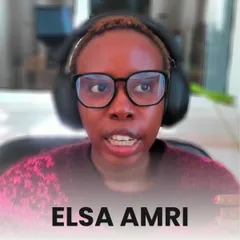
Elsa Amri is a senior designer and Webflow developer at the agency Crew, and runs her own design studio. She is a Floxies ambassador.
Elsa Amri is a designer and Webflow developer. She runs her own studio, AM Design Studio, and works as a senior designer and developer with Crew on contract. She is a Floxies and Notion ambassador, and she used to be an Adobe XD ambassador. Like me, she moved from XD to Figma. She grew up in Tanzania, studied in Canada and the UK, taught English in Japan for a year, and now lives in Spain. We talked about doing both design and development, and about what makes design the harder half.
Still figuring out her style
I asked if she has her own style figured out. She said no. Freelance work means different clients, different guidelines and different brands, so every project starts from what that client wants.
I’m still figuring out my style. I think that’s such a hard question.
For her, style is a long-term project. What she watches for is not standing still. Some designers’ work she could recognise without a name on it, and she doesn’t think she is there yet. I said a style can also be a limit. If all your sites look the same, you might not be growing.
She likes Crew for the team. It is the thing she missed most from office life, and they met up at Webflow Conf in London. I miss that too. Her favourite projects are ones she believes in, like a site for the Feminist Idea Lab.
I will drop my rates to work on this because I feel like this is important.
No more branding
Elsa stopped doing brand identities about a year ago. She now works with a brand designer from Tanzania when a project needs one.
It’s hard for me to do branding when I think of other brand designers and the really cool stuff that they do.
I stopped doing brand identities too. I didn’t get enough of those projects to build routines for them. Elsa still does both web design and development, and she loves building what she designed.
Development in Webflow is kind of like therapy for me.
Design or development
I have been tempted to specialise in one or the other. So I asked if there is still a place for someone who does both. Elsa said yes. A client with no designer and no developer gets both from one person, and that helps you stand out. And what she designs is what ends up in the final product.
If I like let’s say had to specialize for whatever reason I would probably specialize in development actually.
Development is logical. The design is done and you build it. Design is the stage where every stakeholder has an opinion, and you have to pull them together. She said it is also harder to stand out as a designer.
Webflow, you can learn Webflow in a month, at least the fundamentals, but design is something that takes a bit more time.
I think Webflow itself pushes people like me towards technical work. It has grown a lot, and it suits bigger companies more than it used to.
Elsa started on Wix. Her first Webflow site was her own portfolio, built without knowing much about structure or class names. It still brought her a lot of her first leads. Now she builds with Client-First and its cloneable, and she enjoys setting a project up.
The blank canvas
Elsa has no Figma template. She sets up her grids and freestyles from there. I mentioned the bell curve meme, where beginners and pros both start from a blank canvas. Elsa said wireframes are where she gets stuck. Whatever layout the wireframe has, the final design tends to follow it.
SaaS websites are, they kill me because of that. Because I’m like, this is the same.
Most of her projects skip research. The client is ready to go straight to mood boards and early concepts. When research is needed, she works with UX researchers.
I usually make three drafts of the homepage. Benten Woodring told me his studio only designs hero sections, and I want to try that. Elsa also makes three drafts, but only of a few sections. Clients can pick what they like from each.
If you give so many, someone too many options, they lose the plot.
I ask clients for must-haves and no-no’s. Elsa said a no-no sometimes comes back later.
Okay, two months of work down the drain. Sure, let’s do that.
Being public
Elsa had a mentor when she started out in Tanzania, a woman working in UX at an agency. Now she mentors others through Floxies and runs its Webflow round table. I’m thinking about paying for a coach next year. Elsa said a coach is mostly accountability.
Like you can decide, I want to do this. But like the follow through is extremely difficult.
She is in a Floxies mastermind group now, with a goal of making more YouTube videos. Most of her clients are from the US. They come through referrals first and social media second. Crew’s founder found her work on Twitter. Her advice to anyone starting out is to share what you do.
It’s good to get in the habit of just promoting yourself, like be your best ambassador.
She likes goals she can count, like a number of LinkedIn connections. I’d set goals on the part you control, like the number of posts you make. And whatever platform you pick, I think you have to make the bad posts at the start. You can’t skip them, and you get better from there.
Links from the episode
Full transcript
Read the full transcript
Janne Parri: Okay, Elsa. So back in the day, you used to be an Adobe XD ambassador. And I was in the same camp not as an ambassador as a regular old XD user. But I'm curious, how do you remember those days? And do you still have the XD installed on your computer?
Elsa Amri: I remember those days really fondly like Adobe XD, the community at the time was amazing on Discord, the team was amazing and I think it was also around the time I first got into design. So honestly, getting the message or the notification that they wanted me to be an ambassador was very much like a starstruck kind of moment. So I look back on those days very fondly and it was such a great time to meet other designers around the world. Have XD installed in my computer still just because the whole acquisition thing that happened and then didn't happen with Figma, you know, it was a very interesting time and the ambassador program ended and I switched on over to Figma and I've been using Figma since but like I'm still an Adobe person by heart like that's still like the app that started things off for me so it was good while it lasted and I wish it had lasted longer but I always see it as just the starting point of my journey so
Elsa Amri: So there are fond memories there.
Janne Parri: And it was somehow weird how they kind of like dropped the ball with the XT because it had some features, good features, like syncing all the Adobe files and that sort of things.
Elsa Amri: Yes. It had a lot of cool stuff. It was definitely an app that I really enjoyed using. And it's unfortunate, but things happen and sometimes they don't work out. But yeah, I definitely wish they had kept it around and improved it more and didn't drop it.
Janne Parri: Yeah, yeah. And I also remember when I switched to Figma, there was something about Figma. It was like a bit smoother. I couldn't articulate why it was better, but for some reason it felt better. Did you have the same like experience?
Elsa Amri: I think it definitely felt more diverse in terms of what I could use it for. So before with XD, I was mainly using it for like, you know, web design or UX UI design. And with Figma, I started using it for everything. So instead of using Illustrator or Photoshop for like graphic type work, I started using Figma for that as well. So I think I did remember that like, I feel like I can use this for a lot more. And then also just in terms of collaboration, I think Figma, many more people use So even when
Elsa Amri: I would present it to other people they'd be like, yeah, Figma, yeah, I use Figma too. It was just easier, so I noticed that as well. And yeah, I still use it to this day and I like it, I think it's cool. So that's where we are right now.
Janne Parri: Yeah, yeah. And there's even more features in Figma right now than back in the day. And I realized that I use quite much Figma, even so that I do not need to use like Photoshop that much. Do like thumbnails and all sorts of things in that. But okay, we are getting already quite deep into the tools. We have to do little intros. So my name is Janne Parri. I'm your host today and I'm also a general Webflow dude from Finland. And my guest today is Elsa Amri. Elsa has her own design studio called AM and you also work with the crew agency as a senior designer and a Webflow developer. You are a Fluxus ambassador, you are a Notion ambassador, and I would say that you are
Janne Parri: A general ambassador of awesomeness too. And yeah,
Janne Parri: And you come from Tanzania, you went to a college in Canada, a university in UK, you spent a year in Japan, and you're working with an agency based in the States and you happen to live in Spain. So that's basically more countries that I have ever visited. And I'm curious. Have you seen any differences in how people approach design and maybe even more specifically websites around the world?
Elsa Amri: You very interesting question that is also hard to answer because I mean, not to get into it too quickly, maybe we'll get into it later, but like UK I was there for uni, you I wasn't even doing design at that point. Was like many uni students figuring my life out, studying a course I didn't love, but you know, that's how it goes. And then Japan, I was teaching English, so I wasn't doing anything design related back then. I wish I was, because I do think that agencies in Japan are doing really cool stuff. Until I kind of went back home to Tanzania that I started working in design. I think design in Tanzania is something that is evolving a lot more now which I'm excited about because for a long time I felt like things were very traditional or like companies weren't willing to think outside the box and be open to new ideas so like you would get briefs and it kind of be like yeah stick to what we normally do you know it wasn't like we want something new and innovative but I feel like that is changing now which is good.
Elsa Amri: Exciting and I follow a lot of campaigns that these agencies do back home and I'm like that's super cool you know I did see that a few years ago and that's just in general design not even just web design. Spain I am new to so I am still curious to kind of see what people are doing in the world of design in Spain. I did go to a conference like two or three weeks ago called VDS and it was really more geared towards like startups you know looking for funding but also just in general tech conference, AI, that kind of stuff. So not specifically web design, but it was a kind of just a cool way to see like what the European community is doing in the digital realm when it comes to technology. So that was interesting, but I feel like I still have a lot more to learn about how design is in Spain. What are the trends? Know, what, you know, are there certain norms here that are different from what I'm used to? So it's still a learning process for me for sure.
Janne Parri: Yeah. And I would think that we could use a bit more like diversity in the design. At least I feel that here in Finland and in the realm of web design, we kind of just want to do what the big companies from the, well, United States are doing. Like all the SaaS sites look the same and we kind of want to emulate that. But I know that around the world there are some places that do things differently. Like I know that Japanese website design is like
Janne Parri: Miles away from the things that we do in the Western Hemisphere. So that is one thing. Do you like feel that you have your... Your own style figure down at this point.
Elsa Amri: I want to say no because I think the thing when you work, well, okay, I'll speak for myself, not other freelancers, but like working freelance, because you work on so many different kinds of projects with different guidelines or expectations and branding. It's really hard to kind of, well, you can't put your own style into it, but I feel like every project I work on, have a different approach depending on the client and you know, what exactly it is that they want. So in terms of like what style, Thank
Elsa Amri: I'm still figuring out my style. I think that's such a hard question... And probably something I think many other creatives are doing, like figuring out your style or evolving your style is like a very much a long term project. ⁓ Like you can be a designer for years or even decades and still be evolving your style, so to speak. But one thing that I always try and keep in mind is how to better the stuff that I do and improve my work because ⁓ the other thing with working freelance is also not wanting to remain stagnant and kind of just be doing the same thing for years. Like what I worked on last year is exactly the same thing I'm doing this year. Like if I compare the two websites, it's like there's nothing different. So that's also something that I'm like, okay, I also want to evolve. I don't know what my style is yet, but I want to evolve. I want to grow. I want to be impressed by what I'm doing now if I compare it to what I did a year ago. So like that I also try and like keep that in mind, but I'm looking forward to like finding my style or my niche because I see so many other
Elsa Amri: Designers do cool stuff and I'm like if I saw this I could guess who made it and I just don't think I'm at that point you were somebody could look at my work and be like she worked on it you know yeah
Janne Parri: Yeah, that is actually a good point that maybe the style can be also a like limiting factor. If all of your websites look the same, that might be an indication that you are not like progressing. And I definitely have been in there. But you mentioned freelancing. I know that you work with crew, the agency. So how do those projects like differ from each other?
Elsa Amri: So crew is also technically still freelancing, but like... I'm with them also as a consultant contract. I always confuse those two words. Mean, maybe that's just the English failing me, but whichever one you want to use. So I do work with them on like different projects, but not on a full time basis. And then obviously I do other independent projects in my own time. So working with crew though, I still like that there's the team aspect. That's part of the reason why I joined because I love that community feel. That's the main thing I miss working in an office or I missed at the time just, you know,
Elsa Amri: Your co-workers so to speak that you could talk to or connect with. So since joining crew I felt like I've had that and I love the rest of the team everyone is nice. We've met up twice at Webflow Conf when it was in London and that was amazing so I really really enjoy that and having that connection with them and then at the same time I obviously in my own time can work on other really interesting projects that people come to meet with. So I feel like it's kind of best of both worlds situation right now which is ideal for me maybe that might change in the future. But like for now, I think having the agency and at the same time my own time to do other things is really good.
Janne Parri: Yeah, yeah, that's beautiful. And I kind of miss the team aspects. As a freelancer, I have talked with a couple of folks on this podcast and yeah, every time they speak highly of their team, I get a bit jealous because
Janne Parri: Yeah, usually I just work on my own or there's a little team from the client side, but that is not the same thing. But I'm curious, kind of projects are you currently working on? If there's specific you can mention, go ahead. And also maybe what would you like to do more if you had the chance?
Elsa Amri: What I'm currently working on a number of things I guess I'm working on an e-commerce site which I'm excited about because I haven't done one in years and I'm really I really like how the design turned out I like the team that I am working with I'm happy they trusted me to do this hopefully once it's done I can obviously put on my portfolio and share and then I'm also working on it's like a, well, I wouldn't say it's a startup. It's like a community and startup, and they're kind of wanting to revamp their website. But I'm excited about that as well because they were very open-minded to the designs that I did, which I felt like were very, I don't think are normative. I think I tried to play around with some of the structure and how the elements were put on the page and use their brand colors interesting ways. And they were like, yes to everything. So I'm excited to build that and see how.
Elsa Amri: It comes to life with all the interactions. So I'm excited about those two projects and I'm working on a few others. In terms of what I would want to work on more, I think I really like working on projects where I can empathize or sympathize with like... The cause or like what the person is trying to create. So for instance, I did work on this website for, well, I don't know if I should say it's an organization. I'll call it an organization, the Feminist Idea Lab, but it was an individual who approached me wanting to start this initiative to provide grants for like young women in underrepresented countries so they can like do these community projects. And I love that. I support that. I think that's amazing. And so it was really fun to work on it because
Elsa Amri: I empathized with like what her objective was and I don't always get to work on projects like those. So I'm always excited when they do come to me because I'm like you know what I will drop my rates to work on this because I feel like this is important and this is cool and I would want to have this in the community. So I'm always I'm always down for those kinds of projects and I wish I had more of them because I think that they're cool and the people who I work on them with are great. Like they just they're passionate about what they do and I love that as well and we always establish long-term relationships so that's also part of the reason I like those kinds of projects.
Janne Parri: Yeah, yeah, definitely like those kind of like passion project projects that have a clear meaning. I totally get, get what you're saying. I'm trying to think, have I had a proper like organization or charity projects, but I would imagine I would do the same thing because I believe that those will be the projects that you remember when you're old and try to remember your career and so on.
Janne Parri: Yeah. But I'm a bit curious about kind of your process. So you do both design and development. How much, how kind of, how much of the design do you do? So do you start with the, all the way from the like brand identity or just the web design or what's your like sandbox where you work on?
Elsa Amri: So I don't do brand identity anymore. I feel like being a designer is sometimes knowing what your strengths are and what your weaknesses are. Some people ⁓ are ⁓ good at everything. I'm jealous of those people. I'm not one of those people. So even though I have done branding, especially in the past, I just, don't, ⁓ It's hard for me to do branding when I think of other brand designers and the really cool stuff that they do... So I've dropped doing branding. Like since a year ago and I now collaborate with another brand designer, also Tanzanian, on projects that require branding and she's amazing. So I love that she can handle that. I focus on like the actual interface design. So whether it's a website, it's usually a website, very rarely an application. So like normally web design. And so I do all of that. So designing the entire site. And then when it comes to development, if the client wants development services as well, and they're open to Webflow, I would normally do that as well.
Elsa Amri: I've also done projects where the client has their own developers, so it's kind of more like a handoff type of situation. But personally, I love doing both just because whatever I design, I can then make. And I don't know if other people also feel this way, like development in Webflow is kind of like therapy for me. Like I got my headphones on, I'm listening to music and I'm just like building it, seeing it come to life. It's very therapeutic to me and soothing. So I really enjoy doing that. But especially more so if I also did the because it's like I'm seeing my design come to life. So that's kind of how I'm like.
Janne Parri: Yeah, yeah. And I have a similar, bit similar story that I used to do like visual or brand identities. But at some point I was just, I did not get too many projects and I did not have routines for that. So I leave, I will just leave them to others. And now I'm kind of, I have been on the fence about the like. Design and development. I still do both and I enjoy both, but I'm always tempted that should I like specialize in one or the other. So do you think
Janne Parri: That there is still a place for a person who does both the web design and web development?
Elsa Amri: Yes, I say this just because I mean that's what I do and I have had no issues but like honestly I don't know maybe ⁓ market wise it's not a thing anymore but I think it's good to do both just because ⁓ especially if a client approaches you and they don't have ⁓ a designer or a developer it's like hey I do both that kind of already helps you stand out. And I think that it's my thing in design is like what I design is what I want to actually be in the final product. ⁓ I don't want to design, I would never design something unless something happened that then couldn't be achieved in the build. So if I'm doing both then I'm guaranteeing that. Whereas if I'm just doing design, well development is not in my hands anymore so like who knows what could happen at that point. ⁓ So that's why personally I would prefer to do both like moving forward I don't have any plans of like specializing in either.
Elsa Amri: One ⁓ but I will say I do ⁓ if I like let's say had to specialize for whatever reason I would probably specialize in development actually because I would want to work on the cool designs that other people make and make them come to life. So I'd probably pick that but like for the time being I think that there is a place to do both and if you're starting out you may as well learn both and kind of get decent at both and then you can decide if you want to specialize later on.
Janne Parri: Yeah, that will definitely help in whichever path one chooses. But that is like the thing that if you specialize, you might be more suitable for, let's say, bigger projects, and so on. And as you mentioned, that you feel like webflow is like therapeutic, that might be like a reason to do just like Webflow. And many times
Janne Parri: Developers think, and I myself might think that development is easy in a way that the things you build either work or they don't. But on the design side, there's opinions, well, a lot of opinions and it's not clear cut. So you have to be a better communicator and so on. Any thoughts on those?
Elsa Amri: I agree. Think design... Because it's the conceptual phase of the project where you are putting ideas together and like input from stakeholders and clients and your own thoughts and you have to kind of pull all that together to create a product that everybody is happy with. Sometimes that's easy and sometimes that's really hard. I have been doing it for years so like I'm good with doing it but like if I had to specialize I definitely would pick development because the designs are done, this is what they want and it's just building.
Elsa Amri: Like it's very logical, I think, and I think I like that aspect more. Design can be complex, design can be hard, but it's still enjoyable, but definitely a career path that I think is a bit tougher. Also I think, well I would say right now there are a lot of developers and there are a lot of designers. I think that the market is saturated with both, which is I guess another reason why it's good to kind of be good at either one, because it gives you bit of an advantage than just being focused on one or the other.
Janne Parri: Yeah, yeah. Especially if one is working alone as a freelancer, you need, you just need so small piece of the pie that you can carve out your like own audience or own clients. And there will definitely be clients that want one person to do both things. But, I I talked about the development and how it's easy, I kind of want to also talk about design because, okay, it is more challenging, but just because it is more challenging, it might be like a more exciting opportunity to master if one plays the long game. So if you
Janne Parri: Get to do cool designs and you get to... Get some sort of reputation that people come to you and for your designs that of course can be totally awesome too.
Elsa Amri: Yeah. I agree with that. I think that... Yes, I think that's also the reason why I say design is hard. Going back to your question of do you have your own style, right? Like how do you define your style or your essence as a creative in general? I mean, you could define your own style as a developer. I mean, I think there people who have for sure, but more often than not, it's through your design style. With development, it might be like through the kinds of interactions or animations or like those kinds of things that you can create, which is also really interesting.
Elsa Amri: But ⁓ As a designer or anything visual, ⁓ it is trickier to ⁓ stand out, is trickier to define that style for yourself, it is trickier to elevate ⁓ your style and what you create above ⁓ things that thousands of other designers are doing and I think that's what makes it hard as well. Because for me as a creative, like I mentioned before, I also don't like to just stay where I am. I like to grow and I like to evolve and I like to better myself. ⁓ of the ways that I do that is through improving my designs because I Webflow is Webflow and you can also improve in how you do work in Webflow but how you create and the stuff that you can create design wise I think is also really important in how you involve yourself as a creative. That's also why I would say it's a bit trickier and I think I've also I don't want to say mentored but I've definitely talked to other entry-level creatives I'm gonna call them creatives entry-level creatives who are kind of iffy on like should I do Webflow should I do this?
Elsa Amri: Should I do both? And it's like, you can do both for sure, but if you have no design experience, design will always be harder to kind of get a grasp on. Webflow, you can learn Webflow in a month, at least the fundamentals, but design is something that takes a bit more time or a bit more nuance, and that's what makes it trickier. But I think also, like you mentioned, it makes it satisfying as well once you've kind of established those skills.
Janne Parri: Yeah, yeah, this is a difficult topic. And I have been like struggling myself with this for quite a long time. And Webflow in itself is one reason for that because Webflow has involved quite much. It has grown as a platform. It's way more complicated than it used to be, which is of course a good thing, but it kind of it kind of motivates people and me maybe to do more technical projects because the webflow
Janne Parri: Is more suitable for bigger companies. At least I feel like that. Do you feel the same?
Elsa Amri: I think the direction it's going, yes, that is what it's kind of pushing itself towards, so focusing more on enterprise or like you said, these bigger companies. But I think that also doesn't mean that there isn't space for smaller passion projects like we talked about these small types of projects. There definitely is opportunity there. But then again, also these smaller projects, you're probably not getting too technical with them, right? It's like pretty basic stuff. The technical work, at least the ones that I've seen that I've been impressed by have been for bigger, more established companies wanting to invest more in doing something more dynamic and interesting.
Janne Parri: Yeah. Yeah. But flow maybe gets a bit, a bit like, well, comments on the, on the forums, maybe a bit negative comments that they are focusing on enterprise clients. Feel that you can do a proper good, like small business website still. And now with the components and things, you can still make it so that it is quite easily editable. By a person who is not too tech savvy. But yeah, there
Janne Parri: Is the push towards bigger companies. Yeah, do you remember the days when you started using Webflow? And was it hard to learn for you?
Elsa Amri: Hmm, do I remember the days? I vaguely remember the days. I'm acting like it was decades ago. It was like a few years ago. See. My memory is just that bad. I don't know if it was hard to learn because prior to using Webflow, had, well, I'd used Wix. I think you know Wix. I don't know how Wix is now, but like back then it was very much, know. Drag and drop, not like Webflow, right? So very much templatized kind of building, which was a lot easier. So I'd done a bit of like web stuff. I'd done a class on coding, which I honestly hated, but I was familiar with, you know, some of the stuff. So Webflow didn't feel very difficult to me, but I do think it took me a bit of time to understand how to build well. Cause that's the other thing, right? You can learn how to build in Webflow and like,
Elsa Amri: Create something and it can even look decent but like the back end is terrible. When I say the back end I mean just how you've structured your build is like insane. So I think in the beginning I was able to just kind of you know like work on my own portfolio and some of these other smaller projects but I didn't really know what I was doing like naming classes or like how I was structuring my build was very much all over the place because I wasn't like I didn't learn about that. It took me a while to really understand how to actually structure my builds well so it doesn't just look good but if I handed it off to someone else they could understand how you know I set it up and that kind of thing but
Elsa Amri: It was fun to learn. It was fun to do my first portfolio site in Webflow. I was very proud of myself for getting it to work. Did a lot of, at the time, I thought were complex interactions. And so it was just a really fun experience. And it was the first time, I think that was the first site I ever built in Webflow, my own portfolio site. And so it was fun to have something that I could share. And it actually helped a lot because I got a lot of initial leads by sharing that website. So yeah, was a good experience overall, but it took me a bit more time to just understand how to build better in Webflow.
Janne Parri: Yeah, yeah, definitely. I'm going to circle back to the, to the Webflow in a minute, but I gotta say about the Wix because I have, I have maybe one Wix projects in my history, but they had the Wix studio that was quite a Webflow competitor. But now I feel that there's like nothing coming out of Wix because the focus goes to Framer and maybe some new Figma site or something like that. So I'm
Janne Parri: Wondering where is Wix right now. Maybe it's somewhere, maybe.
Elsa Amri: Maybe it exists. But yeah, I don't know. Did you use Wix? At the time I used it, I was still in uni and it was very much like... I don't even know what to compare it to honestly, but like not... Like I couldn't customize that much. I don't know when you used it.
Janne Parri: It was before the Wix Studio, like years before that. So it kind of was this promise that you can drag and drop everything, but then you did not, you wasn't able to properly like edit everything. So that was a little let down and people started turning to webflow because with that, of course. You can edit whatever you want. But you mentioned that at the start, the structure and naming was all over the place. I could ask
Janne Parri: A nerdy question about frameworks. Do you have a favorite framework for Webflow right now?
Elsa Amri: I use client-First that's the only one I know. Honestly... Like I want to learn. I want to learn another one. I don't even know which one I wanted, whether it was Lumos or Mast, one of those two, just out of curiosity, you know, because why not? ⁓ But I think I'm so used to client-First. I've been using it for years. I feel attached to it emotionally. Like it's so easy for me to build with it that I'm like the thought of learning something different is very much like, my God, like I ⁓ don't even know where to begin. I think I need somebody to like tutor me in that new framework. But I use client-First. That's also the one I recommend to other
Elsa Amri: People especially newbies because I think as far as I know it's probably the easiest one to learn for anyone new to Webflow and it's not perfect either like they're probably like obviously things that you know you could like adapt or change to suit your own workflow but it works well for me and the work that I do yeah
Janne Parri: Yeah. Well, you mentioned Lumos and MUST. So I had Corey Moen, who's like the author of MUST, and he actually said that he might recommend client First for the newbies just because the documentation is there and it's so widely used. And I'm with you. It is probably the easiest one. But I'm also a bit curious about MUST because it's a bit more... Maybe lightweight and there's some handy
Janne Parri: Components already in the clonable. So I want to try that but I also want to try the Lumos framework because it's of course on another level utilizes all the CSS features but I feel the same way that I need a at least whole weekend and someone with me going through the documentation and trying to learn that. So, but that is a thing that even if you don't use it, if you just figure how to use it or go through that, you will find probably quite handy and clever things from the frameworks. Don't you think?
Elsa Amri: Yeah, I agree. Think like frameworks are obviously learning a framework is a good start, but you don't have to like follow the documentation exactly like you can Merge things or like kind of putting your own ideas So like you said looking at other frameworks and exploring how they do things you could you could have your own you know ideal combo or ideal product that's a combination of different things and that makes more sense Logically for you and the work that you do I am always interested though when it comes to like collaboration or like handing off work to other developers. Think client-first is the easiest for that reason because you can probably guarantee the other person also knows client-first so they can understand how you built your project and go from there. I don't know if I've ever worked in a project where the other person only used Lumos or only used Mast, but that's my own personal
Elsa Amri: Experience. I don't know how it would work in that situation, but that's another reason I use client-first because I'm okay, I'm pretty sure if I this off somebody else could take over and it wouldn't be an issue.
Janne Parri: Yeah, yeah, totally. Cannot see that. See the reality or world where someone uses Lumos and can't edit a Client-First project properly. Yeah. Do you have like your own starting template cloneable where you have maybe built some components ready, like on top of the Client-First cloneable or do you go with the Client-First or maybe even Relume cloneable.
Elsa Amri: I use... Is it Relume? No. I think it's the Client-First cloneable. I think yeah, I use the Client-First cloneable. I like I've adjusted it like a bit maybe not by much honestly. But I pretty much just use that as a starting point and clone that and then customize it to fit my own project. So I also like the setup of a project. I don't know, maybe I'm weird like that, but like just setting up all my styles and whatever my components and my classes and my variables, etc. I think that's also really fun
Elsa Amri: To So I like taking my time in doing that as well. But like as a starting point, I do use the Client-First cloneable. Yeah, I think that's the one they use.
Janne Parri: Yeah, I kind of get why you like the setting up. I kind of like that too, but every time I do that, I know that maybe this could be, I could do this a bit faster in a way. And I have had like multiple different kinds
Janne Parri: Of like starting templates and I always change them because the projects are different. And then I end up. Deleting a bunch of stuff and that takes time. So I haven't found a proper like good starting point, but yeah. Okay. Now we're talking about webflow quite nerdy stuff. How about on
Janne Parri: The design side? Do you, do you have something, some sort of like Figma template or what's your starting point?
Elsa Amri: No, I have no template in Pigma. I... The most... It's not even a template. Like, the most... Basic thing I do is I set up my, what are they called, is it guides? I don't even know the terminology. The guides and grids,
Elsa Amri: The columns, that's it. And then I freestyle it every single time. I think I could, like you said, there's probably ways you can do things that make the process faster in the future. But I've never really sat down and thought of it. And I think also because the system has worked for me, I'm just like, okay, this is the system. But that's like specifically for like when I'm actually starting the design. Obviously when it comes to the process overall, I have a system. You know, I have like a setup for like mood boards or like, you know, this, you know, stuff that the clients can interact with and give feedback. But for the actual design work, I always start with just my, you know, my page with like my grids and freestyle the design from there.
Janne Parri: Yeah, yeah. I sometimes use the re loom like Figma kits, but I kind of feel that if you know the meme with the belly curve, that all the newbies are like starting with the blank canvas and then in the middle or all those tools. And then the pros are again, starting with the blank canvas that maybe
Janne Parri: It would beneficial to. Just start with the blank canvas so that you do not get influenced with any like template or that sort of thing. Would you think that?
Elsa Amri: Yeah, I actually think that's such a good point because yeah, if you do use a template like because even okay the few normally the people I work with don't need like low fidelity wireframes so like I don't normally do those but like sometimes I will and I will use their loom for that because really great tool easy to make those wireframes but then when it comes to the actual design you do find that okay in the wireframe this section is like image on the left text on the right, you know to grid and then your design you're like, okay image on the left text on the right. But it's like why? That was just the wireframe. It doesn't have to be like
Elsa Amri: That. I can do something a bit different, but like you're obviously influenced by what's on the wireframe. So I think that's the tricky part and that's why sometimes I look at my designs and I'm like, especially for SaaS websites, honestly, that's yeah, SaaS websites are, ⁓ they kill me because of that. Because I'm like, ⁓ this is the same. This is the same. ⁓ my God... And it's because I'm always influenced by those early iterations. So I think it's it's good to have the building blocks, then it can be, you have to really actively be thinking of, I have to design it this way? Can I be more creative with what I make?
Janne Parri: Totally, and yeah, that's of course a balance that you kind of want to have a clear, maybe not too out there layout, but there comes time, comes times when you really want to do something different. And I feel that every designer wants to do like more crazy stuff, but then there's of course the clients. And maybe some other factors that hinder us a bit.
Janne Parri: But I could ask, you mentioned wireframes, but if we take a look at the discovery phase, are there like tools like, or framework is not the right word, like customer personas or things like that you always do or wanna... Want to like emphasize on the process.
Elsa Amri: For, I would say 99 % of my projects, no. So normally... Like whether it's I'm working on a project with crew or like just independently, if the project is coming to us or to me, then the client is kind of just ready to dive into the design. So the most I will do is like early explorations. So that's like moods boards or style scapes so they can see different design directions. You might do low fidelity wire frames or like just early concepts to see how their content or their copy could be applied in different types of designs. And then once they're clear
Elsa Amri: Direction you can obviously do the actual design work. For the research, that's something that I don't normally or clients don't request in my projects, but I would do it for like specific use cases where there is a need to do that research and in that case I also don't consider myself an expert on user research. My postgraduate degree was in UX design which did involve that, but I do like to collaborate with other UX researchers who are just way better at it. At me and I like collaborating in general so if I can work with somebody else I'll do it so that's kind of usually a group effort in doing that part and then I specialize in the design.
Janne Parri: Yeah, cool. How about that crew work? At those projects, are there usually some sort of research or some discovery phase before it lands on your desk?
Elsa Amri: There could be, but also it really just, yeah, depends on the client and their timeline, right? Or if they've, maybe they've already done their internal research and like, they can just give you all the info. But like, by the time it comes to me, it's really just the designs are ready to go and we're ready to start on design. And then obviously after design development. But I think that's also just because of my own situation where that's what I specialize on. So that's why most projects when they come to me, are ready at that point.
Janne Parri: Yeah, yeah. I find this design side quite fascinating because you probably know that even if one has a proper style guide and visual identity, that leaves a lot of room with the website design. And I've been thinking that I should take a look at my own design process. Especially the start. Usually like to do like to do like some sort of clients or customer personas just like easy ones, not know like interviews or anything like that, just to get a some sort of understanding. But when I start the design now at this point, I usually do like three drafts of the first page, like the homepage.
Janne Parri: But when I was talking with Benton, Benten Woodring, he said that they at his studio, they do just like the hero sections. And I was thinking that's, that might be quite clever. And I want to, I want to try that because the hero section usually gets the concept and everything just like follows that. And if that doesn't work, well, the rest of the page probably doesn't work. So, any thoughts on that?
Elsa Amri: That is so interesting. Just the hero section. I definitely can see why that would work. Also, less work. Yeah, because obviously if the hero isn't working, then probably the remaining, whatever, however many sections you're doing might not work either. That is so interesting. I think like you, I also do like those three drafts, not the full homepage, right? Maybe like certain key sections. I do think it works well just because, or maybe I'm giving the client too much. I want them to like kind of pinpoint key things from each concept that they like, right? So I like this hero,
Elsa Amri: But I like this feature section. I like this blog section, you know, when like you put it all together into like one thing that is cohesive. So I think that's why I like to design a couple of different sections rather than just the hero. But I also can see why at the same time, this is something that I've heard before. If you give so many, someone too many options, they lose the plot. I think that's a tricky part with clients sometimes because sometimes you get clients who know what they want and they can communicate it very well which is always dream clients right sometimes you get clients who it's a bit more difficult so you're kind of very much like back and forth and back and forth and back and forth and it's not always easy to really pinpoint okay you know what you want but like how do we how can I help you communicate that or express that and if I give you 10 different concepts is that really helping you know figure out what you want maybe I
Elsa Amri: To give you like three solid like things to look at and then you can say you know what out of these three this is what I want so I think that's also probably something to think about Moria.
Janne Parri: And I would even like question that is three too much maybe I use the three threes but back in the day when I did like the visual identities there was there was this designer who like made just one like logo and or one concept he finalized, he of course did the discovery and all the work before actual design properly
Janne Parri: And then presented just one finalized logo and visual identity and just like explained it clearly or even maybe one could say that they sold them to the client so they did not need to do any decisions. So that was a interesting thing, but I still, I feel that I'm not on that level that I could do that same thing with the website designs.
Janne Parri: But yeah. That is something to think about. And I feel that the design side kind of has more like, or the design process has more like vehicle room, if you may, than the development, because the development is just development and client sees just the end result, which should be quite similar than the design. So it is, yeah, go on.
Elsa Amri: Yeah, I was gonna say I think design is... The exploratory phase where you are supposed to experiment with different ideas and different directions. And you know, obviously clients can also come to you with their own like, I like this website or I like that website, which I always find helpful because having an example is better than having vague descriptions, right? You have like a reference point, so to speak, that you can use as a starting point, but there is more wiggle room to like do something in
Elsa Amri: Or do something more traditional depending on what you want. It can be fun. It is not fun if you just cannot align on what it is that you are trying to achieve, but that's also just part of the job, right? Like every job has its cons and that's the con of design. Being a, not really a con, it's just sometimes you have to put in more work to understand what your client is expecting and that's okay because that's part of the job.
Janne Parri: Yeah, and there are of course tools for that and you might use those tools and still get it wrong. I usually ask for the like references or something that they like and then on top of that I plankly ask other somethings that are musts. And something that's our definite no-no's. Everything goes like some colors, some sections, some content, some images, whatever. And if I get answers to those, it helps me to align a bit more to the actual like goal.
Elsa Amri: I mean, yes, I agree. But it's also always fun when those knows are communicated and then down the line it's like, actually, you know what, let's do that. You know, that's always fun. Like, okay, two months of work down the drain. Sure, let's do that. So yeah.
Janne Parri: Yeah, that's stuff. Okay, we have talked about, like, design processes and workflow talk. I also know that you are you are active well on social media, but on communities like fluxes. And you mentioned that you might have helped some like newbies. And I know that you have helped throughout your content or through your content, a lot of people. So how is your experience on well, being a mentor or a coach, if you may, and do you consider that you have had or have you had like coaches or mentors yourself?
Elsa Amri: So I have had coaches or mentors. I know when I first started out I did seek out mentorship from this one woman when I was in Tanzania who was at the time she was I think what is it called creative director or head of head of UX maybe UI at this one agency and I just thought it was cool obviously that was kind of what I was at the time I think I was working as a graphics designer but I was interested in like UI UX design so I sought out mentorship from her to kind of hear her experience and how she got to where she was and like I would share like my portfolio and CV with her so she can give me
Elsa Amri: Feedback, we'd meet up in person so I could just ask her questions and it was really helpful because obviously she's working the job that I want to work in so like hearing directly from somebody like that can be really helpful when you're starting out in your journey and all that help was helpful in the long run in kind of helping me get to get to where I was especially because she's obviously similar to me in that it's another woman, it's another black woman so like there is that relatability from the same country that kind of thing. In terms of my experience being a mentor, I would love to do more. I feel like I have no time lately, but I'd love to do more. If people come to me with questions or advice or seeking advice, I try and offer my own experience. I feel like I always repeat the same thing because that's genuinely what helped me, which is be active on social media. Work on your portfolio. It sounds generic, but genuinely that is exactly what I did.
Elsa Amri: I really try and give practical advice that ⁓ has worked for me or has worked for people that I know because then I can ⁓ more or less guarantee it could work for you. ⁓ And like Fluxies is a great platform for that because obviously community for women in tech, so many like incredibly skilled women on there and obviously newer people trying to get into the same industry. So it is nice to kind of just ⁓ be someone who can guide people when they want to be guided or who can help answer questions. ⁓ Like we do these round tables now. Have like a career round table, have a webflow round table and a design round table. So I help do the webflow round table like every two weeks. And we just meet up and like talk about things that are webflow related. It doesn't even have to be like, I need advice on this. It can even be like just generic questions like, you know what, you know, have you guys heard the latest updates that webflow has opened an office in London? Like we just talk about anything webflow related. And I think that's also another good way of just people kind of giving advice and giving information.
Elsa Amri: Into each other and it's a nice safe platform to do so. So I really like Vloxies because it's allowed me and it's allowed all of us to have those opportunities to connect with each other. And I would always suggest it to any woman trying to enter into the tech industry because it's just such a great resource in general.
Janne Parri: Yeah, totally. It's been popping on my radar from left and right. And it's so cool to see that it is like a proper active community because some like webflow related communities have faded away a bit or they are like, there might be some discord server, but it's a ghost town. So it's good to see that there
Janne Parri: That point was that it's great to have those communities, of course on the internet, especially because many of us are like freelancers and we do not have like the team around. We do not have any senior people around us. So that is, that is one thing, but I have been thinking that I might want to get some sort of like coach or mentor. And I would be willing to like actually pay for that, because there is definite like,
Janne Parri: Advantages for that like just of course there are things that you know that you have to do like you mentioned a generic advice or those might feel like generic but it's the simple stuff that is not easy and when you're accountable for someone and especially if that someone has gone through the same steps they can just like say it's great to you that those are just your excuses. Just do the thing. And if one has
Janne Parri: To pay for that, is what one has to do. So I'm considering to have some sort of coaching next year. Have you had anything like, how should I say, like,
Elsa Amri: Paid for like coaching.
Janne Parri: Paid and like regular coaching for yourself?
Elsa Amri: I have not had regular coaching from myself, but I agree that it is good for the accountability reason because that's the hardest part. Like you can decide, I want to do this. But like the follow through is extremely difficult. Consistency is difficult. Motivation is difficult. If you're the only person holding yourself accountable. You know, the rate of failure is high, but if you have someone else like a coach or a mentor who you check in with every week, every two weeks, however often, it is a good motivator because you know this person is like on this journey with you and you know, it's not like a strict like, my God, if you don't do this, but like, you know, it's an accountability buddy in a way. So I think that it
Elsa Amri: Is important to do. I honestly should have done that in the beginning more often. I just did, I sought out mentorship like whenever I felt like I needed it, which helped me at the time but I think regular mentorship is important. ⁓ You can pay for it for sure. You can ⁓ find somebody you know who can provide it to you. ⁓ I'm in, okay, this is another Fluxies thing but we have mastermind groups now, ⁓ which I think mastermind is a universal thing, right? ⁓ So in groups where we motivate or like we have our own goals and we check in with each other every two weeks. So I've done it, I'm doing it for the first time right now because ⁓ my goal ⁓ is to make more YouTube videos. Actually, it's not even to do my-
Elsa Amri: Work is to make more YouTube videos because I started and now I'm like being lazy but you know stuff like that is really useful because it's like okay I'm in a group we're all we all have different goals we're kind of working towards these things but like they are kind of holding me accountable and holding them accountable and I think that is really helpful at times than just trying to do it on my own in which case I probably wouldn't do it so I think ongoing mentorship or even if you're like I'm gonna seek mentorship for like three months by the end of the three months I have to have achieved
Elsa Amri: X, and Z can be very helpful.
Janne Parri: Totally. And of course it's a, if it's a decision and maybe even a privilege to be able to like pay for coaching. But as you said, you can just have a group. You can call it a mastermind or just like accountability group. You gather a bunch of friends and say that, okay, let's work on ourselves and keep ourselves like accountable. That's totally cool.
Elsa Amri: Yeah. That reminds me. One of my best friends, had, well I don't think they're doing it this year, they did it last year, her and a few of her friends, they all set goals at the start of the year, but money was involved, so they all put in some money, and they were like, by the end of the year, whoever has achieved their goal will get a portion of the money, so if only one person achieved their goal, obviously they get all the money, if two people did, you split it half and half. And you know, it wasn't a small amount of money either, if I remember it correctly, and I was like, you know what, that would be the biggest motivator for me.
Janne Parri: That's cool. That's cool. But isn't there an incentive to like sabotage each other?
Elsa Amri: Sabotage? Wait, sabotage is crazy. I mean, I would hope not.
Janne Parri: Yeah, hopefully. ⁓ But hey, you mentioned your goal to do more YouTube videos. ⁓ And I know that you, are already like active on social media. So is the YouTube channel that you want to ⁓ conquer like next? Or how's the big picture on your social media ⁓ going?
Elsa Amri: I've done YouTube on and off, like I obviously did a lot more YouTube when I was an ex-D ambassador and then I stopped for a while and then I started, well I did like Webflow workshops with floxies which are finished now so lately I've been trying to do like this animation series where I just teach really simple animations using the you know obviously new interaction engine in Webflow and I did one video which people did find helpful and it was fun to make but you know motivation like YouTube is I don't even want to say it's hard but like finding the time to sit down and like do the animation and record and edit and upload
Elsa Amri: Yeah, that's the part that I'm struggling with. So I'm trying to I'm trying to be more consistent with it
Janne Parri: Yeah, it's a lot of work. I totally know it. And that's actually because that's a reason why I have this podcast, because this is kind of like an easy way to make content. And at the same time, this is very fun. And also the format that I always have a guest, it keeps me accountable on showing up and
Janne Parri: Doing. Doing the content. Yeah, I have been planning to do more like regular YouTube videos, but I have the same problem. Where do I get the time? And when do I actually sit down and record the video? That's the hard part. Yeah. Yeah. Yeah. And you also, I think I saw some some videos about notion. I right? How's the notion thing going? I'm not in that bubble, so I do not know anything about that.
Elsa Amri: Notion is my life. It's probably if you had if I had to pick one app that I could not live without it would be Notion. Like everything is on Notion. So being an ambassador was like amazing. I'm so glad I am one now. I trying to do more Notion related content. That's the problem with doing different things, because I do Webflow, I do Fluxies, you know, now I do Notion. But it's hard to juggle everything, but I did start doing these, what did I call them? Notion and friends videos where I interviewed somebody ⁓ who also works with Notion ⁓ and what they're doing with Notion, so like a specific use case. And those were fun, I really, really wanna do more of them. It's just definitely finding the time to do.
Elsa Amri: That. Now that I'm also in Spain, I am trying to connect with like if there is an ocean community here because like back in Tanzania there really wasn't but like here maybe there is. I need to do more research into that because I think having the physical community is honestly great. Like in Tanzania we had our own Phloxies TZ community and
Elsa Amri: Yeah, like me and one other girl started it so that we could actually know each other and meet up face to face and like, you know become friends and so that was amazing So like i'm hoping in spain there is well with floxies. There are two other girls that i'm gonna meet hopefully next week So, you know, that's the start of something there and then with notion that's what I need to look into because as an ambassador whenever an ambassador or something I do actually take it seriously and I do want to do my part in promoting the product because I mean I use it. I think it's great. I think it's useful it's just you definitely have to find time and you have to find like the best medium for doing so YouTube videos can be hard to do but also like you mentioned can be easy if you're doing like interviews or stuff like that or any kind of social media content. So yeah, I'm still trying to see how to do notion in Spain and like what kind of stuff I can do
Janne Parri: Yeah, yeah, the community part comes up again and again on this podcast. People who work on computers all day long
Janne Parri: Want to have some sort of like actual contact with real people in the real world. And of course it takes effort to get yourself into a physical location, but afterwards you are always excited and thinking that I should do this more often. That's a that's a funny thing and I have mentioned that we have we have tried to have like Webflow meetups here in here in Finland with quite sad turnarounds, but we should
Janne Parri: Try that one again but yeah, that's cool that I really didn't consider well, I know that notion is a big thing obviously but I, for some reason I thought that it would be a app that really didn't like gather up a community. But obviously now that
Janne Parri: I think of that is just my pre-consumption or something like that. Yeah.
Elsa Amri: No, but I mean, I think it's fair, but I think I also would have. Thought the same thing? Well, I've been using the notion and like somebody in the community introduced me to it. So I always knew there was a community aspect to it. I think it is more, it is like more popular in certain places like the US. I think it's very popular there. I think it's actually really popular in Japan as well. Or like I've seen a lot of meetups in Japan. So like there are key places where I think that it's more like the community aspect is growing a lot faster. But I could see the notion community.
Elsa Amri: Growing really quickly in the next few years especially if they put in more effort into these community initiatives and stuff like that which I think Webflow should do more but you know we're starting to see that a bit.
Janne Parri: Yeah, yeah, hopefully. Yeah, I think that they are doing something. Let's say, let's keep it at that. Of course, there's,
Janne Parri: Yeah, of course, there's like, there's, what's the community like global leaders, I believe it's gone through a couple of changes. But yeah, before we go to another topic, I gotta ask you, of course, have you like integrated? Webflow and notion in any way for yourself or any clients or whoever.
Elsa Amri: I think I only, not like integrated directly, but my freelancer CRM or you know what I use for work is a Notion. So obviously that's like related to my Webflow work. I think I used to use Notion, like I used to create these client, what are they called? Like pages where clients could like see project updates, status and stuff like that. But the thing with Notion is also as a Notion person, I might think, everyone can use Notion. But actually not that many people use Notion, right? So introducing it as a tool, especially to clients, is very much like a, hmm, what is this? How do I access it? If they want to edit it, whatever. It was a whole thing. So now, to keep things simple, I use Google Sheets. Or if they use Asana or ClickUp or something, maybe we'll use that. So I just keep Notion for my own personal database of tracking projects and things like that.
Janne Parri: Yeah, yeah, I can, I can totally see that back in the day. I made like CMS pages in Webflow for the client projects that they could like check out. And it had like some sort of like percentages on how far the project is going and what are the next to do's and so on. It was quite much work to put up and.
Janne Parri: No one basically used that. So I scrapped that. I could see the same thing. And I feel that with notion, the ones who use notion are very deep into it and like power users and well, this is just my, my like thoughts, but there might be like notion might be missing like the middle. Middle between like newbies and the power users so there should be some sort of like
Elsa Amri: No, I think that's very true. Think that because also I think when you first start using it's very overwhelming or very like, okay, so what do I do with this? And then like you said, if you use it a lot, then you're doing crazy stuff with it. So like you said, you're a power user. So like that middle ground, I don't think is there, but I'm also like, how do you achieve a middle ground with a tool like Notion where you can do pretty much anything, right? It's really hard to find that audience as well.
Janne Parri: Yeah, yeah, totally. Maybe it's a feature, not a bug. Yeah, yeah, ⁓ this is this is cool. Maybe we should land this plane at some points. But I gotta ask you ⁓ that because of course, you do like cool stuff with websites and ⁓ design. So do you have anything coming up for the next year because we are closing in it's almost December. ⁓
Janne Parri: And people are making goals and thinking new ventures. So do you have anything interesting coming up next year? Or maybe even the rest of the year, this year.
Elsa Amri: I mean... Other than the projects that I'm working on, which I do like and find interesting, I don't know if have anything interesting coming up. My goal for the remainder of the year is to survive, to like
Elsa Amri: Make it. Like honestly, work is, yeah, work is work right now. So my goal is to just get through this next month or so and then I always take a break, obviously in December towards the end. So just get through the rest of the year, manage what I need to manage and then new Year goals I'm not a really bad goal like new Year goal setting person I want to become better at it I think it is good to set goals so I don't know what my goals for next year will be but I would like to actually set some I mean I have financial goals but like even stuff related to what I mentioned so like okay I want to evolve in what I'm doing that's very vague how do you like how do you calculate that there has to be something quantifiable to it so I do think I need to
Elsa Amri: Actually sit down and figure out how exactly I want to quantify some of these goals. I think also now that I've moved to Spain, I'm using it as an excuse. I'm like, okay, I moved to Spain. That was a big goal. I'm here. Let me give myself a year to adjust. So I'm not trying to do anything crazy. I'm just trying to adjust to life here. Maybe obviously connect with like other people in tech while I'm here as well. But I'm trying to not put so much pressure on myself. Like, I'm in Spain. I have to get 10 Spanish clients. Or like I mean I just
Elsa Amri: Got here right I have to breathe a bit so that's my excuse but I think that is also you also want to be realistic and like not put too much pressure on yourself like I try to live a stress-free life so there is that aspect too yeah
Janne Parri: Yeah, now that you mentioned the Spanish clients, I could have asked you at the start, where do your clients come from? All over the world. Obviously, there's the crew and it's kind of based on the state. So are there any like common things among your clients?
Elsa Amri: I think most of my clients are from the US actually. I'm trying to think where else. US, I've worked with a few clients from back home, like here and there, not that many projects, or in other East African countries like Kenya. Have I worked with clients in Europe? I want to say yes, but I can't remember off the top of my head. I do think most of my clients are from the US in terms of like where they come from. A lot of it is referrals now because obviously I've worked with a lot of different people and then social media is still like LinkedIn, especially like every once in a while, LinkedIn or my own website has helped a lot. But yeah, I'm always interested in kind of working with people from different places.
Elsa Amri: I worked with somebody in Japan. He was not Japanese, but he had lived there for years. So that was fun and interesting, you know, working on that kind of project. I've obviously worked with somebody in Canada. It's always fun to like kind of work on things with people in different parts of the world. And sometimes, you know, you could even end up reconnecting with them later on. That's happened to me a few times where it's like, we're in the same place. Like we're in the UK. Let's meet up. So I also like kind of being able to form those relationships. But yeah, most of my clients are from the States, interestingly enough.
Janne Parri: Yeah, yeah, that's the thing with all the other events and community that you every once in a while get to a certain place and get to actually meet people. Well, maybe clients, but maybe just frames. That's of course awesome. But you also mentioned that social media is still a well, good a channel where some leads come in. Has it been a bigger channel or bigger source of leads in the past or have you always... Well, this might be a weird, funny, stupid question, but have you always
Janne Parri: Had your referrals going on?
Elsa Amri: I think the referrals started becoming, I think the referrals are my main source right now, but that only started happening after working on obviously several projects, right? Social media is still like probably second. So referrals first and then social media second. Before it used to actually, I think it used to be Twitter in the beginning. Obviously not. Now it's LinkedIn. Now, unfortunately, I miss old Twitter. But now LinkedIn, think, is the main one. And I think LinkedIn, because I used to be so active. Like, I have a big network on there. So if I put in more effort into posting, I could probably get more work on LinkedIn. But I also just try and keep like a good work-life balance and not do too much of that either. Yeah.
Janne Parri: Okay, cool. Yeah, LinkedIn is a bit weird. And I actually skipped the old Twitter because it's like a big thing here in Finland. Maybe nowadays certain people about this, controversies and so on. So I don't know. But if there was a young aspiring designer or workflow dude, or dudettes
Janne Parri: Starting out, how, and they had the challenge of the first or second client, how would you advise them how to move on that challenge?
Elsa Amri: Like in getting their first client or right generic advice I'm here to say that I think honestly being out there or like kind of being public with what you're doing and who you are is so important and I think the easiest way to like get your first clients unless you know someone if you know somebody who can kind of help you know provide you with those opportunities that's even better not everyone has that person that they know right so the alternative is to be active online I think people can underestimate how not how easy but how just being active being a voice on a public
Elsa Amri: Public platform can sometimes lead to opportunities. That's how I got with crew. You know, the founder, Jordan, had seen my work on Twitter, you know, back then and reached out to me. So had I not been actively posting on Twitter, I wouldn't have that relationship or that opportunity that I still have to this day. So I do think that being active online is good. And I think it's just even if it doesn't immediately lead to work, sometimes things take time. It's good to get in the habit of just promoting yourself, like be your best ambassador, talk about what you're doing online, share your process, connect with other people, join communities, right? So many online communities, so many tech communities. It's a bit harder for us introverts, myself included, but like it definitely is something that you have to push yourself to do because it's like setting the foundation and like down the line you will see how much it has helped, you know, if you are more active
Elsa Amri: And more involved. Yeah.
Janne Parri: Yeah, social media is another difficult topic because of course everyone knows that they should do some sort of content and be active. You have to find the time to do that. And at first it might not like bring any results, but in the long run it will. And on top of that, of course, social media is built to kind of like steal your time and you might end up like just consuming,
Janne Parri: Consuming when you should be like producing. So it's a difficult thing.
Elsa Amri: That, yeah, I agree. I agree.
Janne Parri: And, and still on top of that, when, you get the results
Janne Parri: And you get the clients, then you again have a problem that all your time goes to the client's work. But at the same time, you should be still producing some content. And if you just forget it, and when the project ends, you're, you might be left empty
Elsa Amri: Yeah, it's... It's a tricky balance for sure, but it's not impossible... Like, you don't have to be perfect at it either. Like... Okay, maybe this month I spend too much time on social media. As long as you're being like 80 % productive, you know, it'll pay off at the end of the day. But like,
Elsa Amri: Kind of like I mentioned before, having metrics is important even with social media. Like, I don't know, maybe this is my type A brain. Having metrics is everything. Like by the end of the month, I want to have at least 1000 connections or 500 connections. On LinkedIn. Like having quantifiable goals helps you measure your progress. Otherwise you might find that you're kind of just not really doing much of anything, you know?
Janne Parri: Yeah. And, I would say that the goals or the metrics are great. And of course the platforms may change, but, one could also make goals like action-based that rather than having X amounts of followers, you should do X amount of posts because that part you can totally control and so on. My social media is it is it is weird.
Elsa Amri: It's weird and it's tricky and like you mentioned the key point also it changes so quickly so like I mentioned Twitter which was everything when I first started and now is like a ghost of its you know past self and who knows in five years what will be the new its social media platform I speak like strictly for like designers so things change also over time as well
Janne Parri: Yeah, yeah, yeah. And I have been doing this podcast for, what would I say? Like half a year. I just was it yesterday, listened to a, some, podcast about podcasting and they were like long form content is dead and you should do just like some sort of Instagram reel shows and so on.
Elsa Amri: My god. But I, yeah, but honestly, podcast lovers are still out there, myself included. I love long form podcasts. But yeah, I do see a lot of these like clips, like on reels and stuff. So I, yeah, yeah.
Janne Parri: All the like subway takes and whatever those are hot right now. And before I forget, you said that you do not have to be perfect at the start or later on either. But especially at the start, I feel that whatever platform you're choosing, you kind of have to do that shitty posts at the start, you just cannot like skip them. And later on you can fine-tune those and you'll learn and so on.
Janne Parri: Yeah, yeah. Okay. There is still one thing I'm not sure if you checked out the previous episodes of this show until the end, but there is one section at the end of almost every one of them. And it is this weird finished section, where I tell you a some sort of saying or a phrase in Finnish I will translate it straight to English and you have to guess what that means is it clear?
Janne Parri: Your saying is actually quite short and well simple maybe but don't feel bad if you don't get it because there's probably be one that has gotten this right so your phrase is in Finnish posketon which means cheekless so without cheeks what does it mean when I say that some person or something is cheekless
Elsa Amri: Cheekless my god okay well my initial guess is that they're being cheeky is that no no okay
Janne Parri: No, I'll give you another guess. Not even close.
Elsa Amri: Not even close my god cheekless what on earth could that mean without cheeks okay, if it's not being cheeky, is it being... Okay, can I ask a clarifying question for help?
Elsa Amri: Is this something negative or positive?
Janne Parri: Fffs- It's hard to, it might be a bit, it might be both, but usually it is negative.
Elsa Amri: Okay, usually it's negative. Okay, and it's not being cheeky? My God, what could it be? Okay, my final guess is if you say somebody's cheekless, it means that they say things without thinking. I don't know why I'm thinking of something related to like speaking. I don't know. My final guess is it's saying things without thinking.
Janne Parri: Yeah, not it, not it. Yeah. Yeah.
Elsa Amri: No. I have no idea what is this.
Janne Parri: So when I say that something or someone is cheekless, it's it means that it's nonsensical or enormous or unbelievable. It is just like, well, not maybe outrageous, but something like that. And I do not have a clue what's the logic behind that because these do not have, usually these do not have logic.
Elsa Amri: I mean yeah, they're just expressions right? Okay. Okay, so yeah, if somebody says something like almost unbelievable, which can be negative or positive, right? But usually negative. You say cheekless, yeah, okay.
Janne Parri: Yeah, someone can be like nonsensical or enormous or something like a, well, let's say a car can be cheekless.
Janne Parri: It's like outrageous. Yeah.
Elsa Amri: Cool. Okay. What is it again in Finnish?
Janne Parri: Posketon, like this poski, cheek and with the
Janne Parri: With the little on at the end it's like without
Elsa Amri: Cool, okay. That's something new today. Nice.
Janne Parri: Yeah. Okay. Elsa, this has been awesome. I've had a blast. If people want to check you out on the internet or maybe even contact you, should they go?
Elsa Amri: You can reach out to me on LinkedIn for sure, on Twitter as well, on my website. I know, I have a form. I have an email there. But I think LinkedIn is, or Twitter are really good platforms for just, you know, communicating. If you're in Spain, let's meet up. I'm like looking for friends in Spain now. But yeah, I love meeting up also in person and connecting with new people. And yeah, thank you so much for having me.
Janne Parri: Yeah, cool. And I will obviously put all the relevant links in the description. But hey, all the listeners, thanks for watching or listening and we'll see you in the next one. Bye.
About Webflow and Friends
A podcast about building websites with Webflow and the tools around it. Janne Parri talks with designers, developers and marketers about how they design, build and run sites for fast-moving teams.
Hosted by Janne Parri. Janne designs and builds design-led websites and design systems for fast-moving marketing teams, in Webflow or Astro, and is a Webflow Certified Partner.