Webflow, UX, Rive & theLong Game of Freelancing
- Published
- Episode
- #36
- Guest
- Joshua Fry
- Length
My guest is Joshua Fry, who has run his UX business FryUX for over ten years. We talk about freelancing, how UX has changed, and how he added Rive to his service stack almost by accident.
Joshua Fry
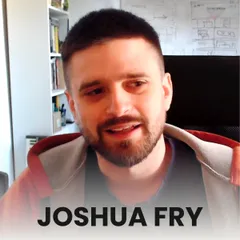
UX designer at FryUX (opens in a new tab)
Joshua Fry is a UX designer from the UK who has run FryUX for over ten years. He studied psychology and music neuroscience, and now combines UX with Webflow and Rive.
Joshua Fry runs FryUX, a UX and Webflow business in the UK that has been going for over ten years. He studied psychology and music neuroscience, and has worked in design roles at agencies and startups. Now he combines UX with Webflow and Rive, and he is an official Rive expert on Contra. He thinks Rive today is where Webflow was when he started. He also loves to learn, to the point that learning new software is his idea of downtime.
Rive by accident
I didn’t set out really to make Rive an offering or service.
After leaving a full-time role, he had some time off and used it to learn Rive. It was the way he learned Webflow years ago, by playing. He made a drum machine you could play.
You can make these kinds of rich experiences that reminded me of like Flash back in the day.
He posted it, and Webflow people started asking him to add Rive to sites they were building. He tracked every job in a spreadsheet. What he charged, how long it took and what he should have charged. Now he knows his prices. Rive is still a side hustle that fits into the gaps while he waits for feedback on bigger Webflow projects. His market is people like him, on the last stretch of a Webflow build. So his pitch is that they can come to him today and have it within a week.
With his own clients, he doesn’t sell tools.
I won’t necessarily talk about the technologies that I’m using. I will talk more about the experience that I’m delivering.
Ten years of FryUX
His first tech job was at a personality profiling company, which led him from psychology to UX. When he left, the company had grown, and he had connections asking for freelance work.
Kind of did become a freelancer by accident as well.
Back then, he thought you needed 10 or 20 years in a field before going freelance. He started learning Webflow in its early beta and made cloneables. He learned from people like Vincent Bidaux and PixelGeek on the forums.
I’m so interested in Rive at this point, because I see a very similar thing in their approach and in their sort of current position as Webflow was then.
His first Webflow clients were people he met. A textile design business, jewellery workshops and a fabrication studio in London. All are big businesses now, and he was probably charging far too little. I feel no one can skip that step. Even the people who say never to work for free have done it. Joshua said those early projects taught him communication most of all.
And just learning that it’s not all about you and how you think it should be, but it’s about the client.
An agency picked him up early. His mentor there took him onto projects for Kia, Speedo and Great Ormond Street Hospital. He ran UX reviews, user research and a workshop with 30 or 40 people in the room. They interviewed surgeons, and parents who travel internationally for operations their children can’t get anywhere else. He moved on purpose from discovery work towards doing the whole thing himself.
I just enjoy, I guess, having the control and the autonomy.
Discovery first
Joshua has a toolbox, not a fixed process. The skill underneath is communication. He likes to understand a client’s whole business, which can surprise them.
They’re like, well, aren’t you just here to do the website?
That context reveals things clients can’t see themselves. A second workshop organises the information and page hierarchy. Instead of personas, he uses empathy maps, which show what each user type needs.
Not personas, but something that I call, well, I didn’t invent this, but empathy maps.
I actually use personas a lot. Some clients find it hard to see that we’re not building the site only for “Mark”. Joshua designs each workshop for the client. A recent one in Miro had six exercises. In one, the client moved page cards around. In another, they responded to colour-coded post-its from their own email feedback.
I am very tool agnostic in that sense.
I almost always will do the discovery phase as a separately priced chunk before I do the main body.
Discovery reveals costs for the main scope. It’s also easier to sell, and the client can take the results elsewhere, though nobody has.
About 20%, I think.
With small clients, I made discovery mandatory, or they’d skip the empathy map and the wireframes. Joshua’s long-term clients sometimes trust him to just get on with it.
In that case, I kind of am doing the discovery with myself.
Clients, camera and balance
Webflow used to be 30 or 40% of his work. Now it’s about 80%, mostly direct clients. His first agency still sends him work when a client is delaying. He just did Rive work for We Ride at Dawn, Joey Judkins’s agency. Joey’s tutorial was the one he followed when he started.
I think now I prefer direct stuff because I feel a lot more like I know what I’m doing these days.
When he isn’t sure about something, he brings in a level-headed collaborator for a meeting. His work comes inbound, from events and LinkedIn posts when he has something to say.
What I do actually, I kind of hate LinkedIn in some ways.
But his network there reaches back to school and university. Someone he went to uni with saw his posts, and now their video studio is a client. He isn’t chasing as much work as some people. I agree. If your prices are high enough, you can do one project at a time, with full days for it. He hasn’t used Contra much yet. Being a parent changed how he sees 48-hour competitions.
I’m not gonna spend like burn myself into the ground for 48 hours to produce something cool for a competition.
His advice for new freelancers starts with whether it’s right for you.
You need to be able to be someone who can cope with uncertainty.
Build a financial buffer, because it took him six months to get back up to speed. Take clients you’re excited about, learn to say no, and be ready to fire one. And get comfortable on camera.
Every time I post something where I’m talking to camera, I get so much inbound work.
I just finished a Webflow project, and a voice in my head says I should post about it. I’m bad at that. But I’ve had offers worth thousands signed without ever meeting the client, just from a video walking through the offer. If an email would be more than two paragraphs, I record a quick video instead.
I think that is actually also important, like designing the life that you want.
Before his daughter started school, he took one day a week with her. The influencers who post their income and cars make it hard. I think you really have to prune your social media to do your own work in peace.
Music, frameworks and AI
Music is the love of his life after his family. His room has a piano, guitars and a drum kit, all wired in.
It’s really good to be able to come off a slightly frustrating client call and play the drums.
A Webflow microsite for the artist Tim Exile led to a full-time role at Endless, a music startup. They made a beat-making arcade machine and an online looper you can jam on together. The startup closed, and Imogen Heap bought the software.
Yeah, I am something of a generalist, I suppose.
His site offers UX, Webflow and Rive. If a client wants only a Webflow specialist, that’s fine.
You don’t want to be tied to that so much that if it goes under, you have nothing else left.
They were more interested in working with me than with the platform.
I think strict specialisation is a bit robotic. Webflow pulls me more than Figma. Joshua said Figma still gives him freedom, an infinite canvas. I use Client-First mostly because of Relume. But ready-made blocks can hold you back creatively.
I’ve moved from Client-First to Mast, I would say, as my go-to.
He dislikes Client-First’s wrapper divs and likes MAST’s column grid. Neither of us had tried Webflow’s own framework, Flowkit, much yet. He loves build mode.
Because you’re able to show like, look how easy this is, I’ve basically made you your own website builder inside my website.
On AI, he is interested in anything that is not creative.
What I have been interested in from AI is anything that is not creative.
Scraping people’s work without permission is immoral to him. And art appeals to us because of the person behind it.
And I just don’t get anything out of AI music.
He uses Claude to summarise his voice notes after meetings. He also learns with it, like on cookie setups, asking it to explain everything. I have mixed feelings. If a tool helps me turn things out faster, I’m excited. Design isn’t on that level yet, so I’m not too afraid. But it will get better.
Links from the episode
Full transcript
Read the full transcript
Janne Parri: Okay, Joshua, so you do cool animations with Rive and now you're actually an official Rive expert among other things, obviously. So I'm curious, how do you package and sell Rive services to your clients?
Joshua Fry: Yeah, it's been interesting really, because I didn't set out really to make Rive an offering or service. But basically what happened was that I left my previous full-time role and I had a bit of time off. And I'd been sort of tracking Rive for a while and got interested in playing around with it a bit. So I used that time to just... Skill up and with the intention that it would be something I could add to sites that I was building and maybe just have a bit of fun with. Because I felt like back in the day when I started Webflow that used to be the thing that I used to play around a lot and have and do sort of more on the side fun bits and that's kind of how I learned it. So I tried to do the same thing and I made a bit of a I made kind of a music experience we could play like a drum machine and
Joshua Fry: Yeah, that was one of the interests just because you can use audio with it as well. You can make these kinds of rich experiences that reminded me of like Flash back in the day. But yeah, I just did that. And then I started posting about it. And then it turned out that a bunch of Webflow people were interested in having Rive experiences on sites that they were building. So I started getting approached for that. And it's not really been at that point, it's not really packaged at all. It's like people that I know quite well. And I know kind of how they're working. And so it was quite like, we have this Figma design and we want to do something with Rive and we need to get it in next week. Can you do it? And just kind of
Joshua Fry: Doing those quick turnaround things quite unofficially. But since then, I suppose I've seen the value in it. And what I did was while I was doing those various jobs, I kind of just kept track of them all in a spreadsheet and... Like what I did, how much I charged, how long I thought it was going to take, how long it actually took, what I probably should have charged, that kind of thing. And sort of built up a bit of a reference table for new jobs coming in. And then I've managed to get it to the point now where I think I, kind of know what I need to be charging. But ⁓ it's definitely kind of still a bit of a side hustle for me because my main work is doing Webflow sites. And I kind of have usually have one
Joshua Fry: Big project on at a time. Then I like doing the Rive bits because it's a nice thing to fit into the gaps. While I'm waiting for client feedback and things like that, I just do a couple of... Usually I'm turning things around in two or three days with that and just really soldiering through making a Rive experience. So that's kind of how I've tried to package it as well now, I suppose, on my website when I'm talking about it. I'm saying that this doesn't have to be a long scoping process because I know that my market is people like me who are on that kind of last stretch of a Webflow site development. And I want to make sure that they know ⁓ this is something where you can come to me today and I'll start on it tomorrow ⁓ and we'll turn it around within a week ⁓ a lot of the time. Obviously that's not always possible, but that's why ideally I'm getting across.
Janne Parri: But that's a fast turnaround. But I'm also curious if you have a website, Webflow client, and they do not specifically ask for, let's say, rive interactions, do you try to slip that in or upsell that? Is it part of your process?
Joshua Fry: It's an option. For Webflow stuff in general. I won't necessarily it depends on who the client is, but I won't necessarily talk about the technologies that I'm using. I will talk more about the experience that I'm delivering. And one of the things that might sort of bump up the price on an overall like website scope might be the kind of animations and stuff in general. But I very rarely would talk about using GSAP and using Rive and all of that sort of thing. I'm talking about this is what it's going to be like for you. But yeah, it's come in. And sometimes I just use it without even talking about it at all. It's just become part
Janne Parri: That is cool. We're already diving to the tools. We're going to do little intros before we continue our
Janne Parri: Dives. My name is Janne Parri. I'm your host today. I'm a Webflow partner all the way from Finland. My guest today is none other than Joshua Fry. Joshua, your thing is UX. You have studied psychology and music neuroscience back in the day, and you have held multiple design roles through your career. Now you combine your UX knowledge with, well, all the cool tools like Rive and Webflow just mentioned. And your business is called FryUX. And that particular business has been running for over 10 years now.
Janne Parri: So I'm ⁓ naturally curious how has the landscape, like the UX landscape changed ⁓ during those years? And has your business changed with it?
Joshua Fry: Wow. Okay. Well, first of all, thank you for that lovely introduction. I wasn't expecting that. And so it's nice to hear someone else talk about what you've done sometimes.
Joshua Fry: Yeah, it's been an interesting time, I guess. There has been there was kind of one break in doing freelance to some extent where I did a more full time role for a couple of years, but the clients that I already have, I continued with and just didn't take any more on in that time. But I suppose I think I've just talked about how I did Rive by accident. Kind of did become a freelancer by accident as well. So when I started out, I had actually only had one role in tech previously. Did for two or three years, I worked at a company doing personality profiling, which is how I got from the psychology, I got into that role, and then kind of transitioned more towards UX while I was there, learning from some of the people that were at that company. And
Joshua Fry: And then when I left there, I was actually looking for jobs, but I started that company had grown quite significantly in the time that I've been there. So I've made a lot of connections and I started getting requests for freelance work. And after a while I was like, actually, this is, this may be enough to sustain me and started taking it more seriously and sort of fell into freelancing, which was strange at that point. Cause I think at least back then it seemed a lot more like you had to have been doing it for you had to been in a field for sort of 10, 20 years, I thought, before you could go freelance. Whereas now I think it's much more common for people to do it earlier in their career. So it was different back then in terms of what I was doing was a bit more unusual, I suppose. And yeah, I don't know if I can speak entirely to all of UX, because I think a lot of UX actually happens in house and with
Joshua Fry: Teams and I did get pulled into some of those for like short contracts. But certainly on the Webflow side of things, which I know that your viewers will be interested in, that was something that I, that had only just shown up on the scene and I had just started learning a little bit of Webflow since the like the first beta had come out and was like excited because I'd been doing CSS and JavaScript and this seemed just much easier way for me to make web experiences. And so I was getting the UX jobs, but then I was also just keeping an eye on Webflow and having fun making little cloneable things in the community, learning from people on the forums, like Vincent Bidaux and
Joshua Fry: PixelGeek and all these people. And it was a really interesting time. And I started to get a couple of small clients that were just sort of friends who were like, would need a website. But it didn't seem then necessarily like it was going to become the behemoth that is now. And that's kind of also why just a tangent slightly why I'm so interested in Rive at this point, because I see a very similar thing in their approach and in their sort of current position as Webflow was then. So I think Rive is going to be a huge burgeoning thing in another sort of five years time. So that's why I wanted to
Joshua Fry: Hop on that train early. But yeah, that's certainly changed in that now, obviously, people are, there's this huge agencies, a lot of the other people who started out similar time of running massive agencies. There's, know, you're able to build really high level enterprise sites, like some of the projects that I'm doing now, I wouldn't have imagined would be possible, it would have been like a big agency team producing the kind of things that we're able to do as individuals, which is yeah, that's just fantastic. On the UX side. It's hard for me because I've now in sort of the last couple of years, reinstating my freelance business, I've done a bit less of the UX product work. And because partly because Webflow has become such a big part of it.
Joshua Fry: Yeah, don't know what else I can speak to there.
Janne Parri: I'm actually a bit curious about the early days. Like you mentioned that you, started tinkering with the Webflow all the way back when it was in beta and you already know new ⁓
Janne Parri: HTML and CSS, but you were coming from like the psychology field. So how does that work? ⁓ Like, and where are you like, when you talk about the early freelancing work, what kind of projects were those? Were they like more in the UX and the persona thing you mentioned?
Joshua Fry: Yeah. Well, so I also had as a teenager, I had actually made websites, but very basic like HTML and a little bit of CSS, like the early days of that, where I didn't know a lot of the more complicated modern stuff, but I knew enough to throw together a web page. So, but I never thought of that as a job when I was doing it, I was just doing that for fun and putting like things that my friends thought were funny on the internet. Which fortunately all of those websites are no longer accessible.
Janne Parri: Where's the way back machine?
Joshua Fry: I've tried actually, I'm a little bit sad. Some of them aren't fine. They probably didn't have any traffic over me in a couple of but yeah, so when I sort of knew that I was going to leave the other job, that was when Webflow released that beta and I started kind of learning it a bit on the side. But I'd also been generally trying to upscale with the coding. But yeah, Webflow quickly took over that really. I'm much better and much more into doing the visual interface style of web design. And I was obviously I was learning Figma, I've been using Figma and stuff a lot as well. So there's a lot more of a closer relationship between those two activities than with the coding. There was another part of that question, which was
Janne Parri: I'm not sure what it was like, what kind of freelance projects were those in the early days.
Joshua Fry: Yeah. Yeah. So with I remember with Webflow, there was someone that like my friend's boss needed a website for the textile design business. There was someone who was doing a jewelry workshops thing. There was some kind of like fabrication studio in London, it was really just people that I would bump into and like make personal connections with that needed websites and were starting out. I think all of those are now actually quite big businesses. So that's interesting. Like it was fun to be kind of their first person that they worked with to kind of get something
Joshua Fry: Off the ground. And I was probably charging way too little at that point, but I'm kind of glad that it made it possible for them to have something.
Janne Parri: Yeah, we all have to do that at one point. I feel like that is not a... That is a step that no one can like skip. You have to maybe even have to like do something for free at least for your mom's website or something else. Even though all other people say that never work for free even if you are doing your first project. But I feel like every one of those... People who give that advice has done something for free at some points. Yeah, just a side note. You were saying so.
Joshua Fry: Yeah. Yeah, no, absolutely. And I think that the thing that you get out of those early projects as well isn't just like learning how to build a website, it's about it's learning how to communicate with a client. And I mean, for me, I cared about some of those projects, like almost a bit too much, and would get very kind of invested myself in it being a particular way. And just learning that it's not all about you and how you think it should be, but it's about the client and listening and communication. Think that was the key skill that I developed in those early days. But yeah, at the same time as I was doing those projects, I also was fortunately picked up by an agency that I still work with today who do the more UX stuff and had a bit of a mentor there.
Joshua Fry: Sean, shout out Sean, who was getting me onto projects with big companies. Like I worked on stuff for Kia and for Speedo and then we did a big project with Great Ormond Street hospital. And all of that was just invaluable to see kind of these like massive web projects and how much work went into that and the client relationship. And I would get taken along to meetings and things and, get to see what it was like at that level and really be like, okay, what of this process can I get into my smaller time relationships with these smaller
Joshua Fry: Clients? So that was really great experience.
Janne Parri: In those projects where you like doing some technical or workflow work or like more of the UX side research things or what was your role?
Joshua Fry: So there was no, there was no Webflow involved in those ones. It was still too early. It's like that agency has started to ⁓ kind of do a little bit of Webflow stuff just recently. Actually I've been pushing it for years, ⁓ but most of their
Joshua Fry: Projects are like larger, like Drupal sites and things like that. But it was a lot of the UX side of thing. And we used to do. I used to get put on a lot of like UX reviewing, which would be a process that they do for like, early on in the client relationship where we just look over all of their existing products and website and do like a comprehensive report of all of the UX issues there. Because that would then help to sell in the next round of research and all of that stuff. And then yeah, going and doing actual interviews and research with
Joshua Fry: With them, which was, which was really cool and works user workshops, you know, some of them, can imagine with like Great Ormond Street, how many people are involved, how many stakeholders like we did a workshop that I think there was 30 or 40 people in the room and you're just like doing post-its at the front and trying to like get all of the opinions. And then we did like interviews with parents of children that were, you know, traveling internationally to come and have operations that you couldn't have anywhere else in the world. And speaking with surgeons and all of these different people that would be using the site. Yeah, that was still one of the best projects I've worked on really, just because it was so interesting.
Janne Parri: Yeah, that like requires some serious ⁓ facilitating all those workshops. ⁓ But how about how about nowadays? How are the UX services in your current business? And are they like ⁓ a always a mandatory piece of ⁓ the service? Or ⁓ do you do like just UX without any Webflow or website work? How is it like nowadays?
Joshua Fry: Yeah, that's still an offering that I have. It used to be so kind of when I'm saying I did I did sort of freelancing and then full time and then freelancing it in this sort of first period of freelancing. It was much more of what I did. Just because I picked up a lot of those agency clients, and I would be brought in often to do sort of the initial discovery. Piece with the client and then some user research interviews and then through to kind of information architecture and wireframing. So that was like very much my specialism in the early days, but I was always trying to learn more of the sort of later pieces of the puzzle as well and still had those other clients that I was going all the way through with. So I've kind of purposefully transitioned more towards that end because I saw the future becoming more what I
Joshua Fry: Focused on now, which is the full end to end delivery where I get to actually do the UI design and the animation and the final product. And I don't know why it is that I've chosen to become one of those people that does absolutely everything. But I just,
Joshua Fry: I just enjoy, I guess, having the control and the autonomy and sort of knowing that I'm not handing it off to someone else that's going to deliver a subpar experience. So yeah.
Janne Parri: Yeah, yeah. Actually, the last episode I had with Elsa Amri, she does like also the design and the development side. And she said the same thing that there's a certainty that what you design, you can also implement. So there is not a gap in that. Obviously, like big projects usually like have separate designers and... Developers, but after that talk and well, maybe my general opinion is that there is still a place for a person who does like both. Not all of us need to be very specialized, but this brings me brings me to the question about your like process.
Janne Parri: Where do you like start the discovery and designing and how far you go and what happens in between?
Joshua Fry: Yeah, well, I mean, I would say that I don't think it's ever really been one size fits all for me, like I have a toolbox. But I think that, again, that the most valuable skill to sort of maintain this kind of operation is in communication and in understanding a client and meeting them where they are. So some clients need a lot more handholding in the early stage. And sometimes you do have again, like lots of stakeholders, you need to really make sure that they're all on board. You don't want to be surprised later on with like,
Joshua Fry: Actually, like our boss has come back and said, it's like, okay, but I thought you were the one in charge of this. So ⁓
Joshua Fry: It's good to really feel all of that stuff out. I like to fully understand people's business. And sometimes people can be a bit surprised or confused by that when you start asking questions about kind of, you know, what is going on with your business and how you have what's your business model and how you make money and what your clients like and all of that stuff. They're like, well, aren't you just here to do the website? But I think having all of that context is really important, and can sometimes reveal things that they that you can see that they need, but they can't see themselves.
Joshua Fry: So I do a lot of that kind of upfront discovery and then usually moving into a sort of second workshop would be around like organising all of the different information that has come up and the different possible pages and what like the hierarchy of things is. Trying to work out who those users are and I don't very often actually with Webflow clients have the more UXy bit of doing interviews, but that does happen sometimes. But often, you know, you're dealing with kind of marketing sites and things like that where a lot of the problems are solved and also where hopefully your clients have a pretty good idea of who those different user groups are. So, but we will do, I will sometimes do things like put together.
Joshua Fry: Not personas, but something that I call, well, I didn't invent this, but empathy maps where you're just like, really trying to show like, what are these different user types and what are their needs and what are the things that they're trying to achieve and keeping that in front of the client. But without getting into, I never really liked the persona thing of going like, this is Mark and he's 42 years old and he's whatever. Cause I think that's a bit too specific.
Janne Parri: Yeah, yeah. I actually, I actually use quite a lot of personas. Obviously you have to make a lot of like assumptions and some
Janne Parri: Clients have hard time understanding that we are not building this website for only Mark, but this is just a tool that so that we can like understand the whole group and we can like have some. Some persona in front of us and think of a kind of real person. But yeah, I believe I have used those empathy maps to at some point. But I'm curious what, before we go any further into the design, do you have any other discovery tools that you always like to use?
Joshua Fry: I mean, so do you mean tools in terms of actual tools or tools in terms of processes?
Janne Parri: Like process is not like Webflow or hammer or ⁓ like personas or some sort of a ⁓ what are those like frameworks or like the empathy map or something like that.
Joshua Fry: I'm not I wouldn't say there's anything in particular that I use on a regular basis, but it's more just about, I kind of designed like a workshop session for the client depending on who on what they're doing beforehand. And I'm just thinking of one that I've just done last week, which basically like we're using Miro just but that's again, like an actual tool. And the reason we're doing that is because they already knew it and they're comfortable with it. So I am very tool agnostic in that sense. But I just kind of knew where all the gaps were in the project and I planned out a two hour session where we're, we've got like one, two, three, four, five, six, Processes. And I'm just trying to think off the top of my head what they were now. But, basically we did like a structural exercise where I'd very roughly mapped out what I thought was the shape of the website, but then we got them to like place cards and move them around and stuff like that.
Joshua Fry: We had one where the initial design direction had already been done. So I'd basically done a bunch of slides that just had examples from similar sectors or related sectors that we might be drawing from in the project. And they'd already given a bit of feedback via email and I'd collated all of that into like post-its that I'd put like in different colours for the people who had said them and sort of played all of that back to them and got them to respond to it and added more post-its and... Sort of built all of that up. So it's those kinds of exercises, but I feel like I almost don't have a name for them or they're not that they're not necessarily the thing I would use every time because it's just what I feel is right for that client in that moment. And maybe it's one of those things where you've done things so many times that it's like become embedded,
Janne Parri: How do you feel, do your clients always get why we are doing this or do you have to explain them that we have to go through these workshops in order to have a good outcome or something like that? Do they get the value of all the discovery and UX?
Joshua Fry: Yeah, I think I think generally they do and they appreciate being listened to. It can be difficult when businesses are obviously very busy and it's hard to like get the call with all of the stakeholders on and stuff like that. And you can, you have to kind of get a measure of that as well and make sure you're not wasting too much of their time from their perspective. But yeah, generally, I think it's received very well and usually I I make sure to explain all of the reasons why I'm doing that and what the outcome will be. Another part of, I suppose, process as a whole is that I almost always will do the discovery phase as a separately priced chunk before I do the main body. And part of the reason for that is because the discovery phase reveals all of these, you know, other costs that are going to come into the main scope.
Joshua Fry: But also it's an easier thing to sell into people with a smaller price and a smaller period of time. And so they know that this bit of work that we're doing right now is discovery and they're not actually going to be getting like final designs or anything in that, at that point. But yeah, I think they really do appreciate being listened to most of the time, if they're good clients.
Janne Parri: Yeah, yeah. That's actually interesting, like you separating the discovery in terms of like size, is it like, if 100 % is like the budget of the whole project, is it like one third or less 10 % or what kind of size is that part?
Joshua Fry: About 20%, I think. Yeah, so quite small. I usually try to make that not too big a commitment for them because also then I think once they've seen the value of that discovery project, they are much more likely to commit to the rest of it. But also I do say, you know, if you want to, you can take the results of this away and take them to somewhere else. Thankfully, that's never happened. But that option is always there.
Janne Parri: That is true. I, well maybe it relates to the size of the clients. Nowadays when my business is kind of grown with workflow and I get like bigger clients and as you said, you never like could imagine that how cool and how big sites one could do just. Just alone with Webflow nowadays. But anyways, like back in the day, I used to have more like small clients and I made the decision that whatever discovery thing I wanted to do, I kind of had to make it mandatory or if
Janne Parri: It was like optional, then the client would just say that let's not do this empathy map or user persona or. wireframing, I don't even know what that is. Let's just like, build a website. But I guess in your case, the discovery phase is like the first step and you cannot like jump straight to the design without it, am I right?
Joshua Fry: Yeah, I'd say so. Mean, it's difficult because there are there are also clients that I have like such a good sort of long term relationship with and they know what the work is and they like trust me implicitly to just do stuff and we'll be like wanting something turned around really quickly. I would just be like, just do your thing. Just go do it however you want to do. Here's what I have but honestly like in that case, I kind of am doing the discovery with myself. And so
Joshua Fry: How long have you been doing Webflow?
Janne Parri: I believe it's over six years now, right now.
Janne Parri: But I mostly have like clients from Finland. I
Janne Parri: Have one or two like international projects, but there has been always some Finnish dude there in the mix. And that's why I'm there too. So, but yeah, it's grown in Finland too. So yeah, the clients are getting like more. Well, bigger in the terms of revenue and the platform is getting like more complex. So webflow has been evolving and it might not be the best for someone who just wanna easily build a quick website for their own business. But it's of
Janne Parri: Course a cool. Cool tool for more like, well, bigger companies that want to scale and so on. So yeah, yeah, that's.
Joshua Fry: So do you use other options as well in those cases? Or are you just?
Janne Parri: No, no, I'm just referring them to someone else who does like or uses other platforms. And now there's my website and my communications is all Webflow. So I did not get those like WordPress questions unless they want to migrate to Webflow, obviously. But I know that you have done a lot of projects with agencies So how did you get to that point and do you still get like much of your projects from the agencies?
Joshua Fry: Yeah, so I guess I still have a couple of agencies that I'm close with. But it's been, I have made more of a push now on the sort of direct stuff and building up the Webflow client base. So I suppose I used to be, Webflow used to be maybe 30, 40 % of what I do. And now it's maybe 80%. And that's with direct people. And then I have that very first agency that first picked me up. Still kind of have a good enough relationship with them that they pull me in for things and I go back to them. I go back to them if I need some extra work.
Joshua Fry: You know, like, have you got anything this week? Because my client is delaying and I don't have anything to do. And so that's nice to have as well. And that can be really broad across other areas of design as well. So sometimes it's like print design and things like that, which is not something I'm seeking out day to day, but I do enjoy doing a bit of every now and then. I have just made...
Janne Parri: It's always weird when you have to make the jump back to the CMYK universe.
Joshua Fry: Yeah. Although they've been kind of ahead of the curve in using affinity for a while. And so it's cool to see affinity being picked up by a lot more people now that they've changed the model with the Canva takeover. So yeah, it's another tool.
Janne Parri: Yeah. Where are you saying something about the agency work still?
Joshua Fry: Yeah, well, I've just now got my just done a bunch of the first work with a with an agency for on rive stuff as well, which is with we Ride at Dawn, which is Joe Judkins agency. And so that's been really interesting as well. Hopefully, that will be a long term relationship, too. But, again, wasn't really something I had, I had planned, but it's really great to do some of that work with, you know, just like Joey is an incredible animator and to have him feeding back on my work and learning from that is great. But yeah.
Janne Parri: Did you say that the agency was called we Ride at Dawn? That
Joshua Fry: Yeah, it's cool, huh?
Janne Parri: Immediately gets me intrigued. I almost did not hear anything you said after that.
Joshua Fry: Yeah, definitely. Out what they're doing. Yeah, Joey's amazing. He's actually one of the people who when I first started Rive, and I made that music box thing, it was his tutorial that I was referencing. He had made like a cat sounds keyboard. So I took a lot of the techniques from that and then spoke to him a bit. And yeah, it's again, it's just like these things, these opportunities come a lot of the time from just chatting to people, like making, building a network and communicating clearly with people, stuff like that. I don't know, things,
Joshua Fry: Maybe I'm lucky, but I feel sometimes like things just fall into my lap.
Janne Parri: Well, obviously if you like, you're active on social media and you put your, put your work out there, gets you the possibility that someone ⁓ sees, that and contacts you or you can contact obviously them. But how do you mentioned that, you get more like Webflow work and you try to get like, your ⁓ own clients, but how do you see the difference between agency work and your own work. Do you see that you might wanna, let's say do more one or the other in some cases, or do you like, do you prefer, can you say that you prefer one or the other more?
Joshua Fry: I think now I prefer direct stuff because I feel a lot more like I know what I'm doing these days. Think earlier on I liked having the leadership of more senior people within an agency to guide me through. But now I feel comfortable doing my own thing and I also have enough connections that if there is anything I'm not so sure about that I can call upon those to consult on things or to, know, sometimes I bring in another freelancer collaborator for a meeting or something like that. Just to just make sure that I'm, I've almost said my first curse word to make sure that I'm not talking shit.
Joshua Fry: And to get, to just get, have a guy that I work with sometimes who is just so great at remaining level headed and like fielding unexpected questions and, catching things that I might have missed. Cause I can be a little bit all over the place. He's just, he's just very, very level. So finding someone like that you can collaborate with, I think is still very valuable. And that's something that you do get from agencies is that you'll have, you know, you're not on the big discovery call on your own, have other people that you can lean on as well. But also now we can lean a little bit on AI assistance, which I do a bit as well. That can be a really useful thing to get through some of the more admin-y work that might feel like it's getting in the way otherwise.
Janne Parri: But how about like sales? Many people would like to be some sort of go-to freelancer for agencies just because
Janne Parri: They do not have to sell themselves. So do you get like your projects inbound or do you have to work for them if you know what I mean?
Joshua Fry: I do get most of the stuff inbound, but I suppose when I, so I don't do any like cold emailing or anything like that. I do go to events and I meet people and I just talk to them about what they're doing. And often that's not like necessarily the direct person who will then come to you for a website, but maybe someone that they know, or a lot of like the activity on LinkedIn. I just post when I feel like I've got something to say or when I've like made something cool that I can show. It's really not even that regular, but that often leads to some inbound stuff. And a lot of that has come from sort of unexpected places. What I do actually, I kind of hate LinkedIn in some ways, but what I do like about
Joshua Fry: It is that my network there includes like people that I grew up with that are from school or that I met at university. Like I worked with, ⁓ witness studio who are a, like production and directing, video studio. And that was via someone that I, that I went to uni with who just happened to see some stuff that I was posting on LinkedIn that re and realized, they already had a Webflow website, but they wanted to do some new stuff with it. And so they're now a client, a client of mine. And I love those kinds of, happenstance.
Joshua Fry: Connections and like a person that you just haven't spoken to for a while, like, yeah, I've always really gotten on well with that guy. What's he up to? And I don't know. I think, I think also I'm not pushing for like as much work as some people are. Like, this is maybe another topic, but I'm not trying to like have my nose to the grindstone all of the time and just like have a huge flow of clients. In fact, I quite like it sometimes when things go a little bit slower, because it means I can spend some time on. On other things.
Janne Parri: Oh, totally. If you get to a point where your prices are high enough that you can do quality work and not stress about everything, that feels quite good. Especially if you get to do one project at the time and dedicate full days for that one project, that... That feels like the stuff that were meant to do. I believe were not meant to be always active on every social media and checking out every notification that pops up because those are
Janne Parri: Just distractions. So I'm with you on that. Maybe we should.
Joshua Fry: And if you can find, those days where you can really just like, I'm going to spend that whole day on just that one thing. I can see that you've got a whiteboard like I have back here to like, like to disconnect from the screen completely sometimes then to just like do stuff in front of the whiteboard and you get into a completely different headspace, right?
Janne Parri: Totally. And like physical notes also like
Janne Parri: A scrapbook or something like that. Although I like to, I like to work with pixels. It's good to scribble down some notes every now and then. But actually back to the sales thing, how about the Contra platform? I know that
Janne Parri: The Rive expert thing was on Contra, so is that a source of leads for you?
Joshua Fry: It's not yet. I would like it to be. I'm very new to that. I basically have set up my profile and added projects to it and then applied for that, very expert status. But then really, I mean, it's just the thing of time management really that I haven't had much time to spend on that platform and I've had other work on. So I haven't gone deep into it yet. I'm still a little bit skeptical. I don't know. I think that you have to pay in order to see more than like three job listings, which I'm not hugely keen on. But I have seen some people that I know as well making like quite good money on there. So I guess it's possible. I don't know whether they had like an early starter advantage, perhaps because I think it didn't you didn't used to have to pay to access them all.
Janne Parri: Yeah, I'm not sure.
Joshua Fry: But anyone whose posts I see and who has made any money on there seems to have the like the pro account thing, which I've not gone for yet. But it might be something that I try next year sometime if I am looking for new clients. It would be nice to have that avenue for sure.
Janne Parri: I'm kind of on the same boat. Haven't have an account, but I haven't like, my profile. I have some services there, but nothing that anyone would actually buy. So I have to update those two. But yeah, it is interesting platform and they are doing like lots of like partnerships with with the tools and
Janne Parri: All sorts of challenges and that sort of thing. If
Joshua Fry: Yeah, I mean, that's also like the challenge thing. That's the exact kind of thing that I would have been all over kind of five, six years ago. I used to do a lot of like, I don't know if you've ever saw like clone comp and that sort of stuff with Webflow. And we just used to sort of challenge each other to build things really quickly and that sort of thing. But yeah, I think mostly being a parent, basically, I just, I'm like, I'm not gonna spend like burn myself into the ground for 48 hours to produce something cool for a competition where I might win some money. I'm just going to live sensibly, make sure I sleep well, spend time with my kid and get like guaranteed work and just run through that.
Janne Parri: The last like Webflow challenge, I'm not sure, Contra was probably not a part of that, but I was thinking that maybe I should cook something for the challenge. Well, I didn't. I didn't have the time. And then I saw the winners, like the three winners, and I was like, okay, it was good that I did nothing because I I had no chance of doing anything like on that level. Of course, yeah, yeah.
Joshua Fry: The standard is very high. Yeah, it's very impressive. It's cool to see it's definitely an inspiring platform to just go and look at the feed because it is it is all just people posting work. And that's how they've that's what they've encouraged, I think, isn't it? So, I mean, Twitter used to be the place that I spent most of my time and that was that was good for finding design work, but it would also be like littered with other sort of political stuff. And that and LinkedIn, you get you do get work, but you get a lot of also people posting long, written pieces about how great an entrepreneur they are, which I'm not that interested in.
Janne Parri: Yeah, it is weird it is weird but that Twitter thing comes up quite often here and I have said it multiple times that I'm not big on Twitter big because it has not been that big in Finland Nowadays
Janne Parri: It might be different. There are active people on there too but then there's the controversies and all the stuff so yeah, all of those weird places I'm most active on LinkedIn and I know that it usually feels weird and everybody is posting things about themselves and so on. Yeah.
Joshua Fry: I do think it's probably the best place to be professionally now on the whole because also Contra is still mostly designers posting to designers, whereas yeah, to get that kind of broad network that I was talking about earlier, I think LinkedIn is the best for it. And yeah, I've abandoned Twitter, mostly, well, for various reasons, but I'm not happy with the way that it's run now.
Janne Parri: Yeah, yeah, it's okay. ⁓ there's one general question I'd like to ⁓ ask you about like freelancing because you have done it for so long. ⁓ So if you, if you had to give advice for a new freelancer on how they could like, do it on a ⁓ stable basis and be a happy freelancer in a couple of years. What would advice be for them?
Joshua Fry: I mean, the starting out thing, I think is really, is really difficult because everyone has their own circumstances. And like I, ⁓ like I said, I kind of got my chances unexpectedly as a result of network that I already had. I don't really, what I don't really know is like for someone to do a cold start, who doesn't have that, I'm not sure what the best approach is. But what I would say is you need to make sure that it's right for you first. You need to be able to be someone who can cope with uncertainty. I think that like ⁓ Every freelancer will know that, you know, that ⁓ it can be a bit of a roller coaster. Are ebbs and flows of work and you need to be able to like, stick to your guns and ride that out. And you need to be in a position in your life where you're able to do that. Like I think ⁓
Joshua Fry: If you're thinking about going freelance and you're currently full time, like making sure that you just have built up like a financial buffer to enable that is important because it will take even when I was starting back up that took kind of six months for me to get back to the level I wanted to be at. I think trusting your gut is really important, making sure that you're doing work that you believe in and you're taking clients that you are excited to work with. It's very easy to say yes to stuff that's not really what you want to be doing and then to end up being unhappy. So yeah, learning to say no, for that reason. And also for like when clients are showing you red flags,
Joshua Fry: And also be prepared to like, actually I have in the past, like actually like fired clients because, the relationship wasn't going well. It's only happened a couple of times, but I think being strong enough in your convictions to say like, actually, no, this isn't working for me can feel scary because it's like, this is where my money's coming from. But if you free up that time and like relieve yourself of that stress, then you're able to put your focus elsewhere and get into a better place.
Janne Parri: Yeah. I feel like, if do this for long enough time, you will eventually come across some bad apples. At the start, if you like, communicate well and actually say no to some clients, you can like, can like, prevent that from happening, but eventually something like will happen. And that's the way. One should have all the boring contracts and that sort of things in order.
Joshua Fry: Have that stuff in place so you can point to something.
Janne Parri: Yeah, yeah, but you were you were about to continue with something weren't you?
Joshua Fry: I think I was also thinking about just like, one thing that's been a real boon for me, I think is being comfortable being like appearing on camera, which I think a lot of people are not so comfortable with. But I mean, certainly people will say this a lot, but sharing your work is big. But I think that a lot of the time people aren't maximizing that opportunity because they're just sharing like a screenshot. And if you can, if you can show people like you talking about that and like what it did for the business that you were working with, you're doing so much of the work that would, that normally like you might not even get a first call from people because they don't have any reason to value you over someone else or to respect that you're an expert. And I think it's like,
Joshua Fry: The video thing in particular is people feeling comfortable with you and kind of knowing who you are. Which can be unusual sometimes people, because I've done a few bits online, people sort of know me a lot better than I know them when by the time we get on a call. But I have just I've just found that huge. Like every time I post something where I'm talking to camera, I get so much inbound work. So yeah, I would say just get used to that. Get yourself on camera and try it even if you don't put it out there like film yourself talking about what you did and just try and try and get better at that. I mean, obviously you're doing all of this.
Janne Parri: Yeah, yeah, I'm doing this podcast stuff, but I could do better with just like showing my work. So I just finalized one workflow project and there's a little voice back in the back of my head shouting that you should make a post about this, but I'm actually quite bad. Well, bad in a sense that I, in the past have not done that, but I know that would be a quite easy topic for me to cook a post or two about and maybe do a case study and so on. But about other like video things, even if they are like more, let's say private, like I have had some like offers go through,
Janne Parri: Without any meeting like thousands of dollars worth of sales with just going through the offer with a loom video or tele video or whatever and I have never seen the clients before I have just emailed them and they just feel comfortable to sign the contract with like one proper video where I'm talking about the project
Joshua Fry: That's a great piece of advice actually. Yeah. And that's that is a way that you can do it without necessarily putting yourself like in the wider social media world is those. Yeah. Responding to someone approaching you with a loom video goes down really well all the time. Yeah, I do. I do a bunch of that. And I use that throughout my process a lot as well. To avoid like I was saying about getting everyone together for a meeting like you can clear so much of that time with just a short video.
Janne Parri: I like to use it with email. If it's more than two paragraphs of writing, I might just open the loom and record quick answer to the question. So it saves a time. Yeah.
Joshua Fry: Just on the, on the original question as well, like one other thing that I would say is like, about not, I mean, I said about, I don't always have my nose to the grindstone. I think that is actually also important, like designing the life that you want. Like one of the reasons that I freelanced is for work life balance and to, you know, be wherever I want to be. I've done it where I'm like, I'm traveling and I'm in different country, but I'm still able to work. I'm able to take time off. Like in the early days when my before my daughter went to school, I was taking one day every week where I was with her, which was like, you know, you can never get that kind of thing back. Like, it's really valuable
Joshua Fry: To sort of, yeah, structure the life that you want and not just think, like, what's the maximum amount of money that I can make? Because there's, there are certain influencers online, who will just talk about how much money they make all the time and post pictures of themselves with their car and all of that sort of stuff. Yeah, for me, I don't think that's what it's about. I think you can be a lot happier by crafting like a well balanced life.
Janne Parri: Yeah, yeah, I'm totally on board, but those influences make it hard because although you kind of know that they are just like some cases in far away places, I don't know, like your mind gets this picture that everybody is making like 10 or 30 K in a month, like every month doing this. Simple automated process and so on and so forth. And you really have to like, well, prune your social media and maybe try not to like hang out in there all day long, just to be able to like comfortably do your work and not mind about what our other people are doing. It's a modern problem, but...
Janne Parri: It definitely takes some effort, which is weird because we kind of did not sign up sign up for that thing. Don't you think?
Joshua Fry: Yeah, I can I consider it noise and I don't I try not to follow those kind of people. I mean, I just think if you're if you're making enough money to achieve the lifestyle that you want to achieve, then that's that doesn't matter what that number is. And if people have like very different circumstances and people are very different personality types, and, you know, just got you got to be true to yourself to be cliche and cheesy.
Janne Parri: Yeah, yeah. But it is somehow quite hard,
Janne Parri: Hard nowadays. Okay. Being true to yourself kind of bridges this segue to music. And I already see that you have multiple instruments behind you. So music is obviously part of your life. And I'm curious, you mentioned the Rive soundboard. Project but have you had any other opportunities to like combine maybe even webflow projects or your work with music?
Joshua Fry: So yeah, music is like, I mean, aside from my family is the love is the love of my life. Yeah. So this is actually, I'll give you a little peek around this. Have a piano and all the guitars over there. And then I have, I have my drum kit over here. So it's not like a professional studio, but I have the ability to kind of, everything's all wired in all of the time so that I can just like, start making music when I get the opportunity. So yeah, and I really value that as a hobby as well. And as something where it's a break, it's really good to be able to come off a slightly frustrating client call and play the drums. I recommend that to anybody.
Joshua Fry: But yeah, it was it's always something that I had wanted to do. And for a long time, I but I didn't I didn't have any music related clients for a long time. But then this is where the the role that became more full time came in and was like a music related project. Basically, I met Tim exile, who I still do work for now. Shout out to him exile. He is like an amazing experimental artist and like makes music software products. So I do his website now. But I yeah, I got a
Joshua Fry: The full time role at Endless, which was a startup as a result of doing a Webflow project with him. So he was announcing like a bunch of new stuff and wanted sort of a microsite for that. I did a Webflow site. And then I was like, it went well. I was like, what I really want to do is get my hand on the product because I also obviously do like UX and product design stuff. And yeah, they hired me. And so I had I think it was I could describe it as like maybe like a dream job really for a couple of years that we I you know, we made like a beat making arcade machine. And
Joshua Fry: The main the main software product is this like, you know, you know, like the concept of a looper like layering, like guitar parts. It's like
Janne Parri: Yeah, I believe so. I'm not in this weird, I know.
Joshua Fry: It's like that, it's an online connected looper. So you can be in a room with a bunch of people basically all adding layers on top of each other. And it's like a jam. So were making that software. Then it was a startup. And yeah, sadly, doesn't exist anymore, which is a long story. But you can read it on my website if you're interested. But like, yeah, that was incredible. And we got to sort of go out to new York and went to LA for NAMM, which is like the biggest like music expo in the world. Met all these amazing people. The software still exists as well and is like was bought when the company ended. The software was bought by Imogen Heap, who's a few don't know her. She's a Grammy Award winning artist, and she's really cool.
Joshua Fry: So she's kept the software alive and I still do work with her every now and then and consult with her and stuff. So that's nice. And I still work with Tim on his stuff. So, but that was really a whirlwind, like getting thrown into the music side of tech and I met some amazing developers there as well who are doing all of the music tech stuff. So I hope there's more music related projects in my future, but then I'm also very interested in working in a bunch of other areas. And so. I'm quite happy for music to be the hobby thing as well and to like make my little Instagram music videos every now and then and that kind of thing. Yeah.
Janne Parri: About that and maybe with the things that you said earlier, I kind of get this, picture that you are not big on like specializing. Like to do,
Janne Parri: Do like a bunch of stuff and play and bunch of instruments, like, figuratively and like in practice.
Joshua Fry: Yeah, I am something of a generalist, I suppose, which I think like gets looked down on at times. But I do also go quite deep into each of the things that I pick up. I'm just I'm very interested in learning new things all of the time. And that kind of keeps me feeling alive. And that's why, you know, yeah, branching out and doing the rive thing. You know, maybe you could say dilutes my offer. Like if you look at my website, I three things I have the UX thing, I have the webflow thing, I have the rive thing. And maybe some people will look at that and say, well, I want someone who's just a webflow specialist. And I think that's kind of fine. If they're not the right client for me, then they'll go to someone else. But I, yeah, I do have lots of depth of knowledge in all of those areas. And it keeps me interested to keep playing all of the different instruments, you know.
Joshua Fry: I think it makes life and work more exciting. And yeah, I need someone who's more of a specialist, I can get them in. That's not a problem for me.
Janne Parri: I kind of feel that there's a like inbuilt curiosity for all of us. And if we had the time and well, maybe money or freedom, every one of us would do like a bunch of stuff. But of course the natural next question is that how do you find the time to learn new stuff?
Joshua Fry: You do have to make that time. Think like, because I have that natural curiosity, you know, like I am enough of a nerd that like my downtime could be learning a new piece of software, which is not for everyone. Right. And like I created that time, like I said, when I left that endless role, I had, I had enough space, financially to like dedicate some time to learning Rive. And I don't think that comes naturally necessarily if you're like not making direct money from it. Like some people only want to be working on stuff that's going to be generating money. But I think, yeah, the other side of it is that I think it's really important to diversify your offering so that not all your eggs are in one basket. Because even like Webflow as much as I love that, I don't think it should be
Joshua Fry: The focus of your practice in a way. Think you make websites and you understand web technologies and that happens to be the thing you're using right now, but you don't want to be tied to that so much that if it goes under, you have nothing else left.
Janne Parri: Yeah, yeah, ⁓ there is a there is a clear risk with that. ⁓ But at the same time, it's so ⁓ easy to ⁓ communicate ⁓ to the clients that this is the platform you are expert on. This, all the partner programs and those things, ⁓ like, of course, help with that.
Joshua Fry: No, I mean, maybe my clients don't come so much from that angle. Think a lot of people are getting clients as I'm a Webflow specialist, whereas I think I am getting quite a few that are for other reasons, like because of who I've worked with in the past in UX work, or because I have that UX specialism, or because of the psychology side of things. And then the Webflow thing is kind of an afterthought, like with the the client that I'm working with right now, it was like quite far down the line that I was like, and this is the platform that I'm going to use. And this was what it looks like. And these are its capabilities, like just so that they're aware of it. But it wasn't, they were more interested in working with me than with the platform, which I think is like maybe a healthy position to be in.
Janne Parri: Yeah, yeah, yeah. It's a hard thing. Some might say that one should like specialize with their work. There are obvious like advantages with that and then maybe do some more creative stuff off work. But I'm still kind of feeling that is like that is not like the natural thing for humans. One needs to be a bit robotic to pull off a like very strict specialization. And there's the risk that what if things change and maybe your speciality gets automated or goes under or whatever. So it's tough.
Joshua Fry: Hmm. I do think that a lot of the, a lot of the Webflow specialists, suppose, are actually, I don't know, like JavaScript specialists and things like that just happen to now be using that platform. Like one of the values of it is that they've opened it up so much that you can, like, there are lots of very different types of developers that are using it now.
Janne Parri: Definitely. There's those developer features. And like in last workflow conf there was like, well, obviously those AI features, but like AI builder or code editor or what, whatever it was called. Feel that there's a, some sort of run or emphasis on those, but at the same time, as we said, the platform is huge, you kind of can like specialize on the marketing features like optimize analyze or maybe even localize or more visual stuff like yourself. Well, ⁓ maybe even just using the G set features and so on. I feel that there's ⁓ a lot of ways to go ⁓ within the Webflow thing, obviously.
Janne Parri: You should like bring maybe bring in some other knowledge with you. But yeah, it kind of motivates people to do more like technical stuff. Like for me, I'm constantly thinking that should I just leave the design side for someone else and do just the Webflow, even though I'm not like a full blown coder developer. But I just like building on the platform. If I have to choose that, am I like doing this Figma work or Webflow work? Usually Webflow pulls me a bit more, so I just like to use that more, even though Figma is great and I sometimes like to do more creative work.
Joshua Fry: You think that's the like, for me, ⁓ one of the one of the reasons I like the Webflow side of it is because the sense of the thing that goes out is the thing that you've made the thing that people
Joshua Fry: Are actually interacting with, whereas Figma is a bit earlier on in the stage. ⁓
Janne Parri: Maybe and maybe it's like more like more like that in figma you are kind of like trying stuff and the goal is not that clear well in design in general there's a lot of opinions you have to like show it to your client and they might have some like opinions but in webflow side and in development it usually just rebuilds the design and it either works or it doesn't so the goal is way clearer and it's quite black and white so it's easy in that sense but I don't know there's multiple factors obviously yeah
Joshua Fry: Figma still has that freedom thing for me as well. I do like to, yeah, I've seen some people saying with the opinion that sort of all design should just be done in Webflow because you're already dealing with the material of the web, which I get. But I do love to be able to have my infinite canvas and just pull ideas around without being necessarily bogged down immediately by the constraints. Like it's great to have like you're saying Elsa was saying about knowing what is sort of possible and all of that sort of stuff, but also just kind of splurging creatively can be nice too.
Janne Parri: Yeah, it would be hard to like design in Webflow, I would say, because you have to try out different things and just like
Janne Parri: Changing the font, if you like optimize the fonts and upload a custom font that like takes time. So Figma is still a way better place for that. And there's even like tools, trying to do that. Or trying to automate that like ReLume. They have this, well, a wireframe builder or a site map builder and like the design builder. So it kind of integrates well with Figma and Webflow, but it tries to like do the heavy lifting for you. Have you tried that?
Joshua Fry: Do you use that stuff? I'm not personally using ReLume or anything.
Janne Parri: I actually do, I actually do. But not the like design part. It's quite new and it's still in beta and well, the designs are quite basic. But I use like the Client-First framework and the biggest reason why I have sticked with that is Relume because it just... Like makes my workflow way faster. But there is of course the downside that if you use like ready-made building blocks, you're kind of like, limited with those.
Janne Parri: So you really have to like, decide to branch out and do one or two sections like just from the blank canvas in order to be like actually different and better. Yeah. I'm always wary about the fact that if I just get used to using just the templates, that might hinder me in a creative way. Yeah.
Joshua Fry: It's good to just be aware of that, I suppose. Think I'm probably unusual in that I haven't really fixed myself on one framework. I've, again, this is my like, thing of just learning lots of stuff, but I have been, I've learned client First and I've learned Mast and I have been studying Lumos and I'm kind of interested to build something with that. But yeah, I've built sites with MAST standard client-First, and then also I've built sites with kind of my own framework. Which I think, I think is ⁓ it's better to do that if you know that it's only ever really going to be you that's touching the site, because
Joshua Fry: Certainly it's a benefit to the client for it to be something that can be potentially handed off to someone else in the future as well. But certainly for my own site ⁓ is just, you know, freestyle. And I quite like building that way because I like knowing how every single little thing is constructed.
Janne Parri: Yeah, one might say that in that way, you get nothing like useless, like every specific thing is usually like needed. Like, especially maybe with Lumos or some like very advanced framework, there might be lots of features that you just simply do not use. Especially if you just do like a one pager, there are all utility classes and you end up using a handful of them. So there might be some elements that you do not use, but I'm curious. I have watched most videos about the recent.
Janne Parri: Recent updates and there are some cool handy components and I wanna like try that and I have actually had Corey Moen here as a guest but I'm curious because you have actually used both of those like client First and must how do you how do they like compare when would you use one or the other?
Joshua Fry: I would say I've moved from Client-First to Mast, I would say as my go to. I would still do Client-First and I get it. I appreciate that benefit that you're saying as well. Although I think that there are tools now for converting Relume components over to other frameworks. I saw some stuff about that. Timothy Ricks did one for LoonMast.
Janne Parri: Yeah, at least, at least for, yeah, at least for Lumos team did. Yeah.
Joshua Fry: Think someone has done one maybe for other frameworks as well. So that's interesting. But I mostly dislike in client-First just the number of divs that are like wrapping things. I just, yeah, I find that a bit frustrating and I prefer to use, yeah, like utility classes and things like that.
Janne Parri: And there should be, a update coming to Client-First, but it's been on some sort of delay for a while. There is the beta cloneable that has less of the nesting thing going on and new variables and all those things, but I'm not sure why they just... Do not get it out. Maybe, well, there's the whole voting system and board of directors or something like that. But that would be a cool thing. But on top of that, have you noticed that Webflow itself has like released their own like framework, this Flow kit.
Joshua Fry: Actually seen this I might have been I've probably had my head under a rock or something but because they were kind of supportive of mass before because Corey was like quite embedded there as well I think so I didn't yeah I didn't know they were doing that what's that like
Janne Parri: I haven't really tried it. I just today tried to go through the documentation. There's similar things in Client-First. I have the sense that it is not that like, how should I say, advanced as Lumos. It is more
Janne Parri: Towards Client-First and must. There's just some like naming changes. Or different ways of naming, but all the usual stuff like the variables and utility classes. But yeah, I'm not sure why it feels like hidden because I too saw just some Memberstack video about it. And I was thinking that how did it slip from me because it...
Janne Parri: It was already like 2.0 version 2.0 so I'm not sure where they hit it.
Joshua Fry: Wow. Okay. I need to check this out. Really? That's probably yeah, probably not gonna be able to resist diving into those that documentation myself now. But I know that they've always had like a slightly different approach with how they're asking people to build templates and stuff like that. And they have, they've always encouraged the naming system for classes where you like writing with like sentence case, instead of how it actually comes out in the CSS.
Janne Parri: Yeah, that's weird. And I believe they have, ⁓ they might take it back. ⁓ haven't, ⁓ I haven't built any templates or checked the new newer templates, but that just seems old fashioned. And now they have the Webflow way ⁓ kind of like best practices thing that
Janne Parri: You can get a certification at all those things. So I believe they ⁓ somewhat combine the frameworks and those certifications and templates, hopefully, because who wants to like name the classes? Maybe because back in the day, the emphasis was for the client to be able to edit the classes. So they might have been, yeah.
Joshua Fry: Yeah, readability of the design mode, but then you've got billboard now. So that kind of becomes less relevant, I think. Which yeah, that's one of the things that, mean, when we talked earlier about things that have changed, I think that's really one of the most massive, and, changes that I'm happy to see, like the disconnect before between like the designer and the editor mode and just like that being left behind for so long. Yeah, build mode has been amazing. And I feel like that really unlocks another level of client as well. Because you're able to show like, look how easy this is, I've basically made you your own website builder inside my website.
Janne Parri: Yeah, of course it takes a little bit of work but the frameworks help with that. I kind of wish that, well, maybe there is but I kind of wish that there was an ability to copy components without losing the properties from project to project. Like if I have a must-clonable and I want to bring one component to other project that maybe does not use must or is a full blown website already, it kind of unlinks that.
Janne Parri: And I lose the component properties, but yeah, I'm not sure. Haven't checked out.
Joshua Fry: There is like workspace libraries, isn't there? But I haven't actually delved into that. Yeah, I've seen things where stuff gets disconnected. Again, I do tend to like to build things quite from scratch. So even if I do that, I wouldn't be too bothered about that because then I will, at least then you can sort of make sure you're managing just the classes for that site and not kind of getting into a mess with all sorts of different things to do.
Janne Parri: But yeah, yeah, totally there's a value for that. But if you have a bunch of properties in a component, well, with Mars,
Janne Parri: Then it may be especially with some like very advanced Lumos components that do like every possible layout within the one component.
Joshua Fry: Yeah, the possibilities there are crazy
Joshua Fry: That's another point actually for Mast compared to Clamp First. The column grid setup system that's in there is really flexible and useful. Once you get your head around that would be one of my plus points for Mast.
Janne Parri: Yeah, that is true. And it is more like, what's the word? Replicable? Like the Client-First system is kind of like built that you have the layout, separate layout in every section. So it might be good if the client end ups editing the actual like layout, but most cases it's a bit weird. Weird way to build the layouts yeah yeah
Joshua Fry: Yeah. Wow, that's some deep Webflow nerdery stuff there.
Janne Parri: Okay, one thing out of Webflow that was relating to the music and technology. This might be a bit cursing, like hazardous topic, but I want to hear your thoughts on it. And it is AI music. And how there's more and more AR-generated music. Any thoughts?
Joshua Fry: Well, so my opinion on AI stuff, really, what I have been interested in from AI is anything that is not creative.
Joshua Fry: Like all of the like, whether it's images or music, if it's taking like, people's IP without their permission, and just scraping it and then producing something like, first of all, I think that's immoral. But secondly, I don't find much value in it. Like I think that a lot of why art appeals to us is because of personal connection and personal story. And it can really transform a piece of art if you know more about the person that has created it and why they've created it. And I just don't get anything out of AI music.
Joshua Fry: I think there have been like a couple of sort of meme level things where people are like doing soul covers of stuff and that can be like a little chuckle. But then I'm thinking like, is it really worth that little chuckle? And more broadly, the way that I like to use AI is to really limit its scope. So like, when I say I use it as a bit of an assistant, I will take like after a meeting, I will just say everything that I think and that I picked up from the meeting into a voice recorder. I take the transcript of that, put that into Claude and ask it to summarize all of the main points and what might be my next things. And it does a really good job of that. But I don't want it to like be creative and to like go into the, into its broader scraped database and add stuff to that.
Joshua Fry: Then there's also the question of like, what is AI? Because there are things that are like more generative, like, or like machine learning based tools and things like that are getting advertised as AI because investors just want to see that term. And I think that there are things creeping into music technology that are like genuinely quite useful enough, like facilitating a creative process for producers, which I think is cool. It's just when something is like, generated out of nowhere. Well, it's not out of nowhere. It's out of other people's work. I
Joshua Fry: Just don't enjoy it. And I don't think it's a good net good for society.
Janne Parri: Yeah, yeah, we live so weird times. I hope that most of the people like get that kind of stealing people's work. But well, some might not care or some might not like remember that in the moment. And then there's the thing that well, if there's a creative person or some sort of artists, they usually say the same same thing that there's not a personality and it lacks that certain type of value but then if there's a regular blog just listening to some music or watching some sort of image and they kind of enjoy that there's the question
Janne Parri: That is it okay to like that piece of piece of art
Joshua Fry: Is it okay? I mean, I guess it's okay to like it. What are you really... I think that the problem is that you're maybe missing out on a deeper experience. If you listen to an actual artist, then you can learn more about them and you can explore their work and you can follow their career. You can go and see them live. You can get to know other people that are fans of their music as well. All of those things, I think, are part of what I really love about music. And I think that if we get more and more into generated stuff, then those things are going to be lost. And I think that would just be sad. And I think that you still have the option to engage with real art. And I think you'll get much more out of that if it's a choice between the two.
Joshua Fry: I suppose it's also there's the question about it like opening up music to more people like some of sometimes I see that argument that's like someone who couldn't create art or couldn't create music before because they don't have the skills can now do it but then I like but you're not really doing you're doing something else and maybe it's maybe it's fun
Janne Parri: Yeah, that is true.
Joshua Fry: Maybe it's nice sometimes to be to be like yeah you can't really fight it in the I could complain that say, you know, people's background music for their YouTube videos now they might AI generate it and it's just going to be whatever. I could complain that's taking jobs away from people who used to make that stuff. And I think that's true to some extent, but also that's probably the bit that you can't really fight. That really as artists, have to adapt to the new state of things just as we've had to with collapse of like the traditional record industry and everything moving to streaming and social
Joshua Fry: Media and all of those things. You have to find new ways to do it and the march of technology isn't something you can easily stop. But that doesn't mean that I have to like it.
Janne Parri: Yeah, yeah, totally and I believe that most of us think that there is the certain value that you get from an actual person doing this stuff and
Janne Parri: You can as you said follow them and go to their events gigs and so on
Joshua Fry: Where do you where do you personally like how does it resonate with you in the design and the web development side of things with AI using AI there? How do feel about that?
Janne Parri: A bit of mixed feelings because I do obviously use different kinds of tools and if it helps me to turn out things faster I'm kind of excited about that but if it's like if it like completely like does the work well at this point it is not on the level on the design side and I'm not too afraid of it. Maybe at some point it will do like better stuff. But I'm kind of like excited about it.
Janne Parri: But very like mixed feelings because it will get better. Yeah. Yeah.
Joshua Fry: Interesting because it's not art in the same way as what I've just been discussing.
Janne Parri: But at this point, it would be cool if let's say the Webflow AI or whatever they are coming up with would like, build a new sub page for a webflow project from the components that are in the project. That would be very helpful thing. And maybe, yeah, at this point, I also use it sometimes to like give me like feedback or do some coaching. But yeah, the design stuff are, they are not there yet, but I have had like clients, multiple clients that have
Janne Parri: Generated something with let's say lovable.
Janne Parri: And they come to me that could you build something like that? And I'm of course that okay, yeah, it might be some sort of a good like starting points. But yeah, I'm not sure what do I think of think about that. So I kind of
Joshua Fry: Yeah, that can be that's an interesting one. I've not had someone bring me something quite like that yet. But it's I've had similar things where people have sort of tried to do the solution. And I think like then your job is really to pick that apart and go back to what was the problem you were trying to solve to begin with.
Janne Parri: Yeah. Usually you, if you want to do it right, you have to start the process right from the beginning where you would start it without the generated stuff. So I don't know. People get excited,
Janne Parri: But it kind of lets us down still.
Joshua Fry: Yeah, I found it useful for like, code augmentation stuff. I have done a bit of that. Like I just, I've just troubleshooted a load of cookie stuff with Claude that like I previously didn't really have much knowledge of how to do that. But actually going through that process has taught me quite a lot. Because I also try and get it to explain everything rather than just blindly pasting code. And so that could be quite nice. Now I know how to work with Microsoft Clarity's API. Great.
Janne Parri: Those cookies. I just hate the way it is. Especially in the EU where it's heavily regulated. In the UK? Is it on the same level as in EU?
Joshua Fry: Yeah, it's still GDPR level stuff. Yeah, it's the same. I don't know there's any sort of slight differences. Think it's pretty much the same, cookie policy. I mean, we kind of have to follow it anyway. I try and be as tight as I can on all of that stuff. But yeah, it's a little bit out of hand. And I too kind of wish that Webflow had solutions for that built in because I have clients assume that it will have quite often. I'm like, actually, no, we really need to dive into this as a third party solution.
Janne Parri: Yeah, yeah. And it's a stupid way to do stuff. Like the actual thing that every page has to like have their own cookie pop up and it's a horrible like UI or UX and, and there must be some sort of like better alternative, like just a browser. Based like agreements or some sort of option applies to every, page and can be then set to another option. And the default would be to decline the cookies. Yeah. This gets me angry.
Joshua Fry: It's difficult because the balance between these things is hard to get right as well because aside from like the cookies and privacy stuff, there's also like age regulation, which has become a big issue now. And I see I see why that's a thing. And like in terms of protecting children and stuff like that, I understand it. But at the same time, like both of these things are kind of like a threat to net neutrality and like the original like ideals of the internet in a lot of ways. And if we're not careful, then we're going to end up with like governments and companies like being way more in control and having way more of your data than is good.
Janne Parri: Yeah, that is that is true. Difficult. Yeah, difficult topics. Okay.
Joshua Fry: Yeah, you could do a whole other podcast on that probably.
Janne Parri: Yeah, totally. Totally. Let's leave those to a follow up episode. But there is still
Janne Parri: One thing I want to do with you. And it is this weird section at the end of each of my episodes. And how it goes is basically like this. I have a Finnish saying and I will translate it to English word for word and you have to guess what it means. Is that clear? So this might actually be a bit easier than the last ones. There's maybe one or two persons who have gotten this right. You're saying, firstly in Finnish, is, and translated from word to word to English is, make a bull out of a fly. So what does it mean when I say to make a
Joshua Fry: To make a bull out of a flag.
Janne Parri: Like a cow out of a fly.
Joshua Fry: Hey, wait, so that's important. Because a bull has connotations to me of something that's like threatening and might attack you, but a cow being more like a farmed animal, quite gentle.
Janne Parri: It is a bull in the original one.
Joshua Fry: So is that about making... Like a bigger problem out of something that when it was just a small annoyance, like making it seem like a big threat.
Janne Parri: You're actually... Yeah, yeah, totally. I believe that there could be something similar in the English language, but you are absolutely correct. So to make a little matter bigger than they actually are.
Joshua Fry: Making a mountain out of a molehill is the English one, think.
Janne Parri: Yeah, yeah. We just have bulls and flies. I don't know. So yeah, that's a weird Finnish quirky thing that I just have to do a little Finnishness for everybody. Okay Joshua, this has been awesome. It's been a blast. We got into some nerdy things, but if people wanna... Check you out, follow you, maybe contact you. Where should they go?
Joshua Fry: Yeah, LinkedIn is, a reasonable place. I'm just Joshua Fry on there. I'm also on blue sky. I'm not very active posting there because there isn't much of like the Webflow community over there. Although I did try, I have a list of all the people from the Webflow community that are on blue sky. If you want to try and get that going again, but I am on there at fry.design. And then I'm also on Instagram as at fry computer, but that is music and not Webflow. So only if you're interested in hearing that side of things.
Janne Parri: Cool and I will obviously put all the links in the description. But thank you Joshua and for all the listeners see you in the next one. Bye!
About Webflow and Friends
A podcast about building websites with Webflow and the tools around it. Janne Parri talks with designers, developers and marketers about how they design, build and run sites for fast-moving teams.
Hosted by Janne Parri. Janne designs and builds design-led websites and design systems for fast-moving marketing teams, in Webflow or Astro, and is a Webflow Certified Partner.