Why Communities Decide Who Wins
- Published
- Episode
- #37
- Guest
- Raymmar Tirado
- Length
My guest is Raymmar Tirado, whom many Webflow folks remember from the Finsweet livestreams. We talk about how communities change, why in-person meetups still matter, and why the people in the room decide whether a community grows or dies.
Raymmar Tirado
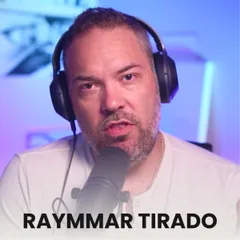
Marketing strategist and community builder at Independent
Raymmar Tirado describes himself as a marketing strategist, startup founder, community builder and online tinkerer. Many in the Webflow community know him from the Finsweet livestreams.
Raymmar Tirado calls himself an online tinkerer. He is also a marketing strategist, a startup founder and a community builder in Sarasota, Florida. Many Webflow folks remember him from Finsweet’s live streams and from State of Flow, the first community-organised Webflow conference. When we talked, he was about to start community work with Replit. His big idea is that products are a byproduct of community.
What happened to Webflow communities
A few years ago, the Webflow community had a lot of momentum. I asked Raymmar what happened.
I think the biggest thing is just incentives changed.
Webflow took big VC money, brought in executives from scaled Silicon Valley companies and turned towards enterprise. The community went from organic to curated. A few people got “blessed”, and even the showcase became only the best designers. Pockets are still going, like Isabel Edwards with Flow Manchester and Uros Mikic’s team at Flow Ninja.
And then the folks who were doing those things, like the creators, like they moved to Framer, now they’re doing vibe code stuff.
What first excited him about Webflow wasn’t websites.
It was the idea that like you felt like you were working with the primitives of the internet.
He once thought Webflow could be the front end of the internet, with any data layer behind it. Now Replit gives you full code, deployment, GitHub, Stripe and an agent. I still think Webflow has its own place. He agreed, in its own way.
I make the analogy that Webflow is going to be like the HubSpot of web design tools.
He still sells and uses it. But tinkering on it is expensive now, so the early creative class has moved elsewhere.
From State of Flow to Replit
After the Finsweet streams, Raymmar spent most of a year on State of Flow.
What became the first like community organized Webflow conference on the planet.
Over 100 people flew in from all over the world. Then he spent a year on a crypto project and some time at DXOS, a peer-to-peer operating system. At Finsweet, he helped think about products like the attributes and the first browser extension. He left to build his own. Now vibe coding has him excited.
And now I have like the capability of building full stack software, which was never in my tool belt.
He built a member directory for his local tech meetup that syncs with Luma, with Stripe payments and premium listings. He also built a listening tool that scans X and Reddit for sentiment on any topic, powered by Grok. Sign me up.
Products are a byproduct of community
I think products are a byproduct of community.
Hunter-gatherers had no time for products. Agriculture freed people up to build tools. Products extract value from a group. Today, the attention of people is the most prized commodity.
Now we’re in a phase where like building the product is the easy part. It’s getting distribution is the hard part.
Community builds distribution. Even a successful plumber is usually active in the chamber of commerce or a local charity. It’s about trust. But a lot of marketing just calls itself community.
Community to me is like, many to many relationships amongst the people who are involved in the product outside of the influence of the product itself.
Top-down communities become sterile. Real ones can go viral, and toxic. Who did it best?
If you talk to anybody from about 2017 to 2019, 2020, the Webflow community was like the staple for what an online community could and should be.
It gets hard at scale, because control from the top makes people break off.
I think it’s almost impossible to have a church without a pastor.
Communities need personalities, and many of them. Timothy Ricks is one who grew huge. Raymmar was the right person at the right time, with event and video experience when COVID hit. He ran the global open house, the clone competitions and an ugly Christmas website party.
He also told me about his first big client. He had just gone out on his own.
When I closed the contract, I had like six bucks in my bank account.
A jeweller he helped part-time paid him with a chamber of commerce membership instead of cash. There he met a company and talked them into a logo and a WordPress site. He had never done either before. He arrived five minutes late to pick up the deposit, and they made him wait an hour in the lobby. The cheque was 4,500 dollars.
I don’t even think I had closed the door of the car before I started crying.
How to grow a community
Try a few communities. The first one is unlikely to be the one. And show up to give.
You have to find ways to add value to the network, to the community, if you want to extract value from the community.
Find people at or above your level, and find a creative way to stand out.
When I first started going to these chamber events, I just started showing up with a video camera and interviewing people.
He accidentally deleted the first footage. Nobody cared. Everyone wanted to know who the guy with the camera was. I’ve had FOMO about State of Flow and every Webflow Conf, living this far away in Finland. Going to a proper in-person event is next on my list.
I think it’s really hard to break past a certain threshold in a community if you don’t have the in-person stuff.
Travelling to an event is a selection filter. Everyone there is committed, and you meet people at your level, above and below.
The other thing is being the person who organizes that is such a hack for your career.
Sarasota Tech started with six people at a bar. Now 150 or more come every month. I said we tried a Webflow meetup here once, and the turnout was small.
Don’t be scared of a small turnout.
His strategy is to find two or three people to organise with. At the first meetup, the goal isn’t the meetup. It’s getting everyone to commit to the next one, bring someone and suggest a topic. Ask them to teach it, and they’re invested. They curated the early audience, then opened up. There’s always a DJ, a good venue and a bar. Some people ask them to turn down the music. The answer is no.
We have a no sales policy at our event.
How big can a community be? There’s no ceiling. But there is a limit on meaningful relationships.
The average human can kind of manage meaningful connections with approximately 150 people.
That’s the Dunbar number. It’s why big communities break into smaller groups, and why linking those groups makes them strong.
Attention, trust and agency
I asked who owns a community, thinking of WordPress.
You can’t own a community any more than you can own your neighborhood.
Online, we don’t own anything on the platforms, which is why he gets excited about networks people own. He believes in getting involved locally, like showing up at city hall. Here, I feel local politics is too polarised for most people to spend time on.
We have two options. We either talk about it or we fight about it.
Should every freelancer be a creator?
I think that attention and trust are the two most important things, resources that anyone can learn to harness in our modern world.
You don’t need a podcast, but you should show what makes you unique.
Have a list, start building your email list.
He has landed clients from videos with a couple of hundred views. And if video is scary:
I am terrified every time I hit publish on a new video.
Your comfort zone expands to fit anything you put in it for long enough. You can even stay off camera.
There’s no rules to any of this. And the problem is most people get caught up thinking there’s rules.
He told the story of Chesterton’s fence, a huge fence found in the middle of the jungle. One person wants to tear it down. The other wants to know why it was built first. Both might be right. His last point was about agency. You don’t need credentials to build a website. If you have a little vision and taste, this is your moment. From his door-to-door days, he learned to treat every no as a game.
We knew every time somebody said no, we were one step closer statistically to our next yes.
They made each other slip a random word like xylophone into the conversation before the pitch. Dear listener, if you’re itching to build something now, stop this podcast and go do it. As for me, this makes me want to try our small Finnish meetup again, with a different approach.
Full transcript
Read the full transcript
Janne Parri: Okay Raymmar, so you have been involved in several Webflow related communities a couple years ago there was a lot of momentum for those but not so much today what's your sense? What is going on with all the Webflow communities?
Raymmar Tirado: It's kind of a sore subject, think, especially for the folks who were in the early community days and had like such ambition and high hopes for what the like what the community and the product was going to be. I think the biggest thing is just incentives changed. They started taking big VC money. Started bringing in like big executives from other like scaled Silicon Valley companies, know, and kind of lost, I think they lost a little bit of touch with what made them like super powerful, which was like the creative expression, the ability for like creative folks to just build interesting things on the web. And as they started making that turn from like, you know, just casual builders, freelancers, know, tinkerers, creative people, like the no code folks that were like really excited about like using Webflow to build front ends for like Zapier integrations and no code backends and all this other stuff and started shifting towards like enterprise.
Raymmar Tirado: The shift changed in the community too. And it went away from this very organic thing to this very curated experience where just a handful of people from the community kind of got blessed as like, you're certified, you're certified, got very clicky, a couple agencies, a couple creators, and it just seems like there were so many people doing things and even just changing the showcase, right? The showcase used to be this place where I think everybody used to go and be like, what's the most interesting thing that people are building in Webflow today? And then it became this like super curated, only the best designers, like just the, you know, like, so I think everything just, they reach a certain scale, incentives become a certain thing. The community in its current iteration, I think, is probably more effective for what they're trying to do at an enterprise level, the bigger events, more global type stuff.
Raymmar Tirado: Yeah, I don't know. You know, so I'm not inside their decision making process over there. I do know like public sentiment was a little sad as you kind of saw it, you know, kind of fizzle out in the community space. Things like, I mean, the Flow Walkers are still doing their thing, but they're talking about, you know, changing the name a little bit away from like the Flow stuff and like Flow Party. I think... Who's still killing it. Isabel Edwards is still killing it with Flow Manchester, like they're doing a thing, but she was also kind of one of the anointed ones. You know, and so like there were these little pockets of things that kind of happened. Uros over in like the Flow Ninja guys, they're killing it. They're still doing like really
Raymmar Tirado: Cool stuff. So there's little pockets of it, but I think it's a little more strategic. It's a little less organic. It's a little less like, you know, and then the folks who were doing those things, like the creators, like they moved to Framer, now they're doing vibe Code stuff. They've kind of gone to explore other realms now. They're not so much in Webflow. Webflow's living like an enterprise land and they're selling 50, $60,000 a year hosting contracts and bandwidth charges can get expensive now. So you just don't see as many of the creators tinkering as much in Webflow anymore who aren't, again, working or selling into big agencies.
Janne Parri: Yeah, yeah, yeah, there is not that much like excitement than there used to be
Raymmar Tirado: Well, it's all going into vibe code now. Like, don't know how these web builders are going to keep up with, you know, these new tools that are coming out. Like, Replit just announced this design mode thing that is like spitting out these really cool front ends in like minutes. And then you can take that and start working with the agent to build out the backend for it, you know? And it's like, somebody's going to win. You know, like in this road, there needs to be something in the middle because like Webflow still has this beautiful like UI. You can still touch and manage and like get really beautifully custom designed front ends, you know, whereas like the vibe code stuff and some of the like more app builder type things you're getting these like, you know, like shadcn or Tailwind or you know, you're getting some kind of framework that so things start looking similar, a lot like they did when like WordPress really started taking off and all the themes kind of started looking similar anyway. So like
Raymmar Tirado: There's still a place between like purely vibe coded and like fully custom designed. So like Webflow is on the fully custom design side, things like Replit and lovable and blah, whatever other vibe code platforms are over here on like the, you know, vibe code side and they're going to merge at some level. But I think a lot of the excitement is moving into the vibe code space because what really excited people about Webflow was not really like building websites. It was the idea that like you felt like you were working with the primitives of the internet. So the reason I fell in love with Webflow was because I was learning HTML and CSS and JavaScript. And I was like, I'm learning front end. Like, ⁓ and then they start, they start, you know, pitching like logic and memberships and all these things. And you're like, I'm going to be able to build applications on the web. And up until then, like that had been like a really big hurdle. It's a very difficult thing to do, you know? And so like, they got so many of us excited as like tinkerers and like, I went all in. If you like go back to these, the Finsweet episodes. And I was like, Webflow has the potential
Raymmar Tirado: To be the front end of the internet. Like they could. Front end as a service, like I really just thought they were gonna just build this front end layer and then allow you to connect any data layer on the back end and plug that into this front end and you would just go off to the races. And I think they're trying to head in that direction, whatever they're doing. But again, I don't know how they keep up with a company like Replit who's just like full code, full functionality. The agent's amazing, full deployment, like you own the code, put it into GitHub, integrate with any service you want, pull in any data source you want. You don't need to like go and do data integrations with Airtable or Zapier or whatever. It's just like ask the agent and it spits it out for you, connect to Stripe, like just whatever you want, it'll do it for you. And then if you have some design taste, you can go into Figma, you can go into like a TL draw, you can wireframe some stuff and then tell the agent like, this is what I want it to look like. And boom, you get like the best of both worlds. And so like,
Raymmar Tirado: I don't know how like the next couple years play out. Like I would be very interested to know, you know, like what's going on inside the war rooms and places like Webflow and Framer and Bubble and all these other no code companies that as they try to evolve and keep up with the new, like the new players.
Janne Parri: Yeah, yeah, totally. But I still think that, Webflow still has like their own place. Well, maybe it is more in the enterprise direction for like the marketing teams and so on, but go on.
Raymmar Tirado: I make the analogy. Yeah, I make the analogy that Webflow is going to be like the hub spot of web design tools. It is going to be enterprise grade, very good. Lots of people are going to use it. It is still like best of class design, performance, scalability, custom CMS. Like if that's what you're looking for, like it is still, you know, like a top contender. I still sell the product. I still use it for lots of different websites. I think it has a very like strong niche to fill, especially in the enterprise space. And that's why they're like running fully in that direction. What I'm talking about is that early creative class, the folks who are tinkering, the folks who want to build personalized software, the folks who are like indie hackers, but are not like full software developers, those folks, you know, the people who are tinkering, who again, I think are the folks who took Webflow into like, open the door for Webflow to become this big enterprise player. Like those folks are now moving into these other places as they
Raymmar Tirado: One, cost becomes prohibitive, know, like experimentation, like hosting on Webflow is expensive. Like there's lots of little things that if you're just gonna tinker and you wanna like stand up a landing page real quick, you're just, Webflow is not the answer for that anymore.
Janne Parri: Yeah, yeah, definitely. Okay, we are going quite deep. We are almost getting heated.
Raymmar Tirado: Yeah, yeah, let's get back to the community stuff.
Janne Parri: No, before that, before that, we have to do a little intro. So my name is Janne Parri. I'm your web flowing man all the way from Finland. And my guest today is none other than Raymmar Tirado. So you describe yourself as a online tinkerer, among other things like marketing strategist, startup founder. Community builder, ⁓ but many of us Webflow folks remember you from the Finsweet live streams that you mentioned could you ⁓ quickly catch us up? What have you been after those Finsweet days?
Raymmar Tirado: Yeah. It's kind of been a whirlwind. So immediately after we did state of Flow, and I focused on state of Flow for a while, and that was probably seven, eight months, maybe almost a year of planning to pull off what became the first like community organized Webflow conference on the planet. Like we had 100 plus people fly in from Canada, France, Germany, UK, Mexico, like South America, like we had people just literally from everywhere coming to this thing and did like a really cool event, like a three day state of design, state of play, state of the web. And that took up a lot of focus. And that was kind of like the last hurrah in the Webflow space. And we won't talk about the details of how any of that stuff played out, but.
Raymmar Tirado: That was kind of took like, you know, the initial momentum there. And then I took a little bit of time off and actually got sucked into a crypto project. That was very interesting. I have a deep, like if folks know anything about my personal philosophy, like I have a deep-seated idea of like how the incentives of the internet should be restructured in order to allow us to like build more stable societies with through digital channels and with these digital tools, which again, will tie back to community. And so that got me pulled into like this crypto project for a while. Those guys were kind of crazy. And honestly, like I'm not sure crypto is ready for the adoption for the types of products these guys were trying to build. And so that was about a year of work that was very interesting, helping them raise money, going to speak at conferences. I learned a lot about the industry, but I've also been active in the crypto industry since 2013, 14. And so
Raymmar Tirado: Anyway, there's always been like this idea of like digital ownership is an important thing and we should figure out how to do that. And so like that's always appealed to me. And after the crypto project, I went to this other thing called DXOS, which the idea is a decentralized operating system. And it's a peer to peer slash local first super app is what they're trying to build, which essentially it's a former Google guy trying to recreate pieces of the Google Cloud without the cloud infrastructure in the middle. And so could you have things like Google Docs and Google Meet and like a Notion style notes app that you can share, but there's no server in the middle. It's just my computer talking to your computer and you know, like daisy chaining these systems together and having this distributed like operating system that allows you to share notes, collaborate, have meetings, private stuff, you know, like it was a really cool project again, but I think a little ahead of its time. And they're still working on it.
Raymmar Tirado: But I stepped away from that because this vibe code stuff just got me so excited. And so I started building and tinkering and I've always been a product guy. One of the reasons I was at Finsweet and one of the things I was doing at Finsweet in addition to community was helping think about products and how do you take these products into the market and how do you like build cool things that the community needs that Webflow doesn't have yet? And like, you know, how do you turn things, you know, like the attributes and the browser, the first version of the browser extension that Alex Iglesias built, you know, you know, lot of those things came the Client-First. You know, like a lot of these things came from conversations that were having internally as we figured out, how do we make the agency better? How do we solve certain problems? And so like, and even before that, was ⁓ like, I'm a tinkerer, I'm a product guy. And so ⁓ one of the reasons that my time at Finsweet ended is because I wanted to go build my own products, you know? And so alongside of that, I've been playing and tinkering and building. Now this vibe Code stuff, especially Replit, ⁓ allows me to
Raymmar Tirado: Just build things that I never imagined then, you know, like you can sell those things. People pay a lot of money to solve problems with code and with technology. And now I have like the capability of building full stack software, which was never in my tool belt, you know? And so, yeah, it's just like, I don't know if I answered your question, you know, maybe I'm rambling a little bit at this point, but yeah, just
Raymmar Tirado: Like in a roundabout way, I think that's like what I've been up to. Now, when will this publish? Do you know when will this episode publish?
Janne Parri: Yeah, next week at the latest.
Raymmar Tirado: Yeah, so by the time this comes out, I will be in San Francisco doing some work with Replit. And that's going to be the next chapter is I'm actually going to be helping do like community stuff with them and kind of some of the stuff I was doing in the early
Raymmar Tirado: Webflow days of like, how do you see the community? How do you like try to build a little momentum around this thing that they have? And yeah, that's gonna be really exciting. So honestly, yeah.
Janne Parri: Before we go to communities and what you're planning to do with the replica, I gotta ask you mentioned that you wanted to make your own product. So did you
Janne Parri: Accomplish that? Did you get something out?
Raymmar Tirado: I am tinkering with some things that I am very excited about. Let's put it like that. I have a few things. So one, we, going back to the community thing, we run a local tech meetup and that started a couple years ago, five, six of us at a bar. And now our last event, had 150 plus people show up. We did this panel discussion with like a professor from Ringling University and some guy that was like his name's Peter. I can't think of his last name. I can't think of his last name, but he was like at one point one of the most cited mid-journey styles, reference styles.
Raymmar Tirado: And then another guy who works for a group called MediaWise, which is like Poynter Institute. And we had a conversation about the blurring lines between technology, media, and art. And so we're doing these really cool local tech meetups. And I built a directory for that. That syncs with Luma, which we're using for our events. And now we have this big directory on the backend for us is like, we formed a nonprofit around this thing. And so like now as admins, we have access to like the Stripe dashboard and I can see like, can see money coming in real time. We can see members coming in real time. We have some workflows build that like try to get people to create an account and then like upgrade to a premium account so they can fill out their directory listing. And so like that product right there is something that I think, you know, lots of communities that use Luma.
Raymmar Tirado: Could take their Luma calendar and they plug this thing in and automatically you get like a full stack member directory with like the ability to send email blasts and like make members only post and just, you know, like have a public facing business directory. Like that's a product that I think, you know, we'll start figuring out how to get into the market soon. We're just kind of like using it internally and kind of smoothing out the edges. And then there's two other tools. One is like, one that I'm really excited about is this Listening tool and basically it will scan X and reddit and I'm trying to feed it YouTube and other data sources and it basically listens for like trends and industry news and what are people talking about it grabs sentiment and so basically? For instance, I'm monitoring Sarasota and it's bringing me like news reports and
Raymmar Tirado: Stories from people on X and weather updates and traffic updates and real estate updates and all these different things that like because I don't read the newspaper, you know, but it's just it brings me things and it tells me like, hey, are people excited about Sarasota? Are they not? And so I'm like kind of building a filter for the internet that I can point at anything. Let's say I wanted to point it at Webflow and see what are people saying about Webflow? What's exciting about Webflow? If there's product releases, it'll tell me like, are people excited about this thing? Are they, you know, talking shit about it? What are they saying? What are the like most popular images people are sharing. Then there's like a time machine so you can go back in time and see what was a sentiment on each day along with this daily report and all these like beautiful visuals. And so like it's kind of this research tool that like works for you. And it's powered by Grok and the X API and the Reddit API. And like, again, YouTube is getting plugged into it. And so it's like it's becoming this little research assistant that kind of works for me on the back end. And I can keep my eye or my finger on the pulse of an industry or like I can give it
Raymmar Tirado: Financial terms and like have it watch stock signals and things like that. And so I'm very interested in that. And that's something that like I'm also trying to figure out. How do you take something like that to market? Yeah, even in the context of imagine plugging that into Webflow and having it spit out the daily report as a blog article every day about a specific topic. And now you have a running like daily, you know, indexable search engine optimized. Very very niche topic thing with not just an article but all of these links that take you to Twitter, Reddit, to the podcast, to the video, to the thing, you know, where the original source lives and so like I think people would pay for subscriptions to that or the ability to then manage an industry report if you will.
Janne Parri: Totally, like sign me up right now. But so many projects, so many things to keep up. But have you always had the sense that with every product there is some sort of community aspect? Is that like a natural thing that you think?
Raymmar Tirado: I think products are a byproduct of community. And what I mean by that is like, if you think about what a free market is, in a general sense, like if you go real primitive, if you go back to hunter and gatherers days, like there are no products because we're all hunting and gathering and like nobody has time to like think about building shit to make things easier. Right. And so like everyone's just kind of frantically figuring out how do we get enough food to survive? And then how do we like fight off the wild? You know? And then agriculture comes along and you're like, hey, like maybe not all of us have to go hunt for food. Maybe like 70 % of us can work on food and 30 % can be freed up to like do other things, maybe make tools that make it easier for us to make food, you know? And so like products evolve out of like, first of all, convenience, but then also market necessity and like productivity, you know, improvements in productivity. And so like,
Raymmar Tirado: The real reason for a product is typically to like extract value from a network or from a group or from a community, you know? And so like that scales all the way up and now like that's like first principles product, you know, necessity market formation. Now you scale up to like modern society. It's kind of a different thing. But to answer your question. Yes, I think most good products serve the need of some group of people. And as we figure out that the attention of people is like the most prized commodity on the internet, then building products for communities of people specifically has become really important. And you see this in the news. You see this around subscription, like information distribution is like kind of the first big one and like social networks, obviously. And, you know, like we can get into the incentives around how they manipulate attention and blah,
Raymmar Tirado: Right. And so like I think about it like the first big scale products were built like Facebook. The first big social networks were built around community. Right. Like around college campuses and kids rating each other's appearances and blah, whatever. Right. And it's like community builds network effect. Right. And so when you have attention of a group of people, it becomes very easy to shape products or distribute products. And now we're in a phase where like building the product is the easy part. It's getting distribution is the hard part. And so you're seeing everybody kind of lean on community because community is what builds distribution. And so if you can get early users of your product to kind of be your marketing team.
Raymmar Tirado: And then you can scale that. Not only does the product lead the growth, but the community leads the product, which leads the growth, you know? And so that becomes like a very effective strategy to grow software in this modern world.
Janne Parri: Yeah, it is easy to see from the standpoint of an active community member, but do think that companies understand that? Or maybe in the Silicon Valley that is understood, but what about the rest of the world?
Raymmar Tirado: I think some businesses lend itself to more focus on community than not. Right. And this becomes like ⁓ again, a function of what you're selling. If you're selling, if you're a plumber and my ⁓ sink is leaking, I don't give a shit about community. Right. Like I want you to get here fast and turn the water off and make sure my house doesn't flood. You know, so like maybe that's not a big deal in the community. However, if you look closely at most plumbers who are successful, they spend a lot of time working with like chambers of commerce or in their local communities
Raymmar Tirado: With nonprofit organizations, giving back to some, you know, boys and girls club or habitat for humanity or whatever the local animal shelter is or whatever the nonprofit of choice is. They are very active and giving ⁓ the school softball team or whatever, you know, it's like, they're very active in getting their name out in the local community because they want to be known as a known commodity. And that's a great way for advertising and distribution. So even that, like there is always a tie back to trust, right? Like if you want to sell products, you need to have trust of the audience. And if you want to build trust with an audience, you kind of have to build some level of interaction with them. And a great way to build interaction with them is to have some community activity, something, whether you organize it, whether it's self-organized by the community itself, you know, but either way, something like that is important.
Raymmar Tirado: That's how you understand demand. That's how you build attention. That's how you like, again, figure out how to distribute your product. So, and now what we're seeing is like, there's a difference between community and marketing. Like a lot of people are just calling everything that is marketing, like it's community, but it's not, know, like community to me is like, many to many relationships amongst the people who are involved in the product outside of the influence of the product itself, right? Like once the product starts, shaping that thing, can still be community. But you also then like, you know, like you have different incentives inside of there. And so that's why sometimes, you know, you see companies that have like internal community programs, but then they have ambassador run programs and then like community run sections of that they have meetups in different groups. And like they do a really good job of like saying, Hey, we really appreciate what you're doing in the community. Want to elevate you and support you. And that's what our role will be as a community team versus
Raymmar Tirado: Top down communities where they try to tell you how the community should run and how they want everything to be. And that becomes very sterile, very like, you know, it's a very different thing, right? Those are kind of corporate marketing disguises community versus like real community focused, you know, things that are like authentic and, you know, can be very viral and also toxic. Like they can be very difficult. You win by the sword, you die by the sword, right? You live by the sword, you die by the sword. You see like, with any of these products that have huge fan bases when they change their pricing or they make a feature update or something goes wrong or the service goes down for a day, whether it's Cloudflare's fault or the service itself, like whatever. Then you also get this crazy like deluge of just like, we hate you're the worst. You know, and so it's like, it's the era we live in where
Raymmar Tirado: Again, you it's the mob, right? Like it's the mob. And we've learned throughout all of society, like this is why we have republic forms of democracy is that you can't always just let the mob win. Right? Like the mob is not always the smartest thing. You have to have representation and checks and balances. And on the internet, we don't have that. We just have a mob, you know. And so like, again, that goes back to some of the reasons I think about community a lot and how do we build these systems of governance and like how do you organize people on the internet to do things like that, whether for good, whether for evil, like how are people doing it? You need to understand it. And so like this is going to become a whole industry. Like this is literally becoming a whole like industry in and of itself is understanding how to organize people, take the attention of that group, that organized group, and then point it at different things. And you're seeing like YouTubers do this really well and they're launching products off the back of their audiences. Right. And
Raymmar Tirado: You see Mr. Beast launch a chocolate company that's bigger than fucking Nestle in like
Raymmar Tirado: Six weeks, you know, like what? So and I don't know that it's actually bigger than Nestle, but you know what I mean? It's like all of a sudden they're in every shelf in Walmart, not because like they have this legacy of making chocolate because anybody can make chocolate now. It's because they have an audience big enough to distribute chocolate at a scale that makes sense for them to sell chocolate at every Walmart in America or across the world or even start up a kitchen, you know, that sell burgers and compete with fast food. Not because again, like they've been selling burgers for 50 years and they have a legacy of building burgers, but because they have the attention of hundreds of millions of people, you know? And so like this is the new currency. So like, yeah, to go back to your prop, your initial question about does every product have to have a community? Like, yeah, if you want to succeed in this new world, I think it will be very important to have whether that's community is 50 people or millions of people. You will need to have some semblance of that, you know?
Janne Parri: Yeah, yeah. But it's a hard thing because the community is, as you said, like organic being and you kind of can steer it a bit, but you are not like in full control of it. But do you have like, well, you mentioned like Mr. Beast, but do you have any like examples? Who does it best? And maybe in a more like corporate B2B sphere. Does anything come to mind?
Raymmar Tirado: I mean, it's hard to beat those early Webflow days. I think if you talk to anybody from about 2017 to 2019, 2020, the Webflow community was like the staple for what an online community could and should be. And... You know, like I've seen other groups do like Chris Doe has an amazing community, but it's not around like a SaaS product. You know, folks like that, like Ran Segall did a good job with again in the Webflow space with, you know, like there's brands and folks that do Dan Petty, you know, is like doing community really well. But those are like individual brands, not like big SaaS companies. It's very hard to do at a certain scale, right? It's very hard to do at a certain scale because it's organic and because like
Raymmar Tirado: It's just like the free market, the more you start trying to control it from the top, the more people start breaking off around the edges, you know? And because we're getting like exponential product growth, like there's so many new products coming out, it's hard to get like density around a thing.
Janne Parri: Maybe it would be a good play to have some sort of spokesperson that kind of personalizes the brand and you have kind of been one. So what do you think of that model? Like one person like being the spokesperson?
Raymmar Tirado: I think it's almost impossible to have a church without a pastor. Let's put it like that, you know, and at a certain sense, these communities are like secular churches, you know, in the cult mentality of the idea of like the group, the idea of like the hive mind, the, know, like, and so in that context, you always need some kind of personality, some kind of like, person leading and not just one, like lots of them, right? Like there were lots of people in that, in those early Webflow days doing the same type of thing. You know, the ⁓ Joseph Barrys and the Melissa Mendez and the, you know, like the no code North folks and like ⁓ there's all these little pieces of stuff and like some are more successful than others like Timothy Ricks. Look how he's grown, right? Like Timothy Ricks
Raymmar Tirado: Was still in the space and like, look at him now, right? I remember early on ⁓ we actually like tried to get him to come to Finsweet And he wanted to do his own thing and look how big he's grown now. He has a massive community and probably one of the leading intellectual minds in the Webflow space. Solo crew just killing it. Reinventing the way you work with Webflow. So I do think those personalities and those... Whether you want to call them influencer or visionary or...
Raymmar Tirado: Community leader or whatever, right? And sometimes it's a function of the timing, right? In the moment, like there weren't a lot of people doing it. I had experience building community. I had a media studio at the time. So I'm doing a lot of video and a lot of community stuff locally. Like, so things just kind of played right into, and then COVID comes and you know, I have a great experience with events. Like I had been doing events in real world community for a long time. And so like, we start bringing that into the online world. And next thing you know, our online events are just more exciting than other online events. You know, like that global open house event, the clone comp stuff that we did, the even the like ugly Christmas website party, you know, instead of like an ugly Christmas sweater, we
Raymmar Tirado: Did like an ugly Christmas website party and like come build the ugliest website you can in an hour.
Raymmar Tirado: And it was fun, you know, like it's just, but nobody was thinking about stuff like that. You know, like were doing things that were just fun and unique. And again, it takes somebody who that's hard to come from corporate, right? It takes somebody who like fell in love with the product. I fell in love with Webflow. I started using it and I'm like, oh, more people need to know about this, you know, and that led to me showing and creating and that I think it take is what it takes to really start seeding some of these networks. And that's what I'm excited about now is that like I've been using Replit for the last year and kind of showing people and building things and being like, yo, look at this thing I just built. Do you believe this? Like what? And
Raymmar Tirado: Yeah, so now I get like, get to show people that right. I want to show people that and see like, how many people can you show? Mostly because I understand that you can change your entire station in life by learning these tools, right? Like you can go from making zero money to selling a website for 510 2050, whatever $1,000, you know, and so like that's that could be life changing money. If you starting out as a freelancer and you get a couple like website projects and you can quit your job and now you like get to work at home or get work remote and do whatever you want like
Raymmar Tirado: This it's life changing stuff. It changed my life, right? Like I was poor. I was a nobody. I literally had zero dollars to my name. You know, like if I'm happy to tell this, the story of the first website and logo
Raymmar Tirado: Project that I like landed. But. You know, like I had just kind of gone out on my own and when I closed the contract, I had like six bucks in my bank account, like literally six dollars in my maybe less was like five fifty or something like that. So I'm stupid like. And no clue where the next dollar was going to come from. Like absolutely no clue. I had one client that was paying me five hundred dollars a month and I would it was a was a jeweler and he wanted me to come into the office for like a couple hours a week and I would help them with trivial stuff. Their social media and like design stuff, whatever. But he ended up paying for a membership to a chamber of commerce locally in my community. And I had been active with this group
Raymmar Tirado: Like years before or whatever. And he's like, you know what, I want to I want to do this project, but instead of paying you, I'm going to give you this chamber membership. I think it's going to be more valuable for you than the money. And if I give you the money, you're never going to spend it on a chamber membership, you know? And I was like, OK, cool, whatever. And he was also like part of the chamber membership drive. So was like his responsibility to like get more members that year. So anyway, it was a good trade. And I started going to these events and I met this company and I start telling about what I what I do. You know, I tell him I'm a, know.
Raymmar Tirado: Artist and I'm a creative strategist and I'm a marketer and I just learned what marketing was like three weeks ago kind of thing. Know, like at the at the time I was selling text marketing door to door, right? I had moved to Florida and talked some friends of mine into like buying these text messaging credits that were selling. We're trying to sell to companies that wanted like, and this is at the beginning of text marketing. But what I discovered is nobody wanted text marketing. They wanted like integrated marketing. They wanted the text marketing to be part of their email system and part of their website or part of their point of sale.
Raymmar Tirado: As I'm trying to sell this thing that I had no idea about, you know, like door to door, literally door to door, making zero dollars, I started learning what marketing was. I started learning about WordPress. I started learning about building websites and kind of getting into that game. And so I started telling people that I knew how to do these things, but I didn't, you know, and whatever, I'm the young kid at the chamber group. And next thing you know, I'm talking to this company. We built a good relationship. And I talked them into. Hiring me to do their logo and a WordPress site. And I had not done either of those before. I was working with HubSpot at the time and I had convinced them they needed HubSpot to do like inbound marketing and whatever. It's like this whole thing, you know? And again, I remember the day I go to pick up the check, six bucks, maybe less in my bank account. The meeting's supposed to be at eight o'clock. I woke up at like 7 45 and they live there. Their office is 15 minutes away and the guy is a total
Raymmar Tirado: Like stickler for time. I'm like shitting a brick because I couldn't sleep the night before. Was so panicked and excited. I stayed up all night. I just couldn't like. So anyway, I'm like in a movie running down the stairs, trying to get dressed while I'm driving, like putting my belt on, like just driving as fast as I can. And I call the guy like I'm like, hey, traffic's shit. I'm to be there like two minutes late, whatever, you know. And he's like, no problem. We'll be here. Whatever. There was a problem. This guy had already told me that like time was real important to him, you know. So I get there like.
Raymmar Tirado: Five minutes late. It's eight five. And I think I just blew this whole fucking deal. Like I literally and they make me sit in the lobby for an hour. He makes me sit in the lobby and they have like glass offices so I can kind of see that they're not doing shit. He just makes me like sit there for an hour.
Janne Parri: Yeah, yeah. That's tough.
Raymmar Tirado: And I think like, man, I totally blew this deal. And anyway, they gave me the deposit right there. Was like half the contract was like forty five hundred bucks, you know, that they gave me. And I remember grabbing that check. And getting in the car. And I don't even think I had closed the door of the car before I started crying because like of the stress of thinking, first of all, I landed the deal. And then second of all, shit, I blew the deal. And then third of all, I actually am holding a check that gives me I can keep doing this like I can I can
Raymmar Tirado: I can move forward and do more of this, you know, which is like a big deal. And so yeah, that was like the first big contract. Became a client for years after that. I still am friendly with them. They just sponsored our tech summit, you know, so like and again, that goes back to community chamber of commerce, getting involved with folks, showing up at events, being in person, building relationships. And then that led to this project. And that started my freelance career that taught me like, you can sell projects like this. Like I'm trying to sell text marketing door to door for 50 bucks a month. And I just sold this guy's
Raymmar Tirado: Ten thousand dollar website and logo. What are you doing, Raymmar? Like, you got it wrong. You know, and so that like, that was the open door into freelancing of like, hey, go just now you have a model, go do that again. And the next the next client I got was like an $1800 a month retainer, you know, and so like, now I'm in business, you know, like now I'm doing stuff and yeah, just been going from there.
Janne Parri: Yeah, that's a cool story and you were kind of like pushed to the chamber of commerce. We have the same thing, but obviously we do not call it that but yeah, maybe it's a bit hard for a young person to like choose because there are all of those like online communities and then there's like local
Janne Parri: Communities and there are examples of people doing great with both and with multiple communities. If there was a young guy, maybe young Raymmar, trying to choose where to go with the communities, what would you tell them?
Raymmar Tirado: I would say you probably got to try a bunch, you know, like the odds of the first community you try to join being the one that's going to be like the one that gets you there is probably like slimmed up, none odds. And I also think that whatever community you get involved in, it's about what you give to like, if you just go somewhere expecting the community is going to like, you know, suck you in and they're going to like, you know, put you in charge of stuff and start giving you leads and like, you know, doing that doesn't work that way. It's like you have to go willing to like get involved, join a committee, you know, like if you're a designer, you can find a group that needs design stuff and maybe help them, you know, like do something in a way that like nobody else in the group can do, you know, it's like
Raymmar Tirado: You have to find ways to add value to the network, to the community, if you want to extract value from the community. And that's, think, the biggest thing is lots of people just think like, oh, I'm just going to show up. I'm going to pay the fee. I'm going to go to the take the class and then like whatever. Now I'm part of the community. But you're not really right. Like, are you showing up early? Are you showing up at the events? Are you contributing in the Slack channels or in the Discord or like whatever? Like, are you actually showing up? And that's how, you know, like you can you can grow. So I would say try a few different communities and then find like where the vibe fits your style. You know, like you have a specific style maybe that you want to like try to do. And so you want to find people that are doing that, right? Like you shouldn't join a community and the people in the community are not doing the thing you want to do. Right? Like I'm not going to join a community of people who can't vibe code at least at my level, you know? So like I'm looking for
Raymmar Tirado: People who are either at or above my level to join. And then I want to surround myself with that. And I want to figure out how do I offer value into that group so that then they pull me up and like, then, you know, then you can build a little bit of status or clout or, you know, like again, a bigger value exchange, because once you start offering value, then you can start asking more of the community. And the more value you give, the more you can take, you know, it's like that it's like this reciprocal thing. And so if I were me starting over again, I would figure out where is it that I could show up that I'm going to offer outsized value.
Raymmar Tirado: To anybody else in the group. And then I'm gonna find a really unique way to make sure everybody in that group knows who I am and what I do. I'm not gonna show up and just try to do whatever. I'm gonna do something creative to stand out. I'm gonna show up one day with a video camera. Okay, so here's how I did it when I started. When I first started
Raymmar Tirado: Going to these chamber events, I just started showing up with a video camera and interviewing people. I showed up with a tripod. Put a camera in the room and I put a mic in people's face and I just started interviewing people. I never did anything with those videos. Like actually, the first time I did it, I ended up deleting the footage because I didn't know how to use the camera. It was a brand new camera. And I accidentally deleted the memory card, you know, and but again, nobody cared. Like nobody. They just saw that Raymmar was the guy interviewing people at the event, like who the fuck is this guy with the camera?
Raymmar Tirado: Because nobody ever shows up at those events like that with a camera and a mic and a setup. Like literally the whole room saw me and was like, who is this guy? You know, and I find ways to do that. Like I've done things like that in numbers of different situations where again, you like. You can't play by the odds set by the market, you know, like that's those are the averages. That's like what everyone's trying to do. You have to find a way to stand out.
Janne Parri: Yeah, that's actually a great tip. Yeah, I should think of something like that for myself. Well,
Raymmar Tirado: While you're doing it with these podcasts, you know, like...
Janne Parri: Yeah, that's true. But like I was thinking more like some sort of local meetup thing like that. It's too bad. Well, this might be an excuse, but as you know, I live quite far away here in... Here in Finland and I haven't been able to go to all the other cool meetups. And I remember having some FOMO about the state of flow and every Webflow Conf and some other stuff too. Yeah, now that is like my next to do to actually go to a proper like in-person meetup. But do you
Janne Parri: Think that like just online communities can still bring up the best factors or best sides of a community. Does it always need the in-person event?
Raymmar Tirado: I think it's really hard to break past a certain threshold in a community if you don't have the in-person stuff. So that's not to say that you can't build like a really strong online community and that you can't do like a lot of amazing things. But when a community really starts to break out is when people start getting together in small groups in person and and then if those small group become bigger groups and they meet up at a conference, that then becomes like a really special moment. And only because it is a selection filter, right? Anybody who would, first of all, leave the comfort of their desk to go to an in-person meetup has already made a commitment to say like, I am in this space. I want to meet other people in this space. Right? So like, and that's maybe driving to the
Raymmar Tirado: Restaurant across the street or 20, 30 miles away, 50 miles away, whatever, ⁓ somewhere in your local region, even a hundred miles away, let's say, whatever. But when you go and travel internationally or across state lines or hundreds of maybe thousands of miles to a thing, well, now there's one more layer of selection filter that you've created. And everyone that's in that space has a very high signal ratio in that industry or in that thing. And so to network with those folks, there's a couple of things that happen. One, you finally get to be around other people who understand what you do and what you go through and how your, you know, like business works. And so you don't have to bring people up to speed or explain things. You can just talk, you know, and you also meet other people who are at the same level of your career as well as below and above you. And so you get to see, here's this, you know, like
Raymmar Tirado: I came from here. I'm here now. I want to be here and seeing all that in a room and how they operate and how people approach and how they talk and how a big agency versus a small agency might have their booth set up in like a demo area. And like you just start to see all sorts of things. And then like the conversation you might have with a medium sized agency, cause you can get to the CEO still versus like over here it's VIP and you had to pay 500 bucks just to get to the hospitality suite or something like that. And so like there's these different hierarchies and things that happen at a conference and like relationships that can build that come from like grabbing a beer together or having some food together that like just are never going to come from online, you know? And so I don't think it's a requirement, but I do think it is. If you're going to like really grow something or scale something or like get the max value out of it at some level, you need to start having those like real in person moments.
Raymmar Tirado: And that doesn't mean that everybody in the community has to meet everybody in the community. It just means that in pockets and in nodes and in spaces, there needs to be opportunity for that to happen. And then ideally, a couple of times a year, there's opportunity for folks to gather like a bigger regional more like chunky things.
Janne Parri: Yeah, yeah. I'm getting more and more excited. I'm almost booking up the tickets, although I do not know the dates of the next bean
Raymmar Tirado: The other thing is being the person who organizes that is such a hack for your career. So like if something like that doesn't exist around you, if you could start it and it doesn't have to be like, Hey, we're just doing Webflow. It could be web design. Could just web, design development, like whatever, like you could have this hybrid type create online creator, whatever that like gives you enough traction to just bring in some folks and you start teaching, you start sharing. Next thing you know, you become the local expert in this thing. People start like hiring you or asking you for, you know, like advice on projects. And that leads to like, again, higher status for you... And then let's say somebody else in another town close is also doing that. You'd be like, Hey, let's get together. And then you bring your group, they bring their group. And next thing you know, you have 50 people that show up at an event and boom, you've got like magic, you know, like 10 people to show up at an event. You got magic, right? Like I've had events where two, three, four, five people
Raymmar Tirado: It can feel really intimate and great. Our first Sarasota Tech meetup started with six people at a bar. Now we have hundreds of people that show up every month at these networking events, right? Very different feelings, very different vibes, but you don't get to 150 people in a room every month if you don't start with five people who got a lot of value out of being in that room and then decided to bring a friend. And then we do that again. And then, you know, next thing you know, there's 14 people and then there's 30 people, then there's 60 people, then there's 100 people and like you know, obviously that's not going to scale into forever, but like. That's how you do it, you know?
Janne Parri: Yeah, we have actually tried. I have said multiple times on this podcast that we have tried a Webflow meetup back here with a quite small turnaround, but we should try that again, maybe with a different approach. But anyways, I'm curious about like, yeah.
Raymmar Tirado: Don't hang on, but don't be scared of a small turnout. The goal is. Okay, so I'm to give you like my entire strategy
Raymmar Tirado: For like starting a community from scratch, right? First of all, you find something you're interested in and then forget about a meetup, forget about like starting a big thing or getting 10 people or 15 or like a bunch of people, find two or three other people who were also interested in that thing that want to get together with you and help you organize the next thing. Right. And when you get together with those three people or five people or whatever it is, get a small group, like your first meetup, you know, just try to get as many people as you can that are interested in the thing to show up. And your goal at that meetup is not to host a meetup. Your goal at that meetup is to get everyone that came to that meetup to commit to coming to another one and bringing someone with them. And also giving you an idea,
Raymmar Tirado: Like also giving you an idea for what the next meetup should be. So that way, let's say five people show up at a meetup, you say, Hey, what would you guys like to learn at a meetup? And everyone gives an idea. Well, guess what? Now each of them is incentivized to be there at least for that session and maybe bring people because they're excited about that session. And then if you say, Hey, would you teach us at that meetup? Now they're going to get real excited because they've got a little bit of ownership. And again, you've got now four or five meetups that you don't have to fully organize. You just now have to help find the location and keep people excited. And then at every meetup, you do the same thing. Who else would like to get involved in helping us organize this? We need another speaker for the next thing, or we need another blah, for whatever.
Raymmar Tirado: And you start building that compounding opportunity for folks to just like get plugged in to show up and feel invested in like coming to the next one. And not everyone's going to stick on that. But if at the first one you get one or two people to show up and now it's three of you, at least at the next meetup, you know, there's going to be three people. And if you guys can't each bring one more friend, now there's six, you know? And so at least you know, you're not going to show up and it's going to be awkward. And like one other person shows up and it's just you kind of twiddling your thumbs... You know? At least if there's three of you that had helped organize it and only one or two other people show up, now you've got five and those two people don't know that the three of you organized the meetup. They just think like there's five people at the meetup, you know? And so like you can just, it's not as hard as you think, but you kind of have to structure and kind of purposefully get people to take the next step with you know?
Janne Parri: Yeah, yeah, that almost feels like a little bit of a growth hack that you have to think it through and then like build it in a way organically. You mentioned the your like networking events. I'm curious. Let's say I build a beautiful event and I host it regularly. How can I like make the atmosphere so that the networking thing doesn't feel like networking if you know what I mean like oftentimes the network feels wrong it feels forced do you know what I mean
Raymmar Tirado: One thing we early on, were very judicious about like who we invited in, right? We didn't just like open it up to everyone and we didn't have like a public event for like anyone to sign up for. It was the specific request was we want to talk with people who are operating in the tech world who are actually like doing interesting things so that we can have a group. For people to come talk about what they're doing and kind of interact. And then again, those first few meetings were like very much not like we have a vision for this, but like help us set a vision for this and how can we take this next level and who else can we pull in that can help us like make sure we reach all of the best tech people in this town. And until we had like two or three events where were at like 50 ish plus people of just pure like signal in the room.
Raymmar Tirado: We then started letting people and opening up the invites a little bit more. And so we curated that early audience a lot. Then... Now we always have a DJ at our events, right? We always have a cool venue. Like we always try to find a great venue. We bring a DJ and so the DJ is like pumping house music. And so it's kind of like a chill vibe. There's always a bar, right? So like, and we try to make it, you know, like fairly affordable and like, you know, we just try to make like have, like a drink special or some kind of thing, you know, and then we put out some light bites. Like we usually ask the location to like, it's usually a restaurant or something like that. And, know, like we're going to spend a bunch of money on drinks because
Raymmar Tirado: Hundred twenty, hundred thirty people show up, even if like everyone has a drink, you know, like the bar bill is going to be nice. And most people will have two or three or whatever. And so they'll put out a little bit of food for us. And so we curate the atmosphere like a lot. Like people have asked us, can you turn down the music? It's too loud for me or whatever. It's like, no, you know, like we're here for this. This is what we want. Like we created the vibe for us. And so you'll attract the vibe that you create. Right. So if you create a diff networking thing where everyone shows up and they're like just handing out business cards and it's like kind of corny and rigid.
Raymmar Tirado: Like that's what you're going to get. And if you promote a group on like meetup and just kind of like put it out there publicly and just randomly promote it like you might just get something like that. But if it's just you and your homies and you're bringing friends in and you're like, hey, how can I help you succeed? And like, what are you going through in your business? And like, you know, what problems are you facing? And you start having real conversations. Then people are like, I really like that. Like, I can't wait to get back to talk to those folks again, because like maybe I have a new problem this month that I need to talk to somebody that gets it. You know, and so like that's how you get it to be to the place where what people are talking about are like meaningful things rather than like, you know, here's my business card. Like to call you to sell you some SEO.
Raymmar Tirado: You know, like I build websites and do local SEO. It's five hundred dollars a month. You know, and like you get these people that show up to these things and all they want to do is sell. Right. And so like we have a no sales policy at our event. Like we're like we don't want you coming to our event to sell your products. And if we find out you're doing that, we're going to ask you to leave, you know? And so like that's a, that's a stated thing that we tell people. Like if you come and meet someone and you guys decide to do business, that's fantastic. We love that. But if you walk up to me and the first thing you do is try to like find out how to sell me something like, first of all, I'm going to tell you that like, this isn't what we do here. And if I hear that happens again, we're going to just say, Hey, like you're going to get blacklisted on the email. Like you're just not going to be able to check in at these events. Like we just not going let you in.
Raymmar Tirado: And so and the bigger it gets, the harder it is to curate that vibe, right? Like when you have 30 people, 40 people, no big deal. When you have 100 people, it's like, all right, how do you how do you know, like you got to rely on other people now to like curate that. Like, hopefully you did a good job getting there so that like it permeates and like you don't have to be policing it, you know.
Janne Parri: Yeah, yeah, but you again mentioned the like organic nature of the community itself like affecting the community just asking what do people want and asking if they can bring someone else to the community and so it grows but I'm also curious how big can a community be like what would be an example of the like biggest communities online, offline, both, whatever. What's like the ceiling?
Raymmar Tirado: There's no ceiling. Like a nation state is a community, you know, and a family is a community, right? So like there's just scales of connectivity. There's this thing called the Dunbar number. I don't know if you're familiar with it.
Janne Parri: Is it the seven folks that you know
Raymmar Tirado: No, Dunbar number basically says that like the average human can kind of manage meaningful connections with approximately 150 people. Know, and some people can go higher on that. Like I think I'm a little higher on that because I just naturally am more social and like my work and also digital tools help me kind of manage relationships with folks a little differently. Some people might be on the lower spectrum of that, right? Some people may be in the 80 to 100 range, 120 range, you know, a more introverted, smaller network, whatever, but that's kind of the general rule of thumb is that like in that range from a hundred to 150 people, you can kind of manage meaningful relationships with. And this isn't that like, you know, their name or you could pick them out of a crowd. This is that like, you have some kind of interaction with them. You know, a little bit about them. You have some kind of meaningful history with them. And so this is why like,
Raymmar Tirado: Communities beyond that size often start fracturing. And this is also why larger communities end up breaking into smaller groups that tend to be of that size. Because that's where you can have real meaningful connections. Now, how good you are at cross pollinating those groups can also make it very strong because I might have a hundred connections and you could have a hundred connections, but maybe only two or three of those overlap. And so imagine how big our networks could be. And this is where you get to what you're talking about, which is the six degrees of separation where like it may only take one or two networks to get to whoever you need. Right. And that's kind of the idea is that like as these networks combine, this is what they call the network effect is that the value of the network increases because of the size of the network, just because of the availability of access to the different people in the network. And so those are kind of like the laws of networks. They've got the Dunbar number, the six degrees of separation and like
Raymmar Tirado: You know, there's all sorts of dynamics that just plays in between, like what the community is and what the value is and how big it can scale. Right. If it's just watching, you know, a game of Thrones, that's a big community. Right. Like because you're just watching and maybe like talking about it and whatever. And like and you meet your friend, you're like, yeah, the last season was terrible or it was great or I love the last whatever. Right. And like that's kind of a community. But there's probably like a smaller group of those who get involved in like some kind of Reddit, you know, where they're like in subreddit or they're
Raymmar Tirado: Having like meetups where they're watching game of Thrones every week with friends or whatever it is, right? Like, you know, and so like, again, there's different scales. They might all be in one community at a high umbrella, but then those little pockets of things that's like, that's where the real value is in those little individualized experiences inside of there.
Janne Parri: Yeah, yeah, definitely. Just like the chamber of commerce, and I'm thinking like the WordPress communities, I know that you have the dark WordPress past. So yeah, there is kind of this organization, but then there's smaller pockets. And at that scale... There might be like certain issues that you know better than me, but I'm already thinking that like who owns the community, especially if it's like around some tool like WordPress
Raymmar Tirado: Yeah, that was a big debate actually very recently with the WordPress world because Matt Mullenweg versus like the folks over at WP Engine, you know, and it's open source project. And there was a whole sorts of kerfuffle over like, can WP Engine have, know, like be positioned the way they are and not financially support, you know, automatic aka WordPress.com even though they're using the tool to build a big portion of the ecosystem. So like who owns open source technology and who owns this community and who,
Raymmar Tirado: You know, and like, there was a whole, there was a big deal about this, right. And they're still litigating some of it. And this is maybe six months ago, I don't remember exactly the timeline, but like, they're still litigating some of this. So like, you can't own a community any more than you can own your neighborhood. You know, like, the association might own some part of the land, but each individual homeowner owns their plot. And then the city controls the infrastructure and then the county controls like, you know, the utilities or whatever else, I don't know, you know, and then like, then there's the state that like has some kind of say over like what the county can do and these other things. And then there's the nation, right? And so like who owns the, who owns the neighborhood? Like you could say the HOA, you could say the, you know, the city, you could say the
Raymmar Tirado: I don't know. Right. And so, like the idea that you own something like this is like very what you can own. And this is, fundamental property rights as individual property rights are very important in like the physical world. Right. And so, like, sure, there's a federal government and there's a state government and a county government. But like, this is my house. And if you come and try to take my house, these entities will enforce and tell you like, no, that's my house. You can't have it. Right. And so that's kind of an important thing. And so that's a little bit of ownership. When you get into like the digital community side, it's very difficult to do that because we don't really have digital community rights. So Facebook owns us all, know, Twitter owns us all X right. They own everything. TikTok owns it all. Right. And so like we don't own shit on those platforms. And I think until the platforms evolve, this is why I get excited about again, blockchain or some, you know, these peer to peer shared network type things, because until we start building networks that we own and the incentive structures aligned with like
Raymmar Tirado: Us individually owning pieces of those, even if there are governing bodies on top that help enforce and like manage that ownership, then like we will never have a safe and like trustworthy internet that's scalable. That's not just full of bots and advertising and trash. Right. And so we have to start looking at the internet and these communities and these things that we build much in the same way and solve a lot of the problems in the digital space that we learned how to solve in the physical space. Right. Which is local governance and, you know, like the town square, political discourse, Republic representation, not just mob rule. You know, like there's all these systems that work in the physical world that align with, again, some core fundamental human rights, which is like property rights and freedom of speech and some of these other things that like, you know, make the West I deal the ideals of the West, like, you know, something to aspire to.
Raymmar Tirado: And so what does what do those things look like on the internet? We don't know yet. And we haven't had that like American Revolution style moment where the people are ready to say, fuck you, old world. The new world works. The new world works a little different and we need to reassess. We need to realign how this works. And I think the friction that we're seeing in this in the world right now are those pieces kind of rubbing against each other. And some point over the next decade, we are going to see an all out like battle for just this type of thing. You know?
Janne Parri: Are you hopeful that we will somehow get to the other side and stay friends with everybody and stay alive at all? Are you hopeful for the future of the internet?
Raymmar Tirado: Yeah, of course. Look at how like society always gets better. You know, it doesn't mean but just because I'm hopeful doesn't mean it won't be painful or that there won't be transitions or that it's going to be like always good, you know. But I do think at the end of the day, like people win, society wins, culture wins, independence, freedom wins, you know, like it's very hard to put the genie back in the box, you know, but also freedom and liberty has never been an accident through all of society. And if you look at things now, like you look at what's going on in the UK with like censorship laws and you know what they're doing with arresting people for posting, you know, offensive things on the internet and like just showing up at your door to try to intimidate you because you posted something like whatever, right? Like we've seen a lot of these things that, you know, like you might write it off as like, it's happening over there, but it's like, no, that's just an experiment. It could be over here too, you know? And so like.
Raymmar Tirado: We are in the moment where like everyone has to take an active role. We, think, because were born in such a stable and modern society, kind of take it for granted that this is just the state of things. And very few of us think about what it took to actually get here. Like the structure, the systems, the thousands of years of like little steps of things that like make it viable for us to be, have what we have, you know? And so we take it for granted. And so we just think it's just going to always be there. And we don't have to be involved in that. Can just go build my business or I can go build my family. And I don't have to show up at city Hall. I don't have to think about local politics. I'll scream at my president, you know, because at a country level I can scream and like whatever we can all get angry at Trump or, know, like whatever the person of the day that we're supposed to hate is. But. Going back to community and everything's local, like all politics is local, all communities local, like who's your city commissioner?
Raymmar Tirado: Who's your county commissioner? You know, like who's on the school board, which is going to affect you and your family and the people that are around you. And like, this is where I think, again, we can make a difference. So like, I am very positive because I see a lot of people looking to do that, to get back involved in small groups, to get involved in like their local community, to homeschool their kids if the school system sucks, to show up at city hall and speak out if the local commission is making bad decisions to. Show up and try to stop developers if they're, you know, doing like, this is how things change. This is how you like make real progress. And so I'm very positive because like with communication, with social media, with some of these tools that we have, it's easier to organize around these topics. And because attention becomes this, really cred incredible weapon to swing across the internet. If you show up at city hall with 50 people pissed off and you make a video about it and you start sharing that virally.
Raymmar Tirado: You could change the entire outcome of a decision in a city. Right. And I've seen that happen a bunch of times. It's not that hard, right? It's very difficult if you show up to Washington, DC to like get the president in Congress and all these people to change their mind. But if you show up at a small like civic event at the county commission's office and 60 of you show up wearing all the same color t-shirts, they've never seen that in their lives. And they're like, holy shit, who are these people? You know, and they take you seriously, even if you're nobody, they have to take you seriously because that's their job. Like now they're worried about like, these voters, you know, like what are they, are they going to keep showing up here? Like, and you do that for three months in a row, fucking game over. You can get whatever you want. And so like people are
Raymmar Tirado: Starting to realize this. So again, I'm very bullish on, and I'm very positive about this stuff, but I'm also very intimidated and scared by nefarious actors who will use these things and how quickly the system is being set up to lock you out from being able to affect those things. You know, and so like we don't have a ton of time to kind of figure this stuff out.
Janne Parri: Yeah, yeah, and we just started this with the internet and how it's messed up, but talking about like AI and should we regulate that and what will the future bring into the mix? So those are some scary scenarios, but at the same time, like I feel, I don't know how it's there, but at least here. I think that Interest in local politics is not that ⁓ great because it's like very polarized and not something that people want to spend their time like just arguing at the local town hall. But ⁓ what would you think? What's the situation there?
Raymmar Tirado: Yeah. Well, we have two options. We have two options. We either talk about it or we fight about it. Like politics is like, that's it. Like politics and the democratic system, the process of politics is what happens in an attempt to stop violence or to, like, to impede violence or to, if violence is happening, interject and stop the violence, right? Like if you're, if two people are fighting and you can split them apart for second and try to get them to talk to each other, this is at some level politics.
Raymmar Tirado: And if you could, before they start fighting, get them to talk to each other, then maybe you don't have to go fight. Right. And this is the options we have. Like we don't have any other options. Either we're going to talk about this if we have a disagreement, or I'm going to go try to do something that you don't like, and you're going to try to stop me and I'm going to like fight you over that or whatever is going to lead to escalating layers of conflict that move from talking to know I'm going to move the fence a little bit further. And you're like, no, you're not. This is my yard. I'm going to push your fence down. And now you're like, Hey, I put some money into that fence and you tore it down. What's the deal? You owe me money. It's like, well, I'm not going to pay you for the fence. It's like, I'm going to come take your car now. And it's like, well, you're not going to take my car. I'm going to stand there to protect it with my gun, you know? And like, it's like, it's right. So you either talk about stuff and you go to the town square and you get enough people to make a difference, to agree on things and you move the needle or those people start organizing to start breaking shit. Right. And so like,
Raymmar Tirado: If you decide to not get involved in politics, that's fine. But what often happens, and this is like a Plato quote, is you start being governed by people who are inferior to you intellectually. And so then you end up with these systems that don't make any sense. And then you may be unplugged further and it becomes this self-deprecating cycle that just like is a doom loop. Whereas as you start getting involved and as you start maybe like getting these uncomfortable moments in city hall, where you have to, you know, have some tension and have a little bit of conflict. You come to a resolution that maybe helps stave off the next conflict from being as bad, right? Or maybe you reduce the next conflict at some level because you had like, everyone thinks conflict is bad, but conflict is not bad. Conflict is good. Learning how to resolve conflict properly is where the problem comes in, right? You can either figure out how to resolve the conflict or devolve into, you know, escalating again, layers of violence. So like, I don't know, like we ignore politics, especially locally at our own peril.
Janne Parri: Yeah, yeah. This is...
Raymmar Tirado: And I hate that this is like turning into a, like this isn't about a political thing about like, I don't believe, I don't care what you believe one way or another, or like, you know, whatever who you want to support, it's just about having a little bit of understanding that like, if you want to live in a stable community, right? If you want to live in a stable society, well, that requires you to take an active role in like keeping things stable. And sometimes that means showing up to argue with the people who are trying to destabilize that. And destabilizing it may just be building a 50 story building in a city where the tallest building is only 10. Because that would be very like jarring to have that happen. Right. And so like these
Raymmar Tirado: These are all things that have to be thought about. And it's like most people are just too busy trying to make a living, trying to live their life, trying to have a family, trying to like just be happy and maybe take a vacation once in a while to think about like, I don't want to show up at city Hall. I don't want to do any of stuff. You know, and so that's why we elect representatives to go do those things. But then you have all sorts of corruption inside of that system. So, like, you kind of have to like who watches the Watchers. And so like we all have to be the Watchers at a certain level. And especially in a moment like this, where things are kind of getting a little crazy, we all have to figure out that, like, individually, we have very little power. But as a community, as a group, as a collective, if we start organizing around ideas, we can exert way more power than each of us as an individual. And so, again, going back to the thesis of community,
Raymmar Tirado: And building products and selling and moving the needle and all. It's all connected, right? It's all sales. It's all psychology. It's all like human psychology, right? Like that's what it comes down to. And yeah, it's all it's all the same. It's all interconnected. This is why I'm fascinated by all this, by the way. This is why I like I'm obsessed with community and how technology influences it and how like just all of these things are playing out right now. I think this is like the most interesting time ever to have been alive. Like we're gonna watch the machines come to life.
Janne Parri: Yeah, yeah, this is clearly becoming a great pep talk for everybody to take part in whatever communities are there and maybe the local politics. I'm like reconsidering that too, like the politics side. But I want to take it back a bit to the like more practical stuff. Like people are watching this and they are thinking that, okay, I want to be more active member of a a community and then they get the idea that okay like Raymore setup looks very nice and I might have something to say it so I should I should maybe do some content and be a creator I feel that everybody like feels a bit pressure to put something out there so do you think that everybody should be some sort of creator or if that's too broad do you think that let's say if there's like freelancers that every freelancer should
Janne Parri: Also be some sort of a creator.
Raymmar Tirado: I think ⁓ that attention and trust are the two most important things, resources that anyone can learn to harness in our modern world. You have to figure out how to generate attention and you have to leverage that attention for trust. And if you can do those two things, that equals revenue or opportunities to sell products or services or goods or whatever, right? And so I think to answer your question, you don't necessarily need to become like a YouTube content creator, blah, whatever. Like you don't have to start a podcast or, you know, publish a clip every day, but you should probably find a way to articulate what makes you unique. And going back to the idea that I was telling before of like finding ways to stand out in your niche or in your audience or whatever, use content, use story, use media to do that.
Raymmar Tirado: You know, it's the most effective way video, whatever, you know, like, and having some kind of list, right? Like don't just rely on the Twitter algorithm, the X algorithm or Facebook to distribute your message or YouTube to distribute your message. Have a list, start building your email list so that like, when you do have a message to send again, maybe when you start out, it's only five people. It's your mom and three friends, whatever, right? But maybe a year from now it's a hundred people or it's a thousand people or it's 10,000 people.
Raymmar Tirado: And now when you want to like launch a new YouTube video or try a thing, you're not waiting for the YouTube algorithm to help you with distribution. You're going to send it to 10,000 people. That doesn't mean 10,000 people are going to interact with you, right? Maybe you have a 10 % open ratio or whatever, right? And so you get, you know, like whatever you get your conversion rate to go down and then you figure out like how many people are going to, but you at least get an option to send and distribute to that list. And so that's again, going back to digital ownership, like what part of these systems can you build to own? And as you do that, leverage attention to build trust. I've landed clients from videos that only got like a couple hundred views. Know, like specifically, I know people have come to me and said, hey, we're hiring you because we watch these things that you were doing. And like, we want you to do that for us. None of those videos were viral, you know? And so I think people get caught up like trying to be the next, you know, influencer, super mega viral. Everything goes
Raymmar Tirado: You know, like nuts online and you get lots of views, millions of views, whatever. But it doesn't have to be that way. You know, like I just think you probably have to be doing something, you know. But then again, I think that's why building community becomes a really easy thing because then you can get other people, you can elevate other people to do those things, to create your content, to show up. And then you just become again, the connector, the facilitator, the person who's orchestrating the thing, you know, and again, that makes you oftentimes more like that elevates your status is being the person behind the curtains running the show.
Raymmar Tirado: Rather than the person in the show, you know? Like the director and the producer always gets the first credit before the actor, right?
Raymmar Tirado: Like at the beginning of the movie, they show you who produced the movie before they show you the actor, you know? And so it's like you have to think about how do you become the producer in your own world? And that could be content that could be events that could be building little resources. Could be design assets. Like there's a million little things you could do to like start generating attention or creating something that could help you generate attention. And it's not just attention, it's attention plus trust. Right. Attention is not enough. Right. Like there's lots of thirst traps on Instagram where like these girls or whatever will post like half naked body shots and then they'll post a product and you'll see the likes and like nobody gives a shit. Nobody wants to. I'm
Raymmar Tirado: Not here for your product pitch. Right. I'm here to look at you in a bikini. That's the you know, it's like attention, but no trust. Do you know what saying? And so like. So like you have to have both of those things. And that's where community comes in because community allows you to build attention and the relationships that come from that community allow you to build trust.
Janne Parri: Bringing it back to community again. I think that also, well, you might have mentioned that like videos are quite good way to, well, build trust, show yourself and so on. But what if like there's someone out there that feels that making videos is a bit scary thing to start. And I know that you have done videos and live streams throughout the years. So what would you? And wise to them.
Raymmar Tirado: I am terrified every time I hit publish on a new video. So I'd say get over it. I'd say if you're not, then you don't care about it, right? If you're not a little bit nervous about what you're putting out there, then you don't have a quality filter or you don't have, you know, you're not invested enough in the success because you're not worried about it failing. So, and I also think that your comfort zone will expand to fit anything you put inside of it for long enough. And so, yeah, like, you may not feel natural on video now, but you'll never feel natural if you don't just start doing some videos. And you also don't have to have your face on the video. Like you can use voice generation, you can use faceless videos and just do screen recordings with your voice in the background. You could do an avatar, like people are using little avatars to hide their faces. Like there's no rules.
Raymmar Tirado: You know, like there's no rules to any of this. And the problem is most people get caught up thinking there's rules. Right. Like, and they wait for permission. They wait for someone to tell them like, you should go do this. But like, there's no rules. And the rules that exist are about to be rewritten, every single one of them over the next decade to 20 years. Like the next 20 years, we're going to rewrite every single rule society's ever seen. And we're going to probably break a lot of things along the way. You ever heard the analogy of Chesterton's fence? All right. This will be my last little analogy slash metaphor for the for the podcast.
Raymmar Tirado: Yeah. So Chesterton's fence is a psychological kind of experiment. It's like a thought experiment. OK. And the idea is imagine you have two people walking through the remotest jungle you could imagine. Right. The deepest parts of the Amazon in every direction is just sheer wilderness and jungle. And these two people just happen to be walking. Right. And they stumble. Into a fence and it's a big fence. It goes in either direction as far as they can see. And it's taller than you could ever like, then you can imagine, right? Like it's just tall. They can't climb it. They can't see over it. They have no idea what's on the other side. They can't push it over. There's no doors. It goes in every direction. And these two people start talking about this fence. And one of them might say something like, this is absurd.
Raymmar Tirado: We're in the middle of the jungle. Why the hell is there a fence here? We need to tear this fence down. This should be free. We should be able to walk across either side of this jungle. I can't believe there's a fence here. And the other person might say something like, I don't know. Why don't we figure out why somebody built this big ass fence in the middle of the jungle before we start tearing some shit down? And both people might be right. You know, like the fence might have been built one time and it's no longer needed. And now like, hey, there's chunks of it that you could tear down and whatever, no big deal. Make it way easier for people to cross through the jungle and to connect. It's great. But maybe there's some really fucking scary monsters on the other side of that fence that will eat
Raymmar Tirado: You alive and murder everyone you know, if you tear that fence down, you know? And this is society. Like the fence is society. It's our culture. It's our world. And the person who wants to tear it down could be considered somebody politically a liberal. Right. Somebody who says, lean towards freedom. I want liberty. Want freedom. Want, know, just there should be no rules. And then the other side might be the conservative. Right. And this is the person that says, Hey, we need to protect some of the rules that are in place. And so again, both sides are necessary. And probably the answer is somewhere in the middle. Right. But most people are just not walking around the world thinking about this or thinking about who built the fence. They just see the fence and they're like, I want to be on the other side, get this fence out of my way.
Raymmar Tirado: Right. Or this fence is ugly or this fence is holding everyone back like, well, maybe it's holding some people back, but maybe it's also saving a lot more people. And so like. There's all these thought experiments that are just useful for helping people think about like some of the stuff that we see. And it doesn't you don't have to like associate it with, you know, a current day political figure that's super polarizing. You just kind of break it down to these first principles and let people understand like, fuck, yeah, that's right. You know, like. And then you're like, yeah, hey, you're right a little bit. You're right a little bit. Like, we don't need to fight. Like, let's just figure out how to like, what do? You know? And that's compromise. That's
Raymmar Tirado: Politics. Like, that's the idea of politics, right?
Janne Parri: Yeah, yeah. I love this metaphors. Yeah. I think that we should land this plane at some points, but you said that was your last metaphor, but I will give you another chance like about communities or marketing or events or whatever. You want to say as a last like
Janne Parri: For this podcast before like the ending sections.
Raymmar Tirado: Yeah. You know, I think the biggest thing is that like most people. I just spent seven of the last eight weeks in South America, right? Literally, I'm back in the U.S. For two days after spending seven of last eight weeks in South America. And so many people in South America would love to come to the U.S. For the opportunities that we have in the U.S. Because of the land of the free home, the brave, whatever, like the free markets, blah, whatever you want to say. Like, I don't want to get deep into it, but like this idea that, you know, like you can kind of the land of opportunity. And then you have all these people that are here in America that are complaining about how little opportunity they are and how poor
Raymmar Tirado: They are and whatever. Not even thinking about the fact that like, if you have electricity and air conditioning and toilets that flush and door locks on your doors and like, you know, just some like food that you can just go pick up at the grocery store without having to go into the jungle for a week. Like that you kind of live in better than most people ever lived in all of humanity. Like for all up until like the last 100, 200 years, whatever, you know, like, that's being generous. Even royalty, right? Even if you were the kings and queens and royalties of hundreds of years ago, like you're living better today as somebody poor in the United States, if you have air conditioning and a place to live and whatever, like maybe you don't have all the luxury, you know? And so like,
Raymmar Tirado: I think we forget that we are responsible for most of what happens to us in life. And sure, like some people get dealt a better hand, but if you know anything about poker, it almost has nothing ever to do with the cards that are under the table with who wins the poker tournament. You know, and life is just a big poker tournament. And all I mean by that is like, you have to be willing sometimes to bluff a little bit, to overplay your hand. You know, like maybe go all in and that you might bust, you might get busted, but the cool thing in life is that like, as long as you don't die or end up in jail,
Raymmar Tirado: Like you could do it again. If you run out of money, okay. Like you'll just find a way, you know, and this is why doing this stuff when you're younger and before you have a family is super important because it's very different when you're going broke and it's just you having to worry about eating ramen versus like your wife and kids are over there hungry. Like that's a different story, you know? But I think the biggest thing we have right now is a lack of agency because most of what our culture does is tells you to like follow rules and be complacent and go to college and just like, you know, get in line and maybe someday the doors will open for you. But that's not how the world works right now. The world works right now. Like you just kick whatever door open you want, you know, and you do that by showing competence, generating attention and building trust around that thing. And then people will find you like you don't have to have credentials anymore. Like.
Raymmar Tirado: Like, sure, if you want to go be a brain surgeon, like you're going to have to go to school and like you got to have credentials. Like, I'm not going to let you crack open my brain unless you're, you know, like, but if you're building my website, you don't need to go to fucking college for that. Like nobody's dying because you designed like the pixels, three pixels off or like you use REMS instead of M's or whatever, you know, like nobody cares. And so there's so much of that evolving now in this, like intellectual creative skill set. And I think it's only going to keep increasing with AI. That like if you're a creator right now with a little bit of agency and a little bit of vision and a little bit of taste. This is your moment. If you're sitting around thinking like, I'm going to lose my job. I'm like, I'm never going to make it, blah, whatever. Like, yeah, of course you're not because that's what you're thinking. Right. But if you're thinking you're like, I can compete now with the big agency making videos as a two person crew.
Raymmar Tirado: I can go up against the big software development firms, you know, to build a piece of software now, just me and, you know, Replit. Okay. You know, like I'm looking at this as like a buffet of opportunity. And so I think it's that mind shift of like, if you're out there thinking about this stuff, like you just got to find your opportunity and what feels good for you and you know, like what fits into your skillset and then apply yourself to that in a way that like, I don't want to say you have to become obsessed. Because at a certain level, like, you know, you have to find balance. But I've never seen anybody who was super successful or who achieved things where I was like, oh, that's fucking bad ass, who at one point wasn't obsessed with the idea or the problem they were trying to solve. You know, and most people just don't find that level of obsession ever. They just kind of like coast, they get a job, they kind of just get,
Raymmar Tirado: Get in a routine, you know? And so it's, very difficult to push yourself into that phase where you have to like potentially rate face rejection. Right. So to create, to put things out there, you might fail and people are very scared of that. But it's like a prerequisite for getting to the next level. And so it's the people who can like this is why sales is really important, because if you can hear no a bunch, like if you get good at going and like selling stuff and help hearing people tell you, no, it becomes a game. Like I used to door to door sales. Right. Last metaphor. Used to door to door sales. Kidding. I used to door
Raymmar Tirado: To door sales. I used to sell office supplies door to door. And we would make a game out of it because we knew every time somebody said no, were one step closer statistically to our next. Yes. And so we would like, and then we started playing these games where it was like we'd walk into businesses and instead of worrying about what were pitching them, we would like play this. We called it the ⁓ like a word association game. So let's say we're going to go into a business, you and I, and we're going on a team. I'm training you as a salesperson, right? And you have the script in your head. You know what you want to say, but you sound very robotic saying it. And you're like,
Raymmar Tirado: Trying to just like, it just comes off really like stiff. Well, before we go into this next door, as I'm opening the door, I'm going to give you a word like xylophone or elephant or
Raymmar Tirado: Watermelon or something ridiculous. And before you can start pitching your pitch, you have to get that word into the conversation. Right. And what this trains you to do is to start talking to these people about anything other than what you're there to do. The sales pitch. And figure out a way to get them talking about watermelon or a giraffe or again, whatever crazy thing. And so now you, your brain forgets the pitch, right? So you're already at the point where you know the pitch. And now what you have to focus on doing is how do I get into a conversation that matters where this person will let me open the door to the pitch. Right. Every time you try to make a sale, you have to do two things. You have to first get me to listen, and then you have to make the sale. And that first part is the attention. And the second part is the trust.
Raymmar Tirado: Right. And so like we would play all these little games when were doing this door to door stuff that like I think is so valuable to me now in this digital world that I don't think are skills that any freelancers are being taught. Like nobody's teaching these types of things for how to engage with a client and how to just break the ice and talk and do these things. You know, it's like it seems like a trivial, stupid thing. Right. Like, and sometimes you would stumble and you'd fail and then we'd have fun. And then we tell the person what were doing and then we get to the pitch anyway. And because we had a joke now and it was funny like what do you do? Silaphone like what you know? So it's like so either way,
Raymmar Tirado: Like we're having fun. And sometimes they throw you out like I did this one time and we walked into a law firm and I like was like, oh yeah, we're here with the IRS to look at your books on X, Y, Z, like some line. And listen, the girls face at the front, the receptionist face just went
Raymmar Tirado: White. And then somebody overheard and like ran out. And I looked down at the counter. And I see that they are an accounting law firm. So I it was 100 % the wrong analogy to be using, you know. And so they kicked us out like really quickly. But there's also plenty of other times where like jokes and lines like that worked great, you know. And so, like, again, you have to be willing to face that rejection. You have to be willing to just, you know, take a loss a little bit and move on and learn like.
Raymmar Tirado: When I was selling text marketing door to door, like so many people were like, no, we don't need this. It took me like six months before I figured out like, you don't want text marketing. Want email and integrated and maybe text can be a part of that. But that's how I learned. Then eventually I'm selling these big contracts, you know, and it totally changed. And so like if I hadn't been willing to just go out because that's what I knew, I knew door to door sales to try to sell tech the way I knew and just it's going to be uncomfortable. Never would have got to the thing that actually worked. What's the thing that's actually going to work rather than just doing stuff and figuring out along the way what works.
Janne Parri: Yeah, that is beautiful as a xylophone. There's nothing,
Janne Parri: Nothing I can add to that. Dear listener, if you are like motivated right now and itching to go and build something, stop this podcast and go and do that. For the, that's a good option too.
Raymmar Tirado: Now rewind it and listen again. No, I'm kidding.
Janne Parri: But for those that were still here, we we're a weird Finnish quirk thing at the end. It's a surprise. The thing that follows is that I will tell you a Finnish saying and I will translate it word to word to English and you have to guess what that means. And... Don't feel bad if you don't get it because this might be quite hard and there's probably one or two guests that have got it right so okay yeah firstly in Finnish your saying is and in English it is to put flour in someone's mouth so what does it mean when I say that let's say I put flour in your mouth
Raymmar Tirado: I imagine that's not a pleasant experience getting fl- like a mouthful of flour. So part of me thinks it's kind of like filling your mouth with a useless product or something like that. Like maybe, yeah, I don't know. I don't know. Not a useless product, but like causing you to choke on something that like, I don't know. I don't know. Yeah. I can just imagine like a dry mouth and trying to like, know, like.
Janne Parri: You have the right logic because it means that if I put flour in your mouth, I would have silenced you,
Janne Parri: Said something so witty that you are like speechless or something like that.
Raymmar Tirado: Got it, got it. So your mouth is full and yeah, you can't speak, right?
Janne Parri: Yeah, yeah, but that's just a weird Finnish thing I gotta do
Raymmar Tirado: That. That's a good. Yeah, I like that. That's a good little that's a good little finish.
Janne Parri: Okay, Raymmar, this has been a blast. I'm like pumped, I'm motivated. Too bad it's like 9 p.m., right here. I might do it all nighter. But for the folks that are listening, if they wanna follow you, contact you, where should they go?
Raymmar Tirado: X is probably the best thing right now or just go to raymmar.com and drop your email in that subscribe box. I don't think I'm actually doing anything with the emails right now, but I'm still collecting them and I'm kind of between stuff. So I turned off all my automations and all my workflows because I'm like not sure what's happening. But yeah, drop your email at raymmar.com or follow me on X or I'm on all the platforms, LinkedIn, YouTube, etc. Just search for if you search for Raymmar, I'm the only one you're to find for a long like so as long as you spell the name right, you'll find me.
Janne Parri: Yeah, and I will obviously put all the links in the description. But listeners, watchers, thanks for tuning in and we'll see you in the next one. Bye.
About Webflow and Friends
A podcast about building websites with Webflow and the tools around it. Janne Parri talks with designers, developers and marketers about how they design, build and run sites for fast-moving teams.
Hosted by Janne Parri. Janne designs and builds design-led websites and design systems for fast-moving marketing teams, in Webflow or Astro, and is a Webflow Certified Partner.