Lessons From 100+Webflail Episodes
- Published
- Episode
- #38
- Guest
- Jack Redley
- Length
My guest is Jack Redley, who made more than 100 episodes of the Webflail podcast. We talk about why he decided to stop, what freelancing really looks like after the hype, and why trying to build a studio didn't stick for him.
Jack Redley
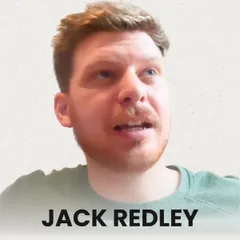
Web designer at Freelance
Jack Redley is a freelance web designer who made more than 100 episodes of the Webflail podcast.
Jack Redley is a freelance designer from Bristol. He hosted Webflail, the podcast that asked Webflowers about their relationship with failure. After more than 100 episodes, he stopped. He has worked with agencies like Edgar Allan and tried building a studio with Arnau Ros. Now he makes weird, playful 3D websites and videos, some of them paid by Webflow.
Why Webflail stopped
Jack felt he had heard every way a Webflower can fail. Not enough time with family, a freelancer who ghosted them, clients who didn’t pay. And he was becoming known for asking other people what they did, rather than making anything himself.
But I think it’s kind of like you’re getting asked to ask questions.
Getting asked to host a conference workshop was lovely. But he started the podcast to learn how people work. After about 120 episodes, he had a good sense of it. Now he wanted to use what he learned. Creative projects can last as long as you decide.
People kept telling him to drop the Webflow focus. He thinks the focus is why it worked. Listeners knew exactly what they would get.
I don’t think you’d have the same like consistency of listenership, which for me is more important than having more listeners.
When I started this show, I didn’t plan for it to be only about Webflow. But it pulls me that way, because it’s so clear for listeners.
Following your nose
Jack has a love-hate relationship with freelancing. People who choose it like the idea of freedom. The first years don’t feel that free.
It feels like you’re kind of trying to punch a ghost in the dark.
One month you love it, and the next you want someone to throw you in the sea. Lately he has been making more videos.
The more you show the work you want to get, the more you get the work you want.
The weird 3D websites came from one question. Clients can now type a prompt and get a website.
I was really interested in making websites that didn’t look like you used AI to make them.
3D is also fun, and websites that feel like video games excite him.
Saying I’m a Webflower is a bit like saying I’m a human.
So you need to work out what you do and for whom. He doesn’t think you can pick that on day one. Joshua Fry played with Rive in his free time, shared it, and people started asking him for it. Jack is annoyed by 50-year-olds telling 20-year-olds to niche down before they’ve tried anything.
Following your nose is a phrase that I’ve said quite a lot to friends recently.
You need to try things, like a baby needs to try food before it has a favourite.
I tried to work for yoga instructors and that turned out to be a terrible niche.
They needed a basic site, and he was trying to upsell them. I’ve felt the pressure to niche down my whole career, beyond Webflow itself. I haven’t picked anything, and probably won’t soon. Following the money is a weird way to decide. You could be a lawyer.
Jack’s best-paid jobs haven’t been his most satisfying. Early on, a 10,000-pound website sounded like he’d made it. Three a year would cover him.
And then I got a 10K website and I thought I’d made it, right? And it was the worst job I’ve ever done.
It took six months of back and forth. He admits he didn’t manage the process well and partly turned the client into a monster.
Day rates and boundaries
Fixed project fees boxed him into a scope the client didn’t understand yet. Halfway through, the brochure site turns out to be Facebook.
So then I started doing a day rate of 400 pounds a day.
He estimates the days up front. If it’s ten days, the client knows it’s 4,000. Adding scope costs more. It makes clients organised, because disorganisation costs them. If they have no brand guidelines, he tells them they aren’t ready and recommends someone. Ten days of work a month leaves him time to play. For small jobs, like a two-day Spline asset, a day rate is simple. For a two-month project, he might offer a lower total.
So hourly, I think, basically hourly doesn’t account for the fact that you’re going to have an hour call with the client.
Then there is the email about the contract and the BIC code. So he works in half days and full days. Small changes go in one list, billed as a half day.
Don’t WhatsApp me asking for changes.
I had a client with almost all of those issues. I’ve always struggled with billing a meeting the way lawyers do. A half day makes more sense than one hour in the middle of the day. Jack thinks bad clients are often clients we didn’t manage. When I asked about letting old clients go, he said it isn’t working for them either. Introduce someone you trust and set up a handover call.
I’m conflict averse, but I’ve learned to talk about price early. Jack doesn’t like the word fight.
I think it’s like turning a fight into a hug.
We build the hard conversation into a monster in our heads. Then the client just says yes and sends a calendar invite.
Ten lessons from 120 episodes
Jack read me his list of themes that came up again and again, whatever the guest’s level.
Okay, so say yes more than no.
Then always iterate.
Three, do rather than talk about doing.
That one is his biggest. People ask how to start a podcast and never start one. Get out of your own way. Rising tide lifts all boats. Obsess over process.
Stop trying to be a 10K freelancer and try and make a 10K website.
Know yourself, like knowing a public challenge will make you show up. Show the work you want to get, like Joseph Berry, Melissa Mendez and Ilja van Eck do. Work to live, not live to work. And make your current project your best work ever. None of it is rocket science. It’s about doing it consistently for long enough. A friend applying for agency jobs was better than the agencies. So Jack posted his old work on his LinkedIn every day.
And I was like, okay, give me your LinkedIn login and I’m going to post on your account every day.
Within two weeks, he had client work. I have a consistent schedule with this show, but I could share my work much more. It’s simple, but not easy.
Jack’s videos are unrequested websites, for a chef, a cyclist and his favourite café. Then Webflow asked him to make videos for them, so now that’s paid work too. And clients come asking for something weird. On style, he thinks of Ada Oliver for fashion and Joseph Berry for a gin brand. Ilja van Eck or Dennis Snellenberg for a slick SaaS site.
Maybe that niche chooses you to a certain extent.
Webflow, meetups and the studio
Jack thinks competition from Framer and Editor X made Webflow pick a lane. It’s the most technically advanced builder, not the easiest. Enterprise brings sites like Edgar Allan’s work for Duracell. He thinks Webflow is going in the right direction. London has a monthly meetup and people still want more, which he sees as a sign of health. I said a higher bar might even help those of us already good at Webflow.
It’s kind of like getting annoyed at the seasons.
A ten-year-old company changes, and the people who leave change its culture. Community is partly up to us. He organised a London event for three years. He admits he wanted to be at the party more than organise it. Isabel Edwards runs Flow Manchester, Chris Skitch the monthly London meetup, and Claudia from the Floxies runs weekly ones.
If you want to see an event happen, like organize it.
In Bristol, he now does monthly taco nights where a few people build an app together. His girlfriend calls him a loser for it. He doesn’t care.
Then the studio with Arnau, who had a big YouTube channel and more leads than he could handle. They had to work out roles, hiring and how to show work they didn’t have yet. Some freelancers weren’t vetted well enough.
I didn’t want to set up a studio, is basically what I realized.
He wanted to do the work, and he wanted clients to come for him.
Actually, what I’ve come to realize is that more doesn’t equal happier.
His advice is to be aligned with your partner and clear on your clients. And be honest about whether you even want an agency.
I’m ambitious for a team of one.
The temptation is always there for me, even though freelancing works and gives me a nice enough lifestyle. I’m not sure if it comes from inside or from the examples society raises. It’s hard to be true to yourself.
Full transcript
Read the full transcript
Janne Parri: Okay, Jack. ⁓ So, why did you stop making Webflail episodes?
Jack Redley: Yes, straight in with a hard question. I stopped making Webflow because I think I'd got to a point where I'd asked so many times, like, is your relationship with failure? And there's only so many ways that webflowers can fail, like in various different ways, like with their family, they weren't spending enough time with them or... This freelancer that they collaborated with ghosted them or clients not paying or whatever. And I think I felt like I'd heard everything that I could in that podcasting format and that sphere. So I wanted to change. And I also think the problem was that I was becoming like known for asking other webflowers about what they did rather than like
Jack Redley: Doing anything creative myself. So yeah, I think it was the right time to stop. But who knows, maybe I'll do something else in the future.
Janne Parri: Teasing us a bit. But yeah, you
Janne Parri: Did over 100 episodes. So obviously, there will be like recurring themes and such. But I'm a bit curious, how did you how did that like being the person who asked questions? How did that manifest? Did people like, ask you to ask questions or something like that?
Jack Redley: Yeah, I think I became like ⁓ this kind of Webflow host rather than like someone that made creative stuff. And I don't think that's necessarily a problem. You know, how people see you depends on like what they see of you. So obviously, like if people are seeing me post episodes every single week and that's like the main thing that they see me do online. Then naturally they'll associate me with that. And it's not the worst association. Like it's lovely to get asked to, you know, like I got asked to host a workshop at a conference and that's amazing. Like that's so fun and that's cool. But I think it's kind of like you're getting asked to ask questions. Like that's kind of, no one's asking you questions as much. It's more like.
Jack Redley: Hey, you should come and host this thing where we get interesting people on stage and you ask them stuff, which is cool. Like don't get me wrong, but I think I was a bit like, I want to make stuff and I'm super inspired by all the people that I talked to on Webflare. Like the reason why I wanted to start the podcast in the first place was to ask people how they did stuff and why they did stuff and kind of get a really good sense of that. And then over the course of 120 odd episodes. I think I got a pretty good sense of that. And then I was like, cool, I've kind of got like kind of what I wanted out of this whole podcasting experience. And now I kind of want to implement a lot of the stuff that I've learned. And as you know, podcasting is super time consuming and
Jack Redley: And it's really fun and I don't regret doing it at all. It's more to say that I think it's OK to you know, look at things like chapters and like you can have creative projects that might last like they'll last for as long as you want them to last and you can decide how long how long that is basically. So it just felt like the right time to stop really.
Janne Parri: Yeah, yeah. Did you think like pivoting the webflail brand? Obviously it has a or had like great concepts, like quite strict concept. But did you ponder that maybe I should like pivot the webflail brand? Or was it like clear that okay, this was that and now I'm on with the next one.
Jack Redley: Yeah. So, man, I've had so many conversations about this because a lot of people have said, you know, we all use like Figma and Relume and people do WordPress space when they also do Webflow work and Shopify. And, know, like you don't need to limit yourself by the platform. But I think the point of focusing on a platform specifically is that there's a very, very clear listener that we're trying to help. And frankly, you can listen to a, you know, podcast on mental health and a podcast on, like, I don't know, relationship with, mental health and, your gut and like, I don't know, a business podcast. Actually they kind of boil down to a lot of the same stuff. Like a lot of it is about your mentality and.
Jack Redley: Your like mental framework and how you see yourself and all of these different like concepts. But like the reason why I listened to a specific podcast is partly because I know what I'm going to get and who I'm going to get and like the kind of framing of that information. And so, I think web flare was kind of like, okay, if you're in this little space of people that are making stuff using this tool, then this podcast for you. And to be honest, I don't think it would have got anywhere near the kind of reception that it did like from the tiny community. I'm not saying the podcast was like huge at all. Like it was just known in our, in our space, which was really cool. And like, I don't think it would have been if it was like, okay, I'm going to interview someone that does WordPress this week. And then I'm going to talk to the CEO of Rive this week. And then I'm going to talk to, you know, I don't know, someone that does like
Jack Redley: WebGL using, I don't know, like they're 3JS and WebGL and they focus on that direction. Like, I don't think you'd have the same like consistency of listenership, which for me is more important than having more listeners. Does that make sense?
Janne Parri: Totally. So when I started this podcast, I kind of had the sense that this would not be just a ⁓ Webflow podcasts, but it kind of pulls me towards it. Because it's a such a clear thing for the listeners clear thing to communicate. So yeah, I totally can resonate with that.
Jack Redley: Yeah, definitely.
Janne Parri: But okay, before we go any further, we gotta do little intros. So my name is Janne Parri. I'm a Webflow dude from Finland. Yeah, that one country in Northern Europe. And my guest today is this guy, Jack Redley. Yeah, doing intro for Jack feels a bit silly because if you have found this podcast, there's a very high chance that you know Webflail and Jack. Obviously. But Jack, besides webflare, you're a plug from Bristol. You have done freelancing on and off throughout the years. You have worked with agencies like Edgar Allen. You took a shot at building a studio with Arnau Ros. And now you're focusing on building cool 3D themed websites. So I'm curious.
Janne Parri: Are you ready to say that freelancing is your one true love? Or will there be more adventures outside of that in the future?
Jack Redley: One true love sounds a bit strong. I think we have a love hate
Jack Redley: Relationship more than a love relationship. Yeah, I can't help thinking that, people that enjoy freelancing and are probably like a particular type of person that want to have, they like the notionality of freedom. Like they want to charge what they, what they want. They want time freedom. Want to be able to work from wherever they want and stuff. And the reason why I say the notionality of freedom is that if you've been a freelancer for a while, you know that it's actually not necessarily, or at least the first years of freelancing, I don't think it feels that free. It feels like you're kind of trying to punch a ghost in the dark. Yeah, I enjoy the
Jack Redley: I enjoy not working for an employer and going to meetings about meetings and exploring and playing with different tools and freelancing really allows that. But I would also say that to be honest, working with one client versus another client can be night and day as anyone that's listening probably knows. You might be like, yeah, I love freelancing one month and then the next month, you're like, kill me now. You know, just take my body and just throw me in the sea. So, yeah, I think it's love hate, but I would say that recently I've been making a lot more video content and the more you show the work you want to get, the more you get the work you want. So if you show websites that are weird and playful and
Jack Redley: Like you enjoy making them, then likely it is you'll enjoy making them for someone else. And if someone sees that and they're like, yeah, we want something weird like that, you're more likely to get the client work that aligns with you better. Does that make sense? Yeah.
Janne Parri: Total. You can scrap the does that make sense question formula.
Jack Redley: I just feel like sometimes I say stuff and then I'm like, maybe I'm asking, does it make sense for me to I'm like, Jack, have you just said absolute bollocks? But okay, if you get it, then that's great.
Janne Parri: Yeah, yeah, totally. About the weird websites and all the 3D stuff. So where did you get the idea? And when did you like start focusing on those weird websites? And how is it going for you right now?
Jack Redley: Yeah, so the weird website stuff happened because I was really interested in making websites that didn't look like you used AI to make them. And I'm not here to be like, AI should go and burn in hell because I use it every day. I think there's loads and loads of tools that have massively improved literally in the last year, let alone like what is going to happen. Plus, know robots probably listening to this now. So you got to be careful, but I would just say that like clients can literally type a prompt and get a website now and that is only gonna get better and so in my head it's kind of like okay, what can you do as a human that like it's harder to replicate using? Code like and logic
Jack Redley: From machines. And I guess like that's why that's partly why the 3D stuff excites me, but also because 3D is just fun and it's like such a different experience of website and it feels like you're in a video game. And I think like the kind of gamification of websites is a space that I think is really exciting and just kind of interesting to explore. And then the final thing I guess is that like you know, saying I'm a Webflow is a bit like saying I'm a human. I think there's so many, there's so many people that are like in this space, which is amazing. And, you know, I don't look at people like we're competitors. I actually think everyone is rising tide lifts or boats type idea. Think like the more people work with other people as Webflowers, then the more work there is for everyone. But what I'm trying to say is that
Jack Redley: I think it's really important to figure out like what you, the type of work you want to do for who. And I think one way of doing that is just figuring out what, you enjoy playing with and what tools you like playing with. I listened to the Joshua Fry episode that you guys did, and he was talking about how he just loved in his free time playing with Rive. And then he shared stuff and he was like, hey, I made this thing. And then everyone was like, Hmm, that's cool. I might. Need your help with the project coming up. And then he kind of got better and better accidentally. Like it wasn't like, I am going to niche in Rive. It was like, I like playing with Rive. Like here's the thing I made. And then people kind of came to him for that thing. And then he is kind of become more and more known for that thing. So yeah, I'm not suggesting everyone should sit down and be like,
Jack Redley: Okay, I'm going to make websites for dentists. I don't think it's like that. I think it's more like, what do you like playing with? And then you'll probably just do more and more of it to become associated with that thing, if that makes sense.
Janne Parri: Yes, it does. But I'm just
Jack Redley: Oh my god, I did it again, sorry. Yeah.
Janne Parri: Smiling because this is one of my favorite topics. This has been like go through like almost in every episode this far, but like niching that is so interesting. Everybody says that one should do it, but on the other hand, it's a big decision, a scary decision. There, well, let's say that we're talking about webflowers. So there are only handful of, things or tools that one could like specialize in. And what if a person does not feel that any of those tools is
Janne Parri: More interesting than others and then there's the logical side so I might like doing some animations but should I do something towards like let's say bigger clients and surprise clients because there's a push for the bigger clients in webflow in general and so on so if one finds this leasing question hard how should they like approach it
Jack Redley: Okay, so let's talk about what I think of as niching so that we're just like, we just kind of set the stool for that. Like, what is niching? I guess for me, or in my opinion, I think niching is essentially deciding what you do for who. Okay. So that means not saying I make websites for anyone. It's more saying I make, I don't know, interactive websites specifically for X type of person. Maybe that's for agencies. So for example, I know people that are like, I am basically like an expert in WebGL and 3GS and I work specifically with agencies that don't have that in-house capability but want to make super interactive websites. Now I'm not saying that everyone can articulate that thing, but...
Jack Redley: I think the more work you do, the more you kind of become clearer and clearer about what that is. And I think one thing that I personally find it really annoying when like a 50 year old designer or developer is like, you should really niche. You should really niche. It's like you're talking to like 20 year olds that don't even know what they haven't made. They haven't really explored. Like they haven't really like. Played with different tools and like really got an idea of what the world is or like who they are. And I think by making like just following your nose is a phrase that I've said quite a lot to friends recently who were like asking the same question, following your nose sounds really abstract, but it's basically like if you smell something that sounds like smells interesting, you're going to follow that smell. And I think vice versa, like
Jack Redley: In freelancing, it's like you can do literally anything for anyone, which is not helpful. Then no one's going to perceive you as high value. You're not going to enjoy doing the randomness that you'll do if you're like, I'll do anything for anyone. But I think like, if you do like just follow what you enjoy and then, you know, like if there's a tool that excites you like spline or rive or Webflow or what, you know, say you're friend is really into skiing and they need a website and you want to help them make that website and you do that and then someone else is like, hey, I saw that you made a website for K. I really want like a snowboarding website. Maybe you're like, I'm really enjoying this or maybe you're like, I'm really not enjoying this and I want to tack away from that. I think that's kind of how you find a niche, which is a really long-winded way of saying, I don't think it's obvious and I don't think it's
Jack Redley: It's easy to work out who you are and then work out what you enjoy and then work out what you want to get paid to do. So I just don't, I think it is valuable niching, but I also think it's really problematic to just be like, right, you've just got a niche. Let's look at industries that have X amount of money in it. And like, I just think that approach is not particularly helpful. And it will just lead you right back to the start, which is like working out who you are, I think.
Janne Parri: Yeah, yeah, totally. Like one cannot make the decision without like experimenting and it might be wiser to let your interests like guide you or let the like niche find you if you may.
Jack Redley: Exactly. I think it's like saying to a baby, what's your favorite food? How the hell is the baby gonna know what their favorite food is if all they've eaten is that gloopy stuff that comes in that little glass bottle that every baby seems to eat? You know, you're just like... Of course you're not gonna know anything about anything, because you haven't tried, you know... You haven't tried Korean food. I mean, giving Korean food to a baby is probably not... Well, I don't know. Maybe it depends on the spice level. I'm getting off track. My point is,
Jack Redley: My point is that like you need to try stuff to know what you like, what you dislike and what you want to pursue is a passion. What you just want to keep as a hobby versus a passion. Like I tried to work for yoga instructors and that turned out to be a terrible niche because you know, yoga instructors don't necessarily, they're not doing yoga. To have like, it's just the wrong thing that I'm trying to push upon yoga instructors. Like they'll probably need a very basic website. And I was trying to like upsell a yoga instructor and it was like, what am I doing? Like this doesn't fit. And so, you then you kind of pivot and you think, okay, maybe this thing isn't what I want to do. But I wouldn't say like,
Jack Redley: I don't know. Think it's very rare for people to find something that they really love doing and then get paid for it consistently and pursue it and then find themselves in a niche like straight away. I think like it's healthy to explore. I'd say it's taken me like 10 years to find a niche. I didn't even know if I found a niche, you know, I'm just kind of, I just think it's problematic to be like, you just choose a niche man. Come on, you just got to choose a niche. Here's how you choose a niche. It's like, yeah, I just, I don't agree with that personally.
Janne Parri: Yeah, I'm totally on the same boat because I have felt the pressure to niche down throughout my career. Well, obviously there's like the Webflow niche in itself, but even further. ⁓ I think that we're in a way similar because I ⁓ haven't chosen ⁓ anything ⁓ like a profession or field or anything like that ⁓ yet. Probably will not ⁓ in a fair time because again, I want to see how Webflow will evolve and if there will be some sort of thing that really interests me and so on. But yeah.
Jack Redley: And I think as Webflow, as in like the tool evolves, like there's different areas where you can kind of specialize. And this is why I think like saying I'm a Webflow is a bit like saying I'm a human because it's like, if anyone's kind of in around this space, like if you're a copywriter, if you're a brand designer, if you're an SEO expert, like you might come to Webflow from a different field or different angle. And thrive in like a particular area of Webflow, but really struggle to, you know, do like animations, right? And you might not give us, you know, I was about to swear, but I'm going to hold back. You
Jack Redley: Might not care ⁓ for like Joseph Berry style websites or award style websites. Like you might just be like, that is not at all the type of Webflow that I want to be, nor the type of websites that I want to make. ⁓ And that's totally fair. Like maybe you're like, you know what, those award sites, they're not going to have good conversion. I'm going to focus on making websites that, you know, are super functional for my, for my client to get like business results. And, you know, if you're trying to build an e-commerce site, like an awards website, I think that's probably like, well, I'm thinking of specific awards websites in my head. Obviously there are examples where
Jack Redley: Form and functionality work great. I'm not saying that there aren't those things. I'm just saying though that like, I think by virtue of following your nose, working out what you enjoy, working out what you're good at by enjoyment, rather than trying to like preordain it is really healthy. I would also say though, like I know people that have gone the other route who have said, okay, dentists earn loads of money. I want to earn loads of money. I'm going to make websites for dentists. And they've been successful in their own way. Like that's how they've approached it. So I don't, I personally find that like, that is not my personality at all. I think I get bored too much. I want to change. I didn't want to be in a niche really. Cause I think it's like fun to, there's so many tools, like Nano Banana came out like whatever, like six months ago, like, that's
Jack Redley: Completely flipped the script for videographers and on content creators and stuff. Like I think there's so many amazing tools coming out.
Janne Parri: Imagine all the dentist images you could create with Nano Banana.
Jack Redley: I mean, yeah, you could have like an eagle flying through a window and picking out a mower and yeah, you could do some amazing stuff. You could do some pretty wild dentist websites with, you know, Joseph Berry style animations. But yeah, I've rambled. Hope that was helpful.
Janne Parri: Yeah, yeah, but I'm again, agreeing if you just like follow the money, well, you could be a lawyer or a doctor or something like that. And it is a weird way of like making decisions, at least to me and I believe for you to
Jack Redley: Yeah. I mean, like, it's interesting. A friend of mine, like, didn't grow up with money. So his head space is like, I heard my parents arguing from my bedroom, you know, when I went to sleep at night. And that was like quite common to hear his parents arguing about money. And so his relationship with money was like, I need money or I won't have healthy relationships. I won't have... Like love from my parents. Like, I, you know, how you, like, I think part of it is like your relationship with money determines, you know, what you put value on in life. And as a result, there are people who are like, I'm pretty good at, you know, websites. I've made a few who, like, if I'm going to make websites, it's the same amount of effort making a website for like a Baker versus like, I don't know, a lawyer.
Jack Redley: Who's got more money? Lawyers do. I'm going to focus there. Okay, cool. Like that's where, you know, that's your preference. But perf like personally, I think the jobs where I've got paid the most have not given me the most satisfaction. So like I had this like 10 K website in my head ⁓ when I was freelancing. Initially, I was like, my God, how do I get, you know, there's all these like tech bros being like, ⁓ it's so easy to get 5 K a month consistently. All you got to do is this. ⁓ And,
Jack Redley: And initially I was like, ⁓ my God, people pay 10,000 pounds for a website. That is insane. All I would need to do is like three websites a year and I'd be covered. Right. ⁓ And then I got a 10 K website and I thought I'd made it right. And I was like, my God, I've got to be so successful. ⁓ And it was the worst job I've ever done. Took six months. Was like insane amount of back and forth. Like I spent, it was the only job I took on because I was like, okay, I'm going to fully like devote myself to this job because 10 K is so much money. Like I need to fully be in it. And I didn't, I didn't manage the process well. And I kind of, think I partly turned the client into a monster to be honest, but either way, what I'm trying to say is like,
Jack Redley: It was the worst job. And I was like, okay, I've tried so hard to get paid more and more and more. And then when I finally got what I thought was success, I was like, my God, this is the worst. So, you know, it really like flips the script when you're like, I got, I got what success was in my head. I got to there. And then I looked around and I was like, is this it? And I was, yeah, it kind of really changed, really changed my approach.
Janne Parri: Yeah, yeah, totally. Those big, projects can be like very daunting and complex and the risks are higher and you might end up like outsourcing bits and if they do not turn out great, that's on you and so on. But do you have like a sweet spot where you like to be like project scope or money wise? Like is it a little under a 10 like eight, six to eight or something. Have you found any, anything like that?
Jack Redley: Yeah, interesting. So I really like talking about freelancing and money, by the way, because I think it's super important to be like fully transparent about this type of thing. So ask anything you want and I will tell you honestly. But I basically tried to do project fees initially. Like, OK, the project scope is X. I like, let's say, I don't know, five page simple website, but then there's a CMS and I'm to do training with that. And I kind of like scoped everything in together. And then tried that approach where it was like kind of a 5k website. And that kind of had mixed results because you've kind of boxed yourself in to a scope.
Jack Redley: With a set price. Then naturally the client doesn't really know what they want until you get into the project, I find, and you kind of do a discovery and you're like, okay, you didn't realize that you're trying to build an app here. You're basically trying to build Facebook and this has completely changed from what we initially spoke about, et cetera. And it just got like kind of messy because then you're trying to work out the scope in advanced. And they want to know the price in advance, but you're kind of like, well, I didn't even know if this is doable, let alone like the costs involved. If it's like a web app suddenly and you're like, well, I don't want to do web apps. So I'm not your guy, but we're halfway into this project. Like it just got messy. So then I started doing a day rate of 400 pounds a day. And the idea with that was that I kind of guesstimated how long it would take. And then
Jack Redley: We would, you know, as I was approaching, I was like, okay, I reckon this development time is going to be five days, 10 days, whatever. And then if it was going to be more than that, obviously I just charge more. And the advantage of doing that approach is that if I've said upfront, I think it's going to be about 10 days of work, then they know it's going to be 4,000 pounds. If we're approaching more than that amount of work, you know, they're adding scope. That's fine because they know what the deal is. I know what the deal is and no one is getting burnt. And also they get their stuff together before we start the project to make sure that I can do the job as quickly as possible. They've got the cop, like they've, they, it's
Janne Parri: Hmm, that's actually interesting.
Jack Redley: In their incentive to be organized because disorganization is going to cost them. Cause I'm literally, I'm, you've booked me on that. Job, like that I'm meant to be working Mondays, Friday for two weeks for 10 day project, right? So I need this before we start all the imagery, you know, have you got brand guidelines? No. Okay. Well, what I recommend is we don't start this project yet because I don't think you're ready. Here's what you need. Like a brand identity is not a logo. I would recommend speaking to this person.
Jack Redley: They'll do a beautiful brand identity for you. Will speed up the whole process. Like you're kind of saying like, I'm not just going to do anything for you. And it means that you don't go crazy as a freelancer. Cause the amount of times you were like, I've had projects that I thought were going to be, you know, lucrative and that I was going to be all right. Like, and then, you know, they start, they pay the first 25 % then they don't know what they're doing for a month and you're working on it and you're
Jack Redley: Like, hope I'm going to get paid the next milestone, but then I don't really know. It's like, you know, well, let's just do a day rate. I get a good day rate. If I work 10 days a month, I'm sorted. So, you know, I can do that. It means I have fun play time as well. I can make stupid videos. I can, you know, explore different tools. And I actually way prefer that approach. I know people talk about value-based pricing and all sorts of other things, but I actually find like a day rate is the easiest way for me to manage my time and clients too.
Janne Parri: Yeah, there are definitely sides for that. I'm still kind of in the camp. Well, now I'm thinking all the alternatives. This is so, so fascinating because you can do it in so many ways. But anyways, I'm in the camp, with the like fixed amount, like just because it's so clear to the, to the client. But there are those, this is disadvantages. You mentioned that. Will they get their content together or how long will the thing last and what is the scope? If we do not know what the design holds, then we do not know the scope. And especially if you like design some fancy interaction or rive assets or spline asset there, how do you like price that?
Janne Parri: Because beforehand you probably don't know what you are like designing there. So there are those things. But then of course you had tools to like just make a contract that says that, okay, I'm gonna be there. And at the latest, the last payment will, or the last bill will be sent at this point. So you can kind of like, dodge those bullets but yeah, so many ways to do those things.
Jack Redley: Yeah, and I would also say that I don't think like... I don't necessarily think there's a right way or a wrong way. I think there's a right way or a wrong way for you. So what I'm saying is that like for small projects, I think doing a day rate is actually better because small projects are, you know, okay, you need a spline 3D asset. I reckon that's going to be two days of my time, but I'll let you know. By the end of the first day, how long it's gonna be, how long it's gonna take me, like how I've got on, right? So it's two day project,
Jack Redley: 800 pounds, bosh, that's great for me. I've got 800 pounds for two days of work, I know that's there, I know that's happening. And I can do a lot in that time. So, you know, I can create a 3D asset, I can embed it on a website, I can make it responsive. There's a lot that can be done in that time and the client's really happy. It hasn't cost them the world. But it's been really like, you know, useful for me to get that 800 pounds that I wouldn't have otherwise. And, but if it's like a big project where, you know, there's so many different variables, I think it's healthy to have like, and also if it's going to be like a two month project and I'm earning a day rate, then that might be a lot more than the client is willing to pay. And
Jack Redley: That's not to say that you shouldn't charge what you think you're worth. I just think it's good to be like, hey, my day rates, 400 pounds. Reckon this project is going to be about two months of work, but I'm willing to do it for this amount. If you're comfortable with that and what you're doing is you're saying, look, I realized that, you know, potentially I'm expensive, but I really want to work with you. And I think we'd be a really good, you know, team together. Would you be interested in working for this is what I'm willing to work with you on. So it's not like, okay, my day rate is set and I'm literally not budging. It's more saying, look, like, this is going to work for this particular project. I think a day rate is appropriate. And it means that I'm covered. I feel satisfied with the work that I'll do for that amount. And the client is transparent on why it costs what it costs versus like a project based
Jack Redley: Thing which is a lot more work and potentially over two months and potentially like more variables involved. I think maybe that would be more appropriate. Yeah, I don't think there's a set way of doing it. I think you've got to work out what's right for you depending on what your skill set is.
Janne Parri: Yeah, but is there a reason you're talking about day rates, not like hourly rates?
Jack Redley: Yeah, so hourly, think is basically hourly doesn't account for the fact that you're going to have an hour call with the client. They're going to tell you about their kids and loads of useless stuff. And you're like, cool, this is eating into my time. Then there's emailing contract. You haven't sent me the, you know, BIC and you're like, the hell's a BIC? Look that up. You know, there's a... There's stuff that's unaccounted for time that is like, you know, an hour is not really realistic in comparison to the amount of time I've invested to do this
Jack Redley: Job. So I think it's way easier to do either a day rate or a half day rate. Cause ultimately like this whole like, no, no, this, should be a really quick job. Like you can't do it clearly. It's not. You don't know if it's a quick job. You're just telling me it's a quick job because you don't think you want to pay, which is fine, but let's be real. And I think with some clients, they're just like, hey, can you just do this quick thing? And then you do it. And then they'll come back with three quick things and then you'll do those. And then they'll be like, hey, we just need a quick landing page. And you're like, okay, I've clearly not set boundaries clear enough with you because now you're trampling all over me. And it's making me feel.
Jack Redley: Resentful the fact that you're emailing me and that's not fair. Like you have created a client that treats you badly because you have not set boundaries. So what I find is it's way easier to be like, here's how I work. I do half day, I do a full day. And what I recommend doing is if you have a few little changes, then put it, put a list together and send me that list and I'll charge you a half day because ultimately, like, don't message me because there's a spelling mistake. The reason why we use Webflow is so you can change it. That's not, you know, don't WhatsApp me asking for changes, you know? So I think it's important to like train your client, like, you know, treat your client like you would want to be treated is basically what I'm saying.
Janne Parri: Yeah, that is actually some wise stuff right there because I just had a client with almost all those issues. Well, luckily I did not set a fixed hourly limit. I just said that this might take, let's say, four hours. But then the task list just kept getting longer and longer and then there was the meeting. And such. And I have always struggled with that meeting. Should I like, send a bill for the meeting like lawyers do? Well, lawyers probably send a bill for just answering an email, but it's not that natural, but the day rate thing could like fix that. And it is like more natural way to work. It's hard to take one hour in the middle of the day, half a day is
Jack Redley: Dude, that's the thing. It's like we're changing tabs. Like I think it's so difficult when you don't set clear expectations with a client. Cause suddenly you've got, let's say you've got two or three clients that all treat you like a bad partner, right? They message you, then they ghost you. I need this now. You do it now. Then they'll message again saying, I need this now. And you've you've already kind of set the precedent for the behavior, that relationship, right? So like, yeah, I definitely think, but again, you know, this kind of comes back to what were talking about with niching. I think it relies on you knowing yourself, you knowing that you having some self-respect for yourself to say, look, this isn't what I'm good at. So I don't think this is quite right. What I recommend doing is speaking to this person. I trust them. I've worked with them before.
Jack Redley: Head on, head on that way, because I'm not the guy for you. Or, hey, appreciate you sending the message about changes to the website. Just so you know, I will not be using WhatsApp for updates because I find it really difficult outside my email inbox to know I have multiple different clients. So please do not communicate with me on WhatsApp unless you want to send funny gifts. Having a light tone I think is really healthy, but it's like, you know, I don't think it's like set boundaries, like fuck off client. I think it's more like,
Jack Redley: You know, I'm a human. Can we just like, I just want to say to you, look, here's how I want to be spoken to. Here's how, I want, you know, website changes to come back. Here's a system for you to follow and, let me know. So I think that's far better to do it that way. Because otherwise, you know, you have created, I think a lot of the time people are like, clients are awful. I've got this awful client. And I actually think a lot of the time it's because you haven't managed the client well enough and you've turned them into an awful, like an awful example of why you don't want to freelance. Maybe it's that you want to freelance, but you want to freelance better for you.
Jack Redley: And that's quite a big difference, I would say.
Janne Parri: Yeah, yeah, totally fine. I'm with you on that. But kind of relating to this one thing, I'm like struggling right now. Probably you and everyone who has done this for a while is struggling to like saying no or putting boundaries for like the old clients, the returning clients that you have kind of moved away, moved past or gone to do something. Different and you have to say that okay. I'm not your guy anymore. How do you feel about those situations?
Jack Redley: Yeah, I actually don't have a problem with saying that. And the reason why is because if it's not serving you, then it's probably not serving them as well as it could either. Imagine you're going out with someone and they're a little bit miserable all the time. Like they're a little bit like, yeah, I don't care what we eat tonight. You're to go and speak to your mom again? You always call her. Come on. Like, you know, if you're getting annoyed with your partner because they're annoying, then, you know, they're probably annoyed by you too. Like it's probably not working. Like if you're not enjoying a client relationship, probably they're not either. So I honestly think it's like it takes one of you to say this isn't working.
Jack Redley: For both of you to say it's not working. So, you know, I honestly think it's better, you're better off and your client is better off by saying, look, hey, I've worked with you for a couple of years. I've really enjoyed working with you, but I'm going to take a different direction with my career. So we're not going to be working together anymore to make sure that you continue to have the support that you need in order to develop your website. What I'm going to do is introduce you to this person who's really interested in taking on this work. I think they'd be a better fit. I trust them. I like them. Would you be able to have a call with me next week with John to discuss how you guys can move forward together and make sure that it's as seamless as possible? That is not disrespectful. That is super helpful. That is helpful to you, helpful to them. I think it's honestly like you're retaining a relationship. You don't want to burn them. You're just saying, look,
Jack Redley: I'm going a different way, but I want to support you. I want to make sure that you are okay. Like, I honestly don't think they can get annoyed with you at all. Like if they get annoyed, that's like getting annoyed with someone because they've got mental health problems. It's like you can't be annoyed with someone for saying they're not okay. Like, you know what I mean?
Janne Parri: Yeah, totally. Yeah. It all comes down to like communication, like going through the hard talks and you can like do them in a good manner. Obviously. Yeah. So much, of like freelancing where maybe about like business in general is just about like communication. If you handle that, well, you can like dodge all the bullets. At least I feel like.
Jack Redley: Yeah, or maybe just like not need to dodge bullets as much just because yet like I think a lot of the time when you start freelancing, like you don't know what you don't know. So you're just kind of like, I the client hasn't paid me the first invoice. That's fine, though. We'll just I'm sure they'll get to it. But instead of asking them, hey, like you haven't paid the first invoice, just wanted to remind you that I've sent that, let me know if you need anything else. Like, instead of just having a direct conversation, you're kind of like, yeah, it would be fine. I'll just keep putting my head in the sand and carry, you know, like you're not like, I think sometimes you want to avoid confrontation so much so that you are literally like lying down and a bus is just running over you.
Jack Redley: And you're like, that's fine. That's just freelancing. It's like, no, it doesn't have to be like, I think freelancing is hard when you make it hard to a certain extent. Yes, there are nightmare people out there who would just disrespectful and mean. I'm not saying that aren't, but I think vast majority of the time people are just trying to live their lives. They want to get from A to B. They want you to help them get from A to B. And if you communicate and you're honest and open, think generally that happens relatively smoothly.
Janne Parri: Yeah, yeah. And it's a learnable skill. I know that I'm like very conflict averse like, I do not want to fight at all with anyone, but I have learned to like, say things out loud, like just a simple example, like talking about the price, like early on just to make sure that no one's like wasting time on that sort of thing.
Jack Redley: Yeah, definitely. I would also say though, like, it's interesting you say like, fight, because I think fight makes it sound like combative, like it's you versus them. And I actually think it's like turning a fight into a hug. Like, you know, often the hardest conversations are the most important to have. And like the hardest conversations. Are probably like the hardest because you have like built up in your head this like monster of an idea of like, okay, well, if I say this, then they'll probably gonna wanna punch me through the screen. If that happens, I will need to move house.
Jack Redley: They know my address, so I've gotta be worried. If I see a box that looks like a bomb, I'm obviously gonna not touch. Like you have this like crazy idea of like, the repercussions from the difficult conversation. But the conversation might not actually be a difficult conversation. Like you've thought it's going to be a difficult conversation before you even had the conversation because you think it's going to be a fight. And that's why it's perceived as difficult. But you might be like, hey, client, it's been great working together, but I just wanted to let you know that I'm going to be changing my career. So I'm not going to be able to work with you beyond.
Jack Redley: I don't know, January 2026. So I want to introduce you to someone that I know to like trust. They might be like, okay, cool. When, yeah, I can meet next Tuesday. Is it all right if we all have a chat? I've only got 15 minutes, but is that, is that cool? You're like, yeah. Yeah. That's that. And it's like, my God, this actually, wasn't difficult at all. I'm being respectful. They are. Receptive of that. And it's not even difficult. We're not fighting. Like it's not even, hey client, I've done more work than the initial scope. So I'd like to have a conversation about increasing the budget for this project. Are you free next Tuesday? Yep. Sure. Just whack a link in my calendar. Right. We're just going to talk. Like it's not even, I don't know. I think like the problem comes from art, perceiving a conversation ahead of time that it's difficult and actually
Jack Redley: Like a lot of the time it's not, it's what I've learned.
Janne Parri: Yeah, yeah. I have to give one like funny example to add. Like just about speaking prices, like you giving up the price, you firstly think that, this will be like way too high. And the client will shout that you're so pricey and so on. But then they will not like blink and say that, okay, just send the invoice.
Jack Redley: Honestly, the amount of times that I've been like before a call, I've been like, get sweaty palms. I was literally like a boiled egg. I was just like, then you know, you watch Christo did videos before you get on the call and you're like psyched. Like, right. I'm going to say the price and then I'm going to shut up and you do the call and you, say the price and then you shut up and they're like, okay, cool. And does that include. Like training? Yeah, yeah, yeah. I'll train you on the website afterwards. Great. Okay. Well, I think it's, I think it's a yes, but I'll just speak to the team and make sure that you're the right fit. Think you are. But yeah, we'll get back to you tomorrow with a yes or a no. Does that sound good? Yeah. You get off the call and you're like, holy fuck.
Jack Redley: And it's so funny because they are like, it's not even a thing to this like water, you know, it's so crazy that I actually accidentally got sent double an invoice because I accidentally like bonsai basically does this like reminder thing and it turns out that I've been paid twice. So I basically messaged and I was like, hey, sorry, I've invoiced twice. You've paid twice. Let me know the account to send this back to. And they were like, don't worry, Jack, like just take it off the next invoice. And for me, that would be like, fuck,
Jack Redley: That's a huge mistake. But they were just like, yes, it's literally fine. Just we'll take it off. Yeah.
Janne Parri: Just accounting, yeah.
Jack Redley: And it's like, you know, we, make mountains out of molehills. You know, we think that problems are way bigger than they are a lot of the time. And normally it just requires a, hey, you know, just a conversation like I messed up. It's going to be this, or, you know, I thought it would take less time than it has, but we're approaching the 10 day mark. You know, if we're going to do more work together, I'm going to charge you more. Are you comfortable with that? Yes. Like it's naughty. Yeah. I don't know. It's important to talk about though.
Janne Parri: Definitely, okay, check.
Jack Redley: No one talks about this on courses as well, just to finish on this point. People do these 5K, 10K freelancing courses and stuff. No one talks about like conflicts and managing the conflict. They just talk about like, okay, here's the strategy to attract 10K clients and stuff. It's like, that's not the difficult part, in my opinion. I think the difficult part is making sure that the 10K clients are happy and like... You are communicating in the right manner so that you are managing that process really well. And it doesn't even matter if it's a 10k client. Like you can, if you're working with your brother, it's the same. I just think like, it's frustrating to me because I think it's all about money and less about doing a good job. And that annoys me.
Janne Parri: Yeah, yeah, definitely. There's, all the soft skills required and no one talks about those. And usually like the billing is just a little tiny thing on the process and your clients, are not paying the bill. The company is paying the bill. And when they might not even see the bill, but they see everything else. They have the like whole experience. So it's weird how we fixate on the money. Well, of course it's money, but yeah. Okay. I had a long list of questions to go through and we're 55 minutes in and I have gone through one of them.
Jack Redley: I'll bring everyone to hang it on.
Janne Parri: But I believe we have gone through some of some of the topics. Like I'm curious. About like all the webflail interviews you made, there like the same topics like niching, communication, stuff like that recurring and is there like something that surprised you, some learning or something that you'd like to bring up?
Jack Redley: Yes. Okay. So Webflail, there were key themes that kept coming up after interviewing a lot of ⁓ Webflowers. ⁓ And it wasn't really dependent on their experience level. It was like common themes across the board. And yeah, we have spoken about some of them. I've got a list. Shall I read them out and you can decide which you would want to talk about more? Is that helpful?
Janne Parri: Yeah, bring it on.
Jack Redley: Okay, so say yes more than no. Especially at the start of your career, seems to be like, put yourself in the way of opportunities and then more opportunities will happen from that. Two, always iterate. So basically what I'm saying is you might think, okay, I'm going to charge this for this person, but then actually you might do it and be like, this is horrible and then iterate from there. That's kind of what we talked about. Three, do rather than talk about doing, my God, this one is probably like
Jack Redley: My biggest one. Everyone bangs on about what they're going to do rather than what they've done. And it's so annoying. It's like, think just the amount of times people have asked me, how do you set up a podcast and then never set up a podcast? And I'm just like, what's the point? Like I've literally recorded an hour long in depth thing for you and you just haven't even and I'm just like, what's the point? So that's annoying one. Get out of your own way. This is kind of linked to the difficulties. You know, what's a difficult conversation. It's like, have you had the conversation? Like, was it difficult? No, you've perceived it as difficult. Get out of your own way. A lot of the time you can do so much more than you think, but you are the problem. Rising tide lifts all boats. Support and lift up others if you want to be lifted up too. Six, obsess over process.
Jack Redley: The results take care of themselves. Stop trying to be a 10K freelancer and try and make a 10K website. Know yourself enough to get the best results. So this one I think is important to do like, for example, I know that if I say to people, I'm going to do a daily challenge, then I've like created a framework for me to actually feel the fear of like not doing what I've said I'm going to do. So I think like if you iterate on like ideas to actually make yourself do stuff. I think that's healthy. ⁓ Show the work you want to get the top freelancers that I've talked to Joe Moore, Joseph Berry, Melissa Mendez, like Ilja van Eck, like these guys show great work that they've done, but also great work. That's not client work. Like they've explored, they've played. So they've shown work that they want to get.
Jack Redley: As much as work that they've done. Work to live, not live to work. Basically everyone I've spoken to has worked so hard and then they've kind of like been like, you know what? I don't have a good relationship with my family and friends and whatever. And then they kind of chill out. And I think there's like this funny arc with a freelancer of being like panic. I've got to work all the time. I've got to hustle and grind, bro." And then they realize, actually, I don't need to do that the whole time. And the final one, 10, make sure your current project is the best work you've ever done. Basically, always try push the envelope and then you'll kind of just grow every time. That's pretty much the gist of it.
Janne Parri: Yeah, those were beautiful points. Hard to pick any of those. But the common theme that I pick from that is that those are not like anything out of the ordinary. Those are quite basic things. Nothing like hard to understand or anything like that. Just do the work, stop talking and do the work. Iterate, like basic thing, try to do things better. Show your work. Even I could do that better.
Jack Redley: Yeah, I mean, think the show your work is actually like quite a big one. That like. No, I mean, everyone's heard all of this stuff, including show your work, like you say, like this isn't like rocket science, right? But I think it's just about doing things consistently and long enough for them to have an effect. Actually, interestingly, I was posting. I was posting for a Webflow. So a friend was like, I don't know how to share my work. And he was applying for jobs in an agency. And I was like, dude, you are so much better than the agencies you're applying to. You should
Jack Redley: Like no offense, but you should really not try and get a job. Like you should try and get clients. Like you don't want a job. You want money. Like that, you don't need a job. You just need clients. Right. And ⁓ So he was like, how do I get clients? And I was like, okay, give me your LinkedIn login and I'm going to post on your account every day. I'm just going to go through your portfolio. I'm going to screenshot some work. I'm going to record like a little video of just scrolling down some of my favorite pages of his website. And within a couple of weeks, he'd got work from just doing that process every day. Like just literally sharing work he'd already done, just doing a video recording, like scrolling down the website.
Jack Redley: And it took me like literally 30 seconds to hit record on screen recorder, scroll down, write a little bit of text being like, made this last year for ex-client. So much fun to work with the team, tag all the members of the team that did it, because obviously we want to be respectful. Great to implement GSAP and Webflow and so cool that GSAP is now actually integrated natively into Webflow. I don't know what I wrote, but basically that type of thing. Did that every day for two weeks. By the end of two weeks, he got client work. My point is that it's not hard, but no one seems to do it consistently enough for it to actually have an impact. And there's a bit of a delay between your actions and the results. Like it's not like do the thing and you get X straight away. It's like, do the thing long enough and opportunities will show themselves. And I think like the great webflowers in my opinion, like the people that are really top of their game.
Jack Redley: Just do, share, do, share, do, share, and it's like a self-repeating cycle, basically.
Janne Parri: Yeah, yeah. And I said that I should do more often too. I have got a regular consistent schedule with this show, but just showing the work, I know that it's quite easy. Have a portfolio and I could just pick those things and do a little post, but yeah, it is weird. It's simple. But it's not easy. About like social media and posting, I know that you are doing some funny videos what's like your media of choice and how did you come about doing those videos?
Jack Redley: Yeah. So for context, for anyone that doesn't know anything about the videos, basically started doing a lot more short form videos where I'd basically make a website for someone or something that I was inspired by. So I made a website for a chef. I made a website for a cyclist. I made a website for a cafe that I love going working in. And they didn't ask for these websites. I just made them. I just wanted to play. And so the context for the videos was basically like, I wanted to make something for someone that or something that I care about and use tools that I don't normally use, make a website that's really weird and not as like client focused, more just like, is a thing that I made. I hope you like it and send it to the people.
Jack Redley: And what I do is I basically message them before I made the video and then I'd make the video and tag them and they might share it. But yeah, it was kind of like for fun, really. And then Webflow said, hey, you keep tagging us in these videos, stop it. No, they didn't say that.
Jack Redley: They said, hey, thanks for making these videos. We'd love if you would actually make like a particular, you know, mention this part of our tool and we'll pay you. And now I basically just make videos for Webflow and get paid a little bit every time I do. So it's kind of like a completely different client income, which is great. And it's way more fun than client work because I basically can do whatever the hell I want and I can use different tools. And if it's like, oh, I want to do a 3D, I don't know, basketball in this website, that's just going to scroll down the screen and...
Jack Redley: Bounce at the bottom or whatever, I can just do that. And the cool thing about it is that as you play and make stuff, you get better at tools, but also you are making more of the work you want to make, so I get better client projects, or I'd say more aligned client projects, where they're just like, hey, we saw that weird thing you made, and we want something weird too, so can you just make something weird and it's like, yes, that's exactly like, it's super fun to get the trust to just make whatever you want to make. And then, you the client is like, you've already made something similar. So we, already know what you do. I think the problem freelancing for me early on was like, you kind of just did a bit of everything for anyone. And as a result, your portfolio was
Jack Redley: Like, yeah, I can make a website for a you know, a scaffolding company. Like, it's like, yeah, I've done, I've done something similar for a brick layer or whatever. And it's just like so random and you're like, and that's fine at the start. I, like I say, I think it's healthy to do whatever and explore and work out what you're good at and what you enjoy. But yeah, I think now I've got a lot better idea of what I want to do. And the videos really helped that. And
Jack Redley: They take way too long and to be honest, I don't think you need to do a lot of effort videos. I think you can screen record a website and be like, here's what I liked about making this website or here's something interesting about the website. We made this website in two months, but this one page took us one month out of the two. That's interesting because, know, like it doesn't have to be some weird video that I've made, but I personally enjoy making them too.
Janne Parri: Yeah, that is so cool. I believe that's like the holy grail to be recognized with your style. And when people come to you for your style and you get to do kind of, as you said, you get the trust and you get to do you on the projects that's sort of like, artists, like not not a functional design, but on the other hand, websites are kind of like functional beings usually. So it's hard to figure out your style. And I'm not sure if people should like try to do some artsy things at the beginning. I talked about this with Elsa Amri.
Janne Parri: And it's a weird thing. There is like the art side of these things, but then there's the functional side and yeah, should we even like have styles as a web designers? What do you think?
Jack Redley: Interesting question. I think you find your style or it's not like you intentionally say, this is my style. Like necessarily you might just be drawn to a color palette or particular animation style or type of website. Like if you said to me, okay, I need a fashion website. I'd think of Ada Oliver. If you said to me like I need a really good I don't know, gin brand website. Like I think of like Joseph Berry, he'd do an amazing job with that. If you said I need like a really good, I need like a really cool, like a SAS website that has like good functionality, but also needs to be like really slick with animation. I'd think of like Ilja van Eck or Dennis Snellenberg. So like
Jack Redley: And I doubt that these guys were like, ⁓ only do like, I doubt Ada was like, I really only do fashion websites. It's just like her editorial style of like design or Melissa Mendes. Like they have really good like editorial style websites and they really care about color and spacing and like not every Webflow it does. So, and I doubt that they were like, we really like focus on that style of website. It's like. That style of website just kept that's what they made and that's what they enjoyed or seemingly enjoy making. And so like, yeah, I think it's kind of like the niching thing. It's like, you can be known for a skillset, a style, a client type, like that. It's not necessarily that you choose that niche. Like maybe that niche chooses you to a certain extent.
Janne Parri: Yeah. Coming back to the nation thing again. Yeah. At some points. I was thinking that it would, it would be cool to call yourself a website artists. No one basically does that. But then you kind of had to do some sort of art pieces and yeah. If there's someone out there, feel free to use that idea. But anyway, let's go forward. We should probably talk about your sense on where Webflow is heading. Like you have been on the community for a long time and you have talked with a lot of people. So how do you feel where Webflow is heading? How it ⁓ is evolving and... ⁓
Janne Parri: Do you think that it's a good way?
Jack Redley: Man, there's loads there. So yeah, I started Webflow working with a guy called Dexter Washington. And when were using Webflow a few years ago, like Webflow obviously was completely different in terms of the tool, the marketing around the tool, I think, which influences the type of clients that use that platform. And then also like the community, just generally, I think there was a lot of excitement that you could, you know, suddenly designers could use a platform that actually enable them to make what they wanted in, you know, visually code, right? And there wasn't a framer around, there was a terrible Wix, very limiting Squarespace and, you know,
Jack Redley: Still a bajillion plugins with WordPress, but I think webflowers were like a particular type of, it was like a clearer type of person in my head. And I also like hardcore developers were like not really using Webflow because they were like, Webflow, like what's the website builder? Come on. That's for designers. And I think now Webflow is obviously a lot more established platform. There's all sorts of people who coming from a dev background that use it and all sorts of other different angles like we've talked about across this episode. And so it's a really exciting place that feels like super inclusive with all sorts of different people. Also, I think Webflow has massively been under challenge from Editor X, Framer, other platforms that have like made, I feel like it's made Webflow like pick a lane.
Jack Redley: Clearer than they have in the past maybe. Like we're not doing e-commerce. Okay, bang, that's gone. We're not trying to be the platform that's the easiest to use. We're trying to be the most technically advanced website builder platform. That seems to be like the rhetoric. Whereas Framer are paying all these different influences to and making a portfolio website with flowers on and that's not really like Webflow's take, right? So.
Janne Parri: I'm gonna clip that and send it to Framer.
Jack Redley: Don't send it to whoever. But I think like, you know, it's a very different, like now it's clearer on the delineation between the type of people that use Framer and the type of people that use Webflow or like the aspirational type of person that uses both maybe. So I definitely think that's like a big change. Like Webflow's push for enterprise obviously has a effect for, you know, the type of clients that come and the type of webflowers that and the type of positioning that webflowers have. Some people are like, we do enterprise projects like that, specifically what we do. We're an enterprise partner and they've really pushed on that program. There's obviously a whole sales team at Webflow that are trying to sell enterprise clients, which naturally has an impact on the type of projects that bigger studios like Edgar Allen and
Jack Redley: Refocus, et cetera, get, and the type of clients that see Webflow as a viable platform. Like Edgar Allen have just done a website with Duracell and it's like, okay, cool. Like Duracell are using Webflow. Like that's a big, new company that's using it. So. Where am I going with this? Basically is Webflow going in the right direction? I think so. Yeah. Mean, the app generation stuff is super exciting. I think there's a huge space for the technical expertise of webflowers and probably like a more lovable cursor AI type experience. So I think that's kind of exciting. There's obviously like so much enterprisey stuff.
Jack Redley: That I don't personally deal with, but the fact that you've got analytics and et cetera on the platform is pretty impressive. And then you've got AEO and all the generative AI stuff. So yeah, is it going in the right direction? Yes, I would say so. I think Webflow maybe wasn't as focused on community stuff and then kind of seems to be focusing a lot more on community stuff recently, which I think probably happens as a company grows as exponentially as Webflow does. Was kind of like, yeah, there was probably a lot of internal changes that impacted decision making and budget and whatever. But yeah, I'd say it generally is going the right direction. And to be honest, for all of us to make podcasts about Webflow, about people that use Webflow and stuff, and the amount of
Jack Redley: Community stuff that happens in the Webflow space from events to, I mean, there's a monthly meetup that happens in London. Like the fact that every month people go to this meetup and they still don't say that there's enough meetups is like, suggests to me that Webflow is pretty healthy. Yeah.
Janne Parri: Totally. We will get to the meetup topic too. But I feel, I feel the same way. Of course, like people will be annoyed when things change. Like Webflow is not the same Webflow that it used to be. It's over 10 years old already. And there's about to be some changes. And as you said, other platforms have kind of like forced a like Webflow picking a lane and that is just the way it goes but one can see that also in positive light because it's hard to if you're a web designer newbie and you're picking your platform all the excitement goes to like framer and all the AI
Janne Parri: AI tools and such, it kind of raises the bar to get started with Webflow. And especially if you're a young starting out person, it would be hard to like sell to bigger clients that Webflow is a better fit. So in a way that might be good for us who are already like proficient with Webflow that there's like higher bar right now. Of course, that's like thinking that everything is competition and so on and so forth. But one does not have to look at it in a bad way would you agree?
Jack Redley: I think that when a company is smaller, there are fewer people working in the company. There's fewer people using that tool in the case of Webflow. And as a result, it feels more like a family, I guess, to a certain extent. I mean, when you start a company, you probably hire friends and family first, right? And I think vice versa with the community aspect, there's probably... A real like sense of camaraderie between people that have, you know, in a small bunch all know each other and are all part of something that feels quite unique and special and like the crest of a big wave, I guess. And then, you know, more and more people come into that space and a tool grows and other tools pop up and you're trying to like compete to a certain extent and that...
Jack Redley: Changes from a position of like, okay, we're welcoming everyone who's new to, who are you? I haven't seen you before. Like, what do you want? And I think that changes the dynamic, right? And obviously there's been a lot of, yeah, internal changes with Webflow, Emily Lento leaves, you know, there's plenty of different stuff that I'm not sure how public it is that they've left actually, so I won't talk about that too much. But you know, the culture and the fabric of a company ⁓ is dominated by the people, you know, who've been there the longest and as a result, when they leave things change. So I guess what I'm trying to say is like to get annoyed at Webflow changes, it for me is, it's kind of like getting annoyed at the seasons. Know, seasons come and go, weather changes and
Jack Redley: And naturally, like a company that's been around for 10 years, it's going to look completely different year on year even, especially in this tech landscape. I don't know. Think it's, I'd still say community is a really strong part of Webflow. And I think that's determined partly by us, the community members. Like, I don't think it's necessarily Webflow's responsibility to, you know, host events the whole time. I think there's plenty of community stuff that they do and there's plenty of like offshoots in the world of community for people to join if they want to.
Janne Parri: Totally. I'm just thinking that maybe that's enough of that. And since you brought up the events and meetups, I'm curious. You said that this monthly, workflow meetup in London, I'm already jealous of that. Like this, there's none back here in Finland. So I'm curious, have you taken a part of like arranging them or or are you just an active member? And yeah, what's going on with the meetups and live events?
Jack Redley: Yeah, sure. So, I'm not actually involved terribly in organizing them. Kind of... I basically organized an event each year in London for three years, I think. And it was so chaotic. I am not an events organizer. I basically wanted to be at the party more than like organize the party, which I don't think bodes that well for people all having a good time and knowing what time to turn up and whether there was food or not or whatever.
Jack Redley: So I stopped doing that because I was like, God, this is insane. I'm terrible at organizing events. I'm good at like injecting a lot of energy into stuff, but I'm not very good at like the fine details. So anyway, I haven't been involved in that, but there are people who are far better at it than me. Isabel Edwards is the obvious one from Flow Manchester. So she and loads of great people organize. A annual event and that was insane. It was like a festival that happened in the summer. And yeah, Vlad was there and like, it was epic and she's great at organizing stuff. So she does that each year. And then Chris Skitch, he organizes an event in London, which happens every month, which is in a coworking space. And so there's a screen and we have drinks and anyone who wants to talk.
Jack Redley: Can present their work or present a tool or whatever. Then there's Claudia from Fluxies. She does events the whole time. They do weekly meetups. They're online and in person. Just such a cool bunch of ladies. And yeah, I think like there's kind of pockets of different events happening all around. But my advice is like, if you want to see an event happen, like organize it, and then hopefully you'll find people who are better at organizing than you, and then you can help collaborate together to organize events. But if you want to see something happen, like it's kind of up to you in my opinion.
Janne Parri: Yeah, like stop talking and just do it yourself.
Jack Redley: Yeah, like, you know, the first event was like, just put on Twitter, like, would anyone be up for a meetup in London? And that's kind of how it kind of came about. It wasn't really meant to be like, I never set out to like organize events. And I do not profess to be an events organizer. I mean, I am so far from it. It's a joke, but yeah, I mean, if you want to yeah, if you want to have a meetup and it could just be in a cafe with like two friends. Like it doesn't need to be like, I don't think it has to be like, okay guys, we're going to organize an event. It's going to be huge. I don't know why I turned into Donald Trump there. You know,
Jack Redley: The wall is going to be huge. But anyway, yeah, it's more like, hey, we're to meet up in a cafe midday this Saturday. We're going to talk about Webflow and whatever you want. Turn up if you're interested. And go from there, you know.
Janne Parri: Yeah, basically everybody that I talk about this topic says the same thing that the first one or the whole thing should like grow organically is like just call a couple of friends and go for a beer and talk about like the next possible like beer or whatever and then it grows from that.
Jack Redley: Yeah, yeah, yeah. Also, like ultimately, if were to like zoom out and be like, should I organize an event or not? I think it's better to ask yourself, do you want to meet like-minded people or not? Like, if the answer is yes, then why not ask your social network on a social media platform of your choice? Like, hey, did anyone want to meet up in, you know, I thought it'd be fun to organize a meetup like. DM me if you're keen to have a beer or a coffee. And it might be like literally you and a couple of other people. And then you might be like, this is fun, let's do it again. In fact, I'm actually doing that in Bristol. I met a guy who is building an app and he was just really cool. And so I was like, hey, do you wanna do like spend an evening making something? And he was like, yeah, why don't we get tacos? So we...
Jack Redley: We've made this like taco and beer creative night thing where me and him met up and then he was like, I've got a friend who's actually building something. Can he come? So now we're just doing like a monthly like, hey, should we meet up at someone's house? Do you want to come to mine? Should I come to yours? And then we'll just all bring food and make something like, you know, an app, like someone's got an app idea and we just make it together.
Jack Redley: But it's not like it's an event everybody tickets like it's more
Janne Parri: That just might be like nerdier than playing D &D.
Jack Redley: It's so nerdy. It's so lame. My girlfriend's like, you're a fucking loser. And I know, I don't care. It's what I like doing. And you know what though, like that play, like I think it's great when people say, man, you're a loser or like, this is so not me. Cause if it's so not them, then you know, you're not going to have people coming to it. They're like, it wasn't quite what I was expecting. It's like, we're going to have tacos. We're going to make an app together. Everyone's going to have their laptops out. We're only going to talk about making this thing. Do you want to join? Like, it's like, you don't, I think the problem comes when events are like, it's a creative meetup and you have like a painter and whatever. And you're
Jack Redley: Like trying to, you know, introduce people that don't even, that not even in the same ballpark. And you're like, event kind of was a disaster because no, it just. There was no structure to it. We didn't really know what were doing because it was like not clear from the outset what you wanted to get from it.
Janne Parri: Yeah, again, like the clear focus thing. But OK, there's one potentially difficult topic that I want to ask you. And I know that if I don't,
Janne Parri: I will regret it later. It's about your strive to build a studio with Arnau Ros,
Jack Redley: Yeah, Mackey, yeah.
Janne Parri: I'm curious what was the experience like and what did you learn from that?
Jack Redley: Okay, yeah. No, it's not a difficult topic. So it's good to talk about. So Arnaud's one of the most talented people I know. He's insanely tenacious and hardworking. And he, so for anyone that doesn't know, he has got a really big YouTube channel. I think he's got like 80,000 followers or something. And he basically got loads and loads of leads from this YouTube channel and was like, I'm giving these leads to other people. What if we did them? What if I did them? So he said to me, hey, do you wanna do you wanna try and set something up with me? So we set out on this crazy journey to try and build the studio together. And it...
Jack Redley: Was such an interesting mix of like, okay, what do we personally both want from setting up a studio? How do we work? What are our roles? Do we hire people? Do we give a full-time position to someone? Which feels like a risk because we don't actually have any work. How do we get work when we don't have any work to show as a studio? Okay, we're just going to show our individual projects on this website. You know, and so were kind of like, dealing with all of this stuff together and building this website together and then launching it and then doing client work. And the first project was fine. It worked out all right, but we had some problems because were trying to work with freelancers and the freelancers, didn't vet well enough. So we trusted them to do work that we thought they'd done, but actually...
Jack Redley: Some sketchy stuff going online maybe and I don't know if they did the work that they were showing and you know it was like a lot of yeah just a whole crazy process but we basically well I chose not to carry on doing it because I realized that I didn't want to there was so much like dealing with admin and getting into slack and messaging freelancers and negotiating with them and then getting them to do the work and then the work wasn't good. So we had to like deal with that repercussion. It was just like, I didn't want to set up a studio. It's basically what I realized. Like I wanted to do the work. I wanted to be in control of the process a lot more. I wanted to know the type of clients. I wanted the clients to come to me because they wanted to work with me. I didn't want to be, you know, sending a proposal with the hope that
Jack Redley: Because were competing with other agencies and stuff. You know, it's just like, I think there's this fetishization of like, okay, you do freelancing for a bit. What's next? What, you know, okay, you've got a ⁓ 2k client. ⁓ Now let's see if we can get a ⁓ 4k client. Or whatever. You know, it's like, essentially you look at a graph and you know that 10 is more than five. So you're like, okay, I know that's going up. And I want to go up, so I'm going to go for that. Or if you're a freelancer, you're like, my aim is to grow an award-winning studio. You start in your bedroom in your underpants as a freelancer, and then you go from there. But actually, what I've come to realize is that more doesn't equal happier.
Jack Redley: Just that I feel like there's this unsaid truth about, you know, actually maybe less is more and in the world of freelancing, like a 10K client doesn't equal more money necessarily as well. Like you might just work on it longer and have more headache and more problems. And, know, break up with your partner because you're working all the time. So I guess what I'm trying to say is. Learnings from setting up an agency. Don't set up an agency unless you're super aligned as the agency that you want to build with your friend, if you're doing it with a friend. Two, I'd be super clear going in the type of clients you want to work with. Three, ask yourself if you even want an agency or is it like social expectation that makes you want an agency? And I would say like,
Jack Redley: Trust your gut enough to say when you're not enjoying what you're doing. Like I think sometimes there's this expectation that it's like, this is hard, but it's meant to be hard. I'm just going to do this for years. And it's actually like, maybe it's hard because you just are not enjoying the thing you're doing, partly because you're not good at it, but also because it's not actually the path you're meant to be taking. So that's my two cents on that.
Janne Parri: But it's like so hard. The temptation is like there, even if you have tried to build something bigger, there's always like a temptation. And even if you like know that, freelancing it's working for me. I have a nice enough lifestyle, but there is the temptation. I'm not sure if it's like internal or external, like is this. Just the society that just raises the examples that do those things. But yeah, it's hard to be true to yourself, I would say, would you agree?
Jack Redley: Yeah, I mean, yeah, I think what I'm keen to say is that I think as like a human, I think you want to progress. You want to feel like you're progressing, right? Like you want to, you know, if you're doing a job, you want to, you want to push and you want to grow and you want to potentially earn more, potentially have more responsibility. And I think what I'm trying to say is like, I'm not trying to say don't be ambitious. I'm just saying be ambitious in a way that you genuinely want to be ambitious. Because I think like you, like, for example, I'm, I feel like I'm ambitious for a team of one. Like I know I want to be a team of one. I want to collaborate with people. I'm not saying I want to be like a hermit. It's just, I know that I don't want to be engaged in something which, involves tons of admin and, tons of stress.
Jack Redley: Even if it brings me potentially a lot of money, like I, that's not a good, I know myself enough that's not what progression looks like for me. Whereas for me, think progression would be, essentially like becoming better and better at using the tools that I'm doing and, making sure that I'm able to teach other people how to do stuff more than just like, freestyle it and be like, yeah, I made something. It's more like I think I would feel a lot of satisfaction being able to help other people make whatever they want to make. That would feel like progression for me. That does not include necessarily building a team. Like, there is no part of me that wants to build a million dollar agency or whatever like fad thing there is, you know, so. But I knew I only know that because I've tried to, you know,
Jack Redley: Pursue a different path and realize it's not the right path for me.
Janne Parri: Beautiful. Believe I have nothing to add to that. But yeah, okay. There's one little weird segment at the end, but before that, I wanna let you, send message to anyone out there who has like listened to Webflail back in the day or recently. And also if people want to contact you or follow you, should they go?
Jack Redley: Sure. So let's start with the last bit. If you want to email me, it's info at JackRedley.design. If you want to Instagram me, it's at JackRedleyDesign. If you want to Twitter me, it's at JackRedleyDesign. So that's pretty easy. And then thanks to gosh, so many people. One person that I want to say thanks to is Matt Evans, who also set up a podcast. He was super encouraging throughout the whole process. Max Haining, a guy from a hundred days of no code. He was the one that helped me figure out whether I wanted to continue with the podcast or stop the podcast. He was really helpful. To all the guests who came on and talked to me and shared secrets. I couldn't have.
Jack Redley: Done the podcast obviously without them. And I also don't think I'd be the person I am today without all of their advice. Because there's like, what's kind of funny is that you are asking on behalf of your guests, but you're really asking for yourself. Like if no one listens to Webflail, I really wouldn't mind because I'm just genuinely psyched to have the conversations that I have. And then people start listening, which is amazing. But honestly, like it was really a Trojan horse to like spend time with people I wanted to ask questions to and they were willing to tell me because we had a microphone recording. So yeah, mean, huge thanks to the guests too. And Webflow for obviously creating a platform that's worth talking to people about. And Vlad was the hundredth episode and he was, he's such a nice human being. I, yeah.
Jack Redley: I know people say this the whole time, but he genuinely is such a lovely guy. Yeah, I mean, so many people, it's hard to encapsulate all
Janne Parri: Beautiful. Okay, the last section, is this weird little Finnish section at the end of every episode so I will tell you a Finnish saying I will translate it to English word for word and you have to guess or know what it's about. Is that clear? So, actually this is a funny one. I have saved this saying for you. So in Finnish it is... and in English it is to take someone behind the sauna, or I could say to you that I should take you behind the sauna. So what does it mean when I say that I should take you behind the sauna
Jack Redley: Is that to basically bring someone behind the curtain? Like tell someone stuff that you wouldn't say to other people?
Janne Parri: Nope, no it isn't. I'm just cracking because it's a funny thing. Yeah you wanna have another guess?
Jack Redley: Is it... Is it... Is it something sexual?
Janne Parri: And no, I wouldn't say so
Jack Redley: Okay. Ignore that then.
Jack Redley: Is it... It... Is it to show someone how something's made?
Janne Parri: Not exactly. Kind of
Janne Parri: In the right direction maybe. But it just means that the one who is being taken behind the sauna should have a proper beat down. So one should really beat it out of him or her. And the theory, this is just my theory, why that is, back in the day in Finland, saunas were like in separate buildings, like imagine a farm and there would be a separate building for sauna. And behind the sauna was the place where you did all the dirty work. So if you had to kill a chicken, you would go behind the sauna. And that would be also the place where the beating would take place. So that's my theory.
Jack Redley: Wow, okay, go this was an unexpected end to the podcast, but
Janne Parri: Yeah, this is just a treat for those who are like in the deep end with us. Yeah, but okay.
Jack Redley: Okay, all right. You don't ever want to hear someone say that to you then.
Janne Parri: You basically know, yeah.
Jack Redley: Okay cool, that's good to know.
Janne Parri: Okay, Jack, this has been awesome. I'm so grateful for you for doing this with me. And hopefully we will see in some meetup or in person someday. But for all the listeners, thanks for listening, watching, and we'll see you in the next one. Bye.
About Webflow and Friends
A podcast about building websites with Webflow and the tools around it. Janne Parri talks with designers, developers and marketers about how they design, build and run sites for fast-moving teams.
Hosted by Janne Parri. Janne designs and builds design-led websites and design systems for fast-moving marketing teams, in Webflow or Astro, and is a Webflow Certified Partner.