From Architecture, Graphic& Motion Design to Webflow
- Published
- Episode
- #39
- Guest
- Özge Keleş
- Length
My guest is Özge Keleş, who tried architecture, graphic design, motion design and video editing before web design finally clicked. We talk about freelancing versus agency work, and how she approaches projects through mood, structure and motion.
Özge Keleş
Web designer and Webflow developer at Freelance
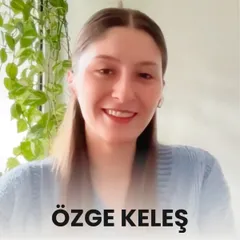
Özge Keleş is a web designer and Webflow developer. She worked as an architect and a graphic designer before she found web design.
Özge Keleş is a freelance web designer and Webflow developer in Turkey. She studied architecture and worked for a big architecture firm in Japan. Then she tried painting, graphic design and motion before she found Webflow. She had just left her job at Snowhouse Studio, an agency in Iceland, to freelance again. She designs websites the way she thought about buildings, as spaces you move through.
Why Özge left Snowhouse
At Snowhouse Studio, Özge was a digital designer and Webflow developer. She was used to doing everything herself. Then her project manager stopped her.
And my project manager said like, stop, you don’t have to do this alone anymore.
Working in a team was great. But she had to be there at the same time every day, and she didn’t get to pick projects.
At the same time, I think I missed the freedom.
She found the job because of a freelance client who changed something for the fifth time.
So at 3am in the morning I started applying for jobs.
Snowhouse hired her first, after a trial period. She says that client’s project is still her favourite. The agency taught her how to handle clients. Now she has stricter boundaries and knows how to manage expectations and give updates. So she is ready to freelance again.
From architecture to Webflow
Özge started in civil engineering, then retook the national exam to get into architecture. She did her master’s in Japan and worked at Nikken Sekkei there before moving back to Turkey.
I was always a bit of an overachiever.
She never had a summer holiday during her studies, so she took a break. She learned acrylic and oil painting, Illustrator and After Effects. She did interior design, posters, motion and video editing. Then a friend started a non-profit for architecture students. The freelancer they found quoted too much, so Özge built the site in Webflow herself. It took about two months, and she rebuilt it three times as she learned more. Free sites for friends led to her first paid client.
That’s how it started. It wasn’t like a decision.
I’ve heard that a lot. People find Webflow when they need a site of their own and don’t have the budget to hire someone.
Design first, then the vacation
Özge does both design and development. She once thought about only developing.
When the design is done and when I switch to Webflow, it feels like a vacation.
But she has built other people’s designs too.
I’ve also built terrible designs in Webflow, so I think I prefer building my own designs now.
Most clients come to her for design, and Webflow is a plus. I once had a client bring me an AI-generated site from Lovable to build, which was a first. I think doing both is a strength. Özge thinks development is faster to learn.
Because like the first thing you need to develop is a taste or like you need to train your eye first.
I agreed. Development is black and white. It works or it doesn’t. Design is also harder to explain.
With design you do the technical explanation, but to them it’s not technical.
She doesn’t do logos. She does what she calls a micro brand identity, colours and typefaces based on the vibe. I’ve done logos in the past, but those projects came so rarely that I stopped. Her discovery starts with a few keywords. Funky, elegant, cool or professional. Then she makes mood boards, one minimal, one flat, one Swiss and one colourful. The client picks what they like, even just a button.
She used to design three homepage options. Now it’s two.
I used to do like put one terrible design so that the client would pick the one I want them to pick.
That backfired.
But one time they picked the terrible design, so I stopped doing that.
I do three drafts too, and I try to make even the boring one something I wouldn’t mind being picked. I told her Benten Woodring designs only a few hero sections. She thought a couple more sections might show the style better. She doesn’t use sitemaps, wireframes or personas.
No, I don’t even use auto layout. I just eyeball everything.
But I really think design is a process. It’s not the outcome.
You discover things while you try them. She thinks AI may get good at design, but maybe not great, because the outcome isn’t the point. She plans motion during the design, but builds it in Webflow, where some ideas fail and some become happy accidents. At first she made everything move.
But now I think my approach is more like, I don’t know, I see it as designing a space.
You walk in, turn left, and the light changes. So she adds motion to the largest things or the tiniest ones, with a logic. Her favourite style is Swiss design. She wants to learn 3D and WebGL next. Clients come for her style, which isn’t always great. A side project about the painter Egon Schiele has lots of horizontal scrolling.
Some clients came asking for horizontal scrolling website.
One of them was a consulting company. She tried hard to talk them out of it.
Clients, community and failure
Özge regrets not posting her work on social media. She thought everyone else was better.
But the weird part is I never have to chase clients.
They come from the Webflow experts directory and referrals. Four came from a Ran Segall video that reviewed portfolios. All but one of her clients are outside Turkey. I’m the opposite. Almost all my clients have been Finnish, and I’m thinking about going more international. More people in Turkey now ask her about learning Webflow, but there is no real community there yet. A meetup would probably be in Istanbul. Neither of our countries has one. Her community is a group of designer friends that meets every Monday, and they recently met up in Prague.
It’s called Judgement Day.
Managing clients was harder for her than learning design or Webflow. When she doubts herself, she sometimes asks ChatGPT to analyse the situation, without picking her side. Not to decide, just for clarity. I do similar things.
Maybe it’s better to make a mistake.
Make the mistake, see you’re still alive, and learn to deal with it. I always say failure sucks. Everybody hates it, even if it’s part of life. But you have to take risks. And sometimes the thing you fear just works, like raising your prices.
Frameworks, interactions and the portfolio
Özge used Client-First for a long time.
It’s too much nesting and it’s too much naming.
She built her own Frankenstein framework. It takes the simpler naming and grid from MAST, and the approach to responsiveness from Lumos. She has used Webflow’s GSAP feature on three projects and wishes for breakpoint-specific animations. I use it on client sites already, more than custom code. She loves scroll animations and hidden hover details.
I don’t show my clients the interactions. Don’t do prototyping in Figma.
They first see them on a call and get excited. When they ask, she tells them it’s a surprise. She outsources illustration when the budget allows.
Also, I realize that it’s not always great that you tell your client that you can do all.
Saying you work with a great illustrator sounds more professional. I’ve become almost purely a Webflow person myself. She enjoys all of it, with development as a break between design. She wouldn’t niche down to one industry.
You can, I think, niche down on the thing you do, but not the client necessarily.
Art galleries would be the exception. She was redesigning her portfolio, starting with who her clients are and what she doesn’t want.
I just started rejecting that kind of stuff.
She meant the centred hero text and about block kind of site. Her advice to her younger self:
Just post your shit everywhere.
I’m updating my own portfolio too, especially the English side. My Finnish site has a lot of pages that rank well, so I’m afraid to change it. English isn’t my first language, so text posts are hard. But these days, a typo is a mark of a human being.
Imperfection will be a sign that you’re a human, I guess.
As more things are AI-generated, I believe the personal, human-made things will rise in value.
Full transcript
Read the full transcript
Janne Parri: Okay, let's get so I just heard that she quit your job at Snowhouse studio you were a Webflow developer there, so what happened? Why did you quit?
Özge Keleş: The official title was digital designer and Webflow developer. So I was doing web design and some graphic design work as well. I think it's great to work at an agency with a team. When I first started, doing Webflow jobs and websites, I was doing everything myself, obviously. And then trying to figure out, I don't know if there's a custom integration, whatever. But when I first started, I was still doing that. And my project manager said like, stop, you don't have to do this alone anymore. We can help. We can figure it out. And it was great actually. But at the same time, I think I missed the freedom.
Özge Keleş: Part of freelancing I mean, it wasn't like super strict, but you have to be here every day at the same time constantly. And then you don't get to pick projects. Sometimes it's like projects you don't like. So I thought like I might go back to freelancing and try again. Yeah, that's the reason.
Janne Parri: But to my knowledge, Snowhouse Studio is in Iceland and you are in Turkey. So how did you find Snowhouse?
Özge Keleş: Actually they had a job posting on a ⁓ website. ⁓ The funny thing is I had a ⁓ freelance client. So one day he pissed me off. Really bad. He changed something for the fifth time. So at 3am in the morning I started applying for jobs. And then I got about three interviews and Snowhouse was the first one to hire me after a trial period. And then the others came back like offering me a job, but it was kind of too late. So yeah, that's how it happened. Me being super angry at 3 a.m. In the morning.
Janne Parri: Yeah, yeah, I totally know the feeling when you have like one like a bad client, you start to start to see all the opportunities.
Özge Keleş: It wasn't bad. I think it's still my favorite project today, but it was so much back and forth, so much like changing his mind about his business. I was like, I'm not doing this anymore. I need a job and like someone to face this client.
Janne Parri: Or where those like studio or the agency projects and your freelance projects, where there like differences or were they about the same kind of kinds of projects? How would you describe them?
Özge Keleş: I mean, with the agency there were bigger projects, Main difference is like you're doing it as a team. So if I'm not, able to do something on my own, there's always someone to help with or like if I cannot handle the client, there's always a project manager to step in. And it's, think it's been great. It taught me a lot.
Janne Parri: Yeah, Okay. How about from this point forward, are you gonna do just a freelance work or are you gonna maybe try to search a new, agency job for you?
Özge Keleş: I think I'll do freelance for a while because I also like working on my own thing and doing it on my own timing, let's I think I've. Learned a lot while working at an agency and I'm more confident in like the whole client relationship part. I have more strict boundaries, I know how to manage their expectations. Know how to start and how to give them updates better. So I think I'll try freelance. Yeah.
Janne Parri: Yeah, it's so, so beautiful feeling when you get the freelance thing going, because there's of course the freedom parts, but as everyone knows, it's
Janne Parri: Not always easy. You have to get your own clients and so on and so forth. But okay. Yeah, we are diving deep already to freelancing and agency stuff, but we have to do little intros before we. Any further. My name is Janne Parri. I'm your host today and a general Webflow dude from Finland. And my guest today is Özge Keleš. Özge, nowadays you are crafting awesome Webflow sites, but you worked as an architect in the past, and also a freelance graphic designer before you found like the web design of Webflow stuff.
Janne Parri: And by the way, listeners, if you do not know Özge yet, you should check her work. After that, you will surely remember her. But I'm curious, you have a master's in architecture. Why are you not designing buildings? And did I see that you had a job in Japan? So what's the story about all of that?
Özge Keleş: It's a bit complicated actually. So I was studying civil engineering first and then I was like, okay, I want to do the architecture side and I quit university. We have a central exam to get into university here and it's like in three sessions. I don't remember. I took the examination again and got into architecture school. Before I graduated, I found a job, worked for a while, and then I applied for a masters. And then I moved to Japan for my masters degree. And then when I graduated, I found a job there at Nikken Sekkei. Worked for a while and then moved back to Turkey. And then...
Özge Keleş: I kinda needed a break I was like super tired. I was always a bit of an overachiever. I think I was pushing too hard... So ⁓ like I never had a summer vacation during the entire time of my study. So I figured that ⁓ I can try things. I learned painting, started with acrylics and oil painting. I should go back to that, actually. It's been a while. I learned illustrator. I got some interior design jobs. And then I tried doing graphic design. I designed posters and brochures and all that stuff. And then I learned after Effects. And I did some motion design animation
Özge Keleş: And what else did I try? I tried video editing, actually. That was fun. And then one day, like one of my friends called and she had this nonprofit organization idea, architectural nonprofit organization, but it was supposed to focus on architecture students. And then like, we started, you know, working on that. We had a mission statement and everything and then we needed a website. And then we found a freelancer who could make that website but she quoted too much that like we didn't have that money at the time. And then I said like, I can do it. I'll design it. And then I found Webflow I think it took me about...
Özge Keleş: Two months. I designed the website and built it in Webflow. And I felt like, this is fun. I can design and build it myself without any contractors or anything. So I started to take it a bit more seriously. By the way, that website, I rebuilt it for like three times as I learned more. So I had no concept of classes or anything. It was super messy, the first build. And then like I started telling people what I do. I was showing people my little non-profit website. I think I designed random websites for friends for free. And then I got my first paid client. So yeah.
Özge Keleş: That's how it started. It wasn't like a decision. Like it wasn't like, okay, I'm going to learn ref love and become a ref love developer or anything. I was just trying everything because I really enjoy design and kind of good at learning tools. So yeah.
Janne Parri: Yeah, that is actually quite common. Or at least I have heard that quite a few people stumble upon Webflow when they have a need for a website. So they have some sort of own projects and they do not want to pay anyone else. Or they do not just simply have a budget. So they end up doing it themselves and end up liking it. So that's one way to find Webflow.
Janne Parri: But I'm curious, are you still doing both the design and development parts? Do you find that one or the other is your strength, your strong suits?
Özge Keleş: Mm-hmm. I do both. There was a time that I wanted to do just development because it's easier than design. It's a hot topic that we discuss with other designer friends. Why is it easier? And I always say, when the design is done and when I switch to Webflow, it feels like a vacation.
Janne Parri: Yeah, yeah, I know the feeling. I know the feeling.
Özge Keleş: I've also build terrible designs in Webflow, so I think I prefer building my own designs now. Or like if someone comes with a great design, that would be fine too. I do both though.
Janne Parri: Yeah, that's the thing. You kind of want to have a certain level of design and then it will be easy to develop. I actually had a client that came to me with a this just lovable AI generated sites
Janne Parri: And like, could you build this? And I was like, that is not a beautiful sites, so could I like do some things better that I will see that would better on the sites and well, we did that project and it was fine, but it was the first time that something like AI generated came to my table. And yeah, I'm not sure if that is the case in the future that people will just.
Janne Parri: Generate all the stuff. But yeah, I'm rambling. I too do the design part too, but I'm always like, thinking that should I do one or the other? Should I like specialize or
Janne Parri: Focus? So do you have the same pressure to do one or the other?
Özge Keleş: I mean, I thought about specializing in workflow only and doing builds, but then if the design is not good, it will be like a bit of a torture for me and I will try to fix the design and they will say no. So, and most of my clients came to me for design. Webflow was a plus. I think I could say I think that it's my strength or a differentiator.
Janne Parri: Yeah, yeah. I have asked the same question quite a few people. And they all say the same thing that it can be viewed as a, as a like differentiator as a strength doing like the both things, like not all of us need to be doing those, let's say enterprise grade projects where there are like multiple people in the team. The team part is cool if you get to a team, but you can definitely find your place doing like the both things and it will usually be easier for the client also.
Özge Keleş: It's also that there are many great developers and they're like, of course there are many great designers, but I think development is easier to learn. And with design, need time. Need to practice it for like hundreds of times. Because like the first thing you need to develop is a taste or like you need to train your eye first. Because like when there's something wrong, you need to have an idea why and which takes time with development. Like it's there. It's so simple. Think I'm not saying it's
Özge Keleş: Easy. Like time wise, it takes longer to learn design.
Janne Parri: I'm with you on that. Development is like black and white. Either works or it doesn't.
Özge Keleş: Yes, that's my point.
Janne Parri: Yeah, but with the design, there's all the opinions. And of course, if you get to a point that you are like the authority, you have the taste and you can like say to the client that wants to make a logo bigger that is not the right way to go. And I'm the professional saying that to you. So listen to me. That is awesome. But it takes more time and it's kind of as you said, it's in a way harder, but then it is also a bigger challenge and some of us like get excited
Janne Parri: From the big challenges. So yeah, it's a tough question that I end up discussing almost in every episode.
Özge Keleş: Yeah, it's also, it's also harder to explain to the client because like with development, you can say, cannot do this because technical explanation, but with design you do the technical explanation, but to them it's not technical.
Janne Parri: Yeah, that is so true. You don't even need to say any explanations on the development side. You can just say that is not possible and client is okay.
Özge Keleş: Yeah. The code is not doing that and that's it. But like with design when you explain it's not always acceptable.
Janne Parri: Yeah, it is not that clear. How about like brand identities and visual identities? Are you tempted to design those two or have you designed something like that in the past?
Özge Keleş: Hmm. I think what I do is kind of micro brand identity, but I don't do logos and like the whole brand identity. Just, I think I design based on the vibe and look and feel. I don't have like a strict technical approach to it. So I can bring together like colors and typeface and that's it.
Janne Parri: But that is in itself quite good and some clients need just that. I have in the past done like even like logos and brand identities, but then those projects were like far in between every now and then so I stopped doing that because I had no like routine for those and at the same time you see all the awesome designers doing like just
Janne Parri: The brand brand designs or visual designs and I will happily leave those projects to them. But I'm curious about your process. Let's say you have a project where you design and develop the whole site. What is like your starting point? Probably some sort of discovery phase. What sort of things do you go through with your clients when you start a project?
Özge Keleş: I think the first thing I ask about is some keywords about the overall vibe, you know? Things like, is it going to be funky, cool, elegant, or professional, but cold, or things like that. I don't ask them to define it. I just ask for some words, random words. And then I bring together different mood boards. It's usually one minimal, one flat design, one Swiss, which is my favorite, and one with lots
Özge Keleş: Of colors. So I ask them to pick the things they like. It can be the whole website, or it can be just a button. And then from there, I try to get the... Looking, feel thereafter or like the identity and then we start from there.
Özge Keleş: Client too, like I'm redesigning my portfolio. This is how I started. Like I sit, down and talk about like what I want people to feel and think when they first enter the site. So I think I, design based on the feeling more rather than a strict concept. And then like after that, I come up with a concept, of course.
Janne Parri: Yeah, yeah. What does your like concepts look like? So if you have like the mood boards, what is like the next step? Do you like design drafts for the homepage, for example, or just a hero section or multiple sections? What does the concept look like?
Özge Keleş: I mean, I start with the whole homepage. I used to do like three options, now it's two. I think three is too much and confusing. I used to do like put one terrible design so that the client would pick the one I want them to pick.
Özge Keleş: But one time they picked the terrible design, so I stopped doing that.
Janne Parri: I kind of do the same thing. I try to do like three drafts of the homepage. And usually there's some like boring version, something in the middle, not too boring, not too out there. And then something that is way out there. Like very somehow like futuristic or colorful or something like that. And that's the thing. I have the same experience that if I put something out there's a chance that it will get picked. So I try to even if it's the boring one, I try to make it so that I do not feel bad if the client picks that.
Janne Parri: Actually one one thing that I'm now thinking of about this specific part of the process. I had Benten Woodring on the podcast and he kind of does the same thing in his studio, but he designs just like the hero section, like a couple of hero sections.
Janne Parri: And that way it's way like easier. You do not have to like design the whole whole page because as you said, three is quite much. If you like do three drafts of the homepage, you kind of want them to be at the certain level. So there's a lot of work there, but just the hero sections. Usually include all the key things and the key visuals that will do the first thing impression and so on. So any thoughts about that sort of thing or process?
Özge Keleş: It makes sense, but at the same time like... I'm not sure if just one hero section would define the entire style, because something else could follow it. I don't know. It makes sense in one hand, but on the other hand, maybe two more sections. I'll try though, it's a good idea. I mean,
Janne Parri: Yeah. Yeah, and...
Özge Keleş: You will be showing like how you use typography and maybe some colors and what kind of layout, so it could be useful.
Janne Parri: Yeah, exactly. And one can do something in the middle, like designing just a couple of sections from the, from the first page. And, if the hero sections are like totally different, that's a, more reasonable approach, but if they are quite similar, then it might be wiser to design more, but I'm curious about the design phase. You use other like, how to say, like frameworks or tools? You like do, sites maps and via frames, maybe even something like user personas or something like that.
Özge Keleş: No, ⁓ I don't even use auto layout. I just eyeball everything... Put things together. There's a second option, copy of that. But I rearrange everything, change the colors. I mean, you can use frameworks or ReLume or something like that. But I really think design is a process. It's not the outcome. Because you discover while you're trying things, you know? You flip something and you get a different idea and then you try it out. I think that's why AI will be probably really good at design. But I'm not sure if it will be great because it's not the outcomes, the process. Like during the process you get an idea or like your client gives you a weird feedback and
Özge Keleş: You're trying to address it and you get a different idea. So like, I try not to start with anything that's why, like, I want to be as free as possible. And I think it's like, for me, it was the best approach so far. Like, I don't know what you think or how you approach design.
Janne Parri: I agree. I agree. Definitely. If you use like some sort of templates, there's always the risk that every design will seem to be like about the same or similar. And the thing with the AI, there's high chance that AI will get good at designing, but the results end up being quite average. Of course. Well, it's AI and it might develop and it depends on the prompts and so on and so forth. But there is still value in starting from the blank slates.
Janne Parri: I have seen your work and there's a lot of like cool effects. On the sides. At what point do you think of the effects and some eye-catching details? Do you incorporate them already in the design phase or do you add them at a later stage?
Özge Keleş: I always have a vague idea of them during the design phase or sometimes like design based on that like motion idea. I think I do the motion design with like along with the whole visual design. But I don't create prototypes and figma or anything. I just like design the thing, have ideas and notes. And then when I switched to Webflow, I start with the motion design phase. And sometimes some ideas don't work. Sometimes they're like happy accidents, let's say, they end up being better than what I planned. I was doing too much when I first began.
Özge Keleş: When I first started doing workflow. Because it was like amazing, everything is moving and like popping up. But now I think my approach is more like, I don't know, I see it as designing a space. You walk there, you turn left, what do you see? Or like, you get. The sun comes out behind the clouds, the light changes, how it does effects, you know, it's more like maybe you can call cinematic. So I either add interactions to the large things or the tiniest things. So I don't add interactions to everything now. It needs to have a logic
Janne Parri: Yeah, yeah, that's
Janne Parri: We all have had that one phase that we have to do all sorts of moving things and effects in one project and then we trickle it down a bit.
Özge Keleş: When you first discover it, you want to make everything to move and pop.
Janne Parri: Definitely, but you mentioned the, like entering the space and you mentioned Swiss design and this clearly things from the architecture background that you bring into the into the design. So do you do you see that there are like more of those things that affects your design and you mentioned that the switch design is your favorite so are there other like styles that favor if you may?
Özge Keleş: I think I like them all. They're all my babies. I don't want to be doing the same thing all the time because it gets boring. But I also like that having a structure and the logic and, I don't know, directing people in that digital space, let's say. I think I like illustrative stuff as well, a lot. I like designing, working on minimalist websites. What else? I think I want to learn 3D and WebGL after
Özge Keleş: That. Because it's like, it's another layer.
Janne Parri: Yeah, yeah definitely.
Özge Keleş: My website started to feel kind of flat recently. I think I want another layer on top of that. I don't know, my taste keeps changing, but I think I like the straightforward logic of Swiss design.
Janne Parri: Yeah, yeah, that is a good, foundation. Definitely. And I feel the same temptation to add the third layer. We have all seen like awesome, like 3d websites and everything else feels a bit dull after that. But I got to say your, your sites are still like very beautiful and, you could like go on with that style if you wanted. Do you find that clients come to you because of your like style that they have seen some of your work and they come and say that we wanna site like that?
Özge Keleş: I guess that's almost all of the clients, which is not always great. But I'm happy that they come for the design and the style. Not great part is that I have this side project, it's about Egon Schiele, the painter. And it has
Özge Keleş: So many horizontal scrolling sections. So some clients came. Asking for horizontal scrolling website. Okay, for some website it might be good especially if you have a storytelling. But one of them was something consulting. So it's clearly not good for them. And I tried so hard to convince them that like that's not the best approach. So yeah, it's a
Janne Parri: Definitely. I hate those vertical scrolls.
Özge Keleş: Some websites they make sense if you have a story to tell. You know, Bureaucratic, they had a 10 years of bureau website and it's all horizontal scroll and it makes sense because it's a journey.
Janne Parri: Yeah, yeah. But even then it could go like down. But yeah, that's just my preference. I'm all...
Özge Keleş: Mean, if you're like business, no, no, like maybe you can have one section with a slider or whatever. But if you're telling what your company does like that, I'm not sure if it would work.
Janne Parri: Yeah. Yeah. But about your like clients, well, you are now about to start freelancing again. Where do you have your clients coming in? You mentioned that they might come as like an inbound, just ask about the previous work, but do they come from social media or do you have any other channels? Or are you about to build some channels?
Özge Keleş: So the social media thing is a regret of mine. All my friends tell me to tweet my projects or maybe random ideas. I've never done that. I was busy, you know. I was just afraid of... I was
Janne Parri: I have been busy two years.
Özge Keleş: A bit afraid of, you know, everyone's great and they look like they know what they're doing and... I don't want to show my little projects. I don't know. But I think I will start doing that. But the weird part is I never have to chase clients. They all came to me. There are some from Webflow experts and some via referrals. Some came from a YouTube video. That Ron Segal recorded. It was a portfolio overview of a bunch of people. I got like
Özge Keleş: Four clients from that video. It was weird. Yeah.
Özge Keleş: And what else? I don't know where some clients came from. Sometimes my friends ask if I want to take on this project or that. So yeah, but I am planning to, like after I finish my portfolio, I am planning to tweet a bit. And maybe share on LinkedIn, I don't know.
Janne Parri: I just started posting on X. I haven't been
Janne Parri: Active. Yeah. Well, we can call it Twitter. We can call it Twitter because the X.
Özge Keleş: It's not Twitter anymore. I still call it Twitter. I'm not accepting eggs.
Janne Parri: Yeah. So I started tweeting on Twitter just like a couple of days ago. I haven't been active on that platform, but
Janne Parri: I felt that a lot of like Webflow talk is going on there. And many people say that it's a good place to go through the conversations and maybe even get clients. So yeah, that is definitely a. Opportunity an opportunity again there was something on my mind what was it? Yeah, the referrals are always like the best way to get clients. And it's great that one gets to a certain point that one can just like live with those referrals. But yeah, I'm getting curious about your clients. Are they like all over the world or are they more in
Janne Parri: Turkey or do you have any Turkish clients or what's the mix in your clientele?
Özge Keleş: I had one Turkish client and that's it. They're all over the world.
Janne Parri: Yeah, was I was actually like expecting that because I have talked with a couple of a couple of people now that like come into this community in a in a way that they just start doing stuff in English and they are a part of this English like community and they do not like take the step on doing like the local local stuff at all. But for me, I have done like Finnish mostly, like almost all of my clients have been in Finland. And now I'm thinking that I should do more like international clients. But all my stuff, most of my stuff is in Finnish. So I have a lot to work with. Well, this podcast is one part of that.
Özge Keleş: More messages from people who want to learn workflow, asking for advice or mentorship. So I sometimes meet them and tell them what I know or how I did it. So yeah, I think it's becoming a thing in Turkey as well. But I wouldn't say there's a community around it or it's like super popular.
Janne Parri: Yeah, almost no one outside of the United States says that. Webflow is big in our country. Well, of course it's not as big as, let's say, or something like that, but it's the
Janne Parri: Same thing here. We do not have a webflow community in Finland, but there are users and there are companies using... Using this site, but have you thought ever that you would like arrange a meetup or something like that?
Özge Keleş: I thought about it, but if there's a meetup, will be probably in Istanbul when I have to go there. It's too much work, but I think I want to do it. I'm just not sure how many people are doing Webflow because I know there are some Turkish people who are in the design sphere or they're doing Webflow. But when I stalk them, they're usually either in France or in the UK. So maybe
Özge Keleş: I can try to reach out to the left lovers here.
Janne Parri: Definitely. I'm and
Janne Parri: Yeah, totally. It, the meetup doesn't have to be like anything huge, just a couple of people that would be awesome too. And maybe it will start to grow from there, but are you a member of any like online communities, maybe the Fluxies or something like that?
Özge Keleş: I want to join the Fluxies actually, I'm not. We just have an inner group of friends that started as a community and then evolved into something nice and weird that we meet every Monday. I mean we talk about personal stuff and help each other out but there's also lot of personal stuff as well. We recently got together in Prague.
Janne Parri: Okay, that is so awesome.
Janne Parri: Does your group like have a name or something like that?
Özge Keleş: It's called Judgement Day. There's a lot of judgment as well so super healthy
Özge Keleş: It's not just workflow help or integration or anything. I ask a lot of stuff about client relationships or burnout. I ask for advice every once in a while. It's very good to have people around.
Janne Parri: Yeah, totally. And yeah, people, even if they are like in the same stage as you are, they might have a experience with. A similar thing just like in the client relationships and so on. So actually before we started recording this, you mentioned that you learned a lot from the WebFlail podcast. So what are your recent feelings about client relationships and do you have any tips for people, let's say who might be starting out?
Janne Parri: Freelancing or something like that.
Özge Keleş: I think the main struggle for me was that... I was learning design. I am learning tools. It's good. And then I started taking freelance projects and I realized that I was terrible at managing clients' expectations or like I wasn't good at communicating things or I was terrible at setting boundaries. I think it was like much harder.
Özge Keleş: And learn design or workflow or whatever. So working at an agency was great in that way. Like there's always someone who can draw that boundary for you. But, I guess I'm doing better now because like it's something you can learn and you need to practice, but I'm not always ⁓ sure that ⁓ if what I think is correct, I doubt myself a lot. So sometimes it's like, ⁓ I think it's ⁓ a bit weird, but I ask chatGPT like, okay, this is what I did. This is what client is doing.
Özge Keleş: Be brutally honest, do you think it's or that or like can you analyze this situation like being super like I don't know analytical, be a mentor, don't pick my side and I'm not using it to decide I'm just like I was doubting myself so much it just brings in a bit of clarity
Janne Parri: I do not think that's weird at all. I do similar things
Janne Parri: Like, especially about things that I do not know. And I want to get some sort of general sense. What should I do or how should I approach this and
Janne Parri: That sort of thing. I feel that ChatGPT is quite good for that. And as you said, you can then do the decision yourself.
Özge Keleş: I'm asking, I'm not asking ChatGPT what I should do. I'm just, when I cannot decide if it's normal or not, I just want you to analyze it. And then I think it does a great job at that. But I, when
Özge Keleş: I am not sure what to do, I ask my friends for advice, but it's getting better. I'm not like recently, I haven't used ChatGPT for that kind of stuff. I think you learn in time after your 20th, 30th project. You start to see the signs and then you step in.
Janne Parri: But there will always be, at least I feel that there will always be some doubts inside you. Like, is this the right way to do things and so on and so forth? I'm not sure if that will ever go away. Of course, it would be nice if you learned the things like quickly and sometimes
Janne Parri: The things that you can learn by just asking your friend or someone who has gone through that are so like important and you can ease your life so much with one single question. So for anyone who is listening, just ask that will probably be helpful.
Özge Keleş: People. I mean, before moving on about doubting yourself, maybe just instead of doubting and saying yes to everything, I started to think that maybe it's better to make a mistake. Do that mistake. See that like you're still alive and safe. It's not a disaster. And then move on and learn. How to deal with your mistake, right? I think I was a bit scared of making a mistake.
Janne Parri: Yeah, and the thing with that is that what if the thing like works? What if it's not a failure? Let's say that you are thinking that should I should I raise my prices and you're afraid that no one will hire me after that? But what if it works? Like what if you get to raise
Janne Parri: Your prices and you get like bigger projects and something like that? There's always the opportunity for the thing to work. We are just scared of the failure part, the negative side.
Özge Keleş: ⁓ But I think sometimes it's okay to fail. We are all human. We cannot do everything great. I mean, we could try.
Janne Parri: Of course like if you are if you are fine with the failure you are in a good position to learn but I mentioned Weflail all the shows like start with the question what's your relationship to failure and to be a bit dramatic, everyone says that failure is great. It's the only way to learn. I'm always like, it sucks. Everybody hates
Janne Parri: It. It's the part of life. But no one like wants it. If you can avoid failure, obviously you are going to avoid it, yeah, that's.
Özge Keleş: Yes. They're evolved to try to avoid failure.
Janne Parri: Yeah, but you have to take risks. That's the thing.
Özge Keleş: I mean, I think it's more important to learn how to deal with your failure than to avoid failing. Because like you're gonna, you're not, you're not going to be great at everything. It's not possible. I mean, I'm sure there are some people, but you cannot be great at everything. There will be mistakes and there will be bad times and... You need to learn how to deal with frustration and failure.
Janne Parri: You are so right about that. But if there is a person who seems to be great at everything, believe that they are just showing us the best parts. So yeah.
Özge Keleş: I think there are some who seems great at everything. I'm jealous.
Janne Parri: I too, but maybe it's just the social media doing its thing. Yeah.
Janne Parri: But okay, I wanna talk about a little bit more about like the development side. So, and a bit more about the process. So let's say that you have your like design ready. And what do you do like after that? Do you have like your favorite Webflow framework? Do you have your own like cloneable? How does your development start?
Özge Keleş: I was using Client-First, like everyone else. And then I like it's too much divs inside of, you know, it's too much stacking,
Janne Parri: Dibs, yeah, nesting.
Özge Keleş: Nesting, it's too much nesting and it's too much naming. And when you see the name, you don't know what it does. Kind of. So I have my own weird Frankenstein's framework that brings stuff from.
Özge Keleş: Must stuff from Client-First some stuff I liked from Lumos but I will improve it for sure.
Janne Parri: Yeah, I'm curious what things are you bringing from Mast and Lumos
Özge Keleş: I think in Mast the naming convention is simpler. Also I like their grid system.
Özge Keleş: I don't know what I was bringing from Lumos, I think... Some interactions and what was I copying from them? I was copying how it approaches responsiveness,
Janne Parri: That is actually quite handy.
Özge Keleş: But I will check them again. I think there were like many updates after I did my weird framework.
Janne Parri: Yeah, that is the thing. There are always those updates and of course you want to update your starter template. Actually, I saw that there is a minor update to must and those like animations or interactions like using the GSAP things and data attributes. That is something that I have done for my projects. But it was cool to see that the framework has their own way or standard way of doing that.
Janne Parri: But on that point, actually, what do you think of the GSAP integration or GSAP feature in Webflow? Do you use it
Özge Keleş: I used it for three projects. I think it's good. It will be great if they keep adding stuff to it. For now I think it's very easy to use faster than writing all that stuff. Well, maybe we could have, I don't know, breakpoints, different animations based on breakpoints, maybe. But I think it's good. It's I'm sure it will be great when they improve it more and add more options.
Janne Parri: Yeah, definitely. It's quite new. Yeah, I
Janne Parri: Have. Yeah, I have. And I actually use it more like than the custom code I did not
Janne Parri: Get on the train with all the GSAP things before this feature. So, I'm kind of on the same boat that I want to see some new features, new updates. It's quite new. New feature but just was it yesterday there was some updates like Lottie animations and some other other things and i believe that there might be if there is not yet the breakpoint stuff it will come quite soon because i have heard people talking about that
Janne Parri: And they also fixed the flickering thing when you have animations on the first section. They did. So...
Özge Keleş: They fixed great. I'll make some changes to a website then.
Janne Parri: Yeah. So they are definitely working on that and it will be quite awesome. And I do use it on like actual client sites already. So that's very handy. Do you have like your favorites, animations? Like, do you always want to do the staggered effects with texts when all the letters come
Janne Parri: One at the time or something like that.
Özge Keleş: That and I think I love scroll animations because it's
Janne Parri: Yeah, like stuff just appearing when you scroll or something else.
Özge Keleş: Things that move as you scroll. What else? I like all animations. I think I don't have a favorite. I like hover animations as well, especially if they're like more of an Easter egg that is obvious but hidden somewhere. They're like nice surprises that add a different level to the craft, to the website.
Janne Parri: Yeah, definitely. Like hidden details. And when someone discovers them, it's a completely different feeling that people have like put effort into such a small thing.
Özge Keleş: Yeah, I don't show my clients the interactions. Don't do prototyping in Figma. So when they first view, we usually do that during a meeting. And when they first see the interactions and scroll animations, they're like, and they get excited. And I love watching that actually.
Janne Parri: That is true. I did the same. I never do like prototyping in Figma, but I...
Özge Keleş: If they ask I say like it's a surprise just wait
Janne Parri: That's actually good. I usually say that this big nothing is static and there will be some like effects or something like that. Maybe I should just say that it will be surprising. It will be the famous word dynamic.
Janne Parri: Something dynamic. Yeah. So cool. Yeah, those things. Those like animations are they are like expected nowadays and I, well, I have seen your work that you have, you have done some beautiful things.
Janne Parri: I'd like to do more like something like SVG things like, paired with scrolling or something like that. I usually, I usually do not like have the assets. So I should have some sort of illustrator illustration or something like that. Do you do all the assets yourself? Or do you have like, people do you outsource some, let's say if you want illustrations or something like that.
Özge Keleş: It actually depends on the project. If the client has, the budget we can outsource. Sometimes I do. Sometimes we just, if they don't have the budget, we just go to a different route. You know, it actually depends on the client and the project. I used to do illustrations, but I stopped because like, I don't want to do. Everything, illustrations and like the little branding study and some has a bit of copy design level.
Özge Keleş: I think it's so much. I think different people should do different stuff.
Özge Keleş: I mean, it's much better if I'm like a professional illustrator.
Janne Parri: So even if one could do it's hard to do everything at the same time. Then the timeline would be longer and it's good to like share the load yeah usually
Özge Keleş: Yeah, shared a little.
Janne Parri: If one like focuses on illustration he or she will be way better at it so that's a good way to outsource yeah go on
Özge Keleş: Also, I realize that it's not always great that you tell your client that you can do all. I
Özge Keleş: Don't know why that they don't take you seriously as much. But if you say that, I have a great illustrator that I work with, you seem more professional.
Janne Parri: That is actually so true, yeah. If you are...
Özge Keleş: Like sometimes even if you can do everything, maybe you shouldn't. I'm not sure.
Janne Parri: Yes, definitely. That's actually a good idea. If you say that.
Özge Keleş: I mean, if I say I can do your illustrations, your web design, your development, and I can design your nice house, it's weird. I don't think they would trust me.
Janne Parri: Yeah, yeah, they know that one cannot be like creates that everything and it kind of Gathers like respect if you say that this is my lane I'm very good at this thing and if there's something outside of that, we should find a person who is great at that thing
Özge Keleş: Yeah, I think that's better.
Janne Parri: Yeah, and that is also healthy. Like we talked about setting boundaries. I think that's a good way to set boundaries that you do not even try to do everything.
Janne Parri: At least at some point I felt like the temptation to do everything, but nowadays I'm almost like just a workflow person. I'm thinking that maybe I should leave the designs things to you, but yeah. Top things to consider.
Özge Keleş: I mean, I love the design part. I'm in it for the design part mostly, but sometimes it's so much back and forth and no one knows what they want. Sometimes it's just, it's harder than development. So design, development as a break, design, development, it might work better.
Janne Parri: Yeah, there is the variety. I
Janne Parri: Believe I had Maria Caravaglia here and she said the same thing as you that when the Webflow part starts, it's like vacation. It's so, in a way, easy and simple. But should that be a... Indicator that one should focus more on the development and less on the design.
Özge Keleş: I mean, it depends on the person, whatever you enjoy, I guess. I enjoy old, so... I think I'll do old.
Janne Parri: Yeah, and maybe at that point when you have been doing the design, it is just that you have worked on the same project so long that it
Janne Parri: Feels a bit like not stressful, but it's not new anymore. At least I feel that when a project starts like approaching two months or something like that. It is not that fun anymore. And I kind of liked to start something new and be excited again.
Özge Keleş: I like building my own designs. It's like I have, I always have this, it's alive moment, you know?
Janne Parri: Actually about kind of about this specializing thing or not specializing. Have you thought that you would focus on some sort of industry or field like doing projects for specific type of company or client?
Özge Keleş: No, I think I would be too bored. You know, I'm making websites for, I don't know, lawyers, let's say. I will be bored in about two months. But let's frame it that way. I make websites for people who value design interactive websites with, I don't know, cinematic facing and interactions, la. So. You can I think niche down on the thing you do, but not the client necessarily.
Janne Parri: Yeah, yeah and of course if we use like Webflow that is a niche in itself
Özge Keleş: There's also a niche. So I'm not
Özge Keleş: Sure if it's a good idea to niche down in one industry because it sounds boring. And also, I can niche down on the thing I do or the style or something like that. Some people have like, I'm doing WebGL and 3D. That's a niche. Science is different, right? The industry is always different.
Janne Parri: Yeah, yeah, there's so many ways to
Özge Keleş: Yeah, I think to me, yeah.
Özge Keleş: Yeah, it makes more sense to me. And then you can change that as well as you learn more or when you get bored. OK, I do that, but
Özge Keleş: I do that as well. Look at my new thing, you can say that.
Janne Parri: Yeah, yeah. I believe the boring part is why people usually do not niche on a specific industry. But then if one just likes a particular industry, it can be quite, good because you end up like, solving the same problems and you know, the types of clients in and out. There are not like new problems, which can be boring, but can be quite nice.
Özge Keleş: Okay, if I could get all the, I don't know, gallery art related websites, I wouldn't be bored. Because it's already something I'm interested in, and I know the details, I know how to do it, so it will be fun. If there are any art gallery owners watching this, contact me. I don't think so.
Janne Parri: Yeah, I will put all the links in the description so
Janne Parri: You can get in contact with those.
Özge Keleş: Like hashtag art, hashtag painting is this still a thing? Can you put hashtags?
Janne Parri: They are still some sort of sort of thing
Janne Parri: But I'm actually one thing I still want to talk with you is your portfolio you said that you are in the process of updating your own like site so can you tell us a bit what have you planned on your new site
Özge Keleş: Okay, the first portfolio was done in two weeks, design and development. I didn't think of any details and they're like super old projects there. So right now I'm like, started thinking, okay, who are my clients? What do I want them to think about me? Like the positioning basically. So I started with the basics. I'm still working on that. Because the first thing that came out to my mind was, what should be the portfolio like? It should be cool. That's not an
Özge Keleş: Answer. So I'm trying to figure out the details. I'm not sure. When I figure that out, I will think about the design style, actually. I have a Figma file with like. Hundreds of screenshots and a lot of text because I'm trying to come up with a, let's say brand identity even. Like what kind of clients I don't want anymore. That's another question. Or like what kind of projects I want to work on.
Özge Keleş: For example, I don't want to work on anything that is like hero section, centered text, about block. Like, it's so boring to me. I don't even want to do that for money. I just started rejecting that kind of stuff. So it's more like, it's not about portfolio. It's more trying to figure out what I want. So last week it turned into a little identity crisis. And then I decided to become a carpenter for a while because I really want to do that. I want to make
Özge Keleş: My own furniture. And then I went back to designer and Webflow developers. So it's a bunch of questioning, trying to decide what I like, what I don't like, what I don't want to do, even if... It's a lot of money because it's even if you earn a lot if you don't like it i mean i'm like that if i don't like it turns into a little torture
Janne Parri: Yeah, I know the feeling.
Özge Keleş: So I'm trying to clear these points. It's more writing than designing right now.
Janne Parri: But that's the thing with your own portfolio. You kind of have all the possibilities and you have to make the decision, but the decision is a huge one. And you have to do a lot of work in order to make it clear what do you want to do. Just the selection of the case studies or portfolio pieces. Those are important you attract what you show so
Özge Keleş: Yeah, no horizontal scroll websites. They're gone.
Janne Parri: Yeah, that's that could be my first lie on my portfolio. I'm actually trying to update mine and my portfolio to especially like the English person.
Özge Keleş: We can collaborate on that if you like.
Janne Parri: Yeah, yeah, there's a I kind of have something along the lines of the design, but I believe I will be the first worst client for myself. I will change it so many times. Yeah.
Özge Keleş: That's normal though. Mean, my first portfolio, I was the best client. It was just done. Let's apply for jobs. But now I'm like, I get what people mean when they say like designing your portfolio is super hard. It is.
Janne Parri: But your current or like the last portfolio, it's still quite cool. And I believe that is the one that was on the run cycles video. And I believe it won some sort of award.
Özge Keleş: It didn't win an award, but it brought me clients and it stopped being cool for about like a year and a half ago for me. Like one day it's
Özge Keleş: Like it's not cool anymore. You need a new portfolio.
Janne Parri: That's great if it lasts for let's say two years. That's good. It's not like you publish it and then immediately start thinking of the rebranding or redoing the site. Okay. Six months. Yeah.
Özge Keleş: No, I liked it for about like six months. This is good. Six months is very good.
Janne Parri: Yeah, yeah. I actually have a problem with my like Finnish side because there's a lot of pages and it does really well on the like SEO results.
Janne Parri: Yeah, so I'm afraid of changing it, changing it. As it is.
Özge Keleş: If you want to be more business focused, that's great. If you want to be more design focused or like cool, you need to sacrifice some of that.
Janne Parri: Yeah, definitely. And I see that quite many people have like one pagers. I believe yours is one picture too. And, yeah, it does not one picture is not optimal for SEO, but it's way easier to do all the cool stuff on a, on a one page and people are doing just fine. Fine. That especially like those like design oriented. Freelancers yeah I might do a one-pager for my English sites
Özge Keleş: I mean, it also depends on where you are. If you have like a lot of awards, you can just get away with one screen with links.
Janne Parri: I'm just thinking, could there be a web design freelancer so well known that they did not need a personal website at all?
Özge Keleş: Think there are some. I think that
Özge Keleş: Some of them don't even have websites, some have just links to their projects. Because they're on other platforms like AdWords or, I don't know, their own X.
Janne Parri: Yeah, those are... It would be totally cool, yeah, yeah.
Özge Keleş: It will be cool, but I would still be designing my portfolio just to design.
Janne Parri: There are those like inspiration sites like triple and Behance and such. Do you actually use any of those or Pinterest or something like that?
Özge Keleş: No, I should. I should post there as well.
Janne Parri: But what about when you are like deciding do you search for inspiration?
Özge Keleş: Yes. Yes. I searched everywhere. Pinterest, Dribbble, Behance, all those awards websites. There many. I have a list of like inspiration search. There are many websites I try to follow.
Janne Parri: Are there any like, not that big, like not that well known sites you could mention?
Özge Keleş: I think I found one yesterday. I'm not sure if it's big. Just, it was the first time I was seeing it. Let me search. Browsing mode.
Janne Parri: Like browsing monk.
Janne Parri: Mode yeah yeah i was thinking like Shaolin monk browsing the website
Özge Keleş: That would be cool. I think many people know this but I recently figured, found out. Click and take care. This one.
Janne Parri: That's a weird one.
Özge Keleş: Yes, and there's the... There are many... Okay, I cannot pronounce it, but there's the blog.gayaktanpautler. I think everyone knows that. Yeah, things like that.
Janne Parri: I'm not sure that I know that, but yeah.
Özge Keleş: I guess I knew links.
Janne Parri: Do that. I will put them in the description. Leave as a last topic, I could ask you that if there was ⁓ a young Özge starting out there. ⁓ web design practice. What would you advise them?
Özge Keleş: Just post your shit everywhere. Like even I knew when I first started, Webflow community was strong. But like I never had the courage to actually join because I thought like I was not good enough I should learn properly and then show people and then become a part of the community or whatever. Like I still cannot, I still don't post. Because I always like, it's not good enough. I think one advice I would give myself is like, just do it, post it, join it, talk to people. You know, don't have to be perfect. I think it's a bit of perfectionism.
Janne Parri: Yeah, it's a one.
Özge Keleş: I still don't think I'm good, but I will try to do it anyways.
Janne Parri: Yeah, I can say that you are, you are good. And the posting thing, it will get easier when you start doing that. And actually I found this sort of mind trick recently, because you know that everyone is doing those AI generated posts like
Janne Parri: On X or LinkedIn and so on, like not even like the images just like text and I have found that it's hard to do like text posts because English is not my native language so I have to be careful not do any mistakes but nowadays mistakes are the mark of a human being so if you have a perfect text you are doing you might be doing that with an AI but if you slip in a couple of typos, spelling mistakes, you are a human being. Yeah.
Özge Keleş: That's great to hear. That's great to hear because English is obviously not my first language. And before I send an email or tweet, post, I'm like, is this the right word? And I started correcting things. Maybe I shouldn't.
Janne Parri: Yeah, maybe. I believe as we will have more and more AI generated stuff, the personalities, the human generated things will like rise in value. At least
Janne Parri: I hope. Would you agree?
Özge Keleş: Mean, imperfection will be a sign that you're a human, I guess.
Janne Parri: Yeah, yeah. And even if you like think of all the art pieces and stuff like just the thing that you know that a person has done this, it will be a thing that rises the value of the thing.
Janne Parri: Okay, we have one last thing, but before that, if people want to contact you, follow you, where should they go?
Özge Keleş: I'm on LinkedIn, on X, and I have an email address on my old portfolio. So yeah, think that's the best, three best ways to contact me.
Janne Parri: Yeah, I will put those links in the description, but actually again about your portfolio. When can we see the new portfolio?
Özge Keleş: Okay, I promised someone that I will finish it at worst case scenario at the end of January, at the end of next month. So worst case scenario.
Janne Parri: Beautiful. I will be checking that out. So there's some accountability for you.
Özge Keleş: I will be posting it as well.
Janne Parri: Beautiful. Okay. The last section for all of the people who have listened this far, this is a weird Finnish section at the end of the every episode.
Janne Parri: So, so I will tell you a Finnish saying and I will translate it to English word for word. And your job is to guess what it means. So the saying for you Firstly in Finnish is mennä putkeen, and in English it is to go into a tube. Like what does it mean if I say that usually it is some sort of thing like this project went to a tube.
Özge Keleş: Bye. It's... Is it something bad?
Janne Parri: Actually no, it's kind of the opposite.
Özge Keleş: So like maybe it's on the right way?
Janne Parri: In all simplicity, it just means that it went very well, like this project went very well. It went to a tube.
Özge Keleş: What was the finish?
Özge Keleş: Menoputken. Okay, I'll use that. No one will know what it means, but I'll be saying that anyway.
Janne Parri: Yeah, this is a weird Finnish thing that I have to do. That was kind of logical if you think that you have a dupe, goes, let's say the project goes straight, not like lingering. So in a way that was a logical, Okay. Let's get. This has been a blast. I've really enjoyed this conversation. Thanks for being here. I'll let you go. And for the listeners, thanks for being here and we'll see you in the next one. Bye.
About Webflow and Friends
A podcast about building websites with Webflow and the tools around it. Janne Parri talks with designers, developers and marketers about how they design, build and run sites for fast-moving teams.
Hosted by Janne Parri. Janne designs and builds design-led websites and design systems for fast-moving marketing teams, in Webflow or Astro, and is a Webflow Certified Partner.