Selling Webflow Workas a Subscription
- Published
- Episode
- #41
- Guest
- Willi Sommer
- Length
My guest is Willi Sommer, head of Webflow at Magier. We talk about selling Webflow work as a subscription, why simplicity matters in landing pages, and what works and what doesn't in subscription models.
Willi Sommer
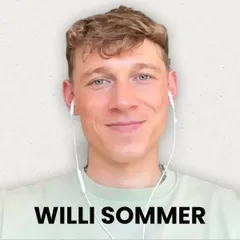
Head of Webflow at Magier
Willi Sommer, also known as Webflow Willi, is head of Webflow at the agency Magier, where he focuses on conversion-centric design. He posts regularly about Webflow and web design on LinkedIn.
Willi Sommer, known on LinkedIn as Webflow Willi, is head of Webflow and a partner at Magier. It’s a design and Webflow agency from Berlin. Magier sells most of its work as a subscription. It has grown to about 37 people in over 15 countries in under three years. Willi runs his part of it while travelling, and he was in Cape Town when we talked. He thinks most landing pages say far too much.
One good reason
Founders and marketers are convinced by their own product, which is a good thing. But they try to fit a dozen features onto one landing page.
Technically you only need one really, really, really good reason in order to buy a product and not 12.
He compared it to a friend who can’t stop talking about something new. At some point you stop listening. A landing page only has to get one click.
With the landing pages you don’t need to convince your prospect of every benefit your product or company has.
After the click, you get another chance to build trust.
Every landing page should have one desired outcome or one direction.
I’ve had clients who wanted a form, a newsletter signup, a demo booking and a free trial on one page. There is no way that ends up clear.
Willi learned HTML, CSS and JavaScript before design. He found he wasn’t a great visual designer. But he went deep on UX, psychology and behavioural economics. Best practices exist for a reason. You can add your own spin, but not too much.
People like naturally don’t really like different. People like what they know.
Portfolios are the exception, because they are about branding. His example was a hamburger menu in the top left, just to be different.
It’s just like the furthest away from the thumb.
The debate online feels black and white to me, as if every site must be art or boring. There are a million websites with different goals.
Finance, ads and a volcano
Magier only got an office about three months before we talked, and Willi had travelled for most of them.
We are a 100% remote company.
Willi first worked in finance and sales. Looking at the people around him, he knew he didn’t want that life in ten years. Travelling made him want remote work. In Indonesia, he met a friend who ran a performance marketing agency and taught him ads. He liked dealing in numbers, and ads led him to landing pages and behavioural economics.
I was looking at, okay, high paying remote skills.
He tried copywriting and dropped it. Then he bought 20-dollar Udemy courses in coding, JavaScript and Figma to Webflow. He had sworn never to use a page builder. Webflow changed his mind. His last ads client then went in-house with two days’ notice. He was living on a tiny island in Indonesia and hadn’t worn shoes for a month. He put on a shirt for his Upwork photo. On his first gigs, he earned very little per hour, because everything took him so long.
One Upwork gig was a travel blog for Sina from Berlin, now a co-founder of Magier. Willi was in Guatemala at the time.
Hey Sina, I need to pause on the project because I’m hiking a volcano tomorrow.
It’s a running joke at the company. Back in Berlin, they had lunch every two months for a year and a half. Sina and Max started Magier inside their venture fund, with its first client in February 2023. Willi joined as a partner to run the Webflow side. They have launched over 100 Webflow projects.
The subscription model
At first, Magier only sold subscriptions. Then clients wanted full rebrands and builds, and they tried to fit those into the subscription.
We have figured out that this just doesn’t work.
One-time projects, like migrations and enterprise builds, need far more planning. So they split the company into a subscription side and a project side. That improved operations, speed and quality.
First of all, we work on one ticket at a time.
The turnaround is 48 hours. A huge ticket gets split into smaller ones, with updates every 48 hours. Tasks are unlimited, and a client who needs more support can buy two design packages.
Regarding the time tracking, that’s something we don’t want to do.
A marketer with an idea shouldn’t have to ask for an hour estimate first.
We budget that one designer can work on four clients at a time.
That’s about ten hours a week per client. Only if a client keeps using 15 to 20 hours a week do they suggest an upgrade. Willi thinks 2,500 to 4,000 a month is on the low end next to competitors. A solo founder doesn’t need weekly design support anyway.
Our ideal ICP are companies who have above 25 employees.
Ideally, they’re SaaS companies with their own marketing team. Each client has one project manager, who also acts as art director. The project manager has three designers with different strengths. An ads ticket goes to the ads specialist and a motion ticket to the motion designer. But the client always talks to the same person.
Client-First and a component kit
Timothy Ricks mentors Magier’s developers every two weeks. Even so, Magier stays on Client-First.
It’s more important that everyone is speaking the same language as compared to everyone speaking like, let’s say, the perfect language.
Lumos changes too often for a large team and freelancers to keep up with. He would wait until it’s more stable. I still use Client-First too, mostly because of Relume. But I want more complex components clients can use in build mode, which is why I’m also looking at MAST.
Magier’s first lead developer built a starter kit. It goes from UI components and utility components like forms, to content components like cards, to sections.
We are now exclusively only building with the component only approach.
Willi thought about publishing their own framework, but decided it wasn’t the best use of his time. Others will figure it out. I think Timothy is killing it, and Webflow should hire him for its product team.
LinkedIn, enterprise and travel
Willi started posting on LinkedIn about two years ago. Most agencies live on referrals, which doesn’t scale.
We get more leads from LinkedIn than we get leads from referrals.
People buy from people, not company pages, so many at Magier post. At first, he posted too much about code.
Anything that involves code, a marketer doesn’t care.
Marketers care about more qualified leads from their website. He thinks people scroll LinkedIn for the same reasons as TikTok.
If you confuse, you lose.
Make it simple enough for a 12-year-old. They recycle what works on each other’s accounts, and each person has their own topic. I post mostly about this podcast, and I believe I could do better.
With bigger clients, the goal changes.
It is way more about risk mitigation than about getting the best outcome.
His recent enterprise project moved more than 300 uniquely designed WordPress pages to Webflow. The company had over 500,000 in traffic, and it all had to carry over without losing SEO. They designed only a handful of pages and built the rest from components. Then a solo founder with a three-page site comments on a line break.
Oh, I don’t like the line break here.
The client doesn’t sign up because of how a word breaks. I’ve noticed the same. Small clients make the most comments, and bigger ones are easier.
Willi has rules for travelling. He avoids the Americas, because his team and clients are in Europe.
Whenever I travel, I stay at least one month in any location.
Airbnb gives better deals for a month, and phone plans and gyms are monthly. First, he sets up his routines. Healthy food, a gym, a good walk and a place to work.
For me, traveling is not a vacation. It is part of my lifestyle.
He hasn’t been very into the Webflow community. He learned from a mentor, Dennis Karg. I’m a bit jealous of London’s monthly meetup, because Finland has none right now. Willi said someone needs to be the first. We are planning something. Let’s say it like that.
Full transcript
Read the full transcript
Janne Parri: Real quick guys, if you enjoy these episodes, please consider subscribing. That's a free little way to support the podcast and it means the world to me. That's all on with the episode. Okay Willy, so what is the number one problem with landing patches in your opinion?
Willi Sommer: So in my opinion, I would say that... Most of the time founders, marketers, whoever built the landing page, they are just too convinced from their own product, what is technically obviously a good thing and is also an important thing. But they have like a dozen features and they try to stuff all the features and all the cool things the product can do into one landing page. For, yeah, for prospects, looking at the
Willi Sommer: Potentially buying this is just way too much so you need to focus on a few on the most important selling points your product has and just bring these across so technically you only need one really really really good reason in order to buy a product and not 12 which are kind of fitting so I think most link pages or like a lot of landing pages would really benefit from getting trimmed down a little bit and having stronger focus on fewer selling points that are more important than just the quantity.
Janne Parri: Yeah, yeah, definitely. I'm on board with that one. It's so like, it's so tempting to try to fit everything on one page and solve everyone's problem. But usually there is just like one or two things that their clients coming to that specific place to solve. And you always feel it when you are the user and you see a landing page, which is crystal clear. Solves one problem it feels so awesome but do you have like some favorite things to do with landing pages
Janne Parri: For example, you like to always do like FAQ sections or maybe put pricing on the first page or something like that.
Willi Sommer: Not really. Like maybe my favorite thing is to keep it simple. I think that would describe it the best way possible. And yeah, I think that's it. Also maybe
Willi Sommer: Something that I would like to add to the that people are just over sharing it's because imagine you're talking to a friend and the friend he discovered something that he really likes and then he's just like so overly excited that he just can't Help himself but talk about it like over and over again and at some point in time you just can't hear it anymore and with the landing pages you don't need to convince your prospect of every benefit your product or company has you only need to convince them that they click the next desired action what like ideal is the CTA and after that you have another chance to sell even more So I like to gain even not selling not sell more but to gain more trust. So they're like different steps where you can
Willi Sommer: Gain more trust by like sharing the benefits or basically bringing the value of your product across and since we're speaking about CTAs another thing too many landing pages they try to do like too many things at once and every landing page should have one desired Outcome or one direction what ideally is something like submitting a form? Calling somewhere downloading something and yeah and not have like lots of different CTAs.
Janne Parri: Yeah, definitely. I've been in that situation when clients want to, want to like go in all directions. So the user should like send a form, subscribe to a newsletter, book a demo, maybe start a free trial. How do you, how do you like put those in every like possible place? There is no way that it will be clear and clean the end results. So yeah, as you said, there should be only one or max two clear CTAs. Yeah, actually,
Janne Parri: A bit random thing. Some people feel, that the way all the SAS and maybe B2B landing pages are going, it is almost like boring to design that sort of landing pages. So do you ever get bored of designing the same
Janne Parri: Old landing page?
Willi Sommer: Well, I mean, I'm not that involved into like the day-to-day operations anyway, so I don't really design any of our landing pages. Yeah, maybe that answered the question, but also I wouldn't say that it's boring. Certainly there are best practices. And if you stick to best practices, usually this has like your advantages. Otherwise, this wouldn't best practices. But there's always like some way of how you can add your own spin to it to make it a little bit more unique, but also not too unique because then people just don't recognize it anymore. And it's like too different. And people like naturally don't really like different people like what they what they know. So and this is also something specifically in
Willi Sommer: Terms of UX design. So even though like a little background, I was, got into, I first got into coding and learned HTML, CSS and JavaScript. And then after that I got into design, but I've just figured out that I'm not that much of a good designer in terms of, hey, let's make like a nice illustration or let's put together like a nice branding. But something I went really, really deep on over and over again. And it's everything around UX, psychology, and also behavioral economics. So this is something I'm really, really into. This is also what I like about this niche or about this business that...
Willi Sommer: UX is something that should not be too fancy. You should make it intuitive. Like you should make whatever you build, it should be easy to use. And I think this is also something where I've been really often design and not, mean, design and development sometimes clashes on this, but I wouldn't say design and development. It's more like design in terms of creativity and design in terms of functionality. What is not always the same thing, that someone tries to design something that is really unique and fancy and sick and ⁓ state of the art and whatsoever. Yeah, ⁓ is most like highest converting my experience, it's just something that people know and that people know how to use. Or to navigate.
Janne Parri: Yeah, yeah, definitely. It needs to be like conventional and somewhat different, but still like clear everything every like navigation and all those things should be like familiar in a sense. And then there is like place for all the fancy sites like they are more like art pieces and they are just like showing what is possible. It might not be the goal for them to like actually convert anyone to do anything. Yeah.
Willi Sommer: Yeah, think portfolios are like portfolios really often perfect example for that because we often in a portfolio website it is like any other artistic website. It's about the branding and it's about showing off what you can do even though. Might it might be not the best thing for conversion. Some like some example is when people put the hamburger menu not on the top right, but in the top left, just to be different.
Willi Sommer: But it just doesn't make any sense because like almost all people use the phone with the right hand. And so the front on the leg, if you put the hamburger menu in the top left, it's just like the furthest away from the farm. So. And this is just like one example of nice idea, but it's just that like super function. Yeah. But maybe nicer branding.
Janne Parri: Yeah, but it's this whole topic and debate on the internet to my mind, it's a bit like black and white, like either all the sites should be like artistic or highly conventional or even boring. Like where's the middle ground? Like everybody understands that there are a million websites and they have all different. Different goals. Yeah. Okay.
Willi Sommer: Yeah, yeah, 100%. 100%.
Janne Parri: We're getting already deep into this discussion, so we have to do little intros. So my name is Janne Parri. I'm a Webflow dude all the way from Finland and I will be your host today. And my guest is Willi Sommer. Also known as Webflow Willy, many people may know Willy from LinkedIn, as I do. He posts quite regularly about Webflow and web design. Stuff. His job title is head of Webflow at a agency called Magier. And really, Magier is based in Berlin, but I get the sense that you are not often seen at the office, so to speak. So where are you right now? Does Magier even have an office? And how did you end up working there?
Willi Sommer: Okay, so first of all right now I'm in Cape Town since like week or so and I will stay here for like one about like two months or together and yeah, so first of all we only have an office since around about like three months but of these three months, I was traveling I think two and a half months. So I was just in Berlin for the for the festival days and so Christmas and new Year's Eve and after that I was traveling again and
Willi Sommer: We are a 100 % remote company because this just gives us the opportunity to be not respected to talent within Germany, but to have a talent pool that just stretches across the entire world to find the best talent everywhere. And so this is not really like a problem with our company since we are like a remote first company. Before we've had an office, our business address was basically like the private address from one of our co-founders. So that's fine. That's like the modern way of working, I would say.
Janne Parri: How did you end up working there?
Willi Sommer: I have a background like first I worked in finance. I worked in sales after I was doing my A level and then I figured out, okay, like I was looking at the people who worked in this like sector in this industry and I was just thinking, okay, that's absolutely not like how I want to live my life in like 10 years or so. And then I traveling and after when I was traveling, I figured out, okay, like I never want to miss this part of my life. So I need to do something with remote, but none of my friends was doing anything remote like business related or freelancer, whatever. Then I got, because I met someone in Indonesia, I got into performance ads because he was running a performance marketing agency. And now he's actually one of my best friends. Then performance marketing has been like one of my first jobs in the remote niche, if you want so. And performance marketing for me was really appealing because you're just dealing with numbers and that's something.
Willi Sommer: I really like and I think I would say I'm pretty good at it. Just making like original decisions based on what works or doesn't work. And this was also my first... But kind of my first way, like touch point with user experience or like behavior economics. And because also like, for example, the ads you do also have like a really close correlation to the landing pages you build. These things are usually really like close, like really attached to each other. And you can't just look at these without looking at the other. So they always need to go hand in hand and
Willi Sommer: Yeah, but then I was thinking, okay, it's interesting, but I want to do something different. And then I got into, was literally like how I got into this. Was looking at, okay, high paying remote skills. And so even before I got into performance marketing, this is how I started. At this time I was working, I was just traveling. And then I first got into copywriting. Then I learned, reading a lot of books about copywriting, was doing some research about it, but then I thought, okay, I think I'm not the best copywriter in the world. So I just ditched it. Then I got into performance marketing, got taught by Cami, my friend. And after that, again, got back to the list, high paying remote skills. And then there was coding development. And then I thought, okay, I'll just give it a shot. Bought the Udemy course for, I don't know, 20 bucks or something like this. And this is how I've been learning
Willi Sommer: Then another 20 bucks for a JavaScript course. Then I've been learning JavaScript. And then last but not least, another 20 bucks for a Figma to Webflow Udemy course. And this is how I've been learning Webflow. With all the research I was doing on behavior economics, because psychology is just an ingrained interest of myself, I saw in Webflow, the perfect combination where I can combine my design UX knowledge with coding and I remember when I started with development I also had okay, I never want to use a page builder because it's I don't know it's because it makes a page bloated and it's just fits like a shortcut and not doing it the right way and then Webflow just completely opened my eyes to yet basically to this new way of
Willi Sommer: Which I didn't know before. And then I always have been doubling down on Webflow. I started then, yeah, then I remember I just, was learning all of this on the site while I still like having like one or two performance marketing clients. And then my last client decided to do the performance marketing in-house again. And they let me know like, I think two days before the month ended. Okay, nice and I was at this
Willi Sommer: Time I was in Indonesia But also at this time I've been learning Webflow already since like four months or something but always like trying around with test projects and then this was for me the time where I was basically like pushed into the cold water and then needed to swim. So funny enough. I've been doing like LinkedIn posts on that topic. I was at this time I was living with Kemi and and cat, like two friends. I was living on an island in Indonesia. What was like super small. It was like, you could walk across the entire island, I think in like 10 minutes or so. And there has been like one restaurant, the house we have been living in, and then like three or five other like local huts and that's it. And for like an entire month, I was not wearing like any shoes or a shirt once.
Willi Sommer: Be only living in my bathers and having the best time of my life. But then I was putting on a shirt because I got kicked out of this job. So I needed to get started with the Webflow side of things. And I needed a kind of professional looking Upwork photo because this is where I started. And this was like the one time during this entire month where I was wearing the shirt. Yeah. And then I got started on Upwork. I've had... I remember like the first my first gigs on Webflow or like on up work Effectively, I probably got paid 150 an hour because everything just took me so long, but yeah, eventually I made it and it was just learning while doing
Willi Sommer: So then I've been starting with up work and after Indonesia I was traveling to Central America and by was in Central America. I got another upward gig and this upward gig was for a travel blog from someone from Berlin and this someone was called or is called Sina and Sina is one of today's co-founders for magia. So and I was also again, I was building this travel blog for I don't know maybe like a hundred bucks or something like this and So barely making any money out of it fully focused on just getting in the webs learning and
Willi Sommer: In the middle of that's like so that's so funny. We have actually we have been sharing the story like a few times doing like our company celebrations, how I got to Maiger. I. Was I was just, I was hiking the Fuego. I think it's called Fuego. It's like a really well known volcano in Guatemala where you can hike up one volcano that is like dead. Do you say like a volcano is dead? I think so. And then like,
Willi Sommer: Then you have like the counterpart was like an active volcano. And I think the volcano is sleeping. I think this is what you say. Anyway, so you can hike up like a sleeping volcano and then like just across on the other side there has been like an active volcano and in the middle of the night you could see how the volcano is like spitting lava and so on that like a once-in-a-lifetime experience that was like so sick and yeah I was texting Zina hey Sina I need to pause on the project because I'm hiking a volcano tomorrow ⁓ and this has
Willi Sommer: Been like such a running gig in our company and yeah this is how I Zina and after that ⁓ for whatever reason Zina was texting me ⁓ and said hey ⁓ whenever you are back in Berlin, can also just meet for lunch. Okay, why not? So, then Zina and I, went out for lunch every two months for like, I think one and a half years. And we have been sharing business, we became friends and yeah, and this is how we got to know each other. And then after one and a half years, were also talking about like the design subscription topic, like multiple times or like Webflow subscription topic.
Willi Sommer: Yeah, were bringing up this topic over and over again. And then he and Max, they started together the venture fund, these adventures. And then... They started Magia within this venture fund and they've been starting Magia. I think they have had the first client on February the 8th of 2023, so almost like three years ago. And then the first Webflow client started in April, so kind of like two months later. And yeah, then we have been meeting, the three of us, and they asked me if I basically wanna join as a partner and one the Webflow side of the company.
Willi Sommer: That's what I've been doing since then and yeah, it has been quite a ride since then I it's yeah, it's crazy like how fast we have been growing and everything that we could put together like on the on the fly by building the company what is really exciting and yeah in these three years now, we have been growing magia to over like 35 people I think we have 37 we are at the moment we've been hiring
Willi Sommer: Like people in over like 15 countries or like over like in over 15 countries we have like active employees at the moment and yeah i've been launching over 100 Webflow projects and that's yeah it's a great it's a great journey we have been doing so far
Janne Parri: That is so exciting. Yeah. And the cool story, the volcano thing. But
Janne Parri: You mentioned the subscription model. And if I understand correctly, that is like thing for Magia. So how does that work? Do you like separate the design and webflow parts? ⁓ and ⁓ What kind of ⁓ boundaries do you put for those subscriptions?
Willi Sommer: Hmm, good question. So first of all, we have split the company. In the beginning, we have been doing only the subscription. And naturally, if you do like design and also specifically, workflow development, at some point in time, people come to you and they don't want to have like a maintenance plan, but they want to redo the entire branding, web design, and then workflow development, like the typical agency business, if you want so. In the beginning, we always try to squeeze these companies into the subscription by saying, hey, just get like these amount of months of subscription and then it's fine. But we have figured out that this just doesn't work because.
Willi Sommer: All one-time projects need way more dedication and planning than, for example, hey, let's please add a new section to our existing landing page. So if you talk about like fully fledged migrations or also like Webflow Enterprise companies and builds, you need like a multiple like staff team in order to properly pull this off. And this is why we started to split the company into the subscription side of the company and then we have like a one-time side of the company. And this is how we have been running it since like one and a half years one of both. They like one year since like yeah one ⁓ and half years. And this has been improving our operations by a lot. Increased customer satisfaction, speed on how fast we can deliver projects and also by a lot the quality. And regarding the ⁓ basically guard rails that you put in place for the subscription.
Willi Sommer: We say first of all that we work on one ticket at a time. Second, you have a turn about time of 48 hours. Here I must say the 48 hours of course like come like a little bit subjective because if you create a ticket that is just immensely big and just unreasonable within 48 hours then say hey, this task is not reasonable within 48 hours. You split it up on like three different tasks and then we deliver it in pieces. But then this, for example, we then always communicate updates within every like 48 hours. Yeah, think this is how we manage the demand of tickets. So by...
Willi Sommer: Saying that you only deliver one ticket at a time or that you work on one task at a time and with this delivery time frame of like 48 hours.
Janne Parri: Yeah, yeah, that's cool. And there is no like our limit. It's like unlimited the subscription.
Willi Sommer: Exactly, it's unlimited. So it's unlimited tasks. But for example, we also have companies who work who need more design support and they, for example, then have two design packages at the time. So and then if we have like two design packages at the time, then we work on two tickets at the time. Regarding the time tracking, that's something we don't want to do because it's... It's just such a pain. ⁓ It's a pain for everyone. So if you are a marketer and you wanna ⁓ start a new campaign because you just have had an creative spark, you have an idea and you wanna execute on it, you don't wanna first go to the agency and ask, hey, what do you think? How many hours is this gonna take? Hence, what do you think? How much is it gonna cost? You just wanna create a request and you wanna get going as fast as possible. ⁓ And by not having this time tracking, you remove all of that.
Willi Sommer: It just makes it easier. It's easier to scale for us, easier to manage for the client. The client always knows exactly what they pay. And like if a client is like so demanding that they... Also like maybe to give like a little bit of a look behind the scenes we budget that one designer can work on four clients at a time Hence each client has around about 10 hours that's also something I always share in every demo call and it's not that if a client hits like the 10 hours we reach out to him. Hey, you have used up your limits or whatever but if we see that someone uses like let's say 15 to 20 hours like every week
Willi Sommer: Then we would say, hey, maybe it's time to upgrade.
Janne Parri: Yeah. Yeah. That is such an interesting model. And, yeah, it's obviously the newer thing that, people are like excited about but obviously, the clients need to be at sort of like a level, not like small companies will pay like thousands of dollars, every month. So what is like kind of your ideal client for the subscription model?
Willi Sommer: It's literally like so interesting that you say that because when we started, I was also thinking, man, this pricing is like pretty sharp, pretty steep. But to be honest, if you look at, for example, other competitors, like let's say, for example, flow Bill or flow Gurus, they have like a monthly retainer of like, I think 5K is where it starts and then it goes up to like 8K. So compared to these for example, we're definitely super on the low end. And I understand that a company, let's say you are like a solopreneur and you just got started. Yeah, of course you afford a subscription where you pay like 2.5 to 4K for designing Webflow support. But the thing is, if you're like a solopreneur and you are just getting started, you also just don't need it because you don't need.
Willi Sommer: Like weekly design support. And who doesn't need weekly design support? Our ideal ICP are companies who have above 25 employees and have different campaigns ongoing all the time. I say, so they definitely need their own dedicated marketing department. That's definitely super helpful. Yeah. So ideally like 30 plus employees upwards, would say, SaaS companies. Yeah.
Janne Parri: Yeah, and how do you like divide the work? So do you have multiple people like doing different segments or different tickets? Or do you always have the dedicated person for that one client?
Willi Sommer: Actually both. Have. ⁓ One we have one dedicated person the client talks to but this is also like a big differentiator for us for example comparing to something like a freelancer I really believe in the benefits of working with experts but when you are a marketer, you don't want to have one person to talk to for ads one person to talk to for web design one person to talk to for graphic design illustrations ⁓ one other person to talk to for I don't know ⁓
Willi Sommer: Social design, whatever, like there are like so many different parts that you can wrap under the umbrella of graphic design. So ideally you have one person who can do it all. But in my experience, if you have someone who can do it all, they probably can't any of the things really, really good. And with Magia you have one point of contact, what is your project manager or slash art director. And if you create a ticket for ad design or like within our company, we then have squats. So we have one project manager and the project manager has three different designers that he's working with. And of course, these three different designers are different, all have different skill sets. And the project manager always says the same for each client, except of course the person is on vacation. And if then there comes in a ticket that is related to ads, the project manager is organizing this with the designer that is really, really good at ads.
Willi Sommer: Comes in with motion design the project manager is managing it with the designer that is really really good at motion design so we always work with experts for this specific skill or trade but for the client they always talk to the same person what just gives them like a lot of like yeah easy project management if you want to and ease of communication i would say
Janne Parri: Yeah, yeah, this is turning out to be a good sales pitch because I'm getting like excited about the subscription. As you mentioned, your prices are not that high and when you like compare them to the possibility to hire one person, they are not on that level. You cannot get a full-time person with that rate and with the subscription.
Janne Parri: As you said, you get like all the specialists for the different roles.
Willi Sommer: Exactly. The thing is, mean, what are the alternatives to get like the same level of quality would be to either have like different freelancers and if you have different freelancers they and they are really good first of all, they're probably booked in advance Second you have like rates of probably like plus 80 years if it's like really really good freelancer who's like an expert in this field and then third you need to manage them all independently the alternative, of course, I mean, the subscription is not an equivalent to having like a full time person because one designer works on four clients at a time. So that's also something you need to get you need to take into calculation. But.
Willi Sommer: If you would look at the alternative for hiring someone, then you would always need to make compromises on the quality because you just can't hire someone who can do it all to this level of quality. Or you go all in and you hire a design team. But then obviously we are looking at completely different costs. And what Magia or what we try to solve with Magia or what we try to provide for the market is that you have the access to to a design team or to like the quality of a design team at a fraction of a cost because like most companies also obviously don't need like four full time designers. So they need support for the marketing department. What is most of the time understaffed because from marketers it's expected that they do that they can do it all. Like a marketer needs to be like a perfect copywriter. They need to be good with tracking. They need to be good with conversion rate optimization. They also need to know SEO. They also need
Willi Sommer: To know performance marketing, there's only like so much you can do.
Janne Parri: Yeah, totally. I sometimes watch the job listings for marketing managers. The demands are just out of the window. Like, you have to be some sort of superman or woman to fit those. I have to ask because you have a big team and multiple people might be working with the same client with the same same website. Then of course, like the documentation and the frameworks and all the stuff have to be like thought out. So what kind of frameworks maybe even specifically webflow frameworks do you use? And do you do something else to get everyone on board?
Willi Sommer: When I started with Webflow, at least from everything that I've been seeing at this point in time, there was like kind of first was just the way to go and was like pretty much like the only like fully fledged framework. And this is also what I've been learning with. And since then, they have been popping up like a few frameworks I think are pretty interesting. So definitely Lumos. We also work pretty close with Timothy Ricks because he's mentoring all our developers on a bi-weekly basis. And we so this is why I have like
Willi Sommer: Like a natural tendency to also be interested in Lumos. Then also, I forgot the name. Do you know the company Settle? I think it's called Settle. Yeah, and this framework is something called with Moose or something like this. I'm not 100 % sure.
Janne Parri: Isn't that just sad?
Willi Sommer: Yeah, anyway, the point is there are like a few different frameworks out there at the moment and we still stick to Client-First because it is if you work with so many different employees and you also work with different freelancers over and over again, it is more to be honest. Do I think that Client-First is from a development perspective, the best framework out there? Probably not.
Willi Sommer: But it is the one that is... The most adapted or like widely adapted. And if you have such a large organization and you also think about scaling this to like 100, 200 people in the next years, then you need to make sure that it's more important that everyone is speaking the same language as compared to everyone speaking like, let's say like the perfect language, you know what I mean? And with Lumos, for example, the thing is that Lumos is changing so often at the moment.
Willi Sommer: That it's just really hard to keep up. And I think it would take quite a lot of work for every developer to really stay on top of all the changes that come with new update from Lumos. So I will always keep an eye on Lumos because I also have a good relationship with Timothy. But I think I wouldn't start with it until it starts to settle in a little bit more and be a little bit more. Slower in the updates even though you would never say that this is a good thing, but
Janne Parri: Yeah, yeah, like more stable.
Willi Sommer: I yeah more stable. Yeah stable was what I was looking for exactly and yeah, that's it where my head is regarding the framework
Janne Parri: Yeah, I'm kind of on the same page that I have been using Client-First for Client-First for so long. And it's kind of clear it hasn't got an update for a while, which should be coming. But anyways, everybody knows it. It's quite like simple compared to, let's say to Lumos. So it's a good foundation, but nowadays I'm thinking more like the components. I want to build more complex components for the clients to use in the build mode. So Client-First does not have anything like pre-built. So that's my issue with the Client-First, but I'm still like using it. I'm also checking out masts like the Corey Moen framework.
Janne Parri: But yeah, it's an interesting topic and I have heard that quite a few agencies are still on the Client-First trade, so to speak, just for the reasons you listed.
Willi Sommer: Yeah, I just wanted to ask if you use any pre-built components, like example, like Relume.
Janne Parri: Yeah, I do use ReLume and obviously that is one of the biggest things motivating me to still use Client-First. There are those conversion things for must and lumos, I believe at least. But I mean like I would like to use like actual like more advanced components and edit those. For example, in the Mast Cloneable, there are quite good quality components for navigation, accordions, footer, obviously, pop-ups and such, with all the component properties. Also, like layout components, so the client could build quite robust layouts.
Janne Parri: With all the components without ever touching classes or the design mode, just in the build mode. So that is kind of my goal to get to the point where the build mode is actually useful for the clients. But I'm not yet there, but I believe that is the way Webflow also is going towards the component-based building. Would you agree?
Willi Sommer: Yeah, I mean we have been we just have been recruiting our first lead developer and we basically have been promoting him now to the first of first like the first January from 2026 and he has been a developer with us before and now he became the lead developer and his like one of his like missions before like in the last and end of the year was to build a fully component only approach basically and now we don't really use we loom anymore. We have our starter kit where we have like a pre like a few predefined components and like all the predefined components in terms of elements that you need and they are like structured on Okay, this I like UI components then this like utility components like for example like a form like overlays stuff like this then you have like another level of components which are like its content components and this for example
Willi Sommer: For is like a larger card. And then you have like the highest level, which are like sections. And we have been structuring all our projects like this, and we are now exclusively only building with like the component only approach. So basically we're putting this together. Yeah.
Janne Parri: Beautiful, beautiful. And is there still like Client-First naming scheme behind that or under that? Yeah. That is beautiful. And have you shared that for the rest of the world or do you keep it keep it in
Willi Sommer: It's something we're still adapting. So we just have been wrapping it up by the middle of December or something like this, so maybe like a month ago. And now we started building the first projects with it to see how it goes. And then we want to iterate over it over and over again.
Janne Parri: Yeah, yeah, I somewhat believe that well Client-First because it hasn't gotten an update it opens the possibility for everyone like to come up with their own frameworks with the components like just in the last episode Alessia Sannazzaro talked about her like framework, which is basically the same kind of framework that you were talking about with their own naming scheme, but they just had their own like framework for the agency and decided that maybe we should publish this to the public and see where it goes. So I would love to see a update for the Client-First too. It's been a while.
Willi Sommer: Yeah, I've been, I've been thinking about this as well to build our own framework. But then I was thinking, okay, is this the, like the best lever for our slash my time? And I was thinking they are like other people who are just like, we're really, really good developers and I'm sure they will figure it out to be honest. You know what I mean?
Janne Parri: Yeah, yeah, that is... Totally.
Willi Sommer: And we want to focus on delivering a great experience for our clients and building our own framework. It does not really bring the huge endeavor for our clients.
Janne Parri: Yeah. I have to ask you about the Timothy Ricks consultations. You mentioned that you have a bi-weekly meeting. It like the whole like development team and what sort of things do you go through in those meetings?
Willi Sommer: Different, so like the last times I haven't been joining these meetings because I was like in Indonesia and then the meetings just would have been at like 2 a.m. Or something like this, so this is I've skipped them. But also like all lead developers mainly leading those meetings with Timothy together. And it always depends, so if we are working on a project which has like a really complex animation, then maybe we can go for that if anyone is stuck with a specific topic or these ad hoc issues.
Willi Sommer: Are addressed during these calls. And besides that, this is just a space where everyone can jam a little bit on their ideas and problems. And since I've been sharing that our style guide and our component library, what is kind of like our starter kit for each project, is one of our biggest priorities at the moment. This is something where we also work on really closely with Timothy.
Janne Parri: Yeah, yeah, that is awesome and that is probably quite motivating too for the developers.
Willi Sommer: Yeah, yeah, 100%, 100%. Riffin, think it's, like honestly, I think it's also great for hiring the best developers. Yeah.
Janne Parri: Yeah, and Timothy is like killing it
Janne Parri: With Lumos and everything. Everything else is coming. Have you actually seen the
Willi Sommer: Yeah, yeah, yeah, he's a machine. He's a machine. 100%.
Janne Parri: Latest stuff? He has this component library and the AI Webflow builder thing. I'm not sure what the name is, but some
Janne Parri: Sort of, some sort of thing. Yeah. You have to watch his latest YouTube videos. I feel that Webflow should hire him for their own product team. Okay, let's see. We are, we have talked about quite nerdy stuff, but I'd also like to ask you, ask you about your LinkedIn game because you are doing some serious LinkedIn posts and getting a good audience for those. So when did you decide to like really, like focus on LinkedIn and, what have you learned along the way?
Willi Sommer: So I've been starting with LinkedIn, I think two years ago or one and a half years ago.
Willi Sommer: No, one and a half? Now we have, no, I think two years ago, yeah. I think I've been starting two years ago. I was doing the time when I was in, yeah, when I was the first time in Cape Town, I think, and after that on the Canary Islands. I think this has also been the time where I was starting with LinkedIn. And the main reason why I've been starting with LinkedIn is that... Like obviously it's like a huge marketing engine for us and like there are like in for most agencies, they at least this is what like at least this is what I came across. They don't really have like any marketing department. They only they literally only rely on leads on referrals. And obviously this is like not like best way if you want to scale your company.
Willi Sommer: And for us, LinkedIn has been proven to be really, effective. ⁓ And we get as many leads from, like, think we get, yeah, we get more leads from LinkedIn than we get leads from Reference. So it's that strong. And... Yeah, and this is why ⁓ This is why I've been starting with LinkedIn because in the end people don't buy from LinkedIn company profile, but they buy from other people. And yeah, this is why the whole topic of personal brand is ⁓ really ⁓ important for us ⁓ and a lot of us are doing it. So ⁓ Max is really, really heavy on LinkedIn. I'm heavy on LinkedIn. Our marketing strategies is ⁓
Willi Sommer: Doing a lot on LinkedIn, even our executive assistant is posting a lot of LinkedIn and like two or three designers of us are also posting or like also developer also posting a lot of LinkedIn. So we got the feedback really often that Maya is like all over their feet in LinkedIn and that's the and that has been that has been the goal. Yeah.
Janne Parri: That is so awesome and I try to be somewhat active on LinkedIn. Well, I have this podcast, but that is like the main thing that I post and I believe that I could do better. So this is also a very selfish question. In your experience, what does work on LinkedIn? What kinds
Janne Parri: Of posts and so on?
Willi Sommer: Good question. So in the beginning. I've been doing a little bit the mistake of posting too much about Webflow related stuff because obviously like our target audience are not really like other developers, but our target audience are marketers and if I talk about I don't know like a really sick code snippet that Creates like a nice gradient whatever marketer just doesn't care like a marketer doesn't care
Willi Sommer: Anything that involves code. They are interested in how can I get more marketing qualified leads out of my website. So this is what they are interested in and this is also what their like quality goals are measured by. So there is just like no code snippet on the agenda of their like OKRs of their goals. So in the beginning I've been talking a lot about like too many technical things which was attracting like a lot of developers. What is obviously not the most ideal thing for like, bleeds when what I, what is like the reason why I also do LinkedIn. That being said, of course it's also great to educate on LinkedIn, other developers and share things that I've been learning along the way. So that's also something, some part of my LinkedIn strategy, but it's like not, obviously not the main part. And another thing that I've been learning is,
Willi Sommer: People like some people thought that people go to LinkedIn in order to learn something in order to get educated. But I think this is a little bit bullshit. If I don't know if this is allowed to say on a podcast, it's I think this is
Willi Sommer: Just not true. I think people just go to LinkedIn for the same reasons they do scroll on Instagram or like TikTok or any other social media platform. Just with LinkedIn, they can themselves more easily sell that they actually here for business and learning something. But they actually like mechanism in their brain is exactly the same. And. For that, it's really important that you don't make things that are too complicated. So, for example, I've been I'm like so interested in like behavioral economics and UX psychology. But this topic is for most people or for like the pros just too complex. If people it's like the same with the landing page that we have been talking about in the beginning. If you confuse, you lose. And if you make a topic that for you that you are super excited about and you find
Willi Sommer: And found it to be really cool, but it's just like too complex and people don't get it by just reading the hook. It's too complicated and they just continue scrolling. So, and I think I've been doing like a lot of things in the beginning which are too complicated, but you need to make things which are super straightforward, easy to understand, like from 12 year old.
Janne Parri: Yeah, yeah, totally. Totally. That is, that is again, beautiful. And obviously you have to like be clear for who are you doing the posts. Can like go through the thought process if you know who you are posting and you can even like do very specific complex posts. If that is specifically for your like target audience, like the killer scripts could be. Acute post for someone who targets like deep developers or something, someone like that. So
Willi Sommer: Yeah, of course.
Janne Parri: So yeah, yeah. I have to ask, do you like strategize with Max that now you do that sort of post and I do this sort of post that, do you like also divide the targets, like target audiences between you two?
Willi Sommer: Mean, of course we also recycle content. So for example, when something was performing really, really well on Max's account or Antonella's account, I can also just reuse it, recycle it and add my own twist, my own story to it. But it's kind of like the same storyline. And of course you do that. But we also talk about like what are like the stories we talk about. For example, Antonella is doing like marketing in general, Max is doing Webflow but also like a lot of...
Willi Sommer: Design and specifically VC life of like building a startup because this is like his personal brand. So his personal brand more evolves around like angel investing, VC staff and building startups. And my brand is more focused on, yeah, pretty mainly like Webflow and how marketing relates to like website, web design and stuff like this. Yeah, so. Yeah, of course, like all of us have, they kind of like their own topic they're talking about.
Janne Parri: Yeah, yeah, and I see Max also doing like YouTube videos nowadays. So do you feel tempted to jump to other platforms?
Willi Sommer: No, I don't feel tempted to jump to other platforms, but I got DJI and I started to also record videos, but I do all of them only for LinkedIn.
Janne Parri: Yeah, yeah. I would imagine that you get quite killer like travel videos also
Willi Sommer: Yes, and I would like to do like more travel content, but unfortunately, this is not what is like so interesting and so appealing and so convincing for like our ICP. So I don't do that much. I don't do it that much. I do it a little bit because I want to bring up the personal touch of LinkedIn. So. Sometimes I hate it a little bit that LinkedIn is only like so like what you have been saying like so boring and it's look at all the leads. I've been closing with this hook or whatever or like this email outreach template whatever
Willi Sommer: And yeah, I would like to be my LinkedIn, not so stiff, but a little bit more personal. Also, yeah, sharing like a little bit about me, about how I built Magia with Max and Zina together. And this is why after I've been starting doing the videos, my... My kind of like punchline or like intro for a video is like, hey, I'm Webflow Willy and this is how I'm building a Webflow startup while traveling the world. And yeah, that's what I wanna share a little bit. So it's not only about how you
Willi Sommer: Can optimize your website, but also how, yeah, I build a Webflow startup while traveling the world because this is what is most important to me.
Janne Parri: Yeah, yeah, and nowadays you kind of want to put some personality to the content because all of the AI stuff and things so you kind of have to have the human behind that. But before we slip into the travel tips and all the other stuff, I still want to kind of circle back to your clients because I believe that Magier may have bigger clients than many of the listeners. So, do you have like enterprise clients and what are like the problems that those like bigger clients have that smaller clients might not have if we think of like the website and Webflow stuff.
Willi Sommer: So definitely one like I've just have been talking about this in a call before one thing that is gonna change is as you work with bigger clients it is not about hey, how can we make the website look? The coolest, but it's more about how can we guarantee that it works. So it is way more about risk mitigation than about getting the best outcome, if that makes sense. Is changing is the level of complexity in terms of different tools that speak to each other, or different teams who all have different opinions on what should be in a certain way. Yeah, this level of complexity definitely also grows as you work with bigger teams or bigger companies.
Janne Parri: Yeah, you mean like you have to do more of like integrations, like integrate some sort of CRM like HubSpot or something like that. And there are just a list of those. That is, that is like interesting. And, usually, well, tell me, tell me if I'm wrong. The small details are not that relevant compared to some small entrepreneur who wants push the pixels so to speak.
Willi Sommer: This is so crazy. This is so crazy. I just have had this like epiphany when were working on our last Webflow enterprise project... Which we have been launching, I think in November. ⁓ So this was a project where they've been they've been on WordPress and they've had like over like 300 uniquely designed pages and a 4,000 you are so it was like a huge migration and they've had like over 500 K of over 500 K of traffic and obviously everything should go off and weapons to Webflow without losing any SEO value any SEO juice any traffic or like any lead problems so what server and
Willi Sommer: Like a company of this size and they have a total funding of over like 500 billion. And they didn't give us like a proper design for the website. In total, in order to cover all these 300 pages, we got, I think, pages designed. And all of these components, we have been like stitching together all other pages. So they spent maybe like 30 hours on the design and that's it. That's it.
Willi Sommer: And then you have like other, and then you have like, this is crazy. And everything was like, yeah, yeah, design, yeah, it kind of works. And then you work with other companies, which is like a solopreneur and maybe needs like a website with like three pages. And then you have comments like, oh, I don't like the line break here. Maybe can we make the line break a little bit later or earlier? And it's like. I hate to break it to you, but the client is not signing up or not signing up or not signing up because of how the word breaks. This is just not, this is, I see people at this point in their journey just focus on the completely wrong things. You know?
Janne Parri: Yeah. And it is for some reason it is always the smaller clients that have all those comments. And when you get to the bigger clients, it's so much easier for some reason. But I wanted to, wanted touch. Mentioned that we might slip into the traveling topic, but, what are your like recommendations if someone wants to work and travel at the same time? Like what should
Janne Parri: They like think and how should they plan their travels? Because you have been traveling quite much. Yeah.
Willi Sommer: If this is something you're interested in, lucky you, because now you're then talking to an expert on this field. So first, so I have like a few, I have a few words for my traveling. At least for the business I work on at the moment. Different business, my words would change. First of all, I don't travel to America because the team, most of the clients, they would be kind of be ahead. So I would get up and for me, it's maybe like 7 a.m. And for
Willi Sommer: Them, it's like 2 p.m. So I get up in the morning and I know that my inbox is just completely flooded with tasks and with problems. Besides that, whenever I travel, I stay at least one month in any location because one month, can actually better is even longer because if you stay somewhere for one month, first of all, you get way better. Deal to Airbnb. Second, everything that you need in any location in terms of infrastructure as for example, phone contracts.
Willi Sommer: Gym memberships is most of the time monthly. So you can easily set it in and get like all the things that you need. And also it just gives you peace of mind. So if you switch locations just too often, it just gets hectic and super stressful. So that's why I want to stay wherever I go at least for one month. And the first thing I do whenever I go to a new place is to make sure that I'm set up. In order to keep my routines the same as they were in Germany or wherever I have been before. So I make sure, or like I organize some healthy meals for me that I can eat depending on the location. You always have like different like food available. Then I organize like gym membership. I figure out any nice walk that I can do. And yeah.
Willi Sommer: These are the three main things that I do. Yeah, and like a cool working place where I can properly work. So, and this is always like the first I do when I come to a new place so that I'm set it in and that I have my routines and that's it. And this way I can stay focused no matter where I go to.
Janne Parri: Yeah, that is so awesome. And I believe that quite many people who do that pump into that, like hectic part that if you switch many times, you like have to set everything up. And if you try to maintain some sort of work thing, that gets challenging too.
Willi Sommer: And I think it is ⁓ Most people they ⁓ mix up ⁓ traveling ⁓ with vacation what are completely different things. ⁓ So ⁓ for me like when people are on vacation, they have the mindset of ⁓ Now I will eat ⁓ this ⁓ for example now I eat this food even though I know it isn't good for my body, but I really want to eat it, but I allowed myself because I'm on vacation but when I would do that and I would make here an exception here an exception it just wouldn't work because for me traveling is not a vacation it is part of my lifestyle what I do like all the time and Otherwise, I would live in exceptions like half the year or even more now. So ⁓
Willi Sommer: I think the most important thing is to keep your life with a lot of routines. What sounds like a little bit limiting to some people, but for me, keeping routines or habits is not something that is limiting your freedom. It actually gives you security no matter where you are and gives you the mental, the head space to focus on what is actually important.
Janne Parri: Yeah, yeah, that is totally a good tip. But I'm curious, have you seen any Webflow folks or have you gone to any Webflow meetups during your travels around the world?
Willi Sommer: I've been to a workflow conference in new York, but that's it.
Janne Parri: Do you know that what kind of like webflow community there is back in Berlin?
Willi Sommer: No, not really. Actually, I haven't been like that immensely into like the workflow community, to be honest. I don't know why, but just like I've been when I started when I started with Webflow, I bought a mentoring with Dennis Karg. Do you know Dennis Karg? No.
Janne Parri: It doesn't ring a bell.
Willi Sommer: He's like, think he's one of the most well-known and also like a really, really good developer from Germany. And he has been my Webflow mentor when I started and I've been learning like a lot from him.
Janne Parri: Yeah, yeah, that is beautiful and everybody does not like need the community, but it's fascinating to see which like areas are active and which are not like there is a monthly Webflow meetup in London and I'm kind of jealous of that because there are zero meetups in Finland right now,
Willi Sommer: Maybe that's your time to shine and get the next meal up
Willi Sommer: To Finland. Maybe. Someone needs to be the first.
Janne Parri: Yeah, yeah, that is that is definitely the case. Yeah. And we are planning something. Let's say it like that. We are planning something. Yeah, okay. Before we end this episode, do you have any like closing remarks, any tips or anything that you'd like to add? Before we go to the ending sections?
Willi Sommer: No, I've been I pretty happy like about the things I've been talking about so yeah hit me with your with your ending
Janne Parri: Yeah, the first part is obviously thanks really for coming as a guest to this podcast and if people like wanna follow you or maybe contact you, where should they go?
Willi Sommer: So they definitely should go to LinkedIn and then just look for Willi Sommer or Webflow Willi. I think you would find me either way. And then if you want to check out some of our work, definitely check out mager.com. So M-A-I-G-E-R, maiger.com. And yeah, that's where you can find me slash us.
Janne Parri: Yeah, actually I have to ask, does Magier stand for something? Maybe in German? Maybe? Or is it just a cool name?
Willi Sommer: Yeah funny that you ask I was like when I was pronouncing I like when I was spelling it I was just thinking about explaining the meaning so great that you have been asking the meaning of Maiger is kind of the it is a german word for magician and yeah, that's it
Janne Parri: Now it all comes together like the logo has a small like little star and so on yeah yeah okay
Willi Sommer: No, it makes sense. Exactly, like all the magic, like all the magic brand elements.
Janne Parri: Yeah, yeah, that is beautiful. The last section is a funny little Finnish section. So what follows is that I will tell you a Finnish saying, like an idiom or metaphor or something like that we usually say here in Finland. I will translate it to English, like word for word. And your job is to guess what it means. So is that clear?
Willi Sommer: Okay, so and I need to then basically tell you what the metaphor or anecdote like is supposed to mean, not the words, but like the actual meaning. Okay.
Janne Parri: So your saying, firstly in Finnish, is helppo nakki. And in English, one could say that it is easy frankfurter, like easy sausage or easy wiener, whichever word you like to prefer. So what does it mean if I say to you that this was an easy frankfurter?
Willi Sommer: I would say something like kind of like a low-hanging food like that was like in like easy clip easy win
Janne Parri: Yeah, yeah, you are actually quite close. It's like an easy job. You tell me that, thanks for doing that Webflow build and I will be like easy sausage. And it just means it was an easy job. Nothing like walk in the park would be a similar phrase.
Willi Sommer: Okay, do you have another one?
Janne Parri: That was actually good I do have a list, but I'm saving these because I do one in one episode. But you were actually spot on with that because there has only been like maybe three people who have gotten these rights because usually these are way weirder for some reason.
Willi Sommer: Okay, so I've had an easy one. I've had an easy sausage.
Janne Parri: Yeah, exactly. Okay, Willy. Thanks so much for being here and all the watchers and the listeners. We'll see you in the next one. Bye.
Willi Sommer: Thanks, Janne, for having me. It has been a pleasure. Have a good one.
About Webflow and Friends
A podcast about building websites with Webflow and the tools around it. Janne Parri talks with designers, developers and marketers about how they design, build and run sites for fast-moving teams.
Hosted by Janne Parri. Janne designs and builds design-led websites and design systems for fast-moving marketing teams, in Webflow or Astro, and is a Webflow Certified Partner.