Building and Scalinga Webflow Agency
- Published
- Episode
- #43
- Guest
- Uros Mikic
- Length
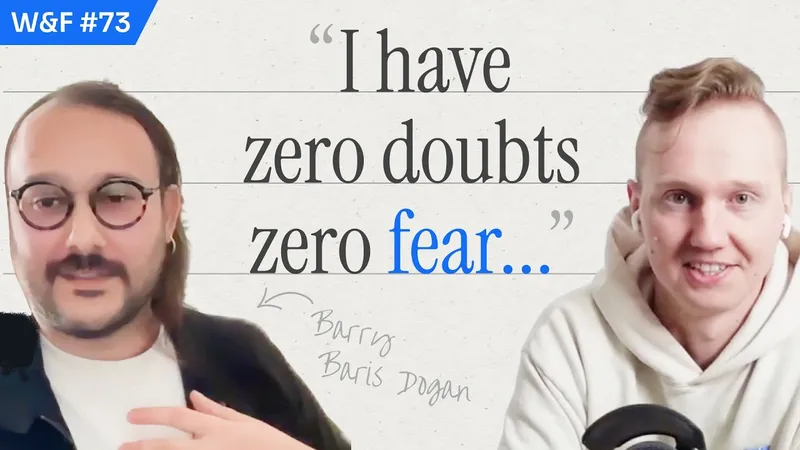
My guest is Uros Mikic, CEO and founder of Flow Ninja. We talk about what it really takes to build and scale a Webflow agency, from sales and positioning to value-based pricing and enterprise projects.
Uros Mikic

CEO and Founder at Flow Ninja (opens in a new tab)
Uros Mikic is the CEO and founder of Flow Ninja, a Webflow agency from Serbia that grew from small freelance projects to enterprise clients.
Uros Mikic is the founder and CEO of Flow Ninja, a Webflow Enterprise partner from Serbia. It works with clients like Upwork and Checkout.com and has won Webflow’s Enterprise Partner of the Year award. The team is almost 65 people and has delivered over 200 projects. Uros started with five-dollar logos on Fiverr. In the month before we talked, his team closed 300,000 dollars of work without him on a single sales call.
From a fruit shop to Flow Ninja
Uros comes from Niš, a small city in Serbia, and from a family that didn’t have much.
I think on one side it might be out of spite because I come from a really small place.
At 13 or 14, he worked at his parents’ fruit shop. A day of work earned him sneakers, another a hoodie. Then he sold five-dollar logos on Fiverr. He grew an Instagram page of motivational quotes to about 200,000 followers. That taught him Photoshop and Illustrator, and the page needed a website. He sold 100-dollar websites on Fiverr and Upwork. He had a full-time job while still in high school, and later dropped out of university.
His clients were international from day one. To win the first ones, he paid for domains and hosting for a few friends’ sites. His portfolio opened with a video of him at 18, walking around in a suit. Someone took a chance on that kid for 400 dollars.
Branding is coming back
What’s next for Flow Ninja is keeping up with the internet. That means AI SEO services, and more creativity.
We’re kind of slowly getting back to the old days of where branding and positioning is really important.
They started as a development shop. In 2025, most projects were full service. That runs from discovery and strategy to design, build and growth. He thinks scalable builds will let AI help later. That means clean classes, tokens and variables. He imagines a marketer typing “I need a landing page for this campaign, here’s the copy.” Webflow then builds it from existing components. I hope for that too, an assistant that only uses a project’s own components. Other vibe coding tools are trying to add the control Webflow already has. They don’t seem to be there yet.
Uros is obsessed with Claude and uses it every day. But you have to learn how. Flow Ninja wrote a 30 to 50 page brand bible, so Claude knows their voice and what not to say.
Learn the tools, don’t rely a hundred percent on them.
The fundamentals of branding and positioning haven’t changed in a hundred years. If you only take ideas from AI, you end up like everyone else. A/B testing needs a lot of traffic, so a small business might skip it. Optimising for LLMs is for everyone in 2026.
He doesn’t separate AEO from SEO. Good content still comes first. Then schema.
I like to say that schema are like subtitles for your website.
Answer every question on your site, with FAQs and maybe a help centre. One lead asked ChatGPT who built two websites they admired. Both answers were Flow Ninja.
Somebody was typing into ChatGPT who built X company website and then it turned out to be Flow Ninja.
Without those case studies on the site, the LLM wouldn’t have known. PR helps too, with real stories on other sites instead of bought backlinks.
I like to look at Flow Ninja more as a R&D, research and development.
They test on their own site first, then offer it through their growth pod. They were also rebranding Flow Ninja itself, starting with customer interviews.
No secret to sales
I asked if there is a secret to sales.
We’ve wasted it like, let’s say hundreds of thousands of dollars on trying to find a secret.
They hired the wrong CRO before learning that sales is fundamentals and daily grit. Deals come from every channel. The website, ambassadors, Webflow, referrals, upsells, YouTube and guest posts. Each sales call has a set of steps, and he systemised everything he did well. For three years, he sat on every call and gave written feedback.
For the last month we have closed, I think maybe $300,000 and I’ve been on zero sales calls.
For a first call, answer three questions. Why are they doing this project? “Our site is ugly” isn’t a why.
Why is somebody doing this project?
Then why now? Without urgency, a one-month project takes twelve. And why us? It can’t just be “we’re the best”. Maybe you have case studies in their industry that nobody else has. Flow Ninja doesn’t bid on RFPs directly. I’ve looked at those too, but they take a lot of preparation. If clients come to you, it’s easier.
They don’t call it a sales call but a consulting process, with at least three steps. A 2,000-dollar enquiry can become 50,000, and the other way round. Half their revenue comes from one-off projects and half from ongoing work.
We moved away completely from hours.
Hourly billing doesn’t reward working faster, especially with AI. So they price on value, fixed for projects and in custom packages for ongoing work. It took seven years to get right, and some projects still lost money.
Enterprise work
For enterprise, faster isn’t better. Secure and reliable are better.
You have to step up your game with development a lot more because you can get sued, the client could get sued.
Flow Ninja has been sued, and learned the hard way. A publicly traded company can’t wait 48 hours for a fix, so someone is always on call. Some sites are huge.
We have some projects which have hundreds of thousands of pages, like 150,000 CMS items.
For Upwork, they integrate directly with the platform to recognise users. Teams with a hundred editors need branching and limited permissions. Flow Ninja became an enterprise partner through Upwork. It grew from a few hours a week to five people. Then Upwork moved to Webflow Enterprise. Uros was a developer on it himself, with his brother, and still oversees the account.
They use their own class naming system, a mix of the frameworks they like. It comes with a style guide and base components. For clients, component properties work better than slots. His nerdy thing is spacing.
I notice from a far away if a website doesn’t have a consistent spacing system.
FlowConf, Balkan Garage and discipline
Flow Ninja runs FlowConf, now in its fourth year and moving to Belgrade. It went from 300 people to about 400, with 14 speakers in two rooms.
Every year that we’ve made a conference, we’ve made zero dollars from it.
It’s non-profit on purpose, and Webflow co-hosts and sponsors it. Everyone at Flow Ninja chips in, and booking speakers’ travel is a full-time job. Speakers included Peter Kang of Barrel Holdings. Events always take time and money. Afterwards, I always feel I should go to more of them.
With a friend, Uros also hosts Balkan Garage, a Serbian podcast about business, finance and cars. They record it in his garage. He wants more people in Serbia to start businesses.
People are still used to getting a full-time secure job, doing the same job until the end of their lives.
That comes from the country’s communist past. How does he find the time? A team that runs on its own, healthy food, training and eight to nine hours of sleep. And discipline. When he hires a Webflow developer, he looks for an engineer’s mindset and enthusiasm.
One of the things I’ve realized is that you cannot motivate people. I’m just trying to not demotivate people.
I feel the same about Finland. Young people are excited about starting their own companies. But there is a lot of bureaucracy and forms to fill. It could be way easier. And some people just want a safe job, which is fine too.
Links from the episode
Full transcript
Read the full transcript
Janne Parri: Okay, Uros. So nowadays Flow Ninja is a household name, an enterprise partner you are known to work with big clients like Upwork and Checkout.com but how on earth a relatively young guy from Serbia start an agency and end up competing with all the big boys, all the major players around the world?
Uros Mikic: Well, that's the golden question, the million dollar question. Well, I didn't know that there is a simple answer to that. But I think on one side it might be out of spite because I come from a really small place. I come from Niš, Serbia. Since starting the business, I always wanted to be the best and I always wanted to give it my all every single day. So with that said, mean, after almost seven years of doing more every single day, I guess we've produced some results in the end. But if we go backwards, mean, there is like...
Uros Mikic: Technically like a story behind everything I come from a let's say a family which that did not have a lot I wanted to kind of find a way to give back to my parents give back to my family and find a way out for our family to earn a little bit more So like in reality it was out of bare necessity for me to live the life that I wanted to live. I needed to basically focus on the business a lot more and focus on finding a way out and that's kind of how Flowing into in general started. I mean I dropped out of university. I actually started working when I was really young so I was working selling fruit at a fruit shop at my parents place where I'm probably gonna butcher years because like if you're looking at things in the past
Uros Mikic: It's a little bit hard to notice but I know like 13, 14 years old I was already let's say working on the fruit shop and whatever I wanted to buy my parents were like yeah you need to learn how the world works so you need to come to work for a day and then we can buy you sneakers then you come to work for a day and then we buy you a hoodie so I kind of understood that you need to work in order to kind of get any benefits out of life and because of that's when I first started working on Fiverr, selling like those $5 logos. Then slowly kind of progressed even more on that. Then I had an Instagram account, which had about 200,000 followers, I think, something like that, where that was the beginning of Instagram. So growing was actually just following and following people and joining some groups where people are going to be posting. So it was much easier that the content was not so hard to produce at that point.
Uros Mikic: That's where I kind of slowly learned, let's say design Photoshop, Illustrator to design kind of those posters and kind of motivational quotes that the Instagram page was about in general. And kind of that led me led me to like in general. The world of web design because I needed to create my first website for the platform. Then I started selling a hundred dollar websites on Fiverr. Then slowly an upwork. I got my first full time job when I was still in high school, which was pretty interesting. I was able to go to high school and have a full time job at the same time. And then kind of slowly year after year, I guess I gave it my all to continuously grow the company and to invest all of my resources, money and time.
Uros Mikic: Into the business and today we're almost 65 people and I could not be happier with the work that we're producing I guess.
Janne Parri: That's such a cool story. And when you started like doing websites, where are you already doing the websites for like international clients? Or did you have to make a leap from like local clients to international clients?
Uros Mikic: Yeah, I guess I was lucky in a sense where all of my clients were, let's say global from day one, even though there were a hundred dollar projects on Fiverr that I worked for our customers, they were still not in my area. I kind of focused from the beginning on getting work from Fiverr, Upwork and then kind of growing the brand and getting customers from there. But there is a fun story of me getting the first customer. That I actually had my portfolio where it was my video from my 18th birthday in a suit because I thought that I should be serious when people are going to work with me. So there is me walking in the suit, like a video of me going back and forth like a real businessman. And then I had about three or four websites in my portfolio, which were one of them was for my friend. He had,
Uros Mikic: A kettle company. Like he was, he had dogs like Pomeranians. So there was like a Pomeranian website. One of my friends was a fitness trainer. So I created a website for that. And then one website was I think for a rental company. So I paid it out of pockets to go ahead and buy domains to design those websites and to host them. So that when I'm applying to jobs, people can actually see this cool kid in a suit and the website that he's done. So I guess people took a leap of faith on me and decided let's work with this kid, the $400, like what can go wrong? And that's kind of how my career in the freelancing design space started.
Janne Parri: That's awesome. And you got to do what you got to do to get started. Okay. Let's do little intros before we go any further. So my name is Janne Parri. I'm a Webflow dude all the way from Finland and I will be your host today. And my guest today is none other than Uros Mikic. And yeah, Uros is the CEO and founder of Flow Ninja. You might already know him, there's a high chance that you do. You might have seen him on YouTube, on LinkedIn. He has appeared on Webflow's channels and many others. Ninja in itself is a major player, an enterprise partner. You actually won the enterprise Partner of the year Webflow Award a couple of years ago.
Janne Parri: And today, as you said, your team is over 60 people. You have delivered more than 200 projects. And I have a feeling that you are not stopping there. So, Uros, what is next up for Flow Ninja? What are you planning to do next?
Uros Mikic: What are we planning to do next? Guess keep up with the internet. That's the hardest thing today is just keep up with all of the changes on the internet and all the things that are changing every minute as it seems with AI. So I mean, like what we're focusing on internally is doing more of the, let's say AI SEO services, understanding the market a little bit more in terms of kind of what are people looking for. Then also doubling down on creativity, I would say, because I feel like that with AI and with hyper optimization in AI, we're kind of slowly getting back to the old days of where branding and positioning is really important. So we're also focusing a lot more on that at the agency to ensure that we can provide those kind of world-class, let's say positioning kind of experiences for our customers so that they're really differentiated on the market and that the websites we're building are remembered for hopefully years to come.
Janne Parri: Yeah, that is that is actually interesting way to like approach this AI thing. So do you have like plenty of designers at Flow Ninja? And has it always been like both design and developments? Or have you ever thought that maybe you should like focus on one or the other?
Uros Mikic: I think, I mean like we realistically started more as a dev shop. Like our origins are more on the development side. So we did do not only development, but mostly development at points. But it seems that as the market is shifting, there is a bigger and bigger need for people who understand. The creative and strategy aspects of a website. So we're, I wouldn't say doubling down, but like we're focusing more and more with time on those. And I would say that in 2025, most of our projects were actually full service deliveries where we've done everything from discovery, strategy, content, wireframing, design, implementation, then the ongoing kind of maintenance and also the growth of the website. So where we do the whole cycle. And that's what we're also looking to do more and more as the time passes by.
Janne Parri: Yeah, yeah, that is interesting. When the projects grow, obviously the demand for the design and maybe the complexity of design also rises. I just talked with Hal Zeitlin and he was talking about all the preparation for... The components like the Webflow components they do like very thorough designs in Figma, all the like naming and all the variables and all the instances of the components. So I would imagine that it is good to have that in house, like that skill in house. Would you agree?
Uros Mikic: Yeah, that's for sure. Mean, designing also, let's say, scalable websites is also really, really important because in the direction that Webflow is heading, and that's the direction where hopefully with AI, you can generate new sections for the website, which have not existed before. The only way, let's say, artificial intelligence is going to be able to do that is if you have a website which is created in a scalable way where it can actually, I mean, kind of... Have components like all the classes which are clean and that it's built in a way where you have kind of small tokens and where variables are being used and that in general it's a scalable platform. So I do think that is also pretty important because it also makes it a lot easier for marketers to use and also for let's say AI later on to help you out in the development process.
Janne Parri: I'm just wondering about the AI and how cool it would be if like, let's say Webflow had an AI assistant that could use just the components that someone has built for the project. In a way that would be like quite handy tool, but still have the control that the designer or the builder wants to have. And maybe on top of that, there could be generating some context or something like that. I'm hoping Webflow would do that. But in your perspective, what do you think that Webflow will do with AI from this point forward?
Uros Mikic: Well, I think it's something similar to what you're describing is that there's going to be a part of, let's say the website that you're going to need to develop and call them maybe let's say new functionalities. But how I imagine a marketer is that they have a text based place where they can write, Hey, I need a new landing page for my campaign for X, Y and Z. Here's a copy. Can you generate me a page? And then Webflow generates you a page out of existing components and kind of tokens and classes. So I hope we're going into that direction. And I also think that Webflow is like, let's say one of the best platforms to do something like that because it's the only, let's say, Vibe coding platform that can both generate you like AI outputs, but it has also visual editor on the side that you can kind of edit all the things on your front.
Janne Parri: Yeah, yeah, that's the thing that other like vibe coding platforms are trying to do. They are trying to bake in the control that Webflow obviously has already. But they seem not to be at that point yet, at least in my experience.
Uros Mikic: I think if you're looking at LinkedIn, it's going to seem that all of the platforms are the best things ever, that you can create spaceships with AI. If you actually start working in it every single day, you're going to realize that, yeah, it's going to disrupt the whole economy, but it's going to take time because it's still not there and the products are still not masters to the point where they can deliver full-blown experiences, full-blown websites, which are created just from prompts.
Janne Parri: Yeah, yeah. There was some, was it cursor or some other platform that kind of has this visual editor that looks a lot like web flows, style panel and you make changes there. But what it actually does is it converts those changes to a prompt and does the changes in a prompt way like in a regular way that it does everything else. That's a weird a trick they are using.
Janne Parri: But yeah, since we are talking about AI, if there are marketers or business people listening to this, what should businesses think of all the hype? Around like AI, all the AI optimization things and that sort of things. What should we do now and what might be like something that we should wait on a bit?
Uros Mikic: So I think the first thing is everybody should focus in terms of learning AI because I myself, technically my job today is like marketing. So I'm really obsessed with Claude recently and like with all the features that Claude is releasing. So I've been playing around with it like every single day and every day I keep producing better and better results. And probably in a span of six months to a year, it's gonna do a better job than me or for many, or. A better job than anybody else in my team. But that is only after I learned how to use the tool. Because if you just say it, say to Claude, hey, go ahead and design a page, he's gonna, or like go ahead and like write a copy for a landing page, it's gonna be pretty bad and the output is not gonna be good.
Uros Mikic: But if you know how to create first a document about your brand, one of the things we've done recently is we've created almost let's say a 30 to 50 page brand Bible so that we describe our brand in every single way so that when we're writing a copy, Claude knows, hey, this is Flo Ninja. Let me write copy based on that. Like we're creating brand archetypes, like we're creating our tone of voice, things which you should say, you should not say. So with time, creating an even bigger library of things like that basically are learning hub for Claude so that it writes better copy for us and that it gives us better results but again it still not replace human input and human ideas and it's still programmatically gonna get to some kind of points so I would say the first thing everybody should focus on is learn the tools don't rely a hundred percent on them because I do believe that
Uros Mikic: Marketing and like positioning and branding is a craft that has not been changed for the last 100 years, 200 years. And those fundamentals of branding and messaging and positioning. Are always going to be the same. So it's also the other thing is like, Hey, yes, learn the new tools, but also strengthen your fundamentals so that you actually understand how marketing positioning and branding works and that you can create something which is unique on the market. Because if you're just relying on clouds to give you ideas and get on AI or like charging PT or like whatever LLMs to give you ideas, you're just going to end up with a template or like with positioning, which is same as everybody else's. And you're not going to be differentiated on the market in any way,
Uros Mikic: Perform. ⁓ yeah, I think that's maybe the biggest takeaway.
Uros Mikic: When it comes to optimizations, yes, there's a lot of things you can do with Webflow Optimize and like with other A.B. Testing tools, which are going to be integrating A.I. Optimizations into websites. But in that case, you also need to have a bigger traffic amount in order to have the benefits, in order to see the benefits of that. So if you're a smaller business, it might not be worth like doing all those. Let's say, optimizations and wasting your time and resources into optimizing things. Because maybe you don't have a big enough audience, versus, like on the other side, optimizing your website for LLMs is something that I think everybody should be focusing on in 2026 because it's going to give you a whole new dimension of where you can rank, how you can rank better. And like people are going to be able to more specifically come to your website based on kind of their searches and their conversations with LLMs in the end.
Janne Parri: Yeah, yeah, if there are people like used to doing like SEO search engine optimization and now they are thinking what they should do differently in the world or the face of AI, what are like the practical things one could do for their websites in order to show up in the answers of LLMs?
Uros Mikic: Well, I think that the first thing is like, yes, you
Uros Mikic: Can do additional things like let's say for AEO and like AI optimization, but the fundamentals are still there. I mean, like you need to have really good content. So like if you've been great on SEO, the chances are you're also going to rank great in LLMs. And I think that you should not be separating those two, like AEO and SEO should not be a separate things. Like you should still continue doing everything you've been doing until right now. But then again, we're getting back to fundamentals of first schema on the technical side. Mean like schema is more important. I like to say that schema are like subtitles for your website because they allow all of the LLMs and like also let's say Google to go ahead and scan and understand your website. It's more important to have good content and to answer every questions on your website because your website is becoming more
Uros Mikic: Let's say, storyteller for LLMs, it becomes a source of truth. So if you have just a single page, then the source of truth is your single page and maybe whatever, like anything else which is available online versus if you have a really good and comprehensive website which explains everything about your business and also has FAQs and maybe even a support center which explains that even further. Is going to give those LLMs a lot more context on what are you doing and why are you different and how can those LLMs be, how they can showcase your brand to everybody else. Because let's say an interesting take is somebody was typing into ChatGPT who built X company website and then it turned out to be Fall Ninja.
Uros Mikic: And then he was like, who built Y company website? And it was full of Ninja. And then the clients reached out to
Uros Mikic: Us and he was like, I want to work with you because you worked with the two clients, which I really admire and which websites I really enjoy. So I want to work with you to deliver me an experience like that. And if we did not have those two customer stories on our website, LLMs would not know that is possible and they would not go to our website in the end. So. I think there's a lot of those kind of small details which can help you out a lot in the positioning, but it's a long-term play in the end. Maybe another tip that I could give to people is that PR is also, let's say, important because for SEO, for a really long time, people were just buying backlinks where they just insert
Uros Mikic: Their website links in random places. Right now, it's more important to have actual stories on web... Other sources which can actually tell LLMs that this is legit and this is real and that there is more context around your brand in general.
Janne Parri: Yeah, yeah, this is so fascinating to keep up with SEO, a world or everything that is changing. And I wonder, will there be new tactics or some new developments? Because as you said, those are kind of like the basics. The new thing that you should do maybe is to construct your content in a slightly different manner and do more of the PR and all the content stuff in general. But we will see where it goes. It's interesting to see. But I'm curious, do clients...
Janne Parri: Like ask about AI and AEO stuff or do you have to be the one that tells them about it.
Uros Mikic: Yeah, so we actually, I mean like we actually started doing
Uros Mikic: Let's say, AEO services for our customers. So we do have a growth pod in the company, which is focused just on delivering growth services to our customers. And an interesting thing is like, I like to look at Flow Ninja more as a R &D, research and development. So we test all of the things on our own website and then we apply it to the growth pod and then we can send it to customers. So we do have already a lot of customers who are using our growth services for the ongoing. Support and kind of work helping them grow and kind of to be more found out on Google and also on all the LLMs.
Janne Parri: Nice. Do you have any other examples that have gone through the R&D lab of Flow Ninja?
Uros Mikic: Yeah. Yeah. So I think right now what we're experimenting is we're actually doing a full rebrand of Flow Ninja. We're not changing the name, but like we're overhauling everything. So, I mean, it's an interesting take for us to go a step back into our service delivery and how to understand, okay, how we're going to be resigning the logo. The process around that and just to ensure that like whatever we are delivering to our customers we are also satisfied with that for us. So it's an interesting process to the research and development on your own skin to be really into all these single details so that when we go back and deliver that let's say rebranding process for our customers we know everything which we need to do. We were doing like customer interviews, were creating us as kind of the whole brand Bible and kind of
Uros Mikic: More focused in terms of doing a rebrand from a messaging and also from getting feedback from customers and only then applying it to visuals but also on the visual side taking it up a notch and kind of creating something maybe which has not been seen yet on an agency's website so far.
Janne Parri: That's nice. So you actually gathered up some like feedback, which is, which is nice. Everybody talks about like user or client feedback, but then it's a different story. How many actually like use that. So that is totally awesome. And okay. That rebrand is like coming, but are you planning to do all of those like starting from the like brand voice of, or tone of voice, all of that's for your clients.
Uros Mikic: Maybe my team is gonna kill me because last year we introduced the growth pod. I know
Uros Mikic: That we have the capabilities in-house because we've done an incredible job on the overall project but I'm just gonna have to wait a little bit more maybe six months to a year before we start announcing that to our customers just to ensure that I don't overload my team and like we always want to... We always want to deliver services which we are sure that we can deliver and that we can take, let's say deliver our promises on. So with that said, because we still don't have multiple people in the company doing those. And because of that, I think it's going to be an interesting time.
Janne Parri: Yeah, yeah. There is so many branches and things one could like, add to their service offerings, but it's always good to like, think where you should focus on and where your like zone of magic is in a sense. But quick side notes here. So I have already booked a bunch of guests for the show. So if you are liking what you're hearing and seeing, please consider subscribing. I am also doing live streams on YouTube. So check the schedule from my channel and come and say hi While I'm live. That's all on with the show.
Janne Parri: But speaking of overloading your team, I want to talk about sales with you because you have been growing Flow Ninja at a quite substantial rate. How have you basically, how have you done it? Is there a secret to sales?
Uros Mikic: A lot of work. Is not a, mean like we were actually trying to find a secret to sales for a really long time that there is like a secret technique and we spent a lot of money. We've hired the wrong CRO. We've wasted it like, let's say hundreds of thousands of dollars on trying to find a secret only to realize that sales is actually there in fundamentals and that it's in the grit of doing things every single day properly and to never deliver something with, I mean like to never go off the sales process. So, in our case, say the sales is created in, like we get deals from multiple streams. So we do get deals from our website and our website is one of the biggest revenue channels for us. So we're investing heavily into that. We're getting for like that from like affiliates because we do have ambassadors around the world that do send us customers. We do get deals from Webflow. We get deals from referrals. We have a lot of upsells for current customers.
Uros Mikic: We try to, let's say, like we do YouTube, we do guest blog posting, so any channel you can think about, we are on it and that helps us actually generate leads to Flow Ninja, like in the end. But from there we do have a really specific, let's say sales process where we have a set of things that need to happen on the first call, on the second call, on the third call, on the fourth call and everything which I was maybe personally doing well, we have systemized that and we have applied it to the agency in a way to know that
Uros Mikic: To know that it's going to be scalable and for me to drop my ego and realize that I don't have to be the one selling. And let's say for the last month we have closed, I think maybe $300,000 and I've been on zero sales calls. So, so with that said, it's a really big, maybe emotional shift on your front to go ahead and kind of let go. And to systemize everything and to figure out that, okay, there are things you're doing well and that's why they're working and let's figure out what are those things and kind of let's teach your team. And in general, to get to a team which can do sales with you, it's been the last three years of me being on every single sales call, providing feedback, providing one-on-one feedback, providing feedback on every sales call that happens and kind of writing kind of physical feedback on the sales calls themselves. So it's a lot of coaching and a lot of, let's say hours,
Uros Mikic: Teaching the team on how to do things. And right now it's finally come after three years, it comes to a place where I can get removed from the sales process and kind of proceed further. But for people, if they want to maybe get something they can implement tomorrow, maybe for the first sales call, there are things you need to answer. And like those things are kind of why is somebody doing this project? And it seems dumb, but many times people get to you and they say, I need a new website. And you say, Hey, that's going to be 10 K or whatever. And nobody actually understands why they need the website. But not even why they're going to say, Hey, we need a new website because our current one is ugly. That is not a why answer. There is probably a deeper answer and a deeper hypothesis behind somebody spending money for a website. And you need to ask a lot of questions to actually understand why are they doing the website. Then why now? Because if they don't
Uros Mikic: Have a strong enough reason to do the website right now, they're either going to delay the feedback afterwards, it's going to become a nightmare project, which is going to be a 12 months long instead of a month because they don't have any urgency. Or if they don't have the urgency, they might start getting into the sales process, but they never finish the sales process. So you need to create the urgency. And then the final piece is why us? So you always need to understand why would somebody choose in this case, maybe Flow Ninja, apart from all the other agencies. And that cannot be the, let's say we are the best, of course. Like they need to have a specific reason of why would they work with us? Mean, like maybe it's because we worked with XYZ company and nobody else has pay case studies in that industry. So because of that, they're going to work with us. So you need a really compelling case of why somebody can
Uros Mikic: Specifically work with you for you not to hope to for you not just to hope for them to choose you kind of compared to all the other vendors and we just those three questions I think your overall sales process can be a lot better.
Janne Parri: Yeah, and specifically the last one, if the client really has some specific reason to choose you are like in a good position. Obviously not all, especially the smaller players, smaller, let's say freelancers and maybe smaller agencies might not be in that situation every time, but it's obviously a good thing to try to. Try to get in. But do you ever do like those official? I'm not sure what's the right word is, but like those competitions that let's say, big company has this competition and you have to fill out certain
Janne Parri: Specs and yeah, yeah. Do you ever do those?
Uros Mikic: Us directly, no. We do have, let's say, we do have partners which are our channel partners, which are bigger agencies, which have internal capabilities to do stuff like that and they're able to do it and kind of they're able to kind of deliver upon that. But in terms of us directly, we have not won any RFPs on our own directly or we are not focusing on that at the moment. Is definitely another revenue stream which can be really, really, really interesting for the company and kind of that we can build upon long term, but we're not focusing on that at the moment.
Janne Parri: Yeah, yeah. I see those in the same way that maybe I should check those out and see if there is a good project for me. But the thing is that you have to spend a lot of time preparing for those and it might come through. But if you are in a place that people are coming to you, it's obviously a better way and easier way to get clients so you do not feel as tempted. Unless you have to have to like get more clients, but still on the sales thing, you mentioned the sales calls. Do you usually go or end up to end up like delivering some sort offer, formal offer that the client then approves or asks about, or do you like go through everything in those sales calls?
Janne Parri: And then jump straight to the contract part.
Uros Mikic: Yeah, so we do like, I mean like, I wouldn't like to call our sales call a sales call. I think it's more of a consulting process because we try to understand what a customer needs and we're slowly going to a solution. When we get to a solution, then we start to kind of, let's say, ideating on the price in terms of kind of... Based on what we believe is good for their success. How much is that gonna cost? Do we want to do everything? Do we want to do maybe a smaller thing? And based off of that, we actually consult the customer in terms of kind of the direction they should go with and then based off of that they proceed further. So it's actually a longer process. Mean like we realized that for us it's better to have a longer sales process. So we have a four step sales process.
Uros Mikic: And that has proven to better than having a one call close kind of with customers. So on our front, of like extending the sales call to more calls and then to actually have actual benefits from that kind of proved a little bit better than to try to wrap everything into a single sales, into a single one call close in the end.
Janne Parri: Yeah, yeah, maybe the shorter like process would better for smaller clients where the problem is like very clear that, okay, they need a website and 10 pages. That's it. It's easy to do a offer for that. But for bigger clients that have more complex problems and you might not know that the website is actually the solution for them. It makes sense to do a longer process. Would you agree?
Uros Mikic: I'm yes and no, I'm like, we always have at least a three step sales call. At least just because we want to ensure that first we ask the right questions, that they know where they're coming from. And sometimes we had a case where a customer comes for a 2k project and they end up spending 50k and we had places where a customer comes for a 50k project and they spend 5k. So it's more about what you actually need, it goes both ways, it's not like a magic wand. But we always want to ensure that like, our job at a company is to understand what you need and how can we support you in that. And based off of that, we actually kind of proceed further.
Janne Parri: Yeah, yeah. I asked you about the secret ingredients of sales. And maybe that is it's like actually asking the questions and going through the discussion until you actually find the right solution. And especially if it goes from big ask to smaller service, that is a major like thing that grows trust in the eyes. Of the client so they will definitely be happy and maybe come back as a customer at some point. Which actually brings to mind do you have like retainers or ways to go on after the initial site launch or when the site gets published or the first project is in a way done.
Uros Mikic: Yeah, we do actually. We have 50 % of our revenues coming from one-off projects and 50 % is coming from the ongoing projects. Last year it's been a clear 50-50 split. And yeah, based on that case, the ideal scenario for us is to do a one-off project and then to work with our customers to be their embedded theme and also to work on the growth for the website. So we like to usually say that, we have web Transform, which is our product where we do transformations of the websites or just Webflow and just Webflow migrations and development. And then we proceed to the ongoing or the growth phase where on the ongoing side we have a WebOps embedded
Uros Mikic: Team where we can deliver any services they need as an embedded team together for our customers or we go to the growth side.
Janne Parri: Yeah, and how are those like, I'm not sure if you call them retainers or what, but how are those like structured, you kind of can get the whole team, but do you charge per hour? Or is it like just fixed price per month? Or? Yeah, how is the structure?
Uros Mikic: Yeah, that's the secret sauce. Mean, we moved away completely from ours, mostly because of AI and everything like that, because it doesn't make sense to keep the hourly system because then people are not incentivized to do things faster. So in our case, we want to ensure that we have a system where both of our customers are incentivized to know that... They have an X amount they're paying, so their budgets are like a lot easier. But for our team, that they're incentivized to use whatever they need to deliver the solution to customers faster. So whether that's going to be for one-off projects or whether that's going to be for ongoing projects, we have a value-based system that we've created where we do create either fixed price for one-offs or we have a specific
Uros Mikic: Let's say pricing system for the ongoing initiatives, depending on who from the team needs to be involved, how many initiatives we're going to be doing on the website per month and how many updates on the website we're going to be doing per month. And based off of that, we create custom packages for our customers.
Janne Parri: Nice. That's always so interesting to see how people like structure those. And I have heard from a lot of people that they do not like the hourly retainers for the same reason that you mentioned that. That is not like good for anybody basically.
Uros Mikic: I mean, it's like, let's say value-based pricing is really hard to implement if you don't have any, let's say, previous experience. So for us, it's been, let's say, a pricing system we've developed over the last seven years. So it's been a lot, but it takes time and I think it's a really good thing when you nail it good. But we did have unprofitable projects, even they were, let's say, value-based and it's a trial and error. There is not a perfect pricing plan. This one is even maybe harder to manage, but it's more oriented towards the success of customers because if we make a mistake and we do something longer than expected, it's on us and it's on our productivity instead of customers paying for maybe some of our team members being tired that day and then in the end, like customers pay more. But on the other side, when our team is more productive, in that case, they're getting a better time for, I mean, they're getting a better value.
Janne Parri: Yeah, yeah, definitely. Okay, I wanna hone in on the bigger like clients, like the enterprise clients. How do you see, what do they like ask or want that is different from the, let's say smaller clients?
Uros Mikic: I think faster doesn't necessarily mean better for enterprise. Means like more secure and more reliable are like, let's say better words to use. So in our time working with enterprises, we've seen that on one side it might be easier on a day to day and week to week basis to work with them. But on the other side, there's also a lot more risk and you have to step up your game with development a lot more because you can get sued, the client could get sued, so the stakes are much higher... Higher... Higher... Than for working with any bigger clients. I mean, we compared to working with any smaller clients. So like I would say that's the bigger difference. We have gotten actually sued before. Like we've paid the price and we've learned that, like we've learned which things you can and cannot do on enterprise websites, maybe on the harder way so that we know how to do it long-term.
Uros Mikic: But in general, I think it all comes down to your agency size as well. Because for enterprises, they're looking also for a one-stop shop for their website. And that's why we kind of created more of the website operations initiative where we can handle everything under a single roof. And if you're a smaller team, maybe you cannot handle that. And also in terms of support, we are available, I wouldn't say 24-7, but no matter what happens, weekend after working hours or at any times you need to have somebody who's going to be on call for the customer because if they're a publicly traded company, they cannot wait 48 hours, 72 hours for somebody to fix something on the website, but that needs to be done as soon as possible.
Janne Parri: Yeah, usually the CEO will answer if no one else answers.
Uros Mikic: Yeah, so either CEO of our team leads or like our CTO, there's a lot of us at the company and I think we have great people. So I'm really grateful in that case that there is like more people than me to respond to those messages. But yeah, I do agree there.
Janne Parri: Yeah, but I'm also curious about the actual builds and the solutions like what does the enterprise Webflow project have that maybe smaller ones don't? Probably some integrations does the like framework or the structure look any different? What can you tell?
Uros Mikic: Mean, first thing is like probably thousands of pages. Have some projects which have hundreds of thousands of pages, like 150,000 CMS items. So just working with that and then filtering that on landing page can be a really interesting thing. And like to search that as well, that's like, let's say a challenge on its own. Then integrations directly with their platforms. So like we integrate maybe for Upwork directly with their... With their platform in general to recognize users and to showcase different data points. So you need to know actual, let's say development in order to work on those bigger customer projects. Then reliability and like also Webflow Enterprise as a platform comes into play because there's a lot of, let's say legal and also security concerns that come from having a publicly traded company or like a company which has a lot
Uros Mikic: Team members involved. And because of that, you also need to learn all the features of Waflo Enterprise, how to sell that and how to use all the additional features that are going to be available. And maybe that's going to be branching, maybe that's going to be limited permissions to ensure that in a company which has maybe a hundred people who have access to a website, that somebody does not publish something which they should not, or that somebody does not break anything that they should not be breaking.
Janne Parri: Yeah, a lot of training. Training needs to be done. I'm curious, could you tell us the story how Flow Ninja became an enterprise partner?
Uros Mikic: How funny? Yeah, mean, technically that was with Upwork. So like Upwork did reach out to us at that point because there was not a lot of agencies. We worked with Upwork for the last six years, I think right now. So it's been a long time. So I would say on one side, were really well positioned on the market because were always trying to be a Apple only agency. And that's kind of how we positioned ourselves. And because of that, they stumbled upon us. They started working with us and then slowly the account grew more and more and then kind of we supported from a few hours per week to then one person, two people, then five people working for Upwork directly. And then Upwork did get like the Webflow Enterprise plan. And that was kind of our way into transitioning into being an enterprise agency.
Janne Parri: Nice. That's a beautiful little stamp or certification to have. But do you feel that after you got that stamp, more enterprises were asking for Flow Ninja's services or was it like just nice to have?
Uros Mikic: I think it was more, let's say, I mean, one thing when it was, let's say 2016, 17, whenever we did become like Webflow Enterprise partner, it did mean a lot because were one of the first enterprise partners in the marketplace. So that case, let's say the competition was not so big. So we did maybe actually get some customers because of the certification, but afterwards it's more about just, let's say, a credibility statements that were certified. And we actually got more clients from them seeing that we have worked with Upwork, that we have worked with enterprise XYZ and that was a bigger reason for them choosing let's say Flow Ninja because they've seen those projects which are pretty interesting.
Janne Parri: Yeah, yeah. And I know that when a company grows, your role as the founder and CEO will change. But did you get to work on Upwork in the actual like, Webflow design mode, or was it just the other guys?
Uros Mikic: Yeah, I was actually like one of the developers a while back. Mean, like, of course, like, as you know, like when you start a business, it's done all nice and handy. So when we did start, it was actually created in a way where I was one of the developers. I was one of the first designers. So I've done everything. I was like the account manager, developer and a designer. And then actually my brother joined as well to that account. Like he was one of the developers and kind of the account slowly grew to a place where I'm still, let's say the lead account because I just enjoy them kind of as a customer. And I like still keeping touch and getting feedback from some of our customers where I'm just kind of overseeing the high level project more on a quarterly basis to ensure that everything is running smoothly and that we're going in the right direction.
Janne Parri: Nice, and how about today, you ever end up like doing some webflow work or is it just like checking out the cool new features and playing with cloud?
Uros Mikic: Yeah, mean like checking out cool new features and I like to build websites with more for my friends in my free time. Like if somebody of my, some of my friends start a business, I'm like, I'm going to build your website. So it's more of a side project, but for actual customer work, we do have people who know Webflow much better than me at today's age. Mean, like because they're building websites every single day. So unfortunately I'm not doing more work because the team doesn't allow me to do so. But I would love maybe to have
Uros Mikic: A little bit more satisfaction by the developing instead of being on meetings and developing the strategy for the company. But yeah, I'm not doing that at the moment unfortunately anymore.
Janne Parri: Yeah, yeah, it's the price you have to pay when you grow a company. You have to become this manager. But I have to ask you the framework question because you have multiple people working within the same project and you obviously have thought processes through. What kind of frameworks do you use and do you have anything else that... Ensures that people are on the same tracks or on the same wavelength, like they feel me.
Uros Mikic: Yeah, so on our front, like we do use our own, let's say class naming structure. So like developed in house. We always say that we're going to make it public, but we never have the time to do so. So that's like an unfortunate thing, but I would say it's a combination of all of the frameworks online because you see something you like it, you see something you don't like it. So we did create a framework we enjoy working on and that kind of is actually kind of helping us long-term grow all the projects. And that's, that is what all of our team members are following. And that's like the way we're able to grow projects and grow actual enterprise projects.
Janne Parri: Do you have like ready-made components or let's say starter components in that templates or is it just like the class naming scheme and the structure thing?
Uros Mikic: Yeah, I'm in class naming, style guide, and like you have components for all the base elements, like maybe navigation, footer, sliders, and kind of some of those base elements that you build the websites out of. And kind of that's what we use to start every single project and to kind of have us a base for any projects we're going to be building long-term.
Janne Parri: Yeah, yeah. And now in the previous episodes of the show, we have talked a lot about open versus closed components. So do you like components that the clients can edit in a free way that you like nest components inside of slots and so on, or are you in the school where you do lots of properties and then edit the components with the properties or something else maybe.
Uros Mikic: Yeah. So we found that properties are like a little bit easier for customers. Like if you ask us that has been like an easier take on our case where they can just kind of select properties, they see a different component basically by adjusting the properties on that front. And that seems to be working a little bit better than allowing customers to have slots and to put things into things. But I guess that's always changing and like we'll see kind of where we end up with long-term because we are experimenting more and more. And kind of we're building more and more websites with components themselves.
Janne Parri: Yeah, yeah, that's the thing that in a way I get that, let's say closed components with all the properties that's in a way simpler. But then I see the temptation to build a system that the clients can use, but usually it ends up being quite complex. Maybe you could like have both of those, but I feel that everyone is like struggling to find the balance and then there's new features coming up and you have to update whatever cloneable or template you use. Yeah, it's a constant struggle, but do you have some...
Janne Parri: Some specific elements or things you like from your template or cloneable.
Uros Mikic: Specific things that we like from our templates are cloneable.
Janne Parri: Something nerdy. Give us something nerdy. Nerdy things.
Uros Mikic: Nerdy things. Mean... For me, guess maybe it's spacings because I'm a freak. If I see a website which does not have a good spacing system, I'm going to be the one trying to adjust it and to ensure that spacings and line heights are created in a way where it makes sense. So maybe the most nerdy thing of kind of things where even like if I leave feedback at Flow Ninja, people are going to think that it's something crazy, but I'm like going to see an inconsistency in spacings around the website and I'm going to be the freak that leaves comments on. This should be 96 or whatever it
Uros Mikic: And add like 97 or whatever so that's me that's my nerdy thing about websites is I think I notice from a far away if a website doesn't have a consistent spacing system.
Janne Parri: Yeah, that's a great topic. Are you in the camp of doing spacing like with div blocks or paddings or both and maybe some fluid units?
Uros Mikic: Yeah, so we usually use classes like directly in elements kind of for spacings, but we do have a preset of let's say spacings from XS, S, M, L, XL, XXL, 2XL, 3XL, like, et cetera, et cetera. And based off of that, we apply those to elements directly in classes and then we can basically change the properties and the things of how far things and like we also create classes like that for paddings and kind of for like margins or like anything needed on that case.
Janne Parri: Nice, yeah. Sometimes that spacing discussion gets heated online and that's always cool to see how people get into a fight with such a small, well not small, but such a nerdy little thing. Okay, let's change gears a bit. I want to talk about FlowConf, which is coming in May. It's your event and I believe it's the second time around that it, that it's held. Am I right? Is it fourth? I'm way off. Okay.
Uros Mikic: Fourth. Yes. Way off. Double the time.
Janne Parri: Yeah. Yeah. Well, maybe now is the time when it burst like my bubble and I like know it. So, when did you decide to host an event and what's the like reasoning or motivation behind that?
Uros Mikic: Well, think that, I mean, like giving back is a really good thing in general. So I always think that I've learned the most from visiting conferences, but... There was never let's say a super secret thing that I've heard. It might be a sentence that changed my kind of thinking or like anything similar to that. So because of that I think that it's really good that people come together to a single place and that also after COVID that people are spending more and more time together in person because maybe they're working home remote. And it's our way to give back to the community. It's actually a nonprofit event. Every year that we've made a conference, we've made zero dollars from it and like we have made it our, let's say,
Uros Mikic: Commitments to make it a non-profit event every single year. So because of that, it's a great place where people can come they can learn like they can network they can hear new things and where the let's say web is going to and like a they can also have fun because my biggest job for conference is how can we make it fun? So that's what I'm supporting all of our team members to and because of that, I think it's an interesting way for me to give back to the community and to feel also what are people thinking about where the web is heading. And this year we're doing it in Belgrade and hopefully we're going to see you as well there.
Janne Parri: I have like added that to my calendar, but we'll see. I cannot do any promises, but since it's first time in Belgrade, so I would imagine that it has grown. So how many like seats do you have for the event?
Uros Mikic: Well, this year is going to be probably 400. Last year we filled 300 people. So like we are going to be upping up the notch a little bit. It might be a place where we stop because we want to keep the exclusivity of the event, but yeah, we'll see how it goes. But it's interesting because Niš is my hometown and we've created the event three times in Niš and it's time finally to go to a bigger place and to a bigger location and I think that it's gonna be pretty interesting to kind of grow the events to a bigger size and to also change the city and to allow people to come to also explore Serbia as a country because it's a place I love spending time in and I think it's gonna be great for people to come from all over the world because we have people coming from London, Portugal, have people from Poland, from the US actually fly
Uros Mikic: Into the event so it's gonna be a multinational event from all over.
Janne Parri: Totally. And I'm all for it. We need more events this side of the pond. So obviously the States have all the meetups and all the webflow cons and such. Well, London is an active city. Also, they have plenty of meetups, but when I talk to people here, quite quite a few says that in their country, there's like nothing happening unless they themselves arrange something. So that's a good thing to see. See people coming up with the events. I have to ask, do you have like a separate team for the events or does everybody like chip in a bit?
Uros Mikic: Unfortunately, everybody chips in every year, so they're hating me for that, but it's a passion project. Mean, like we always say next year we're going to hire somebody to do the conference, but it requires a lot of energy, a lot of thinking, a lot of involvement from different departments. And it's generally our way to express our culture in a way, because when people come to the conference, they're going to be able to feel us and kind of what we are as a company. So we've found it pretty hard to hire somebody to do it. So, we are organizing everything in-house in the end.
Janne Parri: Yeah, yeah. And I would imagine since it's a once a year event, there might not be that much work for the full year. So it might be a seasonal thing. There it is. Okay.
Uros Mikic: There is, there is, there is trust me. Or selling 400 tickets for an event is a task on its own, but also, I mean like we're going to have about 14 speakers because we have two rooms. Figuring out who those 14 speakers are gonna be getting them from the US from London from all different places to Serbia paying their tickets booking their flights booking their accommodation their transfers is a full-time job on its own so that's one of the things which is a little bit a little bit getting into the way but like there's a lot of those small details that you never planned for that you always need to think about finding the event booking the I mean booking the venue and it's
Uros Mikic: It's a task. Realistically I think it's a full-time job if somebody would do that all year long.
Janne Parri: Yeah, yeah, you opened my eyes. It's a good thing that no one pays for me to me to arrange these events. But that's so cool. Do you already have some speakers booked? And can you tease us about any anything?
Uros Mikic: Yeah. So we have Peter Kang. He's going to be coming from new York. He runs Barrel Holdings and he's been like one of my inspirations in terms of how to run and grow an agency. He's been, I mean, I'm going to be looking forward to kind of listening to him talk. We have Laura. She's also from new York coming to speak more about brand and where are brands heading in the age of AI. So there's that. Mean, like we have some of our customers. We're to have Ruxy from checkout.com giving a talk. So it's going to be an interesting time on the stage, I think.
Janne Parri: Yeah, yeah, definitely. And those events, it's such a cool thing. Obviously you're like thinking that, I spend the time and money to get there and so on and so forth? But afterwards, it's like always the feeling that I should do this more and I should visit these events even more. So it's a good thing for the community. But actually we could talk a little bit about the Webflow community updates and since we are kind of on the same topic, there was a new platform, new global leader thing, and then there was also the community fund so you can like apply for funding for the community projects. So what do you think about those updates?
Uros Mikic: Yep, so I mean... Webflow is doing a lot for the community and Flowconf would not be able to happen without Webflow. There's been a huge support from financially to support in terms of helping us get the right speakers and everything like that. So I would say definitely that Webflow is doing great things for the community. Know that Veronica and everybody in the team is doing a lot on that point. So I think I really like that and I think it's up to people to start using those benefits and to start organizing things on their own, in their own hometowns and kind of promoting workflow into their own places.
Janne Parri: Yeah, yeah. Are you thinking of maybe applying for some sort of grant
Uros Mikic: On one place, Webflow is sponsoring the FlowConf. So like they're the biggest sponsors and they're co-hosting the event together with us. So that's been like a huge grant out front. And I think we're just hoping to have that every single year.
Janne Parri: Yeah, yeah, nice. Okay, there are a few little sections at the end of this episode. Before we go to those, is there something that you wanna say to the listeners or watchers about Webflow, growing an agency or whatever you have in mind?
Uros Mikic: Well, I might be joining a big YouTube channel pretty soon. We'll see in about a few days where I'm going to be
Uros Mikic: Able to share a lot more about how to actually grow an agency and to share my experience behind running and growing Flow Ninja. So they can follow me on LinkedIn or Instagram and stay updated to that. So hopefully I'm going to be spending a little bit more time this year into sharing my story and everything I've been doing so far.
Janne Parri: Yeah, nice. We'll wait for that one. Yeah. One thing I want to ask you about, to my understanding is not related to Webflow, is Balkan Garage. What is Balkan Garage?
Uros Mikic: What is Balkan Garage? We're still trying to figure that out. Mean, that came out as a hobby project with one of my friends because both of us really like and enjoy talking about business, cars and finance. So we decided to go in my garage and to start recording a podcast in my garage. So like we publish every week. We haven't missed a week so far, so we'll see how far we get with that. And it's just a place for me and my friends to jump together and kind of spend a little bit more time together and to... Talk about business, finances and cars and to share that with the Serbian audience. And again, like it's also another way for me to try to give back to the community of let's say my experiences and my thinkings and hopefully some people are gonna...
Uros Mikic: Start listening to that, maybe they're open to their own businesses, maybe they start something on their own or they get even better careers by listening to the podcast. So it's my way to hopefully influence the community in Serbia because I don't know, I always like to... Try to make changes by looking at things around you and I can maybe complain that some things are not perfect in my country or I can take things into my hand and try to actually make something good out of it. So I decided to do the second thing and actually focus on making things better by sharing my knowledge and that hopefully with time if more people have successful businesses and careers things are going to better.
Janne Parri: That is a great thing to do. How is the general like business culture or atmosphere in Serbia? Is it like, how to say uplifting? Are people encouraged to build their companies?
Uros Mikic: I think recently yes, but we came out of communism, so... People are still used to getting a full-time secure job, doing the same job until the end of their lives. Their responsibility is not changing for 40 years. And even though some younger people maybe understand capitalism a little bit more, you still don't have a country where you're going to be learning that in any place. And maybe your parents are going to be giving you advice which are not related to capitalism. So think things are changing and it's getting better. But it's definitely nowhere near maybe London and US where if you have a business people are gonna be, that's amazing. How can I support you? What can I
Uros Mikic: Invest? Here is gonna be, are you sure? Maybe you have the job. I don't know, should you do it? Who do you think you are to start a business? Like you're gonna fail. Look at all the other people who failed. So it's getting better, but I would say that it's still not in the ideal scenario. I don't know how is it on your phone, but that's what I see here.
Janne Parri: In a way, same feelings. I believe that especially the young folks are like excited about the possibility to be an entrepreneur. But then again, the, like government, does not make it as easy as it could be to like build a company. There's somewhat, lot of like bureaucracy and forms to feel. And all sorts of things. And yeah, we have all sorts of aid programs and such, but it could be like way better and way easier. But I feel that people are like somewhat excited about the possibility. But then there are obviously the people that want a safe job and do not want to deal with all the risks and so on. But that's all.
Janne Parri: That's all fine. Everybody does what they want to do. Yeah, that's an exciting conversation. And it's cool to see that you are giving back in that sense too. But I sometimes I sometimes start with this question. But it might be one of the last questions for you. How do you find the time to do everything?
Uros Mikic: I mean, I don't know. I guess I'm lucky. Have a great team at a company. So the company runs on its own today. I'm there to support and to make it bigger and to kind of give ideas. So there's that. Then I mean, I don't use a lot of, even though I post a lot of on social media, I didn't use a lot of social media. So I don't have spent a lot of time on my phone or anything like that. Then there's like, if you eat healthy, you train and you sleep really well. I don't know, like I sleep eight to nine hours every night. You get a lot of energy to do things.
Uros Mikic: I would say it requires a lot of discipline. The problem is like if you're not disciplined for a day or two then things start catching up on you and like you start getting anxious and you're like okay why did I end up with all of these things that I'm doing but as long as you're disciplined I think it's possible and I cannot wait to do even more things with the time that I have but you have to be really really disciplined with your time and show up every day and then after that you're gonna have time to enjoy whatever you want to.
Janne Parri: Yeah, yeah. And when you get like that positive feedback that gives you more motivation and you do not like, you do not want to fall off the wagon. You want to just do more and more. So yeah, that's so awesome. Okay. If people want to contact you or follow you, where should they go? You already mentioned LinkedIn, YouTube, any other places.
Uros Mikic: LinkedIn, YouTube and Instagram are the best places if anybody wants to shoot me a message or follow me. I might be a little bit slower to respond, but I'm going to try to get to everybody at one point.
Janne Parri: Yeah, yeah. And obviously there will be forums at Flow Ninja's websites if you need a cool ass websites done for you.
Uros Mikic: Or if you want to submit to work, we have open jobs for an account manager or an Apple developer at the moment. So if somebody is interested in
Uros Mikic: A new role, there is also that place.
Janne Parri: Okay, I know that we like at the deep end, but I gotta ask, what do you look from a Webflow developer?
Uros Mikic: Mean first, let's say more of an engineer's mindset in terms of coming to Webflow with an idea that at one day you want to maybe be a backend developer. So that you look at Webflow as just one of the tools in your tool set which are going to allow you to build great websites but that those websites are at one point going to be connected to so many APIs and to so many things like for enterprise websites that they need somebody who's willing to learn. On other side, think it's just attitude and enthusiasm to come to work because one of the things I've realized is that you cannot motivate people. I'm just trying to not demotivate people... Which are great. With that, so if you're highly motivated but without me doing anything, that's going to be great. And I'm going to just try to stay out of the way to let you do your own thing and to let you progress, maybe earn more money and progress in your career. And those are going to be maybe the two biggest things.
Uros Mikic: We're looking for.
Janne Parri: Yeah, yeah. But that's the thing when you are like growing your business and obviously it's your business and you are so excited about that, but you kind of cannot expect everyone else to be as excited. But then again, if you find the right people and they want to do the same thing and walk the path to the same direction, that is obviously like the best win-win situation. Wouldn't you agree?
Uros Mikic: Yeah, yeah, agreed completely.
Janne Parri: Nice. Okay, we have the last weird section at the end. It is as follows. So I will give you a Finnish saying and I will translate that to English and your job is to obviously guess what that means. So it might be a metaphor, a saying and yeah, you will just have to tell me what that means. Are you ready? Okay, so in Finnish the saying is päivä on pulkassa, and in English it is "a day is in a sled".
Uros Mikic: Day is in the sled. I have no idea. It's actually a fun question, but it's like a day is in a sled. Can I type on Google?
Janne Parri: It will probably give you some sort of answer, but that's in a way cheating. Did it give you anything?
Uros Mikic: An intense fitness routine using a weighted sled for strength, power and endurance training. Is that correct?
Janne Parri: Yeah, that is not correct. I will give you one guess, then I'll end your agony.
Uros Mikic: A day is in a sled. Maybe that you should follow your
Janne Parri: What could it mean?
Uros Mikic: Daily routine. I don't know.
Janne Parri: Yeah, yeah, yeah. The day is in the like topics, but yeah, that is not too close. It means that everything is done for that day. So because this is the last meeting for us for today, I could say to you that the day is in the sled. So all done basically.
Uros Mikic: Okay. All done. The day's in a sled. And how do you say it in Finnish?
Janne Parri: Päivä pulkassa. Tai päivä on pulkassa.
Uros Mikic: Bye, päivä on pulkassa.
Janne Parri: Yes, beautiful, exactly.
Uros Mikic: People are gonna start hating me from Finland but... I've tried, I've gave my best.
Janne Parri: Yeah, yeah. And you can say to your employees after four or five p.m. That the day's in the sled and they will look at you puzzled. What is it mumbling about? Okay, Uros, thank you so much for being here. It has been a blast. This was a great conversation. And for all the listeners and watchers, we'll see you in the next one. Bye.
About Webflow and Friends
A podcast about building websites with Webflow and the tools around it. Janne Parri talks with designers, developers and marketers about how they design, build and run sites for fast-moving teams.
Hosted by Janne Parri. Janne designs and builds design-led websites and design systems for fast-moving marketing teams, in Webflow or Astro, and is a Webflow Certified Partner.