Advantage of DoingBoth Design & Dev
- Published
- Episode
- #46
- Guest
- Jordan Gilroy
- Length
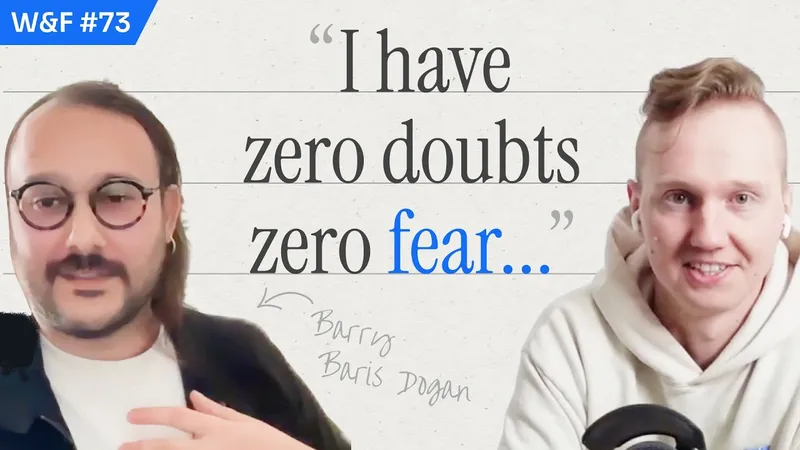
My guest is Jordan Gilroy, a freelance web designer and Webflow developer from Leeds with a shelf full of awards. We talk about the real advantage of doing both design and development, and how he thinks about motion.
Jordan Gilroy

Web designer and Webflow developer at Freelance
Jordan Gilroy is a freelance web designer and Webflow developer from Leeds, with a long list of design awards.
Jordan Gilroy is a freelance web designer and Webflow developer from Leeds, England. He has won Webflow’s Creative Excellence Award, a Webby and several Awwwards Sites of the Day. He has judged for Awwwards too. He started building because he got tired of developers not doing his designs justice. Now his work is about half design and half development, and he likes it that way.
Kin Studio, and building more
Jordan and his brother Liam started Kin Studio because they wanted to work together. Jordan does web design and development. Liam’s main passion is video and photography. They thought the services would overlap. But most of Jordan’s leads already had their visual assets.
It just felt like we were two separate entities sharing an office.
After a year, they had worked on one project together. So they called it a day, with no hard feelings. Liam now works at an agency, where he designs, builds and shoots. He also plays several instruments.
You’re interviewing the wrong brother.
For a long time, Jordan wouldn’t take development-only projects. A quote without seeing the design was hard to price. And someone else’s messy Figma file, with no spacing system, could blow a fixed price. But he has come to enjoy building more than he expected.
I find it a little bit therapeutic.
Design can be really stressful. Another guest told me that jumping into Webflow after the design phase feels like a vacation. I’m heading the same way.
Lumos, Osmo and courses
Webflow used to lack features, which pushed Jordan to learn some JavaScript. He calls Webflow low-code at least, and he now uses so much custom code that it isn’t even that.
A big shout out to Osmo. First of all, that is a resource library that I use on every project.
When he started, he watched every Timothy Ricks tutorial and asked questions in Discord every day. His first portfolio, built after Webflow University’s 101 course, looked nice.
It was a nice site, but it was a horrific build.
He still takes courses, often just to see how the teacher sets up Figma files or frameworks. I think the best courses are exactly about those systems. You don’t have to use them as they are to get ideas from them.
Jordan clones Lumos for every build and takes out what he doesn’t need. He likes its accessibility and how fast he can build in it. The downside is that it changes often, so his builds from last year use a different system. He tried Client-First first and didn’t like all the nested divs. I was doing my first proper client site with Lumos, and the grid tutorials were already out of date. I was building another with MAST, after years on Client-First.
At least we don’t have, you know, there isn’t like a toxic debate over frameworks like there is with platforms.
Designing and building the motion
Jordan doesn’t always plan interactions in the design phase. If a button is just text in a pill, he leaves its hover for the build. If it’s a ticket stub, like on the MoMoney site, he thinks about it early. The audience decides a lot. A techie site might get flickering text. A site for deaf and hard of hearing people covers a wide age range. So its motion is soft and delicate.
He sometimes prototypes a scroll interaction in Figma to explain it, with the caveat that the easing will be crude. Often a reference from another site does the job. When he only builds, designers usually leave the motion to him. He won’t suggest a scroll-triggered section unless the design’s structure already allows it.
On a kickoff call the day before, a client had described interactions he couldn’t yet picture.
AI can help me figure out pretty much anything.
That panic used to be real. It still helps to know some code, so you can challenge what AI gives you, for example on accessibility. His favourite projects are the ones he both designs and builds.
It made my design worse to start with because I was having to play it safe.
Now he designs more freely, and there is less back and forth.
No niche, no wireframes
Jordan feels no pressure to pick design or development. And he doesn’t believe in niching down.
The whole thing about niching down, I never got on board with that.
He left agency life partly because it was all fashion and retail. Right now, he has told himself no more SaaS or crypto sites for a year. Most of his work comes from referrals.
Your pool of potential clients is really small if you do that.
A hotelier can only refer you to other hoteliers. He expects to drift towards development as he gets older, because the tools keep making it easier.
I’m going to start losing my touch with design.
He thinks design takes more practice to learn than code. I agreed. Development is black and white. It works or it doesn’t. Design is subjective, and the client has opinions. Jordan hasn’t seen AI design that worries him yet.
At the minute, designers are definitely not cooked.
He doesn’t do sitemaps or wireframes either. He asks the client for a list of pages. Wireframes were a him problem.
I can’t stop myself.
They turn into the design in black and white. After a short questionnaire and a mood board, he explores. He used to design two homepages, one bolder and one safer. He stopped, because he didn’t want the client to pick the safe one. Now it might be five hero sections, or a whole homepage, or a couple of routes. Every option has to be one he’d happily build. A “10 out of 10 experimental” in a questionnaire might really be a four.
I always allocate three days for that.
I used to design two or three whole homepages too, and often the idea is already in the first section. In one recent project, the client asked for a light design. I happened to make a dark version too, and they picked it. I should tune my process for that kind of early feedback.
A typical project takes eight to ten weeks. Jordan tells clients they have more say over that than he does, through content and feedback.
If that does not happen, it causes delays and then I can just say, it’s your fault, not mine.
Referrals, LinkedIn and awards
Complex interactions are hard to schedule, because you don’t know what you’ll get stuck on. People forget that award sites took a lot of struggle.
If it’s smooth and seamless, you automatically get the impression that it was easy to them.
Referrals come from anywhere, even a lead who never hired him. Dennis Snellenberg sends him work since Osmo became his full-time job. Félix Meens has done the same for me, and now I’m overbooked. Jordan’s early LinkedIn strategy was to connect with lead designers at agencies, so they would see his work.
If you’re a designer, don’t wear a suit and tie on your LinkedIn profile picture.
He prefers direct clients over agencies, because no one sits between him and the client. To attract the right clients, he only posts what he wants more of.
My strategy for that is to post only post the work, the type of work I want to attract more of.
When leads were slow, he still worked nine to five, on courses and self-initiated concepts. Those got him out of the fashion and retail mould. His first Site of the Day came from a Niccolo Miranda masterclass, and it brought him more creative leads. FWA and CSS Design Awards never brought him a client.
Awwwards is the one where you can actually get work from it, in my experience.
His own portfolio is out of date, like every designer’s. Mine too. I’ve been saying my new site is coming out shortly for two or three months. The building blocks are there. As we talked about, the details just take time.
Links from the episode
Full transcript
Read the full transcript
Janne Parri: Okay Jordan. So what happened to Kin Studio?
Jordan Gilroy: Well, Kin was something that me and my brother Liam started because we always wanted to work together on something. We enjoy being in each other's companies, which not all brothers do. So we wanted to try and find something where we could sort of collaborate and work together, rather than just ad hoc on a project by project basis, something more longer term. And we thought initially that our services would tie in with each other. I do, you know, web design and web development and his main skill set. I mean, he's got, you know, he's very talented. He can do a lot more different things than I can do, but his main sort of passion and focus is in videography and photography. So we thought that, you know.
Jordan Gilroy: Websites tend to be very visual. There's going to be lots of opportunity for overlap there where, you know, I would bring in web project clients that have that sort of requirement, but it just didn't pan out that way. Unfortunately, we just found ourselves a year into Kin still having our own sort of funnel of clients. And at that stage, I think there might have been one project that we actually worked on together. So it just felt like were two separate entities sharing an office, which was great. And it was good fun, but weren't really benefiting from it. And I feel like Liam was benefiting from it even less so than me because our website...
Jordan Gilroy: It's hard to create a website that's set up to work for a videographer and a web designer. And it was probably geared more towards the web design thing than the videography and photography side of things. So yeah, we just decided to call it a day and just focus on our businesses separately. So yeah, no hard feelings or anything like that. It just didn't pan out as we initially thought it would.
Janne Parri: Yeah, yeah. That sounds like a logical combination, like websites and videos and images. Guess like websites are in a way easier to do remotely, but for videos and images, you kind of have to be there in person. So was that a challenge or was it just like the leads wanted one or the other?
Jordan Gilroy: Yeah, that was part of the challenge, but I think the main thing was most of the time when I got a lead, they had those sort of visual assets already. They weren't sort of looking to have a photo shoot or a video taken. They'd kind of got things already in place. So that was the main sort of bump in the road with that one.
Janne Parri: Yeah, yeah. And I have to ask, have you done your brother's website?
Jordan Gilroy: No, I haven't. He's done that himself. Like I said, he's more talented than I am. So right now he's working in an agency and he's sort of designing, building, shooting. He plays multiple instruments as well, whereas my guitars just sit on my wall as decoration. You're interviewing the wrong brother.
Janne Parri: Yeah, yeah, yeah. He's one of those guys who you can just be envious of Okay. We have to do little intros and stop talking about your brother. So my name is Janne Parri. I'm your host today. I'm a web loader all the way from Finland. And my guest today is Jordan Gilroy. Jordan is a freelance web designer and Webflow developer from Leeds, England. Jordan has won all sorts of awards like Webflow Creative Excellence Award, Webby Award, multiple Awards, side of the day Awards. And he has also been giving out those awards, say awards, to members. So definitely check out his work if you haven't already. Obviously after this episode.
Janne Parri: So Jordan, your background is in design and I remember hearing a story that you got tired of some developers not doing a good enough job with your designs and that kind of started your development slash Webflow journey. So how about today? Do you consider yourself to be a designer first and how much of your time like goes into development?
Jordan Gilroy: To be honest, it's becoming more of an equal split or maybe even more recently, I might be doing more dev work than design. There was a point where after I first learned Webflow and got comfortable with it, I would do design only projects or design plus Webflow development, but I would never do development only. And the reason for that is because one, I found it very hard to price up because I weren't, usually I'm asked to quote on development without seeing a design. And I found that like extremely difficult to do. And the other part of it was I didn't like the idea of jumping into someone else's Figma file and trying to figure it all out.
Jordan Gilroy: Because everybody works in different ways. There's no right or wrong way, but if I, if I sort of give a fixed price for a website development project, and then I jump in and there's no clear, spacing sort of system or, the type sizes that haven't been set and it's all just like a bit of a mess, then I wish I would have, you know, charged more for that. Retrospectively, I just try to avoid that kind of thing right from the start and just say, well, if I'm going to build it, I'm building something that I've designed. The other side of that is kind of knowing what I want to do with animations and interactions and how things should work instead of having a designer try and explain all that to me. But as time's gone on, I've just, I've enjoyed building more.
Jordan Gilroy: Than I thought I would. I kind of get locked in and get in the zone with it and I find it a little bit therapeutic and sometimes design can be really stressful. Build can as well, but I've started enjoying it more. So now I do a lot of dev only projects. So that's that split between design and development has started to really sort of balance out. And I can't remember what your original question was.
Janne Parri: No worries, me neither. But I have heard similar experiences. It was probably Maria Karavá who said that when he ends the design phase and jumps into Webflow, it feels like a vacation. And I can relate to that and I kind of feel that I'm... Moving to the same direction, like I'm doing more and more of those development projects. But do you think that like Webflow as a platform has like something to do with that because Webflow is increasingly more complex than it used to be. So does it like push us towards the development?
Jordan Gilroy: Yeah, maybe, but I think the so Webflow hasn't always had the features that it's had, that it's got today. And because I've been using it a little while when it was lacking certain features that actually pushed me into trying to, trying to learn a little bit of JavaScript, or to at least be able to, if I can't write the code, I can look at it and sort of recognize the structure of it. Maybe able to see. Where something might be wrong, have a basic understanding of how, you know, of how to create something in custom code. So because the lack of features initially in that area, that pushed me to learn in these things, I've always bolted a lot on to Webflow. So people call it, or some people, you know, refer to it as a no code platform. I used to...
Jordan Gilroy: Refer to it as a low code platform, rather than no code. But now I use quite a lot of custom code, so it's not even low code anymore. But it's what I've learned, it's what I know, and I love to build sites in it, but I've always lent on using external resources and custom code to sort of elevate it.
Janne Parri: Yeah, yeah. And what would those external resources, what would those be? Probably GSAP, maybe some sliders, Swiper stuff, what else?
Jordan Gilroy: Yeah, well, a big shout out to Osmo. First of all, that is a resource library that I use on every project, even if it's just for the simple things like, you know, adding Lenis or detecting scroll direction. But yeah, it's a gold mine for resources just to either elevate part of the, you know, part of the development or just to help you get started. Timothy Ricks, when I first started with Webflow, I just, I watched every tutorial that I could find from Timothy Ricks. And I was always asking questions in Discord that were probably like really annoying to him because they were daily.
Jordan Gilroy: But that really helped me as well. Because when I first dived in, I watched the Webflow University 101 course. And from that I built my first portfolio site and it was a nice site, but it was a horrific build. Like if you were to look, I think I've still got a draft of it somewhere or a duplicate. And if you look at the sort of, there's no system to it. It's just chaos and every, developer's worst nightmare, but I managed to botch something together and then.
Jordan Gilroy: That's when I started, you know, I discovered Tim Ricks, started learning as much as I could from him. And yeah, it's just been, I've always been one to take courses. I never feel like I've sort of mastered something or I've learned enough about something, especially as a freelancer, know, when you're, you don't know what everyone else is doing and you kind of just. Kind of you're winging it to an extent, find something that works for you and then you keep doing that. But I'm always curious about what other people are doing. I might take a course and I might not necessarily think that I'm going to take that much from it in terms of what it's trying to teach, but I'm more interested in the teacher and their process and what they're doing.
Jordan Gilroy: So sometimes I take courses just to look at how people set up their Figma files or the frameworks they use and things like that. And again, I forgot your initial question and I've drifted in a tangent.
Janne Parri: No, that's just great you mentioned so many things but before I talk about Osmo or LUMOS or Timothy Ricks all those courses and things like that is that is definitely a good way to see what people are doing and I find that the best courses are exactly about those systems and you do not necessarily have to use those things in the same way that it's good to check out, let's say, Webflow frameworks and try to figure out how they like work, how they are built, what the systems are below the surface. And that way, even though you will end up using some other frameworks, you get the ideas that maybe I could do this instead. But yeah.
Janne Parri: Before I forget Osmo, I also like it very much and I believe they just pumped up the lifetime price. So unfortunate for the listeners, but I think that it is still a great value because it's just getting like bigger and cooler and there are courses and there will be like easings I believe too. All those things. So yeah, kudos for those guys. But yeah, about Timothy Ricks. Since you have seen all of his videos, are you still like a Lumos user or do you play in some other camp?
Jordan Gilroy: I am, yeah. So I've kicked off a development project today and the first thing I do is clone Lumos, but I don't use everything in it. The sort of state machine for interactions and I can't remember what else. There are some things that I take out and some things that are left in and never really utilized. But as a core sort of framework and foundation, I think it's great. It's got a lot of useful things in there and it's set up well for accessibility. And I can just build fast in it just because I'm used to it. Just think, I think one of the things that some users complain about and I've complained about it myself is that Tim is so like...
Jordan Gilroy: He's got his finger on the pulse and he's sort of like innovative with his ideas that almost to his detriment because it changes Lumos a lot, quite frequently. So I could go into a build that I did last year and it would, there would be a different sort of system, different naming convention. Things would work a little bit differently. So it's kind of hard. To keep up with your own work sometimes when it's changing that much. I did have a chat with him about this and he did say, not because of what I've said, but he did say that it is sort of slowing down on these, you know, bigger changes like that. But yeah, I still find it the best one to use for me. I think before Lumos, I tried Client-First and I wasn't a fan of how many...
Jordan Gilroy: Sort of nested divs you had to have just to put a section together. Which one do you use?
Janne Parri: Actually, I'm now building like my first proper client site with Lumos. And I just bumped into that same problem that I was trying to figure out like how to properly use the grids and the layout components. And I was checking
Janne Parri: Out some tutorials or videos from Timothy and they were kind of outdated. Because it has changed. So yeah, that's the thing. But I'm also building another project with MAST or MAST. So that's also like quite interesting, maybe a bit simpler, but I'm trying to trying to learn all of those like properly. I have been for the longest time a Client-First user, but
Janne Parri: It's just like outdated. I believe they have this beta or some sort of cloneable out there that kind of fixes the nesting thing with variables, but that's not like out there yet. And at the same time, Relume guys are cooking up something big, I believe. So I'm not sure how is the future of Client-First gonna be so it's a big question mark in my mind at least so yeah
Jordan Gilroy: Yeah, at least we don't have, you know, there isn't like a toxic debate over frameworks like there is with platforms.
Janne Parri: Yeah, yeah, that is true. That is true. But in a way, feel like, well, Client-First has been like the biggest, most common thing. And some people like it just because of that. But now, because it's like outdated, people are willing to try out new stuff because it hasn't been updated recently. But it is what it is. But kudos to all the folks giving those things freely. I
Janne Parri: Cannot imagine what it would be like to try to update. The framework itself, the documentation, all the tutorials and such. So that is awesome. But yeah, I'm also curious. Well, you, we talked about briefly about Osmo, but I'm also curious about your like interaction workflow all the way from like the design phase. Do you like know what kind of interactions or animations you are going to do in the design phase or what is the phase where you kind of like come up with those?
Jordan Gilroy: It varies. So the first example that comes to mind is sort of like taking a button component. So I, you know, my, when I'm exploring different concepts, I'll probably explore different designs just for a button. And if it ends up landing on something which is just text in a pill shape, then there's, then I'm not really thinking about. The interaction at that point, I'll probably see how the rest of the design develops and then think of, you know, how that can, how that interaction can tie into like the wider idea for motion behind the site. So I'll probably leave that interaction until I get into development. But if I've designed something, a button component, like the one on
Jordan Gilroy: More money using them of money.com, where it's like a ticket stub kind of thing. If the button has a little bit more to it, basically, then I might be thinking a little bit more in that design phase around, okay, what happens to this on hover? So it's a bit of a mix, cause that happens with every element on the site. Sometimes I'll be thinking about. I'll be thinking about it early and often, like how certain things, interacts or behave on scroll or on hover. And then other times I kind of leave it until we get into development, knowing what the sort of like bigger picture is in terms of interactions. Like right now it's not a site that I've designed, but I am building a site which has got a
Jordan Gilroy: A very techie aesthetic to it. I kind of from that, it might seem a little bit cliche, but I am going to probably lean into, you know, doing some flickering sort of like text elements and just leaning into that techie side of it. So I think a lot of it depends on the audience and the... Where that site belongs in the industry. Do you know what mean? I'm working on a site at the minute. Again, I didn't design it. Hunter Thompson has designed it and I'm building it. But it's the audience for that one is wide arranging. It's for deaf or hard of hearing people. So obviously that you can be deaf from birth or, you know, it could be, you could be.
Jordan Gilroy: Get hearing loss as you get older. So that's a wide age bracket. So I've just got to be conscious of that and I can't do anything too crazy. And it's got to be the whole motion language with that one is kind of soft and delicate. There is stuff there that brings it to life and elevates it from being a flat design, but it's more tailored to that. To that wider sort of audience age range that I've mentioned.
Janne Parri: That is nice. Yeah, it is always like a balance with the visual identity that you have to kind of feel like a familiar entity, feel like you belong to the field or the group, but at the same time you have to be somehow different. That is that is interesting. I wonder do you ever like prototype those interactions like in figma?
Jordan Gilroy: Yeah, sometimes, especially if it's like a scroll interaction where I'm trying to explain to the client or a developer if I'm not building it. Like when this scrolls into view, this element should grow and then this needs to come in. And if it's something like that I'm clearly not going to get the idea across from explaining it, then I'll prototype it in Figma. Always with the caveat that, you know, Figma is not really... Meant for this and know easings timings it's all just it's all very sort of crude and it will come to life much better but just to get the general idea across I do some prototyping in Figma unless I can find a reference sometimes
Jordan Gilroy: There might be something that's very close to it or the same as what I want to do already out there that I'm aware of. So in which case I can just use that reference instead of spending that time prototyping in Figma.
Janne Parri: Yeah, yeah. I'm not in a habit of prototyping, but I am also not designing as, complex or cool stuff that you are doing. But I'm again, wondering what about, with like other designers, because they're often can be a gap that when the design comes from the designer to the developer, the designer can be like limited because he does not know what is possible. Do you have a process with other designers so that they can like design all those crazy scroll animations and stuff and you get to do those. Do you get what I'm saying?
Jordan Gilroy: Yeah, yeah that can be a little bit trickier unless I'm involved in the design phase. So when I, if it's a dev on the projects, the designer could be super prescriptive about what they want, but most of the time they're like, you know, hey you're the developer, we're going to leave most of the interactions and animations up to you. We trust you, blah. If there is a section on the site where what you were just describing about having a scroll trigger interaction, unless it's using the existing structure of the design, then I probably won't suggest it because I don't want to interfere too much with the design and sort of overstep that boundary a little bit. And most of the time when you're designing a section like that.
Jordan Gilroy: It needs to be with that kind of interaction in mind. You need to know that's something that's going to be happening. It's hard to sort of retrospectively sort of... Working a scroll trigger interaction into a section when it's not being considered as part of the design. Unless you land on a design where all the pieces are there and you can maybe make that suggestion that, this could happen when we do this. So yeah, as long as it's not going to create a redesign, yeah, like to make those suggestions or at least have those conversations and see what the designer thinks.
Janne Parri: Yeah, yeah. And do you, are you ever in a situation where the designer comes up with something crazy and tries to explain what they want to you and you have to like figure it out.
Jordan Gilroy: Yes. So that's going to happen on this project that I've started today, because we had a kickoff call yesterday and they were explaining certain interactions and animations and I'm just, hmm, yeah, that's my sort of response on the call and I'm trying to figure
Jordan Gilroy: It out live in that moment. But I couldn't, but it's something that I'm going to discuss with my friend Claude and I'm sure we'll figure it out together. And that's the beauty of AI now. Like when I first started building websites, I couldn't lean on it to help me figure out a solution. So if it was something that I didn't know how to build or I was aware of a resource for it, then I would panic a little bit because I would be like, shit, how am I actually going to be able to bring this to life and build what they want? But now that stress.
Jordan Gilroy: Has sort of gone away because AI can help me figure out pretty much anything.
Janne Parri: Yeah, that's in a way at the same time crazy and very, exciting. Especially if you know a little about the code you're writing with the AI, you can understand that this would have taken the ages to write or figure out. So that's totally crazy.
Jordan Gilroy: Yeah, it also helps to know a little bit just to be able to challenge it at the right moments as well. So if it spits out a script and you're like, is this really necessary? What about in terms of accessibility? Can you bake something in for that? It's useful to know a little bit so you can. Rather than just taking what it gives you, make suggestions for improvements or to challenge its ideas and outcomes.
Janne Parri: Yeah, yeah, that is totally true. And in a way, well, there's this whole vibe coding thing going on and all the all the security stuff around it is kind of kind of wild also. So I believe that if a person is familiar with Webflow, they are in a good place to like, at least understand the logic behind code and like figure out most of those things. But before we dive deeper into the AI stuff on the last point about the interactions and designers developers in a way could it be like a good place for one person to do both the design and development
Janne Parri: I mean, the place where you have to come up with something crazy, something out of the box. Would that be like the advantage for one person team?
Jordan Gilroy: Yes. Yeah, that's what they're my favorite projects where I'm designing and developing it because I can, they didn't used to, I'm trying not to bring AI into this part of the conversation too much,
Jordan Gilroy: But, designing and developing wasn't always my favorite because it made my design worse to start with because I was having to play it safe, like, because I had to make sure that I could build what I'm designing. Previously, before I was building it, I'd be like, you know, that's someone else's problem to figure out how to build it. But then it became my problem. So it probably made my design worse because it probably became too conservative and played it too safe. But now, yeah, I can pretty much just, yeah, there's no, there's...
Jordan Gilroy: I'm not held back by thinking about how I'm going to build it so I just, can design more freely, but it's definitely better to be the one that's doing both because you understand you're not having to try and direct someone else or give the instructions and create the prototype is, it's a little bit simpler. It's more fluid. Everything's up here. You would just, you have still got to explain it to the client and maybe, you know, do a prototype for them, but there's pro there's less back and forth with the development of, you know, like, Hey, that's not really what I had in mind.
Janne Parri: Yeah, but do you ever feel like pressure to specialize in one or the other and how do you manage that?
Jordan Gilroy: No, not really, no pressure. Mean, design is something I've been doing a long time. Webflow, not so much, but I get leads for design and development. I don't really feel any pressure to. To fall into, you know, to fall over either side of the fence, I'm quite comfortable being on it.
Janne Parri: That's good. So I have to push on this a bit. There might be some people in the audience that are kind of envious of you just saying that. No pressure. So what would you advise for them if they kind of are doing both, they like both, but they feel the pressure that they should do one or the other
Jordan Gilroy: Yeah, where would that pressure come from to do one or the other?
Janne Parri: That is a good question. Feel like it's a common like advice that you should specialize and you should focus on. Well, if it's not like a specific tool you use like a Webflow. Then it should be something like a field like you should specialize in. Let's say the classic example for dentist websites or something like that. And there are certain benefits of that you can like solve the same problem again and again and so on. And yeah.
Jordan Gilroy: I mean, the whole thing about niching down, was, I never got on board with that... I went to like a workshop once where, you know, that's what the person was preaching. I think I paid for a course online and that's kind of the route that they went down as well. And it just... It doesn't work for me. It's kind of the reason that I left being in an agency because I was stuck doing the same kind of work all the time. It was always work for fashion and retail clients. And I hate just being sort of locked into doing one thing. Like it's at the minute, I'm telling myself no more ⁓ SaaS ⁓ or crypto / WEB3 sites for at
Jordan Gilroy: Least a year... Just because I've done that much of it lately. I want to do. Other things and I don't think you need to so with these niche guys what they were basically trying to say is if you niche down specifically to designing hotel websites for example then you know you could become known as that person for hotel websites but at the same time your pool of potential clients is really fucking small if you do that they can only refer you to other hoteliers or whatever they're called.
Jordan Gilroy: You know what I mean? They can't refer you to a friend that's got another business because their business has nothing to do with hotels. And most of my work comes from referral. So I think you just, you put yourself in a small box if you do that, even if it's a big industry that you're deciding to specialize in. I don't know, I'd if it's sport or whatever category it is, you're still closing yourself off from so much work. So yeah, that's in terms of niching, but just going back to the original question about design or development and maybe feeling the pressure if I'm meant to choose one. I think...
Jordan Gilroy: I think it depends how good you are at either of those, to be honest with you, and which one you enjoy doing the most, which one is more lucrative to you. And the answers to each of those might pull you in different directions. You might make more money from designing, but you might enjoy dev more. It's a hard, it's a hard question to answer. Think for me personally, even though at the minute it's 50-50 design and development, I feel like as I get older, it will probably start drifting more into dev. And the reason I think that is because the tools are developing to make dev easier and easier and easier all the time.
Jordan Gilroy: And I also fear that as I get older, I'm going to start losing my touch with design. And yeah, don't want it to get to the point where my age is reflected in the design work that I do. That's like a fear. So I feel like that's going to pull me into doing more dev work towards the latter stages of my career than design.
Janne Parri: Yeah, that is interesting. The dev with all the AI stuff is getting more accessible. But before the AI was a thing, especially some Silicon Valley developer jobs, at least in my mind, those were the jobs of young guns, young dudes who had no other life or whatever. And I felt that it would be hard to get into development at a later age. But in the design, in a way,
Janne Parri: That's more personal and you can like carve your own thing there. But yeah, it's interesting to see or hear your thoughts on that
Jordan Gilroy: I feel like, I don't know, it's just my opinion, but I feel like for some it would be, say if you knew nothing about design or development, I think it would be harder to learn how to design than it would be to code. Just because I see code is a language, or multiple languages, code isn't just one thing. ⁓ But design, I think that takes a lot more practice and repetition to
Jordan Gilroy: Even start getting good at it. Like I said, I've been designing for a long time and I still don't feel like I'm as good as I could be. And it felt like I started really late in terms of when my work actually started getting good.
Janne Parri: Yeah, I'm with you on that. The design is a bigger challenge because it's more subjective. Like, I have said it many times ⁓ on the show that development is, easy in, ⁓ in a way that it's quite black and white either it works or it doesn't. But design is subjective. Even if you are a great designer, your client might have opinions, weird opinions, and then you have to fight, with those. So ⁓ yeah, it is definitely a bigger challenge... But someone can be drawn to the bigger challenge, which is totally cool and fine. But how do you see if we bring, ⁓ bring AI to this conversation?
Janne Parri: How do you see AI affecting the design side of things?
Jordan Gilroy: I haven't, I haven't seen anything else, anything yet that sort of blows me away the way that AI and code does. Like I see a lot of that stuff that's like insanely impressive. I mean, I use it every day, Claude. But I haven't seen anything yet that really gets me worried about, you know, replacing me as a designer. And things that I haven't seen anything either that I sort of think, well, I'm going to adapt that to my toolkit and use that to make me more efficient in design or to help me create certain things. But maybe I, maybe I'm not looking for that as much. Maybe there is stuff out there. But yeah, the whole, especially when it, when it comes to prompting designs, I
Jordan Gilroy: Yeah I'm not too sort of impressed or worried equally by what that's churning out at the minute. I'm sure it will get better. Yeah, I just, I'm not sure people need to worry that much. I think even if it gets really good, most people aren't gonna know how to use it. And maybe we, know, the specialism becomes, you know, becoming an art director more than a designer. You know, if you're having to...
Jordan Gilroy: Art director the AI. Yeah, I don't, the thing is, it's developing that fast that I could be my words in a month's time.
Janne Parri: Yeah, you never know what big companies come out with. Actually, just, just like, was it last week? Claude came up with this, like, from Claude to Figma to Claude thing. I do not remember what was the right name, but the idea was that you can like, things from Claude. To Figma, let's say you're building an app and then edit those things in Figma and then import or move them back to Claude or something like that. Obviously that's in a way in the realm of design, but it is not like the design that we are like, we are like trying to do like the level of
Janne Parri: AI design is not there yet, as you said that you are not scared of that. And maybe someday it will be, but I'm just like wondering if the AI is trained with just the average stuff, can it even come up with anything above average? Yeah, I don't
Jordan Gilroy: Yeah, yeah, well like you said it's subjective, so you even what's average and what's above average. Yeah, it's interesting. It's going to be interesting to see how that develops and how the whole thing around taste and whatever else develops. Something to keep an eye on. But at the minute, designers are definitely not cooked. Maybe, you know, if you just churn out really sort of. Really basic stuff than maybe you are. I don't think it, I still don't think it's these people that are saying designers are cooked and then they're generating with stuff with AI. Think it's mostly designers that doing that anyway. I don't think the clients are jumping around, you know, jumping into cloud and trying to design something in that and messing around in Figma. I think it's all tools for designers at the minute. Don't
Jordan Gilroy: Really think that it's cutting out the designer and being something that the client directly uses. Not yet.
Janne Parri: Yeah. And as you said, if we think on the positive side, we could end up as a, as a, sort of art director who just like manages the AI or like if we'll let the, let the AI do the heavy lifting or the boring sections and we can focus on those crazy sections of the designs and do something that actually is out of the ordinary. That would be awesome. Well, as you said, there are already like handy tools for designers. I wonder, do you use something, let's say, for example, like ReLume for site maps or something like that.
Jordan Gilroy: No, I did get re-loom when it first came out, when I was getting to grips with Webflow and there were a couple of sections that I liked. Yeah, haven't used it anymore. I haven't used it in a long time. The sitemap thing, yeah, I don't really do sitemaps and wireframes and all that kind of stuff... I usually... When it comes to the site map, usually just ask a client to give me like a list of pages that they need. And then if I look at that and you know, think, well, you're actually missing this, and this that your site needs as well, then I usually use that information to put a quote together. But I don't, yeah, I don't really do, there's not much pre-designed that I do. So it'll go from.
Jordan Gilroy: Agreeing the costs to me doing a mood board to them going into concept exploration. Sorry, actually, before the mood board, there is a short discovery questionnaire. But yeah, I don't do wire framing and things like that.
Janne Parri: That's interesting. Again, I have heard that from a couple of guests on the show. Yeah, that is interesting to mention that some people use ReLume just for the site mapping and wireframing and then they do not even use those like elements because they do not want to be bound to those elements. And they will just design it like freehand. But I'm curious of your process you mentioned no site maps or no wireframes. What is like the exploration phase for you? What does it look like?
Jordan Gilroy: Well, first off, I'll tell you why I don't do wireframes and it's more of a me issue than an issue with what, with the idea of doing wireframes. At first I used to say that, I don't like doing wireframes because, you know, some clients take them too literally. But it's, I realized that actually, no, problem is me. Can't. Start drawing rectangles and putting shapes together and stop myself. I end up going so far with it that it ends up becoming the design but just in black and white and it's not really a wireframe. It's just the design
Jordan Gilroy: Without the images dropped in. So I can't stop myself and that's why I don't do them.
Janne Parri: Do you like still do some sort of let's say bulleted list about the sections you want to have on specific page or something like that?
Jordan Gilroy: Yes. So sometimes I'll do that. I'll make a list and other times I'll, let's see if I've got something here. I'll just sketch something out like that. Yeah. Yeah. But it's never anything
Janne Parri: Yeah, yeah. That looks like a bioframe.
Jordan Gilroy: That the client sees. Just for, it depends on the site and how complex it is, but sometimes I'll think, okay, these are the sections I need. And then the next task is this is the order that there should be in unless the client has told me otherwise. And then it's the sketching comes in handy for just making sure the ideas that I've got for the sections actually flow and fit together, especially in that, that sort of hierarchy of content.
Janne Parri: Yeah, yeah. I'm getting excited about this like process talk. Might be boring to some, but I'm like excited to hear other ways of doing, and the question we skipped, a second ago was about the exploration. So you mentioned mood boards and then some sort of exploration or concepts or something. What does that like include? Do you jump into designing the full homepage or parts of it or something totally different?
Jordan Gilroy: Yeah, so when I'm having an initial chat with a client and I start talking about my process, I always say the same thing. And that is that when I get to the concept phase, doesn't always follow the same sort of, it does not always have the same outcomes and necessarily follow the same sort of mini process of that phase. I like to be dynamic with it. So. What I mean by that is I used to be really rigid about what I do for the concept phase. And that was, I will design two versions of the homepage. And usually one will be a little bit more creative and the other one might play a little bit safer. Both would use the same content. But I didn't like doing things like that. I didn't like here's a version that plays it safer because I don't, I don't want the client to pick that. Why am I?
Jordan Gilroy: Why am I designing that? So I changed it and now it's either I will just start exploring everything that's in my head and that might end up being, here's five different hero sections for the homepage. Here's three versions of how the featured projects section could look and here's a couple of options for how this section could look. That might conclude the concept phase or it might be something a little bit more fleshed out where it's like, oh, here's an entire homepage concept or a couple of sections of a homepage and then a different route. But I just like to, even though I've got some direction from the discovery questionnaire and a brief.
Jordan Gilroy: I've had feedback on the mood boards, there's still a ton of different ways that I could execute the design. So it's just about looking at different execution for different parts of the design and getting feedback on those. And then that usually really helps with getting a better understanding of the client's stylistic preferences, how far they want to push things. Because in a discovery questionnaire, you might I've had a question like on a scale of one to 10, how experimental do you want to be? And they might be like 10, but then in reality it's
Jordan Gilroy: Four and there's just that scale is different for them. So it's just trying out different things to see what the actual real answers are and what that scale actually is.
Jordan Gilroy: But that's usually like a really fun part of a project as well where you get to try different things out. Then, but I always now make sure that even though I'm exploring different routes, I want to make sure whichever one they pick, I actually want to develop. Like I'm going to be happy with it. So I've cut out, know, creating like a boring version or presenting something that I don't necessarily like just because I think they will like it. I need to like it as well. To stay engaged in the project and not to like check out as soon as I've even started it.
Janne Parri: That's great to hear. Great advice too. I'm like leaning on towards similar thing. For the longest time I had quite rigid process of like doing two to three, like homepages, the whole homepages, but that's quite a lot of work. And often, oftentimes the idea is conveyed in the first section. So it would be wise to have like a linear process, just explore things and get the feedback quite quickly. Because as you said, the client might say something and want something else. And just like, one of my last projects, the client said that they want
Janne Parri: Like a light design like something on top of white background or whitish background and then I did that and also happened to make a dark mode version of that and they ended up liking the dark mode thing and picking that so I don't know I should like fine-tune my process to like fit those more more early feedbacks things.
Jordan Gilroy: Yeah, so well, sometimes with the concept as well, might, it can be an opportunity to make it make a case for something as well. So if they give me the content upfront, I might design like a hero section where I've changed that content. I've trimmed down the text and it's rather than trying to say to them, you know, I think this is too much and then. Disagree with me, sometimes it's better just to show them, well this concept works a lot better because we're making it easier to digest the information we're getting
Jordan Gilroy: To the point, less clutter etc. So they can also, the concepts can be good just for making a case for a solution that they might not have thought about even if it's just around content.
Janne Parri: Yeah, yeah. One thing that popped into my mind was about the dynamic nature of the, exploration phase, because obviously that's a good thing, but clients usually want to have some sort of like a schedule or a time estimate, how long it will take. So, does the dynamic nature like challenge that? How do you manage those
Jordan Gilroy: You know, because the concept phase always takes the same amount of time. I always allocate three days for that. So it will be, it don't matter what the outcome is from those explorations, I'll always spend three days exploring. And then it's just basically whatever I've got at the end of those three days. Obviously I don't share everything that I've got because that could end up being quite a lot of design or it could be, you know, two days of me working around the internet and actually one day's worth of design, but I'll just share the bits that I'm happy with at the end of that exploration. But I always try and stick to sort of three days for that particular phase.
Janne Parri: Yeah, that is, that is nice and quite a clear box to feel or thing to follow. But how about, the whole like process phase? Do you give like some sort of a deadlines for yourself or tell those to clients or anything like that?
Jordan Gilroy: Yeah, I think that's the most stressful part about being a freelance designer for me is the self-imposed deadlines. Even if I've got a pretty chill client, if I'm expecting to be at a certain point in a project by a certain milestone, by a certain time, then I put that pressure on myself rather than the client putting pressure on me. Mostly because I've got other projects lined up and I know it's going to have a knock on effect. But also because I'm like, I'm just worried about why am I not, why I expected to be at this point of the project. But that's not how ideas and creativity works. It's
Jordan Gilroy: Not a tap you can turn on and off. But yeah, usually I'll say to a client, all websites are different, but an average design and development project will take between, you know, eight to 10 weeks. It depends on the scope of work. So when I'm putting a proposal together, I'm usually just get like, there's a lot of information on there, but in terms of timelines, it's not split out into you know, this is what's happening week one, week two, et cetera. It will just say eight to 10 weeks from this started, with the caveat of, this is what I always try and explain on the call is not just up to me that we get finished in that timeline.
Jordan Gilroy: In fact, you, the client have got more to do with that than I have. Like I need to make sure that, you know, I've got the content ready. And you need to feed back, you know, within. Ideally the feedback straight away, but within a couple of days max, because how I'm usually working on at least two projects at once. So if I work on a project Monday, Tuesday, Wednesday, I want them to feed back over Thursday, Friday. So come the following Monday, I'm. I'm straight back into it. If that does not happen, it causes delays and then I can just say, it's your fault, not mine.
Janne Parri: Yeah, the timelines are always a struggle. Obviously you can like mitigate the risk by clear communication, as you said, but I believe that is a problem that we will have throughout the days and time.
Jordan Gilroy: Most clients are really understanding anyway. The timeline never becomes an issue if the client is seeing things that they like, that kind of... You know, they don't become as, unless they've got a launch date for a very specific reason, like there's a marketing campaign happening and they have to be live by that date. Usually the date that they give me is like, this would be nice. It's not like, it's crucial. So if we're designing and building and they're seeing things that they like, if we start drifting past that, then.
Jordan Gilroy: It's not even mentioned because they're happy with the project and what they're getting at the end of it.
Janne Parri: Yeah, that's my experience too, but obviously it's always nice to keep some sort of estimate at the start or the in the proposal phase. And it would be nice to kind of stick to it, but life happens and everything can happen. But about the timelines, I'm also a bit curious about, well, more like towards the development phase so how much do you allocate or use time for the for all the crazy interactions because i was just trying to whip up something that is a bit more complex that i'm used to and i spent like a day for one or two interactions so what's like the balance if you compare it
Janne Parri: Compare those interactions to the basic building blocks like just like creating the elements and stuff.
Jordan Gilroy: Yeah, first of all I feel you, definitely, because on this project that I'm starting now... As I mentioned earlier on the call, they were asking for certain interactions where I was thinking, I will just figure that out later. And so right now I'm wondering whether to tackle that first or to kind of just do all the simple things first so that in a way I'll feel like I'm not. Even though, ultimately it's gonna expand the same amount of time, whichever one I do first, the complex stuff or the easy stuff. But there's a feeling of if I do the easy stuff first, I won't feel like I'm behind in the project as much as if I do the difficult stuff first and get bogged down on it and stuck on it for a day or two. It's hard to...
Jordan Gilroy: It's hard to sort of plan time for things like this because you don't really know what you're going to get stuck on until you get stuck on it. Usually what happens with me is if I get stuck on something for a lot longer than I anticipated then out of guilt and pressure I'll probably end up working a couple of extra hours in the evening to try and make up for it. Or I'll wait until the next day and hope that I have a really productive day and that's almost caught me up anyway. But yeah, I try not to stress about it too much just because these things inevitably happen.
Janne Parri: Yeah. And I feel like people forget when they browse the internet and sites like awards and check out all the cool things. They kind of like forget that the person who has created those sites probably has gone through quite a while, quite a lot of struggle and iterations. It is not like one time a hit for those sites.
Jordan Gilroy: Yeah, yeah, definitely. Although when you always get that impression though, right? Like when I look at award sites and open them, like, fuck, this is cool. Then I'll, but
Jordan Gilroy: You, if it, if it's smooth and seamless, you automatically get the impression that it was easy to them... ⁓ But yeah, I'm sure, I'm sure to some it is, but yeah, to most it probably did require. Struggling a little bit.
Janne Parri: Yeah, maybe if you do those sort of things, day in and day out for a couple of years, then it could be easy. But yeah. Okay. I want to change gears a bit to a bit of like, more business topics, and freelancing stuff. You mentioned that you get your leads from referrals.
Janne Parri: Are those like real people that you know, and you are not referring to LinkedIn network or anything like that?
Jordan Gilroy: Yeah, they come from anywhere. I got a referral yesterday of someone that said, know, we sometimes it's a referral from a potential client that I didn't even work with. This is the one that I had yesterday. It was kind of like, you know, you spoke to, I'm to use the name John. You spoke to John a year ago about projects. You didn't end up working together, but you still recommended me. The conversations that we have must have been good. They must have left a good impression. But they can come, referrals can come from anywhere really. I'm really bad at tracking where they've come from. I never ask people where, you know, how they found me or where they emailing me from. Unless they say it specifically, then...
Jordan Gilroy: Yeah, I'm bad at sort of tracking. I've always said I need to get better at it so I know which platforms to make improvements on and which ones doing really well. But I'm really lucky that I haven't had to sort of look for work in years. It's all kind of organic. But a big shout out to Dennis
Janne Parri: Yeah, yeah, that is.
Jordan Gilroy: Stellenberg as well, actually, because he... Now that he's working on Osmo full-time, he doesn't do any client work anymore, so he sort of recommends me and a couple of other people. So I get quite a lot of referrals off Dennis to be fair.
Janne Parri: That is nice, that is nice. I kind of have a bit like similar situation. Felix means jumped into an in-house role. He's a webflow dude from Finland too and has referred me a couple of... Projects and cool projects, the kind of projects that I do not want to say no, and I now have a problem that I'm like overbooked. So that's tough. But I also see that you are quite good at sharing your work on socials, at least in LinkedIn. And that's like a
Janne Parri: I don't know if you can say pet peeve, something that I struggle with. So do you have any advice or tips or tricks or should I just like do it? Is that the way to go?
Jordan Gilroy: Yeah, so I think, like I said, I don't track leads, but I think at a certain point, LinkedIn was driving a lot of it. I've never had a link through Twitter. That just tends to be sort of peer engagement, peer recognition. Same with Instagram, the only leads I've ever had through that. I mean, I closed my account for years and then opened it back up. But the only lead I ever had for that was from, you know, maybe a person that doesn't really understand the industry and they think that a website design and development costs £500. So, you know, leads that you can't really get anything out of.
Jordan Gilroy: So then, yeah, LinkedIn was the one that actually did all right for me. I don't have a strategy now apart from just post work, but when I first signed up to LinkedIn, the strategy was connect with lead designers and, know, recruitment team members, people in positions at design agencies that if they saw my work, they would be in a position to reach out or maybe talk to their, you know, superior. To make a recommendation and make those connections. So then when I started posting work, you know, it was, it was people from agencies that were seeing it. So yeah, to start with as a freelancer, I was working with agencies a lot. It tends, now it's a lot more client direct work.
Jordan Gilroy: And these clients are mostly from America as well. But originally it was working with agencies and I think they were predominantly in the UK as well. But that's what LinkedIn helped me with. But it's not easy to make those connections because people don't always accept them. That's a tricky one as well. Because I get connection requests a lot. And I accept sort of most of them, just because of, know, I want to be able to maybe reshare somebody's posts or help someone out, in the way that sort of LinkedIn helps me out. But what I would say is if you're a designer, don't wear a suit and tie on your LinkedIn profile picture because people
Jordan Gilroy: Are probably not going to accept that. Connection request.
Janne Parri: Yeah, yeah, now that I have started doing this show, also get quite a few and there's a similar like thing going on that some profile pictures just do not work. And if it's totally unrelated, like the tagline, then I will ignore bar.
Jordan Gilroy: A, plays a big part
Jordan Gilroy: In, the decision on whether to accept or reject that, doesn't it? And it's not like, you know, like if the person looks a certain way, it's just, yeah, if there's like a clear disconnect between the picture and then the title for some reason, not that like a designer should, you know, dress or look a certain way. It's a weird psychological. Thing.
Janne Parri: But I have to ask, do you prefer like those agency projects or like direct client projects?
Jordan Gilroy: A direct client, definitely. Because with an agency,
Jordan Gilroy: They have their own processes, they have their own way of working. There's often a person or two people maybe between you and the client. I prefer to have direct communication with the client and follow my process 100 % all the way through rather than trying to adapt to someone else's and have a middleman. And also sometimes if you're working for an agency, they have to approve the work before the client even sees it. But because like you said, at the start, design is subjective.
Jordan Gilroy: You know, they could, the client could be missing out on seeing something that they really like because someone else has got to give that the green light first. So yeah, I definitely prefer working with clients Direct.
Janne Parri: Yeah, yeah, that might be a bit simpler if you did just like the technical side. And you are on the client calls and so on. So that might be a bit different. Yeah, but I'm also curious. Kind of relating to this and the social media thing, how do you approach the challenge of attracting the right clients, the clients you would like to work with?
Jordan Gilroy: My strategy for that is to post only post the work, the type of work I want to attract more of. So for example, I think I might have mentioned earlier that I'm done with SaaS sites for at least a year. And if anybody follows my work, might think, well, why? Because I haven't done any. No, I have. I just don't post them because I don't want to attract more. So I tend to just try and post the work that I want to see more of. That doesn't always sort of reflect the leads I get because you know I've had a couple of leads over the past couple of days which are quite sort of dry you know and one for...
Jordan Gilroy: A cemetery after, you know, posting work for the MoMoney site, which is like super playful. That had like this strange contrast. But yeah, just post the work that I want more of. But like I said, it doesn't necessarily translate to the kind of leads that I'm going to get.
Janne Parri: Yeah, the cemetery sounds exciting. I haven't done one for a cemetery. I believe at least here in Finland cemeteries do not have like their own sides. So that's why.
Jordan Gilroy: It's not, the projects, you know, I deemed it not to be a good fit. So yeah, you won't be seeing me launch a cemetery site soon.
Janne Parri: Yeah, yeah. But how do you feel like doing like some sort of mock-up projects or your own projects and using those in your portfolio?
Jordan Gilroy: Yeah, that was that was massive for me back when dribble was good and when I mean even now I don't think you necessarily need dribble for it, but I always found that really a really good thing to do when I didn't have frequent leads and when leads weren't coming to me organically just try and always have something to post so if I say, for example, if I didn't have any work to do, I didn't have any clients lined up rather than just sort of like not working and just waiting for the clients to come. I would still work my nine till five and that would either be filled with taking courses or doing self-initiated design. So make sure I'm still putting the work in, still putting the hours in. And it can, it can be a good exercise even.
Jordan Gilroy: You know, you're not working and it's a stressful time because not working means you're not earning money. But if it's a self-initiated concept, you can have a lot of fun with it. And that is sometimes an opportunity as well to break out of a mould you might have created for yourself. So I mentioned before that the agency I worked at before going freelance, it was all fashion and retail work. So that's all the work I had to show. And then I ended up getting sort of bottlenecked into this. This sort of industry. So when I did self-initiated concepts, I did things that were as far away from that as I could. And just all different types of work to not try and change sort of my industry from this to another one, but to show that I can be diverse and flexible. Just creating concepts for lots of different types of sites and different styles as well.
Jordan Gilroy: But the style thing, that's just up to you. If you've got a style that you really love and that you feel really good at, then by all means, just stick with that. But for me, I had to do a lot of discovery to try and find the style that I like or the style that I'm good at. And I'm still not 100 % convinced that I've necessarily got one.
Janne Parri: Yeah, yeah. ⁓ The style thing is interesting. Like in a way, I feel that it might be a good idea or at least in theory, ⁓ but in practice, especially with the web design, almost all people are ⁓ more towards the functional thing that they will design in whatever style fits the client or the project and that way they do not end up like figuring out their own style. But again, in theory, if you figure that out and find your distinct style, you might attract people who like your style. Let's say like a photographer or
Janne Parri: Someone like that. So it's an interesting... Interesting puzzle. You like know anyone who has like a distinct style
Jordan Gilroy: When I think of, if I'm to think of a distinct style, the same person comes to mind straight away Jill Hubert. Dutch, I'm probably saying that really badly. But his style is editorial and you can track. You can track his projects if you opened up a bunch of tabs that were mixed with all different people's work, you're probably able to identify which are his projects. He has a course as well, which I've taken, which is good. But yeah, he has a very distinct style. Whereas I'm not sure that I do, which...
Jordan Gilroy: Yeah, I think by choice I mix it up quite a bit, it depends on the project. But yeah, he's the one person that comes to mind immediately when I think of having a very specific style.
Janne Parri: Yeah, I kind of, I am in the same boat that it kind of might work, but then again, it takes time to develop the style and yeah, it can become like a specialization and niche in itself. That would be the ideal goal maybe,
Jordan Gilroy: I think it's just a preference. If you know, some people take an editorial as the example, just love that style and just want to do that. And that's fine because there's lots of different ways you can, you can apply that as well. So style, I feel like that's something that you can lock yourself into if you want to, but not what we talked about earlier, like locking yourself into a specific industry or niche in terms of the type of client that you serve.
Janne Parri: Yeah, I guess I'll have to let you go at some point but there are still at least one funny section at the end but before we go there if people want to check you out follow you or contact you where should they go
Jordan Gilroy: I'm more active on Twitter slash X than any other social platform. My website is probably the best place to go to see some work, although it's not up to date. Like every designer's portfolio,
Jordan Gilroy: It's not up to date. And yeah, sometimes I'll go on Instagram, but not frequently.
Janne Parri: I feel your pain. Have been trying to update my website for the longest time. And I have been saying that it will come out shortly for probably two or three months. It's kind of
Jordan Gilroy: No, that's not too much.
Janne Parri: In the phase that there are the building blocks, but I should just like fine tune all the details. As we talked, it takes a lot of time to do those things. So yeah, how about you? Do you want some accountability? When will your refresh will be out?
Jordan Gilroy: It's not so much a refresh, it's just actually updating the work that's on there. So when I launch a project that I'm happy to show on my portfolio, it doesn't actually end up on my portfolio for a long time. Yeah, it ends up being at the bottom of my portfolio. Just the bottom of my portfolio, really,
Janne Parri: Is there a reason or is it just... Yeah, is it just you?
Jordan Gilroy: It should be part of the process of, so with more money, I... I created social assets for Twitter, LinkedIn, Instagram. I created assets to submit to awards, FWA. Part of that day doing that should have been spent creating the assets for the, for my website as well. But I just, it's easy to be like, nah, can't be, can't be bothered. I'll get around to it eventually.
Janne Parri: Yeah. Before we go to the last section, I still have to ⁓ pick all the awards ⁓ thing since I have you on the call. Do you like ⁓ try to ⁓ submit every project to awwwards or do you have criteria ⁓ on what to ⁓ submit there?
Jordan Gilroy: I'll submit things if I think it's got a chance. There were a couple of projects towards the end of last year that I submitted that I wasn't expecting to get a sight of the day, but I was hoping they would get honorable mentions just because I wanted to rack up the Webflow Partner Program points before 31st of January.
Jordan Gilroy: ⁓ The projects that I'd submitted, I'd completed them months ago. They weren't going to be submitted to awwwards because I knew they wouldn't win inside the day, but I just did it just to get the points from Honorable Mentions. But generally... ⁓
Janne Parri: I actually, yeah, I actually did not know that you get points for that. So how does that work? Do you get a lot of points from those?
Jordan Gilroy: It's quite hard to find, but in the dashboard, in the partner program section, I can't remember what it's called, where it tells you how many points you've got. There is a link somewhere in one of those tabs where when you click on it basically brings up a form. You tell that you'll link them to the site on awards and they give you... I think it's 100 points for honourable mention and 500 points for site of the day with a maximum of 1500 points over the course of the year.
Janne Parri: That's cool. Didn't know that. Okay. And would you,
Jordan Gilroy: I didn't until someone told me.
Janne Parri: Yeah. Would you be willing to clarify like, what is the difference on a side of the day and honorable mention since you've been on the jury too. So
Jordan Gilroy: Yeah, so the Honorable Mention, I'm not really sure how you get that actually. Maybe that comes from the public vote, from the overall score of that. If it reaches a threshold, maybe it gets Honorable Mention. And I think it might be anything that gets through to the jury judging. And does it actually inside of the day, think then it just falls back to being an honourable mention.
Janne Parri: Okay, nice. And then there's side of the day, side of the month and side of the year, right.
Jordan Gilroy: Yeah and they have all the things in between like they've got their honours as well so no code honours or portfolio honours because when you submit a site you choose like a category from a drop down so you have a chance of you know getting another certificate too.
Janne Parri: Yeah. Okay. Since we are on the topic, one last question about it. Do you think that people should like try to get those awards? Is it a good goal to have?
Jordan Gilroy: It, yeah, I, helped me. So the first site of the day that I got an awards led to, a lot of other work, but because of the, because the site, so the site I did, it was the result of a Niccolo Miranda masterclass. That got me my first site of the day, but because that project was sort of creative and experimental. The leads that I got from it wanted to be creative as well. It kind of changed the leads I was getting from being... It kind of opened me up to a pool of clients that wanted more exciting work. So I feel like it really helped me in that regard.
Jordan Gilroy: I don't think any of the other awards platforms have really had the same impact. So FWA is the most expensive and I feel like it's the more prestigious one, but I don't think client potential clients even know about that platform. So I've never had anybody get in touch and say, Hey, I saw your work on FWA. But I do get that with awards. The CSS. Design awards as well. Yeah, don't get any leads from that either. So when you submit to all these, you can end up spending a decent amount of money.
Jordan Gilroy: But awards is the is the one where you do you can actually get work from it in my in my experience.
Janne Parri: Beautiful. Okay, now I have a question to you, enough, but there is the last weird section ahead. Do you know what's coming?
Jordan Gilroy: No, but I'm intrigued by it being weird.
Janne Parri: Yeah, this is a weird little Finnish section at the end and it goes as follows. So I will give you a Finnish saying. I will translate that to English word for word and your job is to guess or know what that means. Is that clear? So your saying is out like a snowman. So what does it mean? If I say that I'm or someone else is out like a snowman and oh yeah I didn't say that in Finnish so in Finnish that is pihalla kuin lumiukko. So out like a snowman
Jordan Gilroy: Out like a snowman.
Janne Parri: Meaning like all the yard outside, not inside in the house.
Jordan Gilroy: I would guess like outside in the cold or outside or you know with no trousers on or something like that.
Janne Parri: That's a good guess because usually snowmen do not have Throat trousers, but that's completely wrong it means that you have no idea or the person has no idea what's going on So they are like completely out of that conversation or a situation or whatever. So I'll like a snowman yeah, that's just a weird little thing I have to do at the end of every episode to root for our little country.
Jordan Gilroy: I'll try and integrate that into leads and then hopefully it'll spread.
Janne Parri: You might get some weird faces and looks. Okay.
Jordan Gilroy: I will if I try and say it in Finnish,
Janne Parri: Yeah, yeah, totally. Okay Jordan, thank you so much for being a guest and for all the listeners and watchers. We'll see you in the next one. Bye!
About Webflow and Friends
A podcast about building websites with Webflow and the tools around it. Janne Parri talks with designers, developers and marketers about how they design, build and run sites for fast-moving teams.
Hosted by Janne Parri. Janne designs and builds design-led websites and design systems for fast-moving marketing teams, in Webflow or Astro, and is a Webflow Certified Partner.