AEO is going to change a lot
- Published
- Episode
- #54
- Guest
- Mason Poe
- Length
My guest is Mason Poe, founder of Edgar Allan, the Webflow agency that has won Enterprise Partner of the Year twice. We talk about AEO, why brochureware is dead, and how owned media is becoming a real channel.
Mason Poe
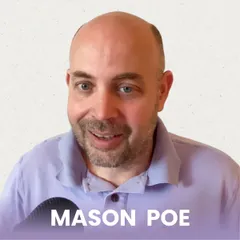
Founder at Edgar Allan (opens in a new tab)
Mason Poe is the founder of Edgar Allan, a Webflow agency that has won Enterprise Partner of the Year twice and delivered over 800 projects.
Mason Poe is the founder of Edgar Allan, an Atlanta-based Webflow agency. It has won Webflow’s Enterprise Partner of the Year twice and delivered over 800 projects. Mason thinks AEO is where brand, search, PR and the website finally meet. And the website stops being a brochure and becomes a real media channel.
The website becomes owned media
Two years ago, Mason wrote an article about dinosaurs and asteroids. It asked what happens when ChatGPT eats the internet and people stop clicking. Some of that is already happening. But he doesn’t think owned media is going away. Every marketer looks at paid, earned and owned media. Brands will still need a source of truth, maybe more than ever.
Anything that is repeatable will be replaceable.
He calls the change the aperture of the web opening. For years, a company had separate partners for brand, paid media, SEO, the website and PR. They rarely talked to each other. AEO is the shorthand for those things coming together.
For a long time the web was viewed as brochureware.
A brand might redesign every two years. Now the site has to work like a media channel, the way paid media always has. Owned media gives you first-party data, and the investment compounds. Mason put it as buy, not rent.
He has been through a shift like this before. His first job in tech was tearing down office cubes from failed dot-coms. Then he worked in Flash for ten years, until the iPhone ended it. He thinks AI is bigger, more like electricity. What helps him sleep is using automation to take away the drudgery. Then he has more time for the human parts, like travelling to meet a customer.
Story first, from day one
Edgar Allan is built on story. Mason sees story as the way humans connect. Even money is a story we tell ourselves about exchanging value. But the agency starts by listening.
Have great stories, don’t tell great stories, have them.
Webflow came from a frustration. After Flash, design and development split into Kanban boards and red lines, measured spacing drawn on every artboard. Webflow shortened the distance between idea and execution again. Edgar Allan opened its account in 2015. Their first clients were enterprise ones, through people Mason had worked with before. On IHG projects, other development partners kept mangling their designs. So they started delivering HTML from Webflow and deploying it into Adobe Experience Manager. Mason says they sold the first ever Webflow enterprise account, a 40-seat license to IHG, before the program existed.
He also listens to how a company talks. The language of war turns customers into conquests. The language of numbers dehumanises, and data only tells you what already happened. Story is about serving what one specific person is trying to do.
His advice for anyone who wants to start a business was to work in one first. He spent 10 to 15 years practising how to run a team, pitch work and read a P&L. I love freelancing. But in an in-house role with other experts around me, I would learn different things, and faster.
Brand sculpture, and the “we” in Webflow
Mason’s shortcut is that the work sits where the brand story and the user story meet.
The brand story is not what the brand says, it’s what others say about the brand.
People talk about brand architecture, a foundation you build on once. Mason prefers brand sculpture. You chip away from the outside in, and your customers do much of the chipping. The user story comes from software development, as jobs to be done. The question and answer pairs everyone mentions for AEO are just those jobs. Designers often focus on the home page and forget the long tail behind it.
I asked about Webflow’s own brand story. Mason loves the visual rebrand for enterprise. But he thinks the line about development superpowers is a how, not a why.
The first thing that I think about really starts with the first two letters, which is we.
His four pillars were that we build, we are editors of effort, we build human connection and we love the web. He gave Rachel, Webflow’s CPO, as an example. She texted a laid-off friend of his just to say she was thinking of them.
What AEO asks of a website
Eight months before we talked, nobody was asking about AEO. Now organic traffic is falling, paid media costs more and keywords are worth less. Marketers are looking for a magic wand.
Unfortunately there’s no magic wands.
You don’t have to boil the ocean. First, make sure you are not blocking bot traffic, which some services do by default. Then look at agent analytics. Training bots take your content for later. Search bots reference you in answers. Agents don’t run JavaScript, so tools like GA4 can’t see them.
Traditional analytics aren’t going to work because the agents aren’t triggering JavaScript.
So you need server logs. Webflow has an extension to Analyze for this, on enterprise for now. Edgar Allan built its own tool, Agents, which proxies traffic in front of Webflow, Framer or any hosted site. Tools like Profound and AirOps estimate the queries you could rank for. Nobody has data from the AI companies themselves, so they triangulate.
The goal is different from SEO, too. You no longer win a few keywords. You win the answer for a type of customer, like the best Webflow agency for VC-backed companies. That means saying clearly who you are good for and who you aren’t. Mason follows Ethan from Graphite and Josh Grant, formerly at Webflow, on LinkedIn to see what works. I already hated how fuzzy SEO is. Mason said this is even worse.
Ephemeral software and the partner directory
OpenAI is rolling out paid results, so some reporting may come. Search is also less concentrated in Google, which means more ways to be found. Edgar Allan already designs in Claude and builds in Webflow through the MCP. Mason imagines sites that change with the season, like a shop window. His team calls it ephemeral software. You build what you need, and you throw it away when you are done, like a spreadsheet. For that, he wants best-in-class primitives from the companies he works with.
I have always been a bit envious of musicians, because their work can last. Websites expire. But if a site took less effort, one-time or short-lived sites would be fine too. I’m still thinking about that one.
Mason also thinks technology changes exponentially and people change slowly. The gap between the two is the opportunity for everyone in this field. He thinks we are moving from knowledge workers to wisdom workers.
Then we got to the Webflow partner directory.
The Webflow partner directory is total garbage.
He gets the worst leads from it. It should remove pricing and separate agencies from individual builders. You can’t even find a company that does AEO or CRO there. One client had interviewed 15 agencies before Edgar Allan. Mason wants Webflow to build an economy, not a partner network. Security will soon be a hard barrier too. They just went through SOC 2.
I’m tempted by the enterprise partner level. But I’m one guy, and the problems at that level are different. Mason suggested starting as an embedded contributor inside a company. Running an enterprise project as an outside agency brings a liability few people talk about.
Every contract that you sign is a liability, full stop.
I’m still not sure I could solve those problems in good heart as one person.
Links from the episode
Full transcript
Read the full transcript
Janne Parri: Okay Mason, so you wrote this article about dinosaurs and asteroids where you mentioned that websites might obsolete in 10 to years. Could you elaborate what possibilities you see for the future of the field and maybe the players in it?
Mason Poe: It's an interesting topic. It's one that, you know, I wrote that article two years ago. And one of the things that I was looking at within there is, you know, I was thinking, I was talking about the death of SAS before. I think, you know, really it was more commonplace and we redesigned our site to be this question answer format and thinking about like, what happens when ChatGPT eats the internet? What happens when you start to move into this idea of zero click. And those things are already starting to happen. Now, let me also preference that by saying, I think the notion of owned media is not gonna go away. So if we think about every marketer looks at three things, paid media, what you're paying Mark Zuckerberg or whatever to be able to get out your message out there, earned media, what people are saying about you and how you
Mason Poe: Drive reputation and then owned media? What is it that you can possibly do and say for yourself to anchor that? I think the notion that we need to have and brands need to have a way to present a source of truth is going to continue to be needed and if anything more needed. I think the other part that I was looking at is there a world of pure services or is there a world of pure SaaS? And I'm not so sure. Anything that is repeatable will be replaceable. And the hard question that I've tried to ask myself is, how do I work my way out of today's job and think about what's the job I need to do tomorrow? And that's something that I continue to challenge our team with. So I don't know, that's kind of where I'm starting. I'm happy to dig into that into kind of more detail here. And then maybe
Mason Poe: Pull out from that a bit more around what we're seeing two years out now and working with customers.
Janne Parri: Yeah, yeah, let's go there right now. Like what are the actual things you might betting on right now with Edgar Allen?
Mason Poe: Well, the thing that's the most exciting is that the aperture of the web is opening. And by aperture, I mean we're looking at this great convergence. ⁓ And the shorthand for that convergence ⁓ is called AEO. But really what we're talking about is for a long time, you had a brand agency that would go and do something. You would have a paid media partner that would do something. You would have an SEO agency that would do something. You would have a website agency that would do something. You would have all the, you your PR, like all of these different verticals. And maybe if you were a big company, then they would all sit under, you know, a large holding company, but really it's these individual teams that never really talked with one another. Now the thing that's happening is in
Mason Poe: The web becoming more agentic, in some ways it's becoming more human. Because it's not about optimizing for a keyword, it's not about necessarily just trying to have PR out there for PR sake, it's how do we go through and build reputation? How do we go through and have a way for people to come to understand us? And what's the heartbeat of what we believe as a company, even if there's nothing else to look at? So I think that's what I think is the most exciting and where we're trying to pivot which is this convergence of what we're thinking about as a brand and performance and kind of bringing those two things together.
Janne Parri: Yeah, yeah, that sounds cool. I think that people are puzzled about is when we get this like more humane approach. It's quite fuzzy. Every website person knows about SEO and that's technical, understandable. There's things and best practices, but the future does not have them yet. At least I do not know of them. So do you have anything you could like elaborate on that in a sense, how we can like structure that in a understandable way?
Mason Poe: Well, yeah, as we're getting into this next convergence, and again, it is really all of those things, right? It is reputation management, it is the technical acumen, that's the way that you position yourself within your site, the way that you want to be able to have the brand referenced, all those types of things. But at the end of the day, it's just like, how do we get one human to understand what another set of humans is doing? And then now, as I said, the aperture of the web has opened so that while we're building tools, we're building faster than ever, we're designing in Cloud Code, there's all these new workflows that we're creating, but our responsibility is also widening. And our responsibility
Mason Poe: Is moving from what I'm really excited about, which is for a long time the web was viewed as brochureware. It's sort of like a brand might go through and do a redesign maybe every two years. And you would go and see product roadmaps from companies that might come out once a year. Now what's happening is like... You ⁓ have to think about this as a real owned media, as real media channel, just as you would for a long time around paid. Paid media has gotten the lion's share of attention ⁓ for a long time. There are all sorts of influencers that are out there that have talked about
Mason Poe: You know, oh, here's all the things you have to do on paid media. And then here's all the things you have to do on earned media. You know, Gary Vaynerchuk being one of those, I love Gary, know, he takes hot takes, wildly entertaining. If you listen, like everything that he talks about is really focused on earned and paid media. Where agencies are taking off, and I think where we're seeing an inflection point is the embracement of owned media and owned media is so important because you have first party data, you have the ability to more like buy not rent how your brand shows up and buy not rent it is the investment that you make there. It is not, you do not have to just like flush that money away and you know in two months there is no long term investment. It really is sort of a compounding effort that you can first learn and listen and then be able to see those
Mason Poe: Those impacts happen over a longer period of time. And then back to the asteroid versus dinosaur type of thing. If I was to rewind, I started my career in tech, but the only job that I could find in tech was actually tearing down office cubes from failed dot-coms. I kind of grew up thinking like, I'm going to go and get a job in tech. And for anyone that's starting out today, I just want everyone to know that I absolutely empathize with where they are coming from and how difficult it maybe is or will be to break into the industry. And I did that for, I mean, months and it was heartbreaking to see people's hopes and dreams and you're like dismantling them and putting them up on Craigslist or, you know, I don't even know where they were being sold, but it was some kind of like aftermarket type of thing. And then I worked in Flash for 10 years.
Mason Poe: And finally, when I was able to get a job, was doing flash development. And then the iPhone came out ⁓ and fully changed. Like all of a sudden, Steve Jobs got in a fight with Adobe. Adobe bought Macromedia. And within two years, ⁓ flash was effectively gone. The question around what's happening now, I think, is bigger. Those were sort of vertical changes. ⁓ And Jeff Bezos, actually ⁓ made a good analogy here where he's talked about the impacts that we're seeing with AI ⁓ aren't just like a form factor change. It's not just like, now I have like, you we went from media being something that you would watch with television and radio to something that you could interact with through a website. And so that was sort of like wave one
Mason Poe: Of the internet. And then you had where you could go through and put the internet in your pocket and you could have a remote control for the internet. But now what we're looking at is a horizontal shift where it is not just about like an evolution of the medium. It is an entirely new medium itself. And so the analogy here is the change that happened within the introduction of electricity. Electricity went and fundamentally altered how humanity works, the way that we approach
Mason Poe: You know, basically everything. It replaced jobs, it created new jobs, it created new technologies, like all these types of things. So that's, think, the step change that we're looking at. And the question is like, how, as people that really love the web, like, what is going to be our role as we go through this hyper acceleration and convergence? And, you know, I think the thing that I'm trying to look at and the way that I'm able to sleep at night, because by the way, it didn't work out well for the asteroid or the dinosaur. Know, like they both kind of got destroyed, but it's like, you destroying or being destroyed? Is I'm looking at how can I use automation to take away the drudgery so that I can find ways to be more human. And I can go in and take time like today and be able to talk with you or travel across the country and meet with a customer and understand their business problem. I think that's what becomes more exciting is that we can
Mason Poe: Try to accelerate what has taken a while to be able to do the things that require high trust and a true understanding of who someone is and what's the problem that they're trying to solve for.
Janne Parri: Yeah, yeah, that's beautiful and I'm with you on that before I forget we have to do little intros. You are now listening to Webflow and Friends podcast. I'm your host my name is Janne Parri and my guest today is Mason Poe Mason is the founder and managing partner or maybe you prefer managing member of Edgar Allen the Webflow agency everybody looks ⁓ up to ⁓ if you don't know Edgar Allen the agency has won the enterprise partner of the year Webflow award twice now ⁓ you guys have delivered over 800 projects you have served over 40 ⁓ Enterprise clients and lately you have been focusing on the aeo stuff
Janne Parri: And you, Mason, actually appeared on the FlowTV panel discussion just the other day. But before we get to the AEO stuff, there's obviously a lot of foundation building and history behind Edgar Allen. So could you explain how did Edgar Allen grow to be such a big player in the Webflow sphere?
Mason Poe: Well, first, thanks for, you know, including me and it's been awesome to watch you build kind of this podcast and have all the conversations. And, I was just watching the one you had with Nathan and, such as so many great nuggets. So that if you haven't watched that, go back and watch, I believe that was last week or the week before. And yeah, I think for us, if I was to rewind, you know, I started in the agency business 25 years ago. As I was just mentioning, my first job was tearing down office cubes from failed dot-coms. I've grown up along a lot of these different technologies as they've evolved. For me, when I was at my last agency, I was thinking about what would be the ideal agency or what's the thing that I've always thought was missing.
Mason Poe: While I've seen the technology change, the thing that hasn't changed is this idea that, you know, if we are able to understand each other as humans, then I think we're able to go in and do more. And that business is a relationship business. So for Edgar Allan and us as a company sort of stems from this very human need to connect. And one of the ways that we connect and sort of the functional way that we connect is that we think story is the most important medium or kind of like format to be able to connect as humans. It's how we are, know, how we learn as children and how we hope to be remembered when we're gone. You know, it is the way that we come to understand the world and everything that we see in the world is really, it can be distilled back down to a story. Everything from even like money. Money is nothing.
Mason Poe: Money is a story that we tell ourselves on how we can exchange value. And I think that one of the misconceptions as it relates to story is that it is a thing that we do and put out in the world. And the thing that we've looked at is how do we first start by listening? How do we have a deep sense of where someone's pain is? And then kind of use the format of story, which is really it's like, you have a series of characters, those characters have challenges, those characters overcome challenges, and then we have a resolution, right? So that's sort of the, there is a general narrative arc. And so our work has grown from that really simple idea of just have great stories, don't tell great stories, have them. And by having them, it starts by listening, it starts by understanding, and then we start to look at how do we format and publish those. So that's really where we started, but if I was to...
Mason Poe: Think back around like, okay, to your second question, it's like, how have we grown into, you know, a player and kind of the contributing member of the Webflow community. When were getting started, again, we're coming off of the transition from, you know, microsites and these immersive experiences. And what was great about Flash was that it was a meeting place and it was a place where developers, designers, animators, all could come together and create something. And when responsive web came around, the challenge was is that all of a sudden all this work was happening in like these tiki-taki little like Kanban boards and like to do's and then like there's this remote control of how to even build for the web. Like you couldn't actually, know, a designer couldn't have that same level of tactile feel of working within the medium. And I thought, I was like, man, if I've got to make red lines for the rest of my life,
Mason Poe: And have that a part of the way that we work as a red lines for this thing where you'd go and measure out all of the spacing and padding in a design. And you would put these literal red lines and then measurements of like, well, this one's 20 pixels. And then you would go in and have another artboard and you would measure that out and be like, well, now this is 15 and all this stuff. I was like, this just isn't gonna work. And so we researched quite a lot of tools and then found Webflow is again, this way to shorten that distance between idea and execution and design in the browser and design all at once. So we would just be like, we can see everything. And we have grown up alongside that team. And I'm really grateful for how, you know, I've learned so much around, you know, product design and like this access to a world in San Francisco that I just never, you know, like, you know, we're an Atlanta based company, like then, and for a long time,
Mason Poe: And it's less so now, but there is this prejudice of like, if you're not in San Francisco or new York, like you're nowhere. And Webflow, because they've kind of always been remote to some way, like there was a real welcoming of how to not only work with a tool, but to work with a team. And so it allowed us to, I think bigger than just Atlanta and also be able to build relationships and networks that had previously kind of been out of bounds.
Janne Parri: Yeah, yeah, that's so cool. As I said, quite a few people and agencies look up to you. So I'm curious, do you remember the first enterprise client and how was that project?
Mason Poe: Well, you know, interestingly, didn't have a website for the first two years were in business. You know, like we had my personal portfolio that I'd put together, but that was on like just, you know, random URL. And I it was, can't, it might've been, was it cargo collective? If anyone remembers that, like that's where it was. And. When were getting started though, like people knew that I was starting something and that was starting an agency and I would just have teams that I'd previously worked out that might be at, let's say like, you know, IHG or CHS, it's a big healthcare conglomerate. And so our first projects were enterprise projects, which is not the typical way
Mason Poe: That you start working. And it was actually the opposite where, you know, were working on these projects with IHG and I was working with Accenture at the time and like we would go and design things and you know were the design partner and then there was IHG and then they had all their other development partners and they would just mangle anything that we designed like it would go and design it however we wanted and then it would come out looking horrible. So after cycle or two or that I was like we've just got to redesign our design process like it's not that hard we're just going to deliver HTML and we started working in webflow and then looking at how we could work in webflow and then actually deploy out into Adobe experience manager So this was before there was collections. This was we like our we established our account in 2015. So it's been 11 years now yeah,
Janne Parri: Quite early, yeah.
Mason Poe: Yeah, and and so that was like, that was how we started with Webflow. And then for a long time, it was our secret sauce. We wouldn't tell anyone how were building. But around
Mason Poe: Maybe 2018, 2019, it was like, need to start promoting what we're doing. So we have these great use cases and we did the global redesign for Holiday and Express on Webflow. And we deployed that into AEM. That was in 2017. And then I was able to meet the Webflow team kind of on Twitter. So kind of hanging out with Vlad and Bryant and Sergey and just Waldo and everyone that, you know, is really like one of those founding members. And then I think from there, we started talking more publicly and then were attracting and kind of deploying out different people and having to make the case for why Webflow.
Mason Poe: But yeah, and then I think were one of the first, you could technically say that we sold the first ever enterprise account before there was an enterprise program to IHG. I think it was a 40 seat license. Josh Jacobs was on that team at the time and we did a lot of work with him and he was taking our work and then implementing it within Webflow. So I think we've been there bit and it's finally. It's great to see that Webflow is getting credit for the scale that they can deliver and working at that level where, you know, it's so much better than Drupal and AEM and Sitecore and like all these other kind of like wildly complex, but quote unquote enterprise projects, products.
Janne Parri: Yeah. Did you have like the story first approach already then or did it come later?
Mason Poe: Yeah, it was there from day one. It was, I started thinking about that in probably 08, 07, something along those lines. There was a article that I can send over to you from the Harvard Business Review called the story Driven organization. And I just loved the way that it talked about, again, story as a medium to organize the way that we work, not just the thing that we put out there in the world. And then there was a couple other. You books that were written around the time, like the Pixar effect, where they again, I think Pixar was a company that really embraced this notion of being story first, even before there was, you know, there was, I mean, even today, it's not really that common, but they're a company that really looked at how to embrace narrative as a, as a management structure, not just a thing that they put out there in the world, but by doing that, then, you know, they're in
Mason Poe: Product was much better. And for people, one way to look at this is if you listen to the language of an organization, it typically falls into maybe one of a few different categories. There's often the language of war that's used in business, which is kind of an us versus them. And it's like boots on the ground, we're going to dig in, we're going to like, what's our battle cards, like all these types of things. And what it does is it creates an adversarial relationship with you and your competitors, with you and the rest of the world. And then you get into this thing of constantly comparing and looking at people, you're looking at customers as conquests. It's not that you're trying to help someone, it is trying to conquer the market.
Mason Poe: Right. So that's the language of war. The language of numbers is equally bad in which it dehumanizes the way that you really so you'll hear like, we're data driven. And it's like, well, data is only it's a reverse of what has already happened. It is not an indicator of what is going to happen next. Again, it is something that you can listen to. It is something to be able to maybe understand, but it is not necessarily a way to create a vision for a large number of people. And then on the flip side, if you start to look at story as an organizing method, then you can kind of be confident in going in on, you know, like a hero's journey alone, that it is not about like conquering the market or whatever your competitors are doing. It is about how do I best serve the needs of what this very specific person is trying to accomplish.
Mason Poe: And help make their day better. I think it creates a more honest approach and look at tension. So tension is not something that should be like that we would run away from. In a of like a war metaphor, you wanna like avoid any conflict, right? Or you wanna conquer that, know, or you're kind of like looking at conflict as a thing to, you know, actively engage in. Whereas tension is how do we, navigate that and resolve it in a way that addresses really everyone's needs. And so it becomes more of like a needs negotiation in service of a journey and service of something bigger. So that's kind of how we had gotten started with that. But again, these have been ideas that I've had kind of for a while. And, you know, for people that are maybe getting started out, one of the things that, you know, I would throw out there, and I've talked with a lot of people about is
Mason Poe: You know, it's okay if you want to start a business to go and work in another business because it's a great way. I mean, I had these ideas that I was putting together for 10 or 15 years before I would even said like, this is what we're going to do. Here's how we're going to work. I was able to, in my last agency practice how to run a team, how to pitch work, what's a P and L look like? What are the ways that, you know, a agency can get in trouble and how do I avoid those? So those are the things that I think have been really helpful to me. And I think if there's an area where I wish this was better in the Webflow community is like, there's a lot of people that freelance and there's not a lot of, there's not as many opportunities to be able to work full-time. Now think that is changing, especially with enterprise. And one of the benefits of Webflow moving up market is that when we create an economy,
Mason Poe: And when we create something that's bigger than a tool, then you'll start seeing job postings. You'll start seeing ways to be able to not have to attract all your own work, not have to worry about contracting and scope management, all of these types of things where I think it's created a lot of toughness and there's a lot of things that are beneficial that come out of that. But when that's the main path or the only path, it can be difficult to go and learn the management skills and all the things that I think can help in the long term.
Janne Parri: Yeah. Yeah. I totally love freelancing but I also know that if I was in an in-house role and let's say there were a couple of webflow folks and all the other experts around me I would learn way different stuff and way faster and so on but I want to drill down on the story part because stories are obviously something that everybody knows and that they are in the headlines quite often and I'm with you that when everything gets like automated, communication and stories will still be there. But what are like the practical things that you do with your story first approach? Like what things you do that maybe some other agencies don't do if they are not on this approach with you.
Mason Poe: That's a good question. What are the things that I think we do that maybe other agencies don't do? I would say that if were to just look at, I'll first start within the Webflow space, which there's an incredible amount of people that know how to build, you know, and there's very few people that maybe have had the opportunity to work with a true kind of brand strategist or digital strategist to know why we build something. And I think that's one of the things that we can create something that looks like a facade, right? So can look like a old Western town, but then you kind of like look behind and it's just, know, plywood
Mason Poe: And timbers. And so I think having that deep knowledge of the business problem that we're trying to address and then how this fits into a larger. Story that's internally on what this work is going to mean or what's, know, how does someone get promoted? Like there's all these layers. So that's on the Webflow side. And then I think on the flip side of this is that traditional agencies, the thing that they've struggled with is that the dirty secret of the agency business, at least within digital agencies is sell a project at cost, lock them into a technology, and then just
Mason Poe: Build the shit out of them for a long time after that. And that's actually kind of like antithetical to how we try to work in Webflow, right? So while on the more traditional side of the business, it's like, yeah, you've got strategist and like all this stuff and kind of like project management and these really deep teams. But at the end of the day, they're, and I'm not saying this is for everyone, I've seen it, right? I've worked in these agencies. They really want to have that vendor lock in and they want to be able to have predictable revenue for a long period of time. And the way that you do that is through slow and complicated technologies that you build to be able to be highly customizable. And then if you take out one Jenga block, right, one little block, then all of a sudden everything falls down.
Mason Poe: What that means though is that you can have all of the insights in the world, but if you're not rapidly iterating with those, or if the customer doesn't have the opportunity or like we try to think about our work as an opt in, right? And I think like Webflow has often talked about the democratization of the web, which is something that I really believe in that more people should be able to have that tactical experience of being able to craft what they want to put out there in the world. But if it is so abstracted and so difficult to be able to make those updates and you might have that technology lock in, you're going to struggle to really be able to have that story live out there in the world. Right. And so that distance between idea and execution becomes so long that by the time it gets out in the world, that it doesn't really matter. So I feel like there is a need to both have, you know, a higher acceleration, which is what I think the Webflow community is really, really good at. But
Mason Poe: Probably more of an understanding of what are the business needs and how to be able to operate. And so I think some of that's gonna start to happen. And I'm already seeing it happen where there's bigger companies that are coming into the market. And again, ⁓ raising the ceiling. We've ⁓ heard ⁓ people talk about ⁓ rising tide lifts all boats. And ⁓ I think when there are larger companies that are coming in and working in the Webflow space, then that means that all of a sudden the sort of ⁓ norm for what it means to deliver a project has just, it's just gone up. And so there's more opportunity for more people to be able to say like, hey, instead of spending a half million or a million dollars for site experience, which is not uncommon with, these big companies, there's maybe different team structures that could deliver that same type of outcome. Again, focusing on the outcome, not just the deliverable and then having like,
Mason Poe: Better businesses that can come up and then, you know, be able to be more of a challenger to like the more older and established. So it's kind of, again, I feel like I'm giving long answers to everything, but it's how we've been looking.
Janne Parri: No worries. Yeah, yeah, it's the idea of podcast like giving like long answers and but still, I'm kind of drilling down on the story if there's like, let's say a designer who maybe does the branding for client and also the web design, how can we like add the story part in there? Does it have to be like some sort of narrative always or how does that part like come together?
Mason Poe: If I was to first I'll say like this is not something I can probably cover in 90 minutes on a podcast. But if you wanted to know what's the CliffNotes or what's the what's the trailhead to start to look at the way that we describe this is our work should be the intersection of the brand story and the user story. You know and so the brand story is not what the brand says it's what others say about the brand. And as a company, we want to be really consistent so that when we talk about, you know, offerings and things on those lines, that people remember that and then they actually repeat that back. So that is the sort of the promise. Is the there's all sorts of parts in there. And so just looking at that sort of very, you know, it is it is a well-worn road on how to be able to create brands. Now, the thing that is different is like
Mason Poe: Brand has often been thought about as a set it and forget it, right? So it's like a define and move on as opposed to, and if you listen to the language, the language of brand is talked about in terms of brand architecture. I try to think about brand in terms of brand sculpture. So not something that we build up from the bottom up that is immovable, right? So brand architecture kind of assumes that like, we're gonna set a foundation. Again, you think about the language, they've set a foundation, we're gonna build on top of that, so on and so forth. But I mean, the market changes and it is fluid. And so I think the best that we can hope for as stewards of a brand is how do we understand something from the outside in and start to chip away at that and start to find what the form of that brand is and that the voice of that brand comes through.
Mason Poe: In a more meaningful way and in a way where it presents itself over time. And that chipping away actually happens with your customer. That customer is going to tell you how they're responding to what the value is that you're putting out there in the market. So that's on the brand story side. Now on the user story side, this is taken more from software development. But within software development, we have very specific jobs to be done that we try to articulate. And the better that we can articulate, what is the thing that someone is just trying to accomplish and be able to meet that and address that. And this is, again, like back to AEO, which is, again, just shorthand for the internet. Everyone's talking about question answer pairs. Yes, right? So those question answer pairs are specific jobs that someone is trying to accomplish. And a lot of times as designers, we'll go and focus on the
Mason Poe: The homepage and sort of the landing experience, but not the long tail of everything else that happens. So I think between looking at like, what's that brand story? What's that user story? How do we bring those things together into creating a unique experience and the owned media that can give people maybe some additional pathways to go and start to look at and, you know, bring if nothing else, some good charts and graphs to your next pitch.
Janne Parri: Yeah, yeah, yeah. I'm again excited. I'd like to like jump in and like figure out like more of my like brand story and so on. But actually one good example or case would be like Webflow's brand story. And you have been around like almost all of the Webflow's history. And now there's all sorts of exciting things, there's AI that kind of like, maybe scares more than excites people in the webflow sphere. And maybe the community is not as, let's say, hyped as it used to be. So how do you see webflow spread and progression through the years and maybe for the future?
Mason Poe: If I was to sit on the brand team, and I've actually thought about this, someone had asked me a similar type of question and I had to kind of do a bit of introspection because I have this irrational love for Webflow. And I was like, but why,
Mason Poe: Right? Why do I? And you'll hear this and you have it and Nathan has it. And if I was to go back and first give feedback to Webflow, it'd be that, when they rebranded for enterprise, I love the visual direction they went in. I love the new logo. Feel like, you know, they could feel how this needs to look. One of the, I think, missteps was, or maybe something that didn't, wasn't impactful as it could have been, is more of a focus on the how instead of the why. So,
Mason Poe: The kind of line was bringing development superpowers to everyone, right? I feel like that's more of a how, right? So how do we do this? It's like we bring this development superpowers to everyone. But why? Why does anyone care about development superpowers? I go back to a really simple idea. If I was to break this out as a slide deck, would say, if I look at Webflow, the first thing that I think about really starts with the first two letters, which is we.
Mason Poe: Right? It is how do we work in the web? And we as a centering idea is the thing that I think we all come back to. It is the moment where we connected with other people who love the web. That's really it. We love the web. And starting with that, focus of a love of the web, which really starts to break out into some things like decency, humanity, you
Mason Poe: Know, while all the technology can be changing, the things that have been consistent. I see this today, I see this in the leadership and by the way, just shout out, if I want to be able to throw out kind of a kudos, it's a friend of mine at a long time customer was recently laid off. Rachel, CPO at Webflow actually sent this person a text message and said, hey, I heard that you were impacted and I just wanted you to know, you know, thinking about you. I really want, know, want the best for you. I'm not exactly sure what it said, whatever, it was something along those lines. And I think that humanity that, I mean, all it took was a text message, but it is that humanity that I feel like ladders back up to this group of people.
Mason Poe: Whether or not you're inside or outside of Webflow who just love to build for the web and really have always have had have been impassioned by the web. So that is where I would start. And then I would start to build that out into the rest of that story, which, you know, is this great transformation and that the focus of the web and the needs of what a website really does is becoming bigger and bigger. And I think there's a lot of opportunity to tap into other communities. Like we've been working a lot with Profound. And what I've found is that, and there's this idea of like, are they going to be frenemies, right? So it's like, Webflows has its, AEO
Mason Poe: Strategy, and then you have these other tools that have their AEO strategy. But if anything, it's like that tool has connected with SEO nerds and
Mason Poe: Public relations nerds, right? So the people that manage, share a voice, which is something that like you and I are not typically, we haven't thought about, how do we track and manage share a voice? But I think there's a lot of crossover there. And I think these communities actually need one another. So for workflow again, like they're launching and they've got some great tools that are out there. And the thing that we can start to look at is how to open up that aperture and look at our work as something bigger than just building pages and more around like, how do we manage that brand story and that user story? So that is how, that is the thing that has drawn me to web like that, to Webflow. And that's the thing that if I was to work on the brand team, what I would love to see is again, that embracement of we, and then, you know, building out.
Janne Parri: Yeah, I totally buy the we idea. That's so cool. It can it can growth from there to all sorts of directions like, if we say about like collaboration or the community and so on. So it's beautiful idea.
Mason Poe: Yeah. Yeah. I had, so I've just pulled up my notes here. If
Mason Poe: I was to like the pillars that I would look at are instead of, again, coming back to we, but we're building superpowers. We are editors of effort. We build human connection and we love the web. That's the thing that I think for me, those are four pillars around like why I love Webflow. And it's not about development superpowers. It's about as marketers we bring, wear so many hats, right? And I think this notion of building is regardless of your, if you're a designer or a developer or, you know, a writer, everyone loves to build and building comes back to like a, almost a childhood.
Mason Poe: Wonder that we can bring to the world in which it's just about putting things together. It's about experimenting. It's about how we create something new. And so the second word that I would really lead into there is building. Editors of effort is this thing where we talk about it a lot as a company and we want to again, shorten that distance and make the hard things easier. And then human connection is just like, while everything can change, what are the ways that we can remain human and look at these automations and all this type of stuff as a way where we can actually spend more time out in the world and, you know, just doing the stuff that allows us to understand one another.
Janne Parri: Yeah. Yeah. I believe that people can see the seed of the lightning with all the AI stuff that they might in the future, they might have more time to do all the stuff that matters and all the interesting stuff. But obviously that will come with that big change, especially if you are in a field that might be impacted heavily with the AI. So yeah, interesting times, but hey, let's dive into the AEO. Obviously it comes from the words, answer engine optimization. And first of all, do like clients already ask for this and how do you explain the landscape for them?
Mason Poe: Six months ago, no one was talking about it. Maybe eight months ago, right? Middle of June last summer, it really wasn't a big topic. It was something that were exploring and we've been doing a lot of this work and thinking about the future. And it was kind of a term that has allowed marketers to express a change that they're seeing. And the change that they're seeing is now the reduction of organic is starting to impact revenue and people are freaking out. People are seeing that paid media is becoming more expensive and that pure keyword references don't have the same value that they once had. So they're looking, people are looking for answers and solutions and magic wands. And unfortunately there's no magic wands. Right. And so there's just like, I mean, it's a long series of things that have to be cleaned up and improved upon.
Mason Poe: But it's not impossible. And it's, think it's just a question of like, at what point does the pain become so much that they, that as an organization, they start to look at like, okay, our brand system needs to work with our search strategy, which needs to work with our PR strategy, which needs to work with, you know, our technical architecture and all these types of things. And then we've getting attribution for what it means. So that, you know, the notion of. Even attribution versus contribution, right? So for a long time, people have just wanted to know like, I spent a dollar here, did I get a dollar out over here? Or did I get $10
Mason Poe: Out over here? And it's more like, well, did you spend a dollar here to help move someone from point A to point B so that can move them from point B to point C and so on and so forth? So those are the big changes that are happening and there's a lot of different roles to play here. ⁓ So just even ⁓ having, know, not everything has to be, you know, you don't have to boil the ocean is probably what I would say. And so for ways to look at what to improve and as people are just building a Webflow, like there are ways to build the bill and Webflow so that it can be referenced and, you know, there's no shortage of articles there. And I think that's it's a good step to take.
Janne Parri: Yeah, yeah. So in a ways a lot of the old SEO stuff still works like if your site is in a good condition and you are producing content, that's already a good foundation. But what are the like new stuff you mentioned earlier, like the question answer pairs, should that affect the content and what else is out?
Mason Poe: So first, I would say just making sure that you are not blocking bot traffic. That's something that a lot of people, they're like, why am I not? But different services by default will block bot traffic. Understanding agent analytics, so what bots are looking at, what type of pages. Webflow has launched this. We also have a tool that we've launched called Agents. This will, you it's early stage for us. If you're looking for an enterprise solution, it's definitely Webflow, it's not us. And I don't know, I think that if you, know, one of the, one of the places that I've been trying to just like stay around and I think doing a lot of listening is LinkedIn, which, you know, just that's where people are having more of this discussion and having it from a business standpoint. And, you know, as much as I,
Mason Poe: Have loved Twitter and it's been great to be able to hang out with the Webflow community on Twitter. It's just not the same. And every time I go in there, it's more of like, it's like this hype cycle of like, man, I just, you know, this is totally going to destroy X, Y, Z or this, you know, it's a lot of, it's a lot of hype, not a lot of sizzle, a lot of sizzle, not a lot of steak probably. And that's where we've been starting. And then from there, it's a really, really, really long list because it is not unfortunately like, you know, it's not just about FAQs, it's not just about backlinks, it's not just about schema, it's not about LLMs.txt. It is a fundamentally different way of building for the web and then understanding even what the web is.
Janne Parri: Yeah, by that, do you mean that our responsibilities in a way broaden? You mentioned this earlier too, that if we wanna have a good standing in all the answers, we should take a look at almost all the pillars of business like strategy, PR, paid and old media and well, the brand and so on. So is that like a, how should I say it, like broader approach that is needed for that?
Mason Poe: It is a broader approach at the same time. The basics are what is the brand offering and the value and the thing that's going to be consistent there. And then what's the job that someone is trying to accomplish. And I think you're just starting from those two places and then building out in detail or like, how do we want to be remembered and what are people trying to accomplish that'll that gets. A lot of the way there. I don't know statistically like how, like what's the impact there. I would say that I've been following Ethan from Graphite for a bit. He's able to talk about this in terms of the statistical analysis around what they're seeing in broad sectors. He's got kind of a great series of observations that he's posting on LinkedIn.
Mason Poe: Josh Grant from who was formerly at Webflow and now I believe he's transitioning to his next thing. I'm not exactly sure what that is, but he's got a substack that he runs as well as posts that he makes on what he's learning. And I think it's a time to listen and see what people are really finding that's working and then kind of start to apply. Okay, what can I, how do I, how do I bring that back to my client? So that's why I'm trying not to get into too many, like, again, I wish I could say that there was like, here's the top five things that you can do, but it's
Mason Poe: Not necessary. It's like, well, yeah, I mean, like when we go and do an audit, we do a technology audit. Do, what is the, like share a voice that's out there? Like what are the searches or the queries that are currently happening? How is the brand being represented? And what are the customers, what's sort of happening in the broader industry. Those are all things to start to look at, but being really specific, it's probably better to, again, look at if you're coming from a builder background, what are the building things that we can address, be able to make sure that those fundamentals are there, make sure that agents aren't being blocked, and then
Mason Poe: Kind of expand out a little bit into that brand story and the user story
Janne Parri: Yeah, yeah. This is a detailed question. But I'm curious, what are like the metrics because I have done some SEO stuff and I know that there's like search volumes and click through the rates and those are like familiar to me. But what are the metrics of this new system? Like what are the numbers that I wanna see and so on.
Mason Poe: Like the, well, it, you know, the first thing I would look at is understanding bot traffic and then the types of bots that are coming to the site and what are the types of pages that they're referencing. So for example, there's, know, we can look at training bots and then search bots. So training bots are, they are looking at the website and then basically just consuming all of that for later use. So if you have like a lot of maybe JavaScript examples or some of those lines, they're going to be training on that JavaScript that is out there in the world, or maybe even just how you're writing about a particular topic. Search is where they're referencing and maybe the later date, some of those things that have been referenced or that you've written about, or maybe you have authority on, and probably maybe some of your authority is like, hey, I've just mentioned two people
Mason Poe: That are doing a great job. And so whenever someone is going back in and looking for references that, know, my backlink to them is meaningful. But understanding what are the pages and topics that are being addressed and referenced for a particular sector. The thing that is complicated is that there is no one like, in SEO, it was easy because you could really focus on winning a few different words, right? But now it is like, how do you win the answer for a customer type in a vertical? So it's less like, who's the best Webflow agency is like, who's the best Webflow agency for VC, right? And so and or like large scale, X, Y, Z, like, so it's a lot more specific. And
Mason Poe: It's how as a company do we say what we are good at and what we're not good at. And then kind of making those tough choices because brands, the reason why there is marketing speak out there that doesn't sound like anything and talks about like setting the standard. I you can go to so many different companies and it'll be like, I have, mean, it sounds impressive, but it means nothing to me. And the reason is, that it's trying to kind of be like, well, we'll work with you and we'll work with you. And like, we'll sort of be like work with anybody. So when you talk about brand, is being specific around who you are good for and who you aren't good for. The other thing that we've started to look out is backing out from the form and seeing what are the types of patterns that we can see and how we can go and influence the traffic from there. And so what's maybe the entry point for that and what are the additional pages that they would move to be able to get to?
Mason Poe: A conversion point. And so in that way, it's kind of like, you know, traditional SEO where it's, you know, first visit, second visit, you know, all of those types of things that you want to be able to have that and in pairing that with paid media. But it's I think more nuanced and that again, it's more human where it's not just about tricking for a few different words, it's about providing clarity on true benefit.
Janne Parri: Yeah, yeah. And what about the tools? You mentioned that you have a tool, Webflow came out with kind of a tool. If I understood correctly, it's a part of like the analyze tool. And then you also mentioned profound, if I remember correctly, like what can you tell about those?
Mason Poe: Sure. Webflow has an extension to analyze that they're launching. It is an enterprise product today. And I think Nathan did a really great job of talking about how things move from pure enterprise to a larger adoption. So if you're working with a large company, generally, they should probably have that. And I think it's something that they can either upgrade to or might be already included within their plan. And that's going to give you the basics. I would say it is a really good, like just understanding like those agent analytics and being able to see general traffic and kind of top pages and bottom pages and sort of an extension of a lot of the analytics work that people have already been doing. One thing to note is that this actually, you know,
Mason Poe: For us to understand agent traffic, we actually have to look at server logs, which is different than GA4, which is just JavaScript. Traditional analytics aren't going to work because the agents aren't triggering JavaScript. They skip over all of that. So you have to have a more primitive source of what are the signals we can understand. So server logs is how to be able to get that. Now on other tools such as AirOps, Profound, Optimize, GEO.AI, there's a long list of these. That's where you'll get into some topics like, what are the query terms that you can start to rank for? Mean, even Ahrefs and Semrush, HubSpot,
Mason Poe: Everybody has some type of AEO solution that they're offering today and you can start to get a general sense of what's happening. Now, nobody has access to, you know, Gemini, Anthropic, OpenAI, like, and so the question is like, how are they getting those query terms? And from what I understand, it is about a triangulation that has to happen because they can't unlike, you know, like SEO today, like you can go in and actually start to see search volume and you can, and I can see that
Mason Poe: This will start to happen eventually, but today it's just not there. So they're having to kind of like guess and triangulate and they're actually buying a large amount of data from companies like similar web and, you know, a bunch of it's almost like a data, a data process proxy. That's happening to be able to get the insights so that you can understand what are the types of query terms and how do you rank against competitors.
Janne Parri: Yeah, yeah. And I already hated the fuzziness of SEO and it feels like this will be on another level again.
Mason Poe: This is even worse. This is even worse. Like it is like, oh, you know, now you have to go and look at SEO, but then you have to think about like your PR strategy and then like your brand strategy all at one time. So as I said, like the aperture of the web is expanding. It is becoming more complex. It is not becoming less complex. The tools are accelerating how we can work, but the pace of what we're trying to deliver is also accelerating.
Janne Parri: Yeah, yeah. But you also mentioned that you have a tool like Edgar Allen has a tool. What is that about?
Mason Poe: So when we are faced with something that we can't accomplish in a tool that is out there, a lot of times we'll just start to build something. So we built, it's called Agents. It's AG dash NTS. We are not totally live. We're right now working with a subset of customers. And if people are out there and they want to request access, then I'm sure send me a DM or, know, you know. Throw a comment in this podcast. And what we're doing here is we're proxying the traffic and it can sit on top of Framer, Webflow, really any managed service, proxying the traffic and then being able to provide reporting on that traffic so that you can see what are the general trends, like are you being reference cited, you know, all these types of things. Again, this is not an enterprise tool because if you want, like we are gonna be
Mason Poe: Kind of sitting between the live site and that traffic to be able to show and report what's happening from those server logs.
Janne Parri: Nice. That's interesting and so cool that when you have a problem, just build a tool. Obviously that's more approachable for all the people nowadays with AI and such. But I have to ask the crystal ball question. Like, what do you think that this AEO landscape like develops to? You mentioned that there might be some sort of like way to get that actual data just like we get the search volumes from Google and such. Are there any other predictions that you have?
Mason Poe: Well, I think it's less of a prediction, mean, OpenAI is rolling out paid results right now. And so with that, they're going to have to have a way to offer some type of reporting or insights. Or I mean, they're just going to be like, give us your money and we'll give you results. I don't know. So that's the part where that's kind of unclear. I do think that even if the thing that's great is that for a long time, Google just sort of owned search and they still largely own, you know, a big portion of the search market. But there's now more diversity and that diversity means that there's more ways to be found and there's less concentration of how to build for the web. And that also means that there's going to be more challenges.
Mason Poe: For how we build for the web. So that's where it's not just about like, hey, it becomes easier to, know, like right now we're designing in Claude and then exporting the HTML and then running as an MCP to then build in Webflow, right? So we're shortening our development times, but imagine a world where we are launching a website or kind of like a brand refresh that's seasonal, that matches maybe what's happening within the business. If think about retail, like brick and mortar retail, for a long time, that storefront would change based upon what's happening in the season. Spring is going to feel different than fall. It's going to feel different than Christmas. It's going to feel different from summer. And that if I was to apply this to Webflow, like, Webflow Conf is coming up.
Mason Poe: Just like, all right, crunch up the old website. And it's not just a microsite that's launching. It is like an entirely new brand experience that happens to now be centered around like the main.com. And getting into this idea of what we've talked about internally is ephemeral software. Right? So that is we build software to meet a need. And if it gets thrown away in a year or two years or a week or a day, it doesn't matter. Because you can just go and build the next thing. I think that's where, you know, if I go back to what we originally talked about with the asteroid or the dinosaur, I think that pure vertical SaaS, you know, I'm not going to go in and vibe code like, you know, Salesforce in a weekend, but I mean, Timothy Ricks has got a really good version of a Webflow editor that he has built kind of over a weekend.
Mason Poe: Now it has, it doesn't have the long tail of collaboration and like SOC 2 and like all these other types of things, but what I'm seeing is like, I need from the companies that I work with, really, really good primitives, kind of best in class primitives. Like think about this as like best in class ingredients. And then I, as a chef of software can then go in and create whatever I need. And I will do that on kind of a daily basis or I'll do that on a whim. And some of that, you know, maybe there's a lot of prep work that might happen if going
Mason Poe: Back to our chef metaphor, like I've got to make sure that we have mise en place, like everything is in its place and all that type of thing. But that software doesn't have to be something that a company kind of conforms to, but the software conforms to that company. And so that's a very different approach. And again, back to what I'm looking at is like, I need really good primitives so that I can, if I want to run something headless, that I can do that. If I wanted to be able to have a part or a piece of something that, you know, I can have access to that and then be able to combine that together. And then two months later, I might throw the whole thing away and build something new. And I know that sounds weird, but think about how many times we create a presentation or a spreadsheet. A spreadsheet is just a piece
Mason Poe: Of software. That's it. It just happens to look like a table. But if I can go and do the same thing and it actually has a UI and an interface and then I throw it away after I'm done, or maybe I keep it around, but it doesn't have to be as precious as it once was.
Janne Parri: Yeah, that's weird to think that I have for long been kind of envious for the artists and let's say musicians, because whatever they create, it has the possibility to be like timeless. It can just go through the through the years. And I've been thinking that okay, websites, they will like expire, even if you have a very, very cool website that will expire. But now you're giving me ideas that what if it wasn't that big of a lift to produce something and it would be more like well one time use thing or a shorter time span thing that was obviously be cool because then we would get plenty more of all the all the stuff yeah that's a that's a interesting idea I'll have to sit on that
Mason Poe: ⁓ so think so ephemeral software is I think, you know, that's the thing that we've been thinking about. And ⁓ again, I see this sort of like, if I was to explain this, or the way that we've ⁓ focused our company, you can think about two lines, you can think about the exponential kind of growth of what technology can do. So this is just happening faster and faster and faster, all the different things that can happen can do. And this is the thing that freaks people out. So the thing that freaks people out is waking up and seeing the next model and the next ability that is out there. The thing that helps me go to sleep is understanding that humans change incrementally over time, right? So there's kind of like, it's a more linear path in which humans change. So you have the exponential right here and then you have the incremental with humans. That gap,
Mason Poe: Between what is changing and the rate of change ⁓ is our collective opportunity... It is my opportunity, is your opportunity, it is everyone that is listening to this podcast because ⁓ chances are you're working in technology already and what we can do is help to connect those dots between the change and people's understanding. That is the thing that if I look out, you know, 15 years in the future, am I creating websites? I don't know. But I am helping to connect that dot between the change and what people understand.
Janne Parri: Yeah, yeah. And it always feels like exciting when you find something new and like bridge the gap. I believe maybe people are just freaking out because they kind of feel that they have to do that all over again and again, through their career. And that might be like taxing, know, in a way. But at the same time, it gets people excited. Yeah, go on.
Mason Poe: And it might be the first time they've been through this, right? So, I loved Flash. I mean, I went to the Flash conferences, like I was fully dedicated to working in Flash. You think like, I'm dedicated in working in Flash. I am taking the same playbook. It is the exact same playbook. There was the Flash community, there was Flash Awards, there was all this stuff. And it all went away overnight, but the people were still there. The things that I learned were still there, even though I couldn't compile a Swift, I learned so much on working with teams, on design, on having big ideas, like all these types of things. And so I think that to understand that, you know, it's like, I don't know, the best way to say it is like,
Mason Poe: We're all going to die, right? So this is my sound about mortal,
Mason Poe: But it's like, is nothing that is permanent. And the only thing that we can do is think about how we can do something that we really love today and work with people that we admire around areas that excite us. Like that's really it. And rinse and repeat that. And chances are tomorrow it's going to be different. But if we're connecting those two dots between the change in people's understanding, then there will always be value that we can add to that.
Janne Parri: Yeah, yeah. And we're kind of like circling back to the human part. You mentioned the community around Java. And now there's also a lot of talk about workflow community. I mentioned that it might not feel like the, so to speak, golden days. So how do you see the progression of the community? And I also know that you have been for long working with Webflow themselves. So how do you see all of all of the human parts and the community part of this huge thing? I don't know if you catch my rambling question, but yeah.
Mason Poe: Yeah. Yeah, yeah, yeah. I think it's like, the question is, what are my thoughts on the Webflow community and how do I see maybe what's happening internally at Webflow with maybe where things are externally within the market? Let me say that I fully believe in the team. At Webflow and I think being able to work with them and understand them and see, you know, how hard Alan and Linda and Rachel and Nathan and just like, there's a core there that is, that is fantastic. Now there's been a lot of change and I think that what we're seeing with Webflow is actually sort of a reflection of all of the changes that are happening in the market. And yeah, like there's been, you know,
Mason Poe: There hasn't been like that drumbeat of like, know, Emily was so critical for a long time and you know, that there is these kind of people internally that could help to bridge that gap or just like, you know, that could be part of that brand voice. And now that brand voice is bigger and it's also, like, it's more, it's bigger than what I would say is like, how about let me reverse here. Webflow for a long time did a great job of addressing the needs of the builder community. And I think that's what you and I relate to and understand. Over the last few years, I think they've made incredible investments in the business community. And I've also seen that. Those are probably quieter and they're not as loud on.
Mason Poe: Know, Twitter and LinkedIn, but there's been a higher adoption of like large companies that have started to work within Webflow. And I think the thing that is, you know, hopefully going to evolve and happen next is that being able to bring both that core builder community and the business community together in a meaningful way. And I will say this even back to the glory days of, know, I'll say glory days, but I mean, it's like, I've been there through like the no code, days, I mean, I've seen sort of every evolution. Unfortunately, even when there was a high amount of investment in the builder community, something that wasn't there was like, it was tough to get a job. It was tough to like find clients. It was not it was like, yeah, we could all get together and rally and be like, yeah, yeah, yeah, we love building for the web. But there weren't as many opportunities as we all wanted to see. And what's
Mason Poe: Been really good is like Webflow has been investing and you know, okay, let's invest in the business community so that, hey, there's more opportunities, but there's that sort of gap that's happened where, you know, as builders, you know, we're looking for that champion, right? Think Nathan is, I actually wrote in some of your comments, I was like, man, if I had a magic wand and Nathan could be an ambassador to the community, which he already is, right? He started the ACE program, he started so many things. Like I think he actually is able to swing between the business world and the builder world in a really fluid
Mason Poe: Way. And so I hope that Nathan or someone like him is able to step into that role to help to bring those worlds together because they need each other, right? So the builder community really needs the business community. And I would love to see some stuff like, hey, instead of the next, like, I'm sure you've been to like all these different talks where it's like, we're going to go and have a panel and instead of a panel, let's have a speed date, right? So let's go and get 10 businesses and 10 builders and like, just have everyone like, and say like, here's my business problem. How would you solve it? And just like go around the room, right? And like, you could literally have 10 different opinions that were brought to 10 different businesses within the course of a couple hours. So I thinking of interesting ways to be able to bring those worlds together, that's where I think we can drive forward like this overall economy and overall way that, you know, we all want to work and, you know, be able to work with one another.
Janne Parri: Yeah, yeah. This obviously the like Webflow partner directory. But to my understanding, is that.
Mason Poe: That's garbage. I'll just say this. The Webflow partner directory is total garbage. Like I get the worst leads. And by the way, we're not even like a top 10. You want to talk about like, we are not even in the top 10. Right? I was going through and I was looking at at Clutch the other day and I was adding in like all the awards that we've won. I mean, we won six awards, seven, if you want to count like, you know, community MVP for me and then nominated for a ton of stuff. We're not even in the top 10. So if you feel like, hey, man, I'm just not seeing a lot from the partner directory, know that it is garbage. It has been garbage for a long time and I have expressed this. It is the biggest black hole of enterprise deals for Webflow and the builder community.
Mason Poe: Right, because I mean, good luck finding anyone because there's a lot of people that look like they know how to build, but there are very few people that are like actually doing really great work at scale. So anyway, that's my, that's my hot take.
Janne Parri: Yeah, that is my feeling and general understanding about the sentiments of that. Like in the early days, if you got in early, you might have gotten some leads there, but nowadays like nobody's getting anything. But since you bashed on that, do you have any ideas how to make that better?
Mason Poe: Well, first off, they need to remove pricing. So if I go in and look at other, and I think it also has to be a real heart to heart conversation around like, you know, am I looking for an agency or am I looking for an individual contributor? Cause those are very different things. And on the agency side, it's like, you know, what really like, because again, two people and a bunch of freelancers can all of a sudden start to become an agency. But it's like how to be able to work at scale, how what is what does that really mean? Because I feel like there's maybe it's a it's a handful of groups that are
Mason Poe: You know, thinking about legal compliance and like all the like, you know, we're SOC 2 like all these other types of things. So I don't know, but I would say that it's a crowded marketplace today. It has very little bearing on who's doing great work, who has been, you know, an award winner, even like go and try to find a company that does a EO on the directory, go and find a company that does CRO. Right? Like this is a whole product offering. It's not there. So I think, you know, it's done a good job of trying to be everything to somebody, but it's done a horrible job of actually delivering any type of opportunities to anybody. Right? So both in terms of like builders or even to the businesses, I was last part of this, I was talking with a customer who came in through a different channel and, were the 15th agency that
Mason Poe: They had interviewed and they had worked with 15
Janne Parri: 15. Okay, that's a lot.
Mason Poe: And they had gone through a search consultant. They had tried the directory. Try and it's just like so many, Webflow makes it so easy to build for the web that it's almost, it looks like you are this massive like big agency or whatever. And then you start to get into it and it's like, great, you can be a really good builder but it's not the same as being able to offer like sort of an integrated service and, you know, again, security and like all these other types of things. And security is this thing that is going to become the differentiator. It really, it's gonna be a hard barrier because the vulnerabilities that are about to come out and be exposed are really gonna be serious. And so we've just gone through our SOC 2,
Mason Poe: And man, it is changing the way that we are working. But the things that AI is unleashing in a not good way around like being able to find vulnerabilities that have been in like Firefox for 20 years or whatever, that, it just changes the game. That's, think the, it's been a crowded marketplace. Think the, if I was to look at, things that I want to see is like focus on how do you build a Webflow economy, not a Webflow partner network, right? So if you build an economy, the partners will come. Talking about it in economic terms of like, what are the investments that are needed by partners to be included within that? And then what's the out, like what's the thing that people are gonna see as a result of that?
Janne Parri: Yeah, yeah. About that security thing, kind of, I'm tempted to try to get on the enterprise partner level, but at the same time, I'm just one guy. And now that I've talked with a bunch of enterprise partners, I understand that the problems on that level are vastly different. As you mentioned, like the security thing, and I'm not sure even if I could somehow end up that level would it be like fun to be there as a one guy or so on so could I actually like in good heart solve those problems yeah that's tough
Mason Poe: So the thing that I would say is being as an embedded contributor inside of an agency, I'm sorry, inside of a company is a great way to be able to start to work with enterprise customers. Trying to run a project as an external agency is a very, different game. And the biggest difference there is the level of liability that no one is talking about. Whenever, and I think a lot of people will just sign contracts. They'll just be like, what does it matter? And
Mason Poe: They just sign it and they maybe don't even have like a good master services agreement or anything like that. Every contract that you sign is a liability, full stop. Anything that goes wrong, potentially you could lose your house. You could go bankrupt, you know, it's really bad things can happen. So I don't know, I think there's a way to be able to crawl, walk, run into that and being able to work internally and, you know, kind of like alongside of that team is a, is it easier and probably lower risk way of doing that. But at the same time, like, hey, you know,
Mason Poe: Going and just taking our big project, like, I think that can be valid as well.
Janne Parri: Yeah, yeah. Okay, I'll have to let you go quite soon, but is there anything you want to add to, well, about Webflow stories at Edgar Allan and the future for the listeners?
Mason Poe: Well, I just want to thank you for including me in the conversation and hopefully you're able to get some good edits out of this. I ⁓ think if I was to, you know, kind of weave on one thought, it's the future of work. And this is something I've been thinking a lot about. We're moving from, you know, we've been information age as knowledge workers. And there is a quote from Frank Zappa on an album that he wrote in the 70s called Joe's Garage. And within there, it's a rock opera where the main character falls in love with a robot. It's really weird. It's in a very 70s type of way. There's this like monologue where the main character says, you know, information is not knowledge.
Mason Poe: Knowledge is not wisdom. Wisdom is not truth. Truth is not beauty. Beauty is not love. Love is not music. Music is the best. Now I say this as like, if I want to think about, and I think the thing that I've struggled with is like, okay, we have been working in an information age as knowledge workers, what comes next? And I think the thing that I'm betting on ⁓ is thinking about this ⁓ progression ⁓ of understanding, right? Moving from information to knowledge to wisdom to everything that is beyond that what i'm looking at is how can we move from being knowledge workers to being wisdom workers? And the difference there
Mason Poe: Is it's less important to have the ability of how we do something and it is more of an understanding of why we do the things that we do and to be able to have discretion and perspective and insight and all these types of things that really come from wisdom. And so looking at the work that we're doing as fundamentally wisdom work with knowledge tools. So I think that's the area where people are thinking about big picture what's next and how to be able to provide a pathway to this. Is again getting into this notion of sort of like having the wisdom and discretion
Mason Poe: To help connect the dots between again, like what is possible versus what other people understand.
Janne Parri: Yeah, yeah, that's beautiful. That's a good ending thought. But if people wanna check you out, follow you, where should they go?
Mason Poe: I'm most active on LinkedIn right now. In the past, I've been so just like Mason Poe or Edgar Allen. In the past, we've been active on Twitter, maybe we'll continue to go back to Twitter at some point. And I know it's called X now, but I just can't call it X because it feels weird to call it X. So yeah, that's probably that's probably the biggest area. And I don't know, like I'm if you have questions, like, you know, send me a DM, whatever. I'd love to have conversations like this. And I really value the Webflow community and I value like just the web community. And so I'm excited to, again, meet more people and hear other perspectives on how people are building and what people are building next.
Janne Parri: Yeah, yeah. And Edgar Allen's website is also quite good at answering questions.
Mason Poe: Yeah, yeah, yeah. So edgarallan.com. Yeah, but just, you know, again, excited to be here and happy to, you know, address additional questions or join a conversation, whatever is the best way that makes sense for people.
Janne Parri: Beautiful. And I will obviously put all the relevant links down below in the description. But there's one last thing that we have to do. It's for the dedicated listeners. So it's the weird Finnish thing. You might know about it. So what follows is that I will give you a Finnish saying. I will translate that to English and your job is to guess what it means.
Janne Parri: So are you ready for your saying? So in Finnish it is pitää mykkäkoulua and translated to English it would mean to hold a class for mute people. So what does it mean if I let's say hold a class of mute people for you?
Mason Poe: Holding a glass for mute people.
Janne Parri: Not class like class like in school.
Mason Poe: Holding a glass, a class like you go to, like not a glass you drink.
Janne Parri: Yeah, yeah, you go to like, I'm the teacher and I'm holding a class. Class.
Mason Poe: I don't know, maybe it's like trying to, holding a class for mute people.
Janne Parri: Or you can also re-press that, translate that to, I'm holding a school of mute people for you.
Mason Poe: Gosh, I don't know. Like I'm, working with a bunch of people that won't say anything or I walked into a party that
Mason Poe: No one will talk to me.
Janne Parri: That's a good logic, but yeah, it's not that one. You actually have a for this one, and it is to give the silent treatment. I'm so angry that I do not speak to you, I'm like holding a glass. Yeah.
Mason Poe: Giving you the silent treatment. Interesting. Yeah. I love these finished sayings. I had a feeling you were gonna stump me on one. So this is a good one.
Janne Parri: Yeah, these are sometimes very, very weird, but yeah, even I do not know all the logics.
Mason Poe: We've had anything but the silent treatment today. So thanks for all the good questions and being able to dig in here.
Janne Parri: Now thanks for you, Mason. It has been a blast and we'll end it here. But for all the listeners and watchers, see you in the next one. Bye.
About Webflow and Friends
A podcast about building websites with Webflow and the tools around it. Janne Parri talks with designers, developers and marketers about how they design, build and run sites for fast-moving teams.
Hosted by Janne Parri. Janne designs and builds design-led websites and design systems for fast-moving marketing teams, in Webflow or Astro, and is a Webflow Certified Partner.