Building a Premium Webflow AgencyThrough Content and Partnerships
- Published
- Episode
- #61
- Guest
- Florian Bodelot
- Length
My guest is Florian Bodelot, co-founder of Digidop, a Webflow Enterprise partner based in Paris. We talk about how Digidop has grown since 2021, and what it takes to build a premium Webflow agency through content and partnerships.
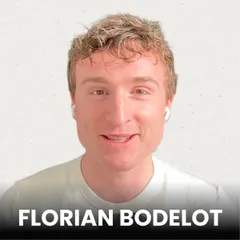
Florian Bodelot
Co-founder at Digidop
Florian Bodelot is a co-founder of Digidop, a Webflow Enterprise partner in Paris founded in 2021.
Florian Bodelot is a co-founder of Digidop, a Webflow Enterprise partner in Paris founded in 2021. Digidop has won Webflow Partner of the Year. It also has one of the biggest French-speaking Webflow followings, with more than 12,000 YouTube subscribers. We talked about going global, selling Webflow Enterprise, and how LLMs changed where Digidop’s leads come from. We also talked about content as selling at scale.
How Digidop became France’s first Webflow agency
Florian and his co-founder Thomas were still in business school when they started. The plan was a service business advising small and medium companies after COVID. They needed a website, compared Wix, WordPress and Webflow, and chose Webflow.
As soon as we started building on Webflow, we felt something.
Digidop pivoted almost from day one. Nobody in France called themselves a Webflow agency yet, so they ranked in the top three for “agence Webflow” quickly. People who already wanted Webflow came to them. The hard part was bigger companies, which worried about picking one of only two Webflow agencies in France.
Before that, Florian told me about the Webflow Momentum Tour in Paris. Digidop hosted two events with Webflow for 30 to 40 people each. The first showed what Webflow can do, and the second was about AI visibility. He recommends events like that to other agencies.
Going global, and selling in France versus the US
Digidop focused on France first. About two years ago they decided to go global, partly because a global brand fits the premium brand they wanted. It took six months to a year to rebuild how they work, their positioning and their website. Now inbound leads come from the US, Australia and France.
You don’t sell at all the same in France and in the US.
They learned it the hard way, by losing leads. In France, the first call is a chill call to build trust. In the US you have 15 to 20 minutes to convince, with numbers, a roadmap and what you have done. The same approach feels aggressive in France. Time zones forced a choice too, so Digidop focuses on the US East Coast.
Selling Webflow Enterprise
An enterprise deal usually has two or three sellers, Webflow included. The first call qualifies, then comes a demo, then a proposal packaged with Webflow. The client also compares other platforms. One current project, Orisha, moves more than 500 static pages from about 30 WordPress sites into one platform. That needs a full team, from relationship management to SEO migration.
Florian and Thomas set enterprise as a goal early, when they saw where Webflow was going. They closed their first deal with Stephanie, Webflow’s account executive. Awards helped more than the enterprise badge. The biggest change was learning how enterprise clients work, and having real enterprise projects to show.
As soon as someone starts asking me a question, I’m just hitting the share button. That’s the best weapon.
Digidop is also a partner of tools like Optibase. Florian thinks a good partner doesn’t push Webflow for everything.
If you always sell, sell, sell Webflow, I think you lose a bit of your trust with your customer.
About 60% of Digidop’s clients are in finance, which happened naturally. The first two years were green tech, because that was where the money was after COVID. Then finance clients came and grew fast, and word spread in that small world. When advisors told them to pick industries, they chose the two their case studies already showed, tech and finance.
How LLMs changed where leads come from
Clients often can’t say how they found Digidop anymore, because Digidop is everywhere. One change is clear, though. More leads come from LLMs, and you can spot them because they don’t even know about Webflow.
We have a lot of clients who reach out to us for the web expertise and not for Webflow.
So Digidop now competes with all agencies, not only Webflow agencies. To get recommended, they rewrote every case study as one problem and one answer. One example is a five-star hotel migrating its site. Webflow already handles most of the technical basics. Florian’s “summarize with ChatGPT” buttons are more about showing clients that Digidop knows AI. Building them took no effort, since Claude and the MCP explain everything. He misses the satisfaction of being stuck on a problem for hours.
He also had advice for me. Put the podcast on your own website, with every episode transcribed. YouTube might change, and your own site is the one asset you control.
We have one big enterprise client, the biggest one, and it’s digidop.com.
Clients kept asking Digidop for SEO, GEO and AEO. So Florian and Thibaut, Digidop’s first employee, started a separate agency called Vydera. AI works well for audits, data and site architecture, so a small team delivers a lot. More than 60% of Digidop’s deals now include Vydera. Each team gets one clear focus.
Content is selling at scale
Florian thinks a sales call sells to one person, and two hours of content can sell to a hundred.
Content is like selling at scale.
Digidop’s YouTube channel started as Loom videos. Their first French clients asked how to do small things in Webflow, and there was no French content. So they uploaded the answers, and the first video on the channel is one of those Looms. Thibaut later made a full French Webflow course with more than 20,000 views. Making videos also forces Florian to really understand a topic.
He wants Webflow to improve the boring things. Localization needs translation guidelines and one-click publishing across many locales. Hosting in Europe should be easier, and cookie consent could be built in. Webflow has a strong spot as the all-in-one platform for enterprise.
Don’t go play against Claude, because it’s not your market.
He plans around what Webflow is good at now, not what it might ship. He expects clients to take two or three years to catch up with what we see in the market. Many big European companies still run Drupal or WordPress. He sees two offers ahead. Webflow Enterprise is for marketing teams, and a custom stack like Astro and Sanity is for technical teams.
I took Florian’s website advice to heart. These episode pages on my own site are exactly that.
Full transcript
Read the full transcript
Janne Parri: Hey, quick heads up. This is the second to last episode before my summer break. So there will be one more coming, and then I'll be back in August with more conversations. Make sure that you're following so you don't miss anything when I return. But yeah, thanks for listening and enjoy the episode. Okay, Florian. So you were a part of the Webflow Momentum Tour, which visited Paris. What was the experience like?
Florian Bodelot: It was great. It was great. To give a bit of context, the Momentum Tour was like Webflow doing a road show across main cities in Europe, and they chose France, Paris. We've done two events with them, and the experience overall was amazing. But what I like the most is the message sent by Webflow, which was like, okay, we arrive in Europe and right now you can count us as a partner, like a strong partner, and let's do things together. So yeah, love it.
Janne Parri: Yeah. Was there a big audience? Did you get people in person there?
Florian Bodelot: Yeah, I would say between 30 to 40 people per event. It was something that we target, like keeping it close, not that big, just to have good conversation with the right people at the right moment. It was not that easy to fill up with a very qualified audience, the Momentum Tour, because it was not like a community event, which was mainly what Webflow was known for in the past. It was more like corporate, business-wise events. But yeah, we've done one, done amazing, we've done a second one, that was amazing as well, and I think we can expect more events like that in the future.
Janne Parri: Yeah, that's good that Webflow does those kinds of things. What were the topics discussed there?
Florian Bodelot: I will say that we tried to split the topics in two ways. The first event was more about Webflow capabilities as a tool, just to set up like, okay, Webflow arriving in France, all the people who don't know Webflow, look what you can do with Webflow. And we've done something a bit cliche, like using a rooftop and everything, just to have a marketing presence. And then the second event was more about all the topics from the last couple of months, which was more about AI visibility, AI port features, and all of that kind. Yeah.
Janne Parri: Beautiful. And if there are some agency owners listening to this, would you recommend doing a thing like that with Webflow?
Florian Bodelot: Yeah. 100%, 100%. We didn't do that much of that in-person event with clients and leads in the past. It was more like an idea coming from Webflow basically. But that's what we want as a partnership as well, you know, like you're both sides and both giving some good ideas, to again grow market share. And yeah, it was a totally different way of connecting with people, and we are very happy with the results.
Janne Parri: Beautiful. Okay, let's do a little intro before we go any deeper. So you are now listening to the Webflow and Friends podcast. My name is Janne Parri, I'm your host, and my guest today is Florian Bodelot. He is the co-founder of Digidop, a Webflow premium enterprise partner from Paris, and Digidop was founded in 2021. You guys have grown to be a big player in the Webflow sphere. You've won some awards, one of them being the Webflow Partner of the Year award.
Janne Parri: You have delivered a bunch of cool projects, just check out the portfolio, and you are actively hiring new people, you are growing the team, and Digidop is doing so much more than just Webflow builds. You have the strategic services, the design stuff, obviously the SEO, AEO things that need to be there nowadays. And alongside all of that agency building, you also have built one of the biggest French-speaking followings out there, with over 12,000 people following Digidop on YouTube alone, which is cool.
Janne Parri: And I want to visit that topic too on this episode. But before we go there, I kind of want to know about the early days. When you founded Digidop with Thomas in 2021, did you know that Webflow would be your main focus?
Florian Bodelot: At first, no. When we decided to build Digidop, just to give you a bit of context, Thomas and I were still in business school, and we just wanted to launch a business. It was just after the COVID era, and after the COVID era we were thinking like there's a lot of things to do around services, around green, around helping companies to do better. And we decided, okay, let's do a services business, we're going to be advisors helping small and medium businesses to take the wave. And we needed to build a website, because you need a website to just have a web presence.
Florian Bodelot: And by building a website, we decided to build it on Webflow. We basically compared a few tools, which at the time were Wix, WordPress, and Webflow. And we decided to go with Webflow, luckily. And I don't know, as soon as we started building on Webflow, we felt something. Some people talk about the founder instinct, and it's kind of the feeling I have looking back at it. When we started building with it, we were like, okay, the business is here, it's Webflow, the business. And so basically Digidop started pivoting from day one, and we decided to become the first Webflow agency, because at that time there was nobody really positioning themselves as a Webflow agency in France.
Janne Parri: Yeah. And did you find that you had to sell Webflow, or tell more about Webflow? Was it already known in France?
Florian Bodelot: It was known from the startup ecosystem, for the people who were already playing with the low-code, no-code wave and trend, I will say. But nobody was betting 100% on Webflow. It was too small. The market was too small, and it was just a tool. So at first our very first clients were more people who needed just a website, basically. So we presented Webflow as a solution and they didn't argue that much about it. And after, when we decided to position ourselves strong on Webflow, there was no competition around it on the web.
Florian Bodelot: So basically it was pretty fast and pretty easy, let's say, to rank among the top three positions on "agence Webflow," which means Webflow agency. And people wanted Webflow because Webflow was doing a crazy great job at marketing at that time, and some people were curious about Webflow and they reached out to us naturally. So we don't think we had to oversell it at first. It was people who wanted Webflow coming to us. The only thing we had to argue a bit was that the lack of competition was putting us in trouble to go to a bigger company, because bigger companies are like, okay look, you are the only Webflow agency, maximum you have two Webflow agencies in France.
Florian Bodelot: What if I go with you and it doesn't work well? The market was not big enough to make people think that Webflow is a strong enough tool.
Janne Parri: Yeah, that's true. I'm just a one-person team, but I had the same feeling and same challenge here in Finland, that there were not too many folks there. So it kind of was a risk to go with Webflow, even if it's a totally cool platform. But
Florian Bodelot: Yeah. When did you start to position yourself on Webflow in Finland?
Janne Parri: I should look it up. I remember that my Webflow account was made in 2019. So I guess it was like maybe a year after that or two years after that. So I was in the first wave about the same time.
Florian Bodelot: Yeah, same. The no-code wave, it was a cool time.
Janne Parri: Totally. But now you are doing projects for international clients all around the world. So how did that come up, and did you have to break the borders in a sense, or was the international angle there from the beginning?
Florian Bodelot: So at first we were very focused on the French market. We were like, okay, let's do it step by step. So we decided to go into the French market. That was the market we knew the most and the best. And at a point we felt mature enough to go globally. We were thinking it's good as well for our brand. Since the beginning we wanted a premium brand. And we felt that being an international global brand is more associated with what Digidop wants to be. And so yeah, like two years ago, a bit more than two years ago, we decided to officially go global. That means having a real global market strategy.
Florian Bodelot: And it took us like six months to a year to build that project, because we had to rebuild a lot of things internally in terms of how we work, how we position ourselves, how our website is built, a lot of things of that kind. And then we have a very strong inbound strategy, so we had to adjust that a bit. And right now I will say that this is successful, because the success can be defined in the terms of, okay, we have inbound coming from all over the world. We have leads coming from the US, from France, from all of those places.
Florian Bodelot: So yeah, I'm pretty happy with that choice, and it brings us some opportunities. Like, I don't know how you know us, but for example, if we produce content only in French, maybe you never reach out to me and propose to host us today.
Janne Parri: Yeah. I checked your YouTube and saw that, there's a huge Webflow-related YouTube channel called Digidop, and I was like, how did I miss this? But then I realized, okay, it's French. Yeah.
Florian Bodelot: Because it's French. Yeah.
Janne Parri: But that's so cool that there can be huge communities all around the internet and world that you do not even know about. And yeah, it's so cool that you are now playing on the international field. But I'm curious about all the cultural differences. Have you found any, like how let's say US or UK based companies work compared to French or anything like that?
Florian Bodelot: Yeah. So I will split it in two ways. I will split it into being global in a marketing way and in a sales way. So in a marketing way, being global lets me reach a far bigger audience, and for example make our brand Digidop known, known by partners, by potential future partners, by potential future clients, just brand awareness, and this is extremely useful. And after, in terms of sales, at first we started having a lot of pipe coming from inbound just because of LLM or SEO strategy, and we were like, okay cool, we're ready to go.
Florian Bodelot: And after, we realized there were several things to figure out operationally, because I would say you don't sell at all the same in France and in the US. It's not the same sales process at all. And I suppose maybe it's the same in Finland if you sell with the US as well. So we learned it the hard way. We lost several leads and we were like, why are our closing numbers so low in the US compared to France? Why? And we just had to redo some other stuff.
Florian Bodelot: And after, we were like, okay, it's cool. We started having leads from Australia. For example, we work with EMB Bank, which is a big bank from Australia. And we started having clients from the US as well. And we were like, okay, so the time zone is crazy right now, and how do we operate, because wow, we need to split the team, it's not going to work that way. So we had to make some choices. And we were like, okay, even going global, you can't go global and decide to take the world, I mean not at our size. So we were like, okay, where do we go?
Florian Bodelot: And we decided, okay, it's better for us maybe to focus on the US but the East Coast, because the East Coast is not a crazy time zone with France. And after we started thinking, okay, do we need to have some people maybe there to operate? So yeah, a lot of things going on. The good thing is we have inbound, we have leads, we have an adapted sales process. Right now I will say to be a real global strong brand, we need to change a lot in the ops as well, because we are a small lean team.
Janne Parri: Yeah. I want to talk about sales and all the team stuff and all of those, but I want to also hear about the concrete learnings about those cultural differences. What were the new or different things that you found you need to do with US clients? And if there's someone in the US who wants to sell to France, what should they do? I
Florian Bodelot: Think a good example is when we sell with Webflow. Webflow is a US company and they have a US sales process, and when they arrived earlier in Europe, they were like, okay, we're just going to apply the sales process from the US, you will see, it's going to work. It didn't. That's why they count on partners like you, like us, to go into each local market, because each local market has its own specificities. And I really think that especially in Europe. But the concrete thing is the first call. In France, the first call is more, to me how I feel it, like a meetup call.
Florian Bodelot: We just discover each other, asking questions, it's a chill call. We just try to build trust, build a relationship. The first US call, you have to arrive strong on your delivery. It's already about speaking about numbers, about roadmap, about what you've done, about how it's going to be for them. You have like 15 to 20 minutes to convince them, really convince them, and be very concrete. In France, I feel if you arrive in the same way, they feel a bit aggressive, like whoa whoa whoa, too much too fast, too much speed.
Florian Bodelot: And so that was, I think, our first learning. We were having a lot of first calls in the US trying to sell in a relationship way, like in France, and it was not about that.
Janne Parri: Yeah. And what about, I know that you are an enterprise partner. Does that differ when you level up to the enterprise level? What are the sales processes there? Oh
Florian Bodelot: Yeah, it's definitely different. When you go to enterprise level, I would say the first thing is most of the time we sell at two to three people. So when I say two to three people, I mean including the partner. So just for those who don't know, enterprise is the highest pricing and most powerful feature set of what Webflow can offer you. But when you go to that level it requires most of the time some technical validation from your client's team as well.
Florian Bodelot: So I will say that the enterprise process is a very long sales process. So the first call is just qualification. As soon as you've done qualification, the call after we go into a demo phase, just showcasing the platform. Then after, we try to build the proposal, with Digidop but also with Webflow. So how to package everything for the client to understand that we have one partner providing the tech and one partner providing the services. And during all of that process, mainly you compete with other technologies, other ecosystems, totally different solutions.
Janne Parri: Yeah. The enterprise land is so curious.
Florian Bodelot: Have you ever worked on an enterprise deal or project, or no?
Janne Parri: No, no. I had one client that was thinking that maybe they should go towards the enterprise thing, but that was too expensive for them and their use case. But I'm on the fence about it. On the other hand it would be cool. Bigger projects are always somewhat cooler, but then as a one-person team there's a lot of responsibilities and such. So yeah.
Florian Bodelot: No, enterprise projects come with a lot of surprises as well. For example, we actually work with Orisha. Maybe at the moment we release this podcast, the project will be live. So just to give you a bit of context on Orisha, it's more than 500 static pages to migrate. Just to give you a bit of context on the scale of the website, you have like 30 WordPress websites. Each business unit of the company has its own WordPress website. So right now we build everything into one platform with a subfolder for each business unit.
Florian Bodelot: So 500 static pages, and we are just talking about the static pages. Imagine, right now we also have to migrate all the content, the dynamic content and everything, from eight different WordPress websites, which for those who have already done big migrations, they know it's not going to be as smooth as you can imagine. And you need to have a full team. You need someone to just manage the relationship with the customer all the time, just so the customer feels you're here. You need to have Webflow on your side as well, to be sure everything in terms of the platform and technically is always ready.
Florian Bodelot: You need one, maybe two developers full-time. You need one person managing the transfer, the migration, the SEO. You need one or two designers. And on top of that, you have the whole team of the client in front who have their own designers, their own products. So yeah, it's a very cool project, very big scale, but it's not just building. You really have to, okay, let's think, let's build, let's see what breaks, let's fix it, let's build again. That's cool. Yeah,
Janne Parri: It's a team effort. And if there are some freelancers attempting to somehow get into the enterprise stuff, maybe it is through some agency or a team, and you could be one person helping in a bigger project or something like that.
Florian Bodelot: And if your goal is just to close a deal in enterprise, you can as a solo close a deal as well. It can be about your client needing some feature, or you have a very high traffic website, or some specific security features, or in Europe for example if you want custom hosting, GDPR specificity and stuff, you can close a deal thanks to that kind of argument. But the best way to close enterprise is on a bigger scale, very up-market, because people who have a big web strategy or web architecture, they don't see Webflow as that expensive.
Janne Parri: Yeah. I have heard that the competition on that level can be very expensive. Adobe Experience Manager and such can be super expensive.
Florian Bodelot: It's just that you and I, we were born in the Webflow world in terms of when it was the no-code wave, building cool stuff, landing pages, animation. But this is not at all the same market. So that's why we are a bit like, enterprise is that big, is that expensive? But when you put all things together and what Webflow has become in terms of the product and where it's going, it's not the same market at all.
Janne Parri: Yeah. Do you remember your first enterprise project? What was it?
Florian Bodelot: 100%, I was very, very happy. At first Thomas and I were more marketing and salespeople. As soon as we felt that Webflow was going to go enterprise, we were like, okay, we have to go. We can't stay just a Webflow agency, it's not going to last that long anymore. And for the future of the company and just to stay in a good spot, we had to go enterprise. So we fixed that as a goal with Thomas. We were like, we have to move the agency to an enterprise level.
Florian Bodelot: So let's get that kind of customer. And yeah, as soon as we've done it, I remember with Stephanie, who is like the account executive at Webflow, we closed our first enterprise. We were so happy. It's a good feeling to reach some goal you've put all the time into. Yeah,
Janne Parri: Totally. And did you see any difference in the leads or contacts when you got that enterprise badge? Did it move the needle or anything like that?
Florian Bodelot: I would not say it's the badge. Maybe the badge is cool, but we feel more of a difference with the awards. For example, winning the Webflow Partner of the Year was big for us, and still is, because you introduce us with this, clients always appreciate to see that we are recognized worldwide and so on. I will say what changed the most about going enterprise is having in front of us clients who pay for enterprise and understand what their needs are, how their teams are built, what they do with the web basically, which is totally different from our previous clients.
Florian Bodelot: And it also gives us confidence in a way, like okay, so this market exists, it's not just talk. For example, you hear me speaking and maybe you are like, does this world really exist? And when you are in it, you're like, okay, so this world exists. And after, I will say the main difference is, as soon as you start having that kind of use case, you can sell with it. And the best way to sell Webflow for me since day one is to show. People need to see what you have built, how you've built it, and when you speak, to be confident that you are going to be the right partner to do it with them.
Florian Bodelot: So when you start having two, three, four projects, big scale, big enterprise, you just open the laptop and see, look, right now my team is live building that, and you can just show it to your clients and they know that you know. So
Janne Parri: Yeah. Yeah, totally. Like show don't tell.
Florian Bodelot: Show don't tell. I mean I'm always selling when I'm selling. As soon as someone starts asking me a question, I'm just hitting the share button. That's the best weapon.
Janne Parri: Yeah, totally. But you mentioned that clients appreciate seeing that you are an active part of the Webflow community, but I know that you are partner with other tools like Localize, and there was some third tool too. Have those partner programs helped you in the same way, or how would you compare those to the Webflow partner program?
Florian Bodelot: Yeah, for example we are partner with OptiBase as well, and big shout out to this team. I really like this team and the product they built around Webflow. It's very cool to see that there are still people building on top of Webflow. That was the energy in 2021, 2022, everyone was building around it, like you do. And thank you for hosting me today, I really appreciate that people are still building on top of that. And how it works, I will say it's two things. First, marketing-wise, when you have a good partner, you do co-marketing together.
Florian Bodelot: And second, as a client you want your partner to give you the best recommendation. And the best recommendation is not always the same tool. For example, if I'm always selling Webflow Optimize, at a point the client will be like, maybe OptiBase was enough for me, why do you recommend me Webflow Optimize? It's not the right fit, and you lose the trust. So you need to keep that trust as a partner and just be sure you have the right tools to recommend at the right moment, and not just always pushing, pushing, pushing to Webflow.
Florian Bodelot: It's maybe a hard truth, but if you always sell, sell, sell Webflow, I think you lose a bit of your trust with your customer. So we just try to be always aware of what tool is building on top of Webflow or around our ecosystem, and just be sure we still provide the best solution to our clients. At the end of the day, clients pay us for giving them advice to help them win. That's it.
Janne Parri: Totally. Yeah, it's somewhat suspicious if anyone says that Webflow or any other tool is the one tool for every use case. That is never the case. So you kind of have to know some other recommendations and when to use those. But one thing I noticed on your site was about your clients. It said that 60% of your clients are in the financial sector. So how has that come about, and was that a goal?
Janne Parri: Did you try to get to that point?
Florian Bodelot: No, I would say not at all at first. It came naturally. So to give you an example, back in the past we didn't have a real positioning on industry, because there was nobody competing against us on Webflow. So our positioning was being a Webflow agency. The market was small enough to be a Webflow agency and just grab all the leads who come from Webflow. And at first, the first two years of building the company, I would say mainly our customers were tech and green tech, especially because it was after COVID, and I don't remember if you remember, but at this moment there was a lot of fun about green stuff being more, yeah, just green.
Florian Bodelot: If you did some green stuff at this time, you could raise some money, and you need a website. So I always say an agency to me is just like, you follow the money. You follow the money, you know where the money is, because where the money is, people need services to build on top of that, and they reach out to you. So yeah, the first two years were mainly green tech and projects of that kind, and after it started switching and we started having more and more leads in the financial sector, and we started having very strong success with them, which means very good success on SEO, very good success on conversion rate.
Florian Bodelot: We have some companies we started with very small, they were like 10 people when we started working together, and right now they are a 50, 60 people group with multi-brand and very high growth. And thanks to this use case, I think we started reaching more people, because each industry is a small world, and they're like, who has worked with these clients and built this strategy and this website? And they started coming to us. And three years ago, I think, or two years ago, I don't remember exactly, we were advised, okay guys, Webflow is a big market now, you have to choose one industry and focus, this is where you are going to do better margin, this is how your team is going to be better, more expert and stuff.
Florian Bodelot: And so we just decided at this time, okay, let's open the portfolio, let's see what we have in terms of use case, because we do believe that you can sell with use cases. That's it. If you don't have any use case, it's very tough to sell. So we were like, okay, if we look at it, our portfolio is made almost only of the financial sector or tech SaaS scale-ups, let's say. So we decided to just open a new dropdown on our website, and right now we have two industries and focus on tech and finance. And because of that we also built two landing pages, and I think that right now when customers arrive on our website, they feel that we are experts and talking to them.
Florian Bodelot: So basically it just brings us more and more leads in the finance or tech world. And so right now we're working with both of these industries, I mean not only but mainly, I would say.
Janne Parri: Yeah. And are you open to adding some new industry in the future if something rises up?
Florian Bodelot: Who knows where the market is going to go? Maybe tomorrow there will be a new industry, like robotics is going to be crazy. But for now we need to keep our focus, because we feel that right now, company-wise, it's the moment to just focus on what we do well and do it very great, being top of our market on our expertise. And yeah, so we just keep doing that right now.
Janne Parri: Yeah. And I wanted to ask you about the team. How is your team right now? And I saw that you are searching for new people, and those roles are remote roles, so how are you managing the remote team and everything that comes with it?
Florian Bodelot: We are born remote, we are a fully remote company, so it has always been like that. I don't think remote is for everyone, but for some people it's great. So I'm managing it in a way, let's say, where I'm always saying you're a big person, you know what you have to do, you know your work. That's it. This is the goal, this is where Digidop is going, this is how you are going to contribute with the team to go to this goal. This is your work. And do great, make clients happy. We have our own way of doing our projects.
Florian Bodelot: It's important to give the right energy and teach them the right energy. And after, we manage to do it perfectly in remote. We just need to have people who are self-driven, who know their why and how they need to do it. And right now we are hiring on three new positions, we try to build a new complete team, let's say. So we're hiring one for web design, one for front-end development, and one art director. So the main goal is to support Thomas and me in sales, because until today it's only Thomas and me who are doing sales.
Florian Bodelot: So we want someone to help us on that. That's why for the art director, and the design and development is just to support our ops. So
Janne Parri: Yeah, we're trying to hire a new team around it. Yeah. I remember when Uroš Mikić was on the show, he said that he kind of has the same problem, that the sales part of the whole agency is too reliant on him. So I guess you are building some sort of sales team or department for you. What kind of plans do you have for that?
Florian Bodelot: We need to have the right people for it. I think sales is a very important position and a very tough position, because it's what makes the deals flow in the company. So our plan right now is to hire one account director. We try to find the right person to build with us, and after, it's pretty comfortable to be a salesperson at Digidop, because we have a strong marketing strategy, and when you have a strong marketing strategy, it makes sales life easier.
Florian Bodelot: Right now we just need to find the right person to work with us more on the closing part, being with the client, upselling, going for the recurring contract, and all of that. For example, we don't need that much people who are going to do outreach and all of that.
Janne Parri: Yeah. And you mentioned that you are getting inbound leads. Which channel is the strongest one for you? Does it just come through websites and maybe SEO, or what about social media maybe?
Florian Bodelot: Yeah, I would say today it's everything. It's very tough to understand where clients come from. We always ask the question in sales, it's very important, okay, how did you discover us, why did you choose to contact us, for example. And three years ago all the clients would give you an answer. It was on LinkedIn, it was on YouTube, it was on SEO. Right now clients don't even remember. They're like, I don't remember, because we are everywhere. We have built a strategy everywhere, on all the socials and everything, on our website, with our partners.
Florian Bodelot: We start having a lot of websites around the world which are signed by Digidop, so they don't even know how they found us. The only thing we have noticed is that since a year, we feel that we have a lot more clients coming from LLMs. And it's pretty easy to identify them because, for example, they don't even know about Webflow. And this is a big shift, a big change in our sales process. Because right now we have a lot of clients who reach out to us for the web expertise and not for Webflow. And just to remind you, we were born as a Webflow agency with a strong position on Webflow.
Florian Bodelot: And because on LLMs they ask some questions, and their question, because we have a lot of case studies on our website covering a lot of problems, sometimes the question the potential lead or client asks the LLM is related to one client's case study we have on our website, and so we get that recommendation. And when we get that recommendation, it definitely changes our market, because before we were competing with other Webflow agencies, people who already wanted Webflow and compared us with other Webflow agencies.
Florian Bodelot: Right now we are mainly competing with agencies overall. It's not even the Webflow world anymore.
Janne Parri: Yeah. The AEO thing is such an interesting one. We can move towards that topic. And kind of relating to that is also Webflow's own efforts. I know that they are getting some success with the mentions in AI compared to the actual market size they have. So that's one thing which obviously helps us. But what sort of things, obviously content is one thing, what sort of concrete things have you done with the Digidop site, for example?
Florian Bodelot: If I give you one straight example we've done, it's as soon as we understood that LLMs are changing search, we've done a lot of things technically and rebuilt a lot of our content, etc. But we rewrote all our case studies. And right now, if you go on the Digidop website case studies, you can see that all our case studies are like one problem, one answer. And the goal was, okay, we have many clients, many case studies already on the website, why always sell the same thing? Let's try to break down each problem and have more possibility to attract leads from LLMs to that strategy.
Florian Bodelot: And for example, if you type on an LLM, I'm a five-star hotel and I want to redo my website and migrate it to something where I'll have better performance in SEO and the marketing team can edit it, boom, we have a case study for that. If you're looking for a master template because you're going to launch 10 to 15 hotels, you have that. In finance, same. And in every case study we've tried to do one problem, one answer. And we do believe it helps us a lot.
Florian Bodelot: And after, we created specific content, let's say, for LLMs. And after all, technically Webflow does a lot of great things from the beginning. So if your website is built on Webflow, clean SEO strategy since day one, you already have a big thing that works. And after, we changed a few little details just about discoverability in terms of AI agents, crawlability, the markdown file, does it work, yes or no. I mean I do believe that a lot of people don't even exactly know what works or not. But I just think that if you do everything great in terms of business-wise, and okay, this is my brand, this is how I want my website to showcase, and this is how I want my company to show on all the socials and have a good reputation, it will pay off.
Janne Parri: Yeah, totally. It's a bit of a black box. People are not sure what is working and what is not, and we're not getting data like in the SEO world, where we got trust data from Google Search Console. But there's no such thing for LLMs. So we end up trying out all sorts of things. One specific thing that I have seen on your site and some other sites is now those buttons like "summarize this on ChatGPT" or Perplexity or something like that.
Janne Parri: Do you think that those work, and were they hard to implement?
Florian Bodelot: I think AI on the website right now has two goals. One goal is to get some trick to rank better, to be better in LLMs. Okay, cool. And the other goal is just for your potential lead or customer to see that you play with AI. Right now people want to have a partner who knows about AI. Even if you don't implement that much, they want to feel that you are AI aware. That's very important, and that's why we built some kind of features like that. So I would say it works more in terms of branding and conversion than in terms of influence.
Florian Bodelot: And after, are they hard to implement? I think that since AI is here, nothing is hard to implement. That's the crazy part. Before, if you wanted to do something on Webflow, you had to find the right forum post or the right YouTube video to explain it to you, or you had to play with the tools for hours and hours, trying to make that thing. Right now it's too easy. You don't have that satisfaction of making it work, because you just explain your problem, connect the MCP with Claude, and Claude will tell you exactly what to do.
Florian Bodelot: It's insane. And I don't know about you, but me, I was having a lot of fun being stuck on a problem when I discovered Webflow, spending hours like, how am I going to do that? And the moment I succeeded, boom, it was something special.
Janne Parri: Yeah, it was more rewarding when you put more effort there, and now when you can just prompt almost everything, that is not the same thing. But since you mentioned the MCP, I know that you did a little stream about Webflow and Claude and the connection between them. So how do you think Webflow is handling the AI building side of things?
Florian Bodelot: I think they do great since day one on that. Webflow is a very clean, strong platform that has native features built in, which are amazing. You don't even realize all the technical part that they are covering, and they were doing that for SEO, and it's not that much to add for AEO. So I will not say they have to improve that much, the platform is already great in that.
Janne Parri: Yeah. And many of those things that you do for AEO are quite basic. Basic stuff, and every platform has them. It's just a question of how easy it is to implement.
Florian Bodelot: I think right now the hardest part for AEO, if you want to be really big, is just to be sure that your brand always has a good reputation. That's tough, that's long to build. And I'm a huge believer in content as well. I feel like content is very important. And I don't know why you created your YouTube channel and why you do that kind of podcast, but I feel that this is very important as well, just to have some authentic content pushing to the web.
Florian Bodelot: I think that kind of stuff is really important too.
Janne Parri: Totally. And that's kind of outside of your website. So the website is one thing, but there are huge things outside, like the reputation and brand.
Florian Bodelot: Yeah. But I'll tell you, because you mentioned Uroš and Uroš does a FlowConf, like a conference around Webflow, and I spoke about that two years ago. I was a speaker there and I was explaining that even if you do a lot of things outside the website, I believe it's very important to in the end put it inside your website. So for example, I don't know how you use this podcast, but if it was me, I would have a podcast page on my website with a resource hub, with all the podcasts being transcribed on my own website. For two reasons. I do believe that the internet understands that this content is related to this website first.
Florian Bodelot: And second, just because you don't know. YouTube is big, okay, it's big, but you don't know tomorrow how YouTube is going to work. And what are you going to do with all that work you've put in, all that discussion, all that content? You don't own it too much. If it's tomorrow on your website, at least you have the content, you have everything built in. And even if it's on Webflow, you can say, yeah but you can export the code, code is very flexible, it's very cool. And I just believe it's cool, all the things you've built, try to see your website as a hub, as a source of trust, and try to make it so that if you have one asset to share, be that one.
Janne Parri: Yeah, totally. And I'm working on my own website and the podcast archive. But as you know, client work always comes first.
Florian Bodelot: That's why your website needs to be your client. I'm saying that all the time to my team. Each time we meet up on a seminar and stuff, I ask them the question, who's your biggest client? I ask them the question just to see if they still have it in mind. And I always say that we have one big enterprise client, the biggest one, and it's digidop.com. And I think it's very important to be good in the long term.
Janne Parri: Totally. And you kind of have to practice what you preach, and also it can be a bottleneck for you if you don't update the site in a long time. So yeah.
Florian Bodelot: Yeah. And me, I'm selling with the website. I always say, okay, the best way to sell a website is to show from your website how you're going to use it as a sales asset. And if our website doesn't reflect who we are, or I don't have the asset I want to show on my website, it's not good.
Janne Parri: Totally. But okay, there are two lines we can go. I want to discuss both of these. They are the AEO services and the content stuff that you are doing with Digidop. But about the AEO, since that was kind of the first topic we discussed, how do you package those services for your clients, and what is Vydera?
Florian Bodelot: Yeah, so Vydera is a new agency we've built with Thibaut, who was the first team member of Digidop. So it's a totally different brand. And on Vydera we are an SEO / GEO / AEO agency. So how we package services is in two ways. You have different services that go around a website rebuild or website migration, with SEO, and Vydera covers for example all the technical aspects, the sitemap and the website architecture, the content migration, the content production if you need help on that.
Florian Bodelot: So really the SEO agency part, and Digidop is building on the web. And how do we package that? You have two experts under one roof, I would say, and especially you will have teams who are used to working together, because it's very important to have people who collaborate inside that kind of project. And yeah, we just decided to launch this agency for two reasons. The first thing was that all of our clients were asking us, okay, can you provide SEO, GEO, AEO?
Florian Bodelot: You're very good at that, you rank everywhere, so you know it. So provide the services. But we were like, yeah, but we need to have a team to provide you that. It's not for Digidop to just add stuff like that. So we needed to have a real strong team with ops building on it and doing that daily. So we decided not to do it for years, and we were giving that to our partners, just giving them some business. And right now we have built it, because we feel that it's great timing to build it, because AI works very great in that industry.
Florian Bodelot: So for example, we were speaking about Webflow a bit earlier, about AI features and Claude and so on. Building on the web with AI is not that easy that you can see online. A lot of people see stuff online, they think you can build great websites with AI, it's a lie now. But on SEO, when you're speaking about data, architecture, audits, all of that, AI does a pretty good job. So Thibaut has built a very strong agency workflow that lets us deliver a lot with a small team.
Florian Bodelot: So we were feeling, okay, we can provide good services to our clients, so it's the right time to do it. And we built the new agency.
Janne Parri: Yeah. That is fascinating. And I kind of like the idea that both can focus on a smaller niche or what they are great at. So that opens the possibility.
Florian Bodelot: I think it's really important for the team first, that they know what they have to do and focus on. Because if you say to your developer, okay, right now you are an SEO expert, Webflow developer, Webflow, you don't know where to focus and what to be the best at. So when you split your team and you're like, okay, right now you are in an SEO/GEO agency, what you have to do is build a strong expertise in that, people go into it, and they start following new channels, new sources of inspiration and all of that.
Florian Bodelot: So just for that, and as well for clients. Clients like the fact that they know we have a team who's doing strategy on SEO/GEO all day. They are not just a service add-on built on top, and they know that on the other agency, the use case is just going to be based on the results they have on visibility. So it's not like a pack, it's a package for the client, but their KPI to have a happy customer is really on visibility only, so they have to deliver on that. And I think customers are happy to have that, just the two things split.
Florian Bodelot: And on our side, the agency part, I will say having the group perspective opens better opportunities in the future. We are a bit less Webflow dependent, because we have a new agency. Maybe tomorrow we can have clients just for the visibility part, and we can sell web from the second agency to the first agency.
Janne Parri: Do you already provide those services with Vydera for other platforms than Webflow?
Florian Bodelot: Mmm, I don't think so. I really don't think so. Or maybe one, but very small, and if we talk about a very small deal, it's not relevant to discuss in this episode. But the thing works very well. We almost always sell Vydera with Digidop now. That means that more than 60% of our business with Digidop now includes Vydera services as well, which lets us have a better package for the customer, better results on the delivery we deliver at the end, because you have a lot more and better results in the future.
Florian Bodelot: So we do believe that in two, three years our portfolio is going to be amazing, because it's going to have even better KPIs and things to showcase.
Janne Parri: Yeah. And this begs the question, have you planned or maybe dreamed of a third entity, a third agency, to build on this same foundation?
Florian Bodelot: Yeah, we think about it. We were thinking about doing an acquisition for that at first, just to not rebuild everything, because building something is long and takes a lot of energy. And we decided to finally just focus on two agencies right now, it's good enough in terms of work and intensity. So as we've always done at Digidop, step by step, keep the brand, keep the quality, keep the services, we took our time. But right now we are open.
Florian Bodelot: We have the group perspective, and so if tomorrow opportunities come, we are open to it.
Janne Parri: Yeah. I know, my brain always says, what's the term, the left side says you have to focus, focus, focus, and do what you do well, but the other side is always like, why don't we do this and that and add all of these things? I know that there's the temptation to try everything.
Florian Bodelot: Yeah, it is, but yeah, you have to make some choices.
Janne Parri: Yeah, that is so true. What about the media side of your business, all the content that you produce online, YouTube being one of those? I know that everybody knows that's important, and many agencies would like to do that, but for some reason they just do not. So how are you different? How have you managed to build such a cool YouTube channel and all the other platforms? We chose
Florian Bodelot: It. We were just speaking about how you have to make some choices, and I think we made it a priority from day one. I will say two things to you. To me, first, content is like selling at scale, and I'm really obsessed by that. And I'm always thinking, what if I create this content and it's seen by a million people? It's crazy when you think about it. You take a sales call, it lasts like 30 minutes and you sell to one person. And maybe if you take two hours to create content, you will sell to a hundred people in the same time.
Florian Bodelot: It's crazy. So I always have seen content in that way, and I'm trying to always optimize my amount of work in terms of the reach it can go and the deals it can bring to the company, and I see content as the biggest leverage we can have for that. So since day one we tried to focus on that. And let me give you a straight example, our YouTube channel, this is how it was born. At first it was Thomas and me only in the agency, and when we started having some customers, we started putting them on Webflow, and all the Webflow content at this time was in English, so there was zero French content.
Florian Bodelot: So for each thing they needed to do on Webflow, even a small change, clients were emailing us, how do I do that in Webflow, how do I do that in Webflow, I can't find it. They were not asking us in English, they were asking in French because they wanted an answer in French. And we were like, wow. We started doing some Loom videos explaining to them and stuff. And when we had one client, two clients, three clients, ten clients, we were like, wow, how is this going to be, we're going to spend our day just sending Loom videos to our clients. So we were like, in the end they are going to have all the same questions, because they have exactly the same needs.
Florian Bodelot: So we were like, why not upload the Loom videos on YouTube? And when the client has a question, we say go to YouTube, we have answered that already. And if you go to our YouTube channel, you look at the first video, it's a straight Loom to our customer, just saying, okay, if you want to do that, you need to do that, that, that. And this is exactly how our YouTube channel was built. It's just answering questions. Right now you have AI, it's not the same world at all, but at this time it's how we tried to scale our support services, and we scaled it through content.
Florian Bodelot: And then after, I just think we liked it, we had fun doing it. It was cool to go into the content world and share some memories online and build a brand with people, meet some people, get some opportunities, so we just keep doing it. And YouTube is great. YouTube is great. Why did you choose YouTube to start your YouTube channel?
Janne Parri: I don't know. It was the one platform I used. I use YouTube more than Instagram or any others, and it's a natural place for long-form videos. So those were probably the reasons.
Florian Bodelot: I think we are the YouTube generation. We are the YouTube generation, definitely.
Janne Parri: Totally. And YouTube is still going strong in my opinion. Some other platforms fluctuate more, but YouTube is still quite strong. But what about for the future? I know that you are trying to offload the responsibilities of sales from your shoulders. What about content? Are you thinking that other people might have more responsibility for Digidop's content?
Florian Bodelot: Yes, they do. They will. Historically a lot of Digidop team members are on the YouTube channel or producing content on everything. Since day one we say to our team that content is what drives the most business in the long term for Digidop, so you have to play the game with us. And I do believe that, and still think that everyone is playing the game and is rather happy to go on the YouTube channel. For example you have Thibaut who made a complete French Webflow course which has been seen by more than 20k people, which is insane for a long episode, we're speaking about an episode of one hour thirty and so on.
Florian Bodelot: We have Lucas who often comes on the channel showing some Webflow stuff and so on. So yeah, we do, we already did in the past and we will do it more in the future as well.
Janne Parri: And do you have plans or goals for other channels than YouTube?
Florian Bodelot: We are strong on TikTok, Instagram and LinkedIn as well. But it's more that we try to create content that can be replicated on all the platforms most of the time. And I would say my favorite is YouTube, because it's very linked to search as well. And I don't know, like you said, I'm a strong believer in YouTube, and I always say to Thomas when we create content on YouTube, it's like our memory at the same time. We can just check a video you've done three years ago and you're like, oh yeah.
Janne Parri: Yeah, that's so funny. But what about utilizing the YouTube things for visibility on LLMs? I know that probably helps, but you mentioned that I could do it with the podcast, the whole archive thing. But do you do similar things with Digidop? Do you publish articles with the YouTube videos or anything like that?
Florian Bodelot: We tried. We try to include video inside the article. For example, if we speak about Webflow AI and how Webflow is going with AI, our point of view on that and some key features and so on, we try to have an article that has both things, the YouTube video so that people can have a video if they prefer, or the content. And for example, when we launched the course on Webflow in French with Thibaut, we built a full website during the course. The main goal was that at the end you'll be able to build your own website.
Florian Bodelot: So we built a website during the course, and after we published the website, and in the website you have all the episodes linked up. So yeah, we try to do both. We think it was a recommendation five or six years ago in the SEO world to propose everything in terms of content. You have an article and you have all the options, image, text, video, you have to propose to your user, audio option right now, and we just keep doing that.
Florian Bodelot: And to me, when I'm doing a video on YouTube, it helps me really understand the topic, because you're going to do a video about it, so you have to be relevant on what you are going to say, you're showcasing to the world what you're going to speak about. So you dig deep into the topic, you put your ideas in order. I like the process. I like that process as well, just for me to be sure that I'm understanding it totally, and after being able to explain it with the right words and everything.
Florian Bodelot: I really like the exercise.
Janne Parri: Totally. And especially if your job responsibilities change so that you are less on the day-to-day Webflow work and you kind of have to do all sorts of manager-type stuff, then you get to do these videos and tinker around with all the stuff.
Florian Bodelot: 100%. For example, I'm not doing that much Webflow anymore. I'm just forcing myself to do some Webflow, because we sell Webflow, so I need to be sure that the product we sell is good. That's my only job, to be sure that I'm putting the company in the right direction. And so for example when I want to do a video about Webflow and AI, it forces me to try the other tools on the internet, to be sure that what I'm going to say about Webflow is relevant and true about where they are. And yeah, I just feel like it's a very good exercise for that.
Janne Parri: Totally. Since you mentioned Webflow, well, it's a Webflow podcast, but Webflow aside being a good tool, what are you excited about? New features, maybe something upcoming that you are waiting for, and what have you been playing around with?
Florian Bodelot: Recently, of course, I've been playing around with AI a lot. I think it's something everybody's playing with. So of course I was really hyped with the MCP. I've tried a lot of things. I personally challenged myself, I said to my team, okay, I'm taking this project, you don't do this project, I'm doing it and I want to do it fully with prompts and MCP. I don't want to use the keyboard at all. I mean it would have been much faster to do it with a regular development process, but just to see where we are. So I was really hyped about it.
Florian Bodelot: I had a very good time playing with it. And I think the MCP is already good. It's still not as good as it can be, because Webflow is not AI native, and I think it's very important for everyone to understand that. The platform has not been built with AI at the core, so they try to adapt it in the right way right now, which is cool. But for example the features that were hyping me the most were more the small AI integration details, like how to use AI to change content, how to use AI to translate your content with Localize, how to use AI to do title and meta tags for SEO, how to use AI to integrate schema markup.
Florian Bodelot: All those small little things, which are not big things like "look what we have built," but which are really useful to my team and my customers. So that's the thing I was the most hyped about. And to answer what I'm hyping for next, of course it's going to be cool if they keep going on the code component features with AI, which is a great feature, if they improve the MCP by opening the API, because right now it's just about how the API works with the MCP. But I would also be very hyped if they do something that is really useful for all of us in the day-to-day, which means improved localization, which is a crazy good product.
Florian Bodelot: And since the launch of it, you didn't have that much evolution around it. And I would be hyped if they make the hosting in Europe easier. You are in Europe, so you know it's a main concern for years. You can do it, but they can make it better and easier. And let's say if we speak about legal in Europe, a built-in solution for cookies or for privacy, all that. You see what I mean? Kind of little stuff which is not fancy on the conference stage saying "woohoo, we are launching the cookie," but in the day-to-day it would be cool and helpful, easier to sell the platform.
Florian Bodelot: And yeah, they have a very strong spot on the all-in-one platform built for scale, very premium enterprise level where you can build at scale with AI, have native tools inside, adjust the small little details, embed code. They have a spot, a strong spot on the market, just don't forget it. Don't go play against Claude, because it's not your market, it's not the same.
Janne Parri: Totally. And same with let's say something like Lovable, app builders. Obviously you can build websites with those tools too, but they are great especially for app building. And yeah, Webflow has its own
Florian Bodelot: Market. They have their own market, and don't forget your actual customer at an enterprise level if you want to go enterprise. There's a lot of AI hype right now, I understand that, but you have a strong spot for the next few years, capitalize on that. It's cool.
Janne Parri: Yeah. Those cookie things, I hate that part of my job, to add those banners and all the things. And that's by no way a good way to handle cookies. In general, I believe we should have some sort of better regulation or some default for the browsers in general.
Florian Bodelot: Yeah. And you have some actors like Finsweet who try to build that kind of product on top of Webflow for years, so they can associate with them, definitely. It would be a great partner for them, Finsweet has helped Webflow grow a lot. So just reach out to them, try to make something together. It's not going to be that costly for them, because they can buy it. And yeah, I would love to see more and more of that kind of stuff happening.
Janne Parri: Totally. Like unsexy but helpful.
Florian Bodelot: Exactly. But the money is on the sexy. The more sexy your business, the less profitable it is. That's crazy.
Janne Parri: Yeah. But you also mentioned localization. How would you make that even more powerful? It's quite good already, so what would you do for that?
Florian Bodelot: Yeah, I would say on big scale websites, when you're managing like 30, 40 locales, there are things in Webflow that start becoming tricky to deploy, or you have small little details that you really have to be aware of or have already worked on that kind of project to be sure everything goes smooth and doesn't break. And let me give you a very small example, just to be sure, when you translate a large website globally, just giving some guidelines on how you want the content to be translated, the tone of voice you want, how you want to give more context on everything, being more qualitative in the translation, in the localization, and being able to go global in one click.
Florian Bodelot: Right now it's more like a lot of clicks to use the translation. So for example right now we are mainly using Claude for doing that, through the MCP, which is great, but so we're using a tool in between.
Janne Parri: Yeah. The localization doesn't get too much attention. Obviously the Webflow-related content is often in English and maybe US based, and it might not be that heavily used in the US, but back here you kind of always need the local language and English at least.
Florian Bodelot: I mean yeah, and Localize is a great product. For example, you were speaking about Lovable or the website AI builders and so on. And when you start asking your client, okay, how do you plan to manage your website in five to six to ten to twenty languages with your Lovable and so on, that's the kind of question you can ask to sell Webflow enterprise. And being sure that your client is aligned with what an AI builder can do now and what Webflow can do now.
Janne Parri: Yeah, totally. But isn't there those translation tools for that specific use case? Like if you have a bunch of text that you have to manage, do you know anything about those and how they integrate with Webflow and Localize?
Florian Bodelot: I mean, you speak about tools on top of that, like Localize, not localization from Webflow but Localize. Yeah, for example we have Localize which is a great product, but it's again a product built on top of Webflow, which is fine for us. It's just at the end, you start coming to your clients and saying, okay, so you have Webflow Enterprise, you have Localize, you have Finsweet cookie. It's a lot of stuff. It's cool, I'm good with that, but if Webflow wants to build new features inside, being the all-in-one platform, to me that's the way to look at things.
Janne Parri: Yeah. Okay, kind of the same question again. What do you think Webflow will release at the Webflow Conf in Boston in September? You can be vague if you have some NDAs or something like that.
Florian Bodelot: What do you think they're going to release?
Janne Parri: Well, something along the lines of AI obviously. They need to get the MCP working even better. So I'm hoping for that. But I do not know. Well, they were hiring e-commerce people at some point, developers with an e-commerce background. So I kind of wish there's something e-commerce related, but I'm not sure what that could be. The last episode I did was about e-commerce, so Webflow e-commerce is a missed opportunity, especially in Europe at least.
Florian Bodelot: So if I give you my take, I think 100% they are going to talk about AI. They have to, because this is the market right now, and Webflow since day one is a marketing-first company, so they need to market their product, good things they do. And right now all the marketing teams want to build with prompts, want to have a chat with AI somewhere, even if it's not that useful, even if it's not that good. They want to feel it and play with it. It's being in the moment of the tech industry. But I don't think they're going to release anything in terms of e-commerce at all, just because I think they have chosen to invest in AI.
Florian Bodelot: And one strong indicator I have on that as well is, for example, if you look at it, Alan, the CTO of Webflow, who came from Shopify, has recently left Webflow. So I think personally that he was coming from Shopify to help Webflow go to e-commerce at this time, and maybe right now e-commerce is not something they want to build anymore. I don't see Webflow evolving that much in e-commerce, to be honest. And I've seen them more being the growth engine for marketing websites, all-in-one platform, very up-market, with a bit of AI inside just to make what you have to do, you know, with AI.
Janne Parri: Yeah. You might be right. I'm just dreaming of the e-commerce, but there hasn't been updates for e-commerce in a while. And localization doesn't work with e-commerce, so that's one thing. I don't know.
Florian Bodelot: Yeah. And you know, when we are in our position, like us, this podcast is Webflow and Friends, so we are very dependent on Webflow, and I think we need to be very aligned with the product and where the product is going. Because imagine you count and dream about e-commerce, you start planning a strategy, you are alone, so it's not that big, but imagine if you have a big team and you say, okay, right now we're going to be strong on e-commerce, start creating content on e-commerce, start learning the best practices in e-commerce, and the features never come, you're dead.
Florian Bodelot: So right now, me personally, I'm not counting on what's going to come next in terms of features and so on. I'm counting on what the product is good for now. I'm trying to have a vision of where they're going in the next six months to a year. I'm trying to discuss as much as I can with the product team just to understand by their questions where they want to go. And I'm driving my team around that. Not making dreams and expectations, because it's too dangerous.
Janne Parri: That is true. But what does your crystal ball say about the next six months? Will Webflow do great in this AI shenanigan hype thing? Will it come on top of everything, or will there be some negative things?
Florian Bodelot: No, I think that we are really inside the market, so we feel everything, we see everything, we hear everything. Our clients are far from that. Don't worry, they are far, far, far from that. So before they understand what's going on with Webflow and all of that stuff and what's going on with the other tools, two, three years are going to pass by. Especially if you go up-market in Europe, enterprise, just think about it, we are still having a lot of big companies on Drupal, or Joomla, or WordPress.
Florian Bodelot: You see what I mean? And they still have a business that works with billions in revenue per year. And they still didn't take the wave of Webflow five years ago or six years ago. They are starting to hear about it right now. So I just feel that it's going to take more time than everyone's thinking. And right now you just have to decide where you position yourself and where you are going to be good and strong for the next two, three years. But it's not going to have a big market shift on that. And if you are on the Webflow enterprise level, you will have clients for the next two, three years, especially because Webflow puts a lot of effort in sales as well on that.
Florian Bodelot: So if the sales license, you will have to have some service providers giving services. And after, on the website world, I'm seeing more and more a cool stack emerging in the next years, and we are going to play with it of course, but it's not going to serve the same client as we serve with Webflow Enterprise. So we are going to have two split offers. One is going to be the Webflow Enterprise, and one is going to be something more custom.
Janne Parri: Yeah. Maybe, are you considering already some platforms, maybe Framer or something like that? Can you tell anything about that?
Florian Bodelot: Yeah, I can. I don't consider Framer at all. I do believe personally that the Framer business is dead, because I think that the small website or the very cool animated landing page is not going to be a healthy market. I mean for agencies at least, maybe for some freelancers yes, but not for us, not going to be a valuable enough market to me. And so I don't consider Framer at all. I'm considering more a custom stack with custom front-end developers building on top of, you know, Astro, Sanity, or all of that.
Florian Bodelot: Next.js is great. So I'm more seeing it in terms of, if you have a strong team in front of you who are aware of how to use all of that, build with AI, you can have something very custom for them, cool. And if you have a marketing team who wants the big boat, they go for Webflow enterprise. Do you think Framer has some space in the market?
Janne Parri: I don't know, I haven't used it so much that I could have a good grasp of what they are good at. I know they are good for fast and cool-looking websites, and they do have that enterprise side, some cool references there. But I'm not sure where they are going. I know they had some sort of big announcement, maybe this week, maybe last week, I don't know. I didn't see that, but someone said that whatever Webflow is announcing, Framer will be six months behind with that same roadmap, so that was kind of funny.
Florian Bodelot: I mean, there's a strategy. They're just trying to copy the Webflow path and keep the vibe of building cool things on the web with a platform made for designers and so on. But I think personally that this was the market five to six years ago. Right now this no-code space for me is taken by AI, and I think it's not going to be easy for them to compete with an AI native website builder, when in the next two, three years people are going to build crazy competitors for Framer.
Florian Bodelot: I just believe that the next generation of builders, people who are actually like 14, 15 years old and start having that fire inside them with all those tools. Imagine, it's crazy. They're going to come with a tool that's going to work like magic, and Framer will be done like that. I personally believe that. And I'm taking that take because I do a lot of Muay Thai on my personal time. And for example, what I notice is the next generation, the fighters from like 15 to 17 years old, they are so good technically already, very, very good technically.
Florian Bodelot: And because they have, since a very young age, access to YouTube, Instagram, social media, and all the content to teach them. Me, when I was starting Muay Thai, I had to go to the gym to learn, I needed my master to explain the technique, show me how to do it and stuff. They can just do 24/7 learning. So imagine tomorrow the builders have access to AI, to YouTube, I mean YouTube right now is insane. All of that, if they choose well where they put their intention and build the right things, I think in the next years we're going to see some cool things building on top of the web. Yeah,
Janne Parri: That's the thing with social media, the intention. You may end up looking at something educational and helpful, but you also may end up watching some total crap.
Florian Bodelot: You make your choice. It's just about taking a decision. And I think some people are very driven and they will put their intention in the right place, and we're going to see some very cool stuff. Just imagine yourself, when you've learned Webflow, how did you learn compared to how, if today you had to learn Webflow from zero, you would do it? Like your first project, if you start now versus your first project five years ago, I'm sure the one now is better, because you have access to so much better resources and so much better leverage.
Florian Bodelot: Just to give you an example, when we launched Digidop, we were like, one day we are going to have a JavaScript developer, it's going to be so cool, we will be able to do that, that, that. And why now, why now we have Claude. It's insane. Of course we have basic knowledge of JavaScript which is important, but for how long?
Janne Parri: Yeah. I'm wondering if there will be, well, there will be those LLMs, but I'm thinking, will there be more apps that build around them? Meaning, let's say if you want to build a static HTML, CSS website, that there are apps that do all the hosting stuff, all the technical stuff, that you can just plug in whichever LLM platform you want and then use that to build it, and you do not have to worry about the hosting stuff or anything like that.
Florian Bodelot: In that way, I don't know if you've interviewed Julian from Ship Studio. So it's kind of the things he tries to build. He's building a tool where you have everything in terms of plugins. You can plug everything on top of it in a way, and build with whatever CMS you want, whatever code you want, whatever LLM you want. We'll see. He looks passionate about it, he's a builder. So let's see where he brings that.
Janne Parri: Yeah. Actually, I just had one comment on Julian's video from the MemberStack team, and yeah, the MemberStack site is built with Claude and I believe Sanity CMS and static code, and it works well for them, but it is not all rainbows and butterflies. That was what the comment was about, that there is still some work to be done with maintaining the sites, and new people will need to be trained for it and
Florian Bodelot: So on. So it's always the same. As a service provider, we still have work, it's just going to be on a different stack or a different level. And yeah, I'm confident with Webflow for the next two, three years. Of course there are some big shifts on the market, of course there's a lot of things going on, but if you're very aware of what Webflow provides now and which clients they try to sell the product to, align yourself and your position to that if you want to keep going on Webflow. And there is a market there.
Florian Bodelot: We have proof that it works, because we started with very small and medium businesses, selling to founders and so on, and right now we have a strong enterprise presence. And you will see in the next six months, as soon as all the AI stuff is going to be released over the next couple of months, that things are doing good.
Janne Parri: That is a good closing thought. We have one weird little section for the dedicated listeners. But before that, Florian, if someone wants to check you out, follow you, or even contact you, where should they go?
Florian Bodelot: LinkedIn, Instagram, or X, but I'm personally present on the three of those platforms. I'm more corporate on LinkedIn, or trying to mix a bit. My Instagram is more for Muay Thai only, it's more my personal stuff and my career in terms of sports sharing. But feel free to connect wherever is best for you.
Janne Parri: Nice, beautiful. And I will obviously put all the relevant links in the description. But yeah, Florian, do you have any idea what the last section is about? No. Beautiful. This will come as a surprise. So this last section is a little weird Finnish thing for the dedicated listeners. What follows is that I will give you a Finnish saying, I will translate it to English, and your job is to guess what it's about, like what it means.
Janne Parri: So are you ready for your saying? I'm ready. So firstly in Finnish it is "ketunhäntä kainalossa," and in English it means "to have a foxtail under one's arm." So what does it mean if I say to you that okay, that guy has a foxtail under his arm? A foxtail,
Florian Bodelot: And if he has that under his arm... I'm thinking he's a hunter, I don't know.
Janne Parri: That's quite literal, but it's nowhere close. Do you want a second guess? This is a metaphor, so not a literal foxtail.
Florian Bodelot: I don't get it, but I'm curious what it is. I'm very curious what it is.
Janne Parri: No worries. This is one of the hard ones, I do not know the logic behind this, but it means that the guy who has the foxtail under his arm has some mischievous plans. He's doing or planning something with bad intentions, maybe a prank or maybe even a crime or something like that. Again, I do not know why the foxtail. It is just a weird Finnish saying.
Florian Bodelot: It's cool. And how do you find this kind of enigma?
Janne Parri: Well, some of the sayings I just know because Finnish is obviously my native language, but there's also a directory for these, a bunch of these. So I actually have my own list, but now that the podcast has gone on for a while, I kind of would have to search for more of these. But I will never go short of these, there will always be some weird saying, because it's after all language and people use it quite weirdly.
Florian Bodelot: Definitely. How many episodes do you have already on the podcast?
Janne Parri: This will be 61, the 61st. But I started having guests on the show probably on the 22nd. So I did monologues before that just to get it rolling.
Florian Bodelot: Cool. And do you like it? You like doing it? Yeah,
Janne Parri: It's awesome, getting to talk with people like you and all the folks in the Webflow sphere and maybe out of it too. So it's kind of like a cheat code that if I sent you a message asking how about a cup of coffee or lunch or something, it might not work, but this is a great way to actually talk with people.
Florian Bodelot: And literally connect, I would say. Even if I say yeah, yeah, let's definitely take a coffee, it's going to just be a coffee. When we share a discussion like that on a podcast, we share a real discussion, and I feel like, if tomorrow we meet up in Boston, are you going to Boston this year for the conference? No,
Janne Parri: I'm not. I have some stuff here in Finland, so that's a bummer. But I'm doing plans for 2027.
Florian Bodelot: Okay, cool. So maybe we'll see each other in Europe before, or if we see each other in 2027 for the Webflow Conf, we'll have this great memory of, you know, one year or two years ago we made a podcast, and that's cool. Totally.
Janne Parri: One thing, one last question. What about meetups in France? Do you have a bigger event there, or at least some meetups?
Florian Bodelot: Yeah, we will have, I mean we have a big conference in Paris all the time. For example, next week is Vivatech. So I know that there are a lot of our customers or partners going to Vivatech, so we'll pass by just to see some partners and friends, let's say. And after that we are going to do a new Momentum with Webflow, let's say September or October. And yeah, we're open to it when there are some good opportunities. Let's catch up, even if you come to Paris or France because of a specific event, just say hi, text me on LinkedIn or Instagram and we'll catch up, definitely.
Janne Parri: Totally. Okay folks, let's end this one. Florian, thank you so much for being on the show. And for the listeners and watchers, we'll see you in the next one. Bye.
About Webflow and Friends
A podcast about building websites with Webflow and the tools around it. Janne Parri talks with designers, developers and marketers about how they design, build and run sites for fast-moving teams.
Hosted by Janne Parri. Janne designs and builds design-led websites and design systems for fast-moving marketing teams, in Webflow or Astro, and is a Webflow Certified Partner.