The component libraryfor Awwwards-level work
- Published
- Episode
- #62
- Guest
- Ilja van Eck
- Length
My guest is Ilja van Eck, a designer and Webflow developer with more than 20 Awwwards Site of the Day wins. We talk about Osmo, the component library he built with Dennis Snellenberg, his creative process, and how he uses AI.
Ilja van Eck
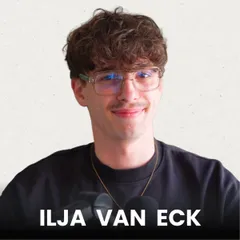
Designer and Webflow developer at Osmo (opens in a new tab)
Ilja van Eck is a designer and Webflow developer from the Netherlands, living in Belgium. He has more than 20 Awwwards Site of the Day wins, sits on the Awwwards jury, and built the component library Osmo with Dennis Snellenberg.
Ilja van Eck is a designer and Webflow developer from the Netherlands who lives in Belgium. He has won Awwwards Site of the Day more than 20 times and sits on the Awwwards jury. With Dennis Snellenberg he built Osmo, a component library for creative web work. We talked about Osmo and the tech stack behind it, and Awwwards-level builds. We also talked about where the craft fits now that AI can fake it.
Why Awwwards brings in client work
Ilja remembers his first Site of the Day well. It was a friend’s portfolio, built with a lot of creative freedom for interactions and animations. The awards have paid off ever since.
Over the course of my freelance career, Awwwards has been the single biggest source of client projects for me.
Some of that work comes from studios and people in the industry. A surprising amount comes straight from clients. Ilja assumes they search for website inspiration, find Awwwards high in the results, and land on his profile. His favorite project is an older one with the studio Holographic, for a Web3 3D company. It was before ChatGPT, so he learned it all through Stack Overflow and Google.
Building Osmo with Dennis Snellenberg
About seven months before we recorded, Ilja and Dennis were flying home from FlowFest in Manchester. They had more ideas than time. So they decided to wrap up their freelance work and go all in on Osmo. Each has done one client project since, partly to test Osmo’s resources on real work.
They met at an Awwwards jury party in Amsterdam, and it clicked. Both were freelancers sitting alone at home, so they started sharing work in progress on Slack. The idea for Osmo came at an Awwwards conference in Spain in 2024. They talk on Google Meet almost every day, but have met in person maybe five or six times.
Before launch, they shared a free resource every week and built an email list of about 6,000 people. Their goal was 300 members in three months.
We reached that milestone within 48 hours after launch, which was insane.
Hundreds of people bought lifetime plans right away. The discounted founding seats sold out in about an hour and a half. The work is split clearly. Ilja handles the marketing site and Dennis the dashboard. Dennis publishes a resource every Monday and Ilja every Wednesday. Dennis answers the help desk email, and Ilja spends more time in Slack. Dennis stays off podcasts.
What is Osmo built on?
Everything lives in one Webflow project, both the marketing site and the dashboard. Membership runs on Outseta, an all-in-one tool. It handles billing through Stripe, a help desk, email broadcasts and a CRM, so they need nothing else. On top of that there are about 16,000 lines of custom JavaScript.
Almost every asset is served from Bunny CDN instead of Webflow, except the font file and the Open Graph image. One day their bandwidth spiked without more visitors. Webflow support said it was most likely bots and AI traffic. Blocking the bots felt wrong for a platform that wants LLMs to mention it. So they moved to Bunny, which served about 2.5 terabytes last month for 10 to 15 dollars.
Webflow is still where most Osmo members work, and Osmo also offers plain HTML and CSS. Dennis comes from traditional front-end work, so part of his audience doesn’t use Webflow. Ilja has also been experimenting with Claude on a converter that would turn resources into React components.
How do you build Awwwards-level sites?
Ilja hasn’t designed for clients himself in a long time. He does the creative development, often for designers like Niccolò Gironda or studios like Holographic. Their designs plan movement from the start, and Holographic’s motion designers sometimes send video prototypes. Ilja always asks for a mobile design too, because a custom section can stack in ways he can’t guess.
For a younger designer or developer, should an award be the goal? Ilja is careful.
Not if you’re gonna make it your entire personality.
When Ilja started, he lived at home. He could take projects for a few hundred euros, just to get his name on Awwwards. With bills to pay, you have less room to be picky.
The thing that matters most is you waking up and being excited to sit behind your laptop or computer.
He also explained how Awwwards works. Submissions go to the jury after a few weeks. A project with an average of about 7.0 or higher enters a queue for Site of the Day. You can’t see that queue. It can win any time in the next three months. To add collaborators to a submission, you need a paid account.
Where does craft fit now that AI can fake it?
Ilja feels the industry is now all about speed and which model you used. Many people are losing touch with why they started, which was the fun of making something nice on the internet.
That’s my single biggest annoyance with especially design Twitter or X these days is all these grifters.
They scroll through sites found on Awwwards and claim they made them with one prompt. Ilja calls them out, like Joseph Berry, Jordan Gilroy and Cassie Evans from GSAP do. He recently objected to a YouTube video on how to steal sites from Awwwards with Claude. The video was later taken down.
He uses AI a lot himself. Osmo’s easing tool is a cubic Bezier editor that outputs CSS and GSAP eases. Ilja would never have managed the math alone, so he prompted his way through it with Claude. AI also built internal tools that rename and compress assets for Bunny, and notify members when new resources go live. Members asked for an Osmo MCP, but Ilja and Dennis chose a “copy AI prompt” button instead. It copies a resource’s code and documentation for any LLM, so they keep control.
It’s humans building a platform, mainly for humans.
He doesn’t use a framework like Lumos or MAST, only BEM class naming that he agreed on with Dennis. He would like Webflow’s build mode to let you set which components fit in a slot. Dennis could do that in the Kirby CMS. Ilja isn’t worried about Webflow’s turn towards AI, as long as the core of the product stays. There is one exception.
I’m gone the day that happens. I’m gone.
He meant the day the style panel goes and every change has to be prompted. I agree with him. Control is Webflow’s biggest strength in the AI race. Imagine Webflow adds AI that brings building speed close to other platforms, and keeps that control. I think that is a winning combination.
Links from the episode
- Osmo (opens in a new tab)
- Dennis Snellenberg (opens in a new tab)
- VRTL WRLD, Ilja's favorite project (opens in a new tab)
- Awwwards (opens in a new tab)
- Holographik (opens in a new tab)
- Outseta (opens in a new tab)
- Bunny CDN (opens in a new tab)
- Relume (opens in a new tab)
- Joseph Berry (opens in a new tab)
- Jordan Gilroy (opens in a new tab)
- Eduard Bodak (opens in a new tab)
- Niccolo Miranda (opens in a new tab)
- Cassie Evans (opens in a new tab)
Full transcript
Read the full transcript
Janne Parri: Hi guys, this is the last episode before my summer break, but no worries, I'll be back in August with some new conversations. Make sure to follow the channel on whichever platform you are on, and yeah, I'll see you in August. But for now, enjoy the episode. Okay Ilja, so you were nominated for awards independent of the year twice before turning twenty two, so that is kind of insane. When you look at all of the side of the day wins, do you even remember the first one and how do you keep on doing that again and again?
Ilja van Eck: Very much remember the first one. It was the portfolio website of a friend of mine for Martin Briseño. He first reached out to me to develop the portfolio of his then girlfriend, which we had a lot of fun with but didn't win side of the day. Just an honorable mention. And afterwards we immediately jumped on working on his portfolio together. And I just remember having like a ton of creative freedom with him in terms of working on interactions and animations, and when we submitted it, we actually quite quickly got that side of the day award for it, which was a very, very nice moment to have together with Martin.
Janne Parri: Yeah, I can imagine. And did that first one was that like the hardest one? And did it like help with the other ones? Did you get like more suitable leads or clients off that first one?
Ilja van Eck: Yeah, most definitely. Like over the course of my freelance career, Awwwards has been the single biggest source of client projects for me. Both in terms of finding collaborations with studios and other people in the industry, and but also actually a surprising amount of inquiries from just direct clients who I assume are Googling for like website inspiration and then the awards platform ranks pretty high on such keywords, which ends up with them leading on like my profile or some work that I have done before and then reaching out to me. So it has definitely led to direct work, people referencing the direct projects very often. And so yeah, a great pr great platform.
Janne Parri: That's beautiful. And what is your favorite project if you had to name one? And you couldn't pick Osmos.
Ilja van Eck: Wow, I don't hmm. I think it actually is quite an old one, which was my first collaboration with Holographic for Virtual Worlds, which was this Web3 3D studio. And it was my first time working with Holographic, and I just remember having to learn so many things. It was before ChatGPT and stuff was like a huge thing. So I just remember spending countless hours on stack Overflow and Google trying to figure out how to do new things. And I just had a great end result with the team on that website. So that was the first project where I felt like I had the opportunity by someone in the creative industry to kind of show where I wanted to take my development skills. So that one has definitely stuck with me. But I think that was already twenty three, if I'm not mistaken.
Janne Parri: Yeah, beautiful. And I will link that down below if someone wants to check it out. Obviously, after this episode. But hey, let's do little intros before we go any further. So you are now listening to Webflow and Friends podcast. My name is Janne Parri, I'm your host, and my guest today is Ilja van Eck. So Ilja is a designer and Webflow developer, originally from the Netherlands, nowadays living in Belgium. Ilja has quietly been building one of the most impressive track record within our space with over 21 awards side of the day wins, two independent of the year nominations and a spot on the awards jury.
Janne Parri: Many Webflow folks know him from the Osmo Supply component Library, which he has built with Dennis Snellenberg. And Osmo is also becoming this huge hub of the all cool things within Webflow development or web development in general. And we'll definitely talk about that and all the new stuff coming to Osmo in this episode. Before any of that, I kind of wanna know has the Osmo taken over your work day or do you still have like time to do design and build those cool sites for your clients?
Ilja van Eck: It has definitely taken over my time. But that was a deliberate choice by Dennis and me, I think about seven months ago or something. We were flying back from a conference FlowFest in Manchester. We had all these new ideas on the plane back home and we told each other like, man, we have so much ideas but so little time. If we want to do this, we have to like commit to this. So right there and then we decided to wrap up all of the freelance stuff that we had going on and then just go all in. And that's still been going on all this time. Both of us have done like one freelance project in the meantime, just to like keep connections with somebody that were working with and you know, just for the fun of it to put some of our own Osmo resources to the test in a in these projects. And just because we feel like it's fun to make these projects, so we don't want to like completely lose touch with the industry and you know, get some practical experience and new creative websites as well.
Ilja van Eck: For ourselves, but now it's our full time thing.
Janne Parri: Yeah, yeah, it's like independent company and you have a bunch of members, over two thousand I believe, me included. I'm like wondering how do you see Webflow's role with Osmo? Obviously copying to Webflow is one one big thing, but you also have like the static HTML structures and a lot of JavaScript there. But how do see Webflow's role in general and will it change in the future,
Ilja van Eck: I mean it might. We don't necessarily expect that to happen anytime soon. We still see like the vast majority of our member base being active Webflow users. Ourselves included. I mean our entire platform runs on Webflow. If we do a client project, it's on Webflow. Like it's still our favorite platform to make websites on. But I mean we do have the flexibility. If something new comes along that has a different type of sharing the code underneath, it would be quite simple, actually super simple for us to just include that in our platform and start offering that as well. So we would be open to that. We definitely don't want to remain like Webflow exclusive or anything. And we're not affiliated with them in that sense. But yeah, for now it's still like our main platform.
Janne Parri: Yeah, yeah. And did you know that from the beginning that you want to have those static things or maybe some other platforms in the future too?
Ilja van Eck: Mm, yeah. I mean, the we didn't want to launch Osmo without offering both the both Webflow and the static HTML and CSS. But that is because Dennis comes from a non-Webflow background. He's just a traditional front-end dev. So we knew that part of his audience would also be like non-Webflow users. So if people wanted to learn from him, we'd have to offer that as well. And as well, actually in our day-to-day work, we sometimes don't use Osmo resources as the copy to Webflow. But we check out the HTML structure ourselves just to see how things should kind of be and then build it from scratch anyway. So we use it in that sense as well. And I mean we are exploring currently. I was experimenting with cloud to build like an HTML CSS to React a converter thing to see if we can offer start offering React components as well. But that's just very much early days right now.
Janne Parri: Yeah, yeah. The AI is opening some possibilities and we are about to talk AI in this episode too. I always say that this wasn't meant to be a AI podcast, but you know you have to have to visit that topic. Yeah.
Ilja van Eck: There's no way around it. Yeah.
Janne Parri: Yeah, exactly. But okay, let's take a little step back. Where did you find Dennis and how do you like share the responsibilities? Do you both like just develop Osmo or do you have some sort of clear like boundaries that Dennis does that and you do that and so on?
Ilja van Eck: We do actually have split responsibilities right now. I mean, if we want to talk about where I met him, that was at an awards jury party from the first conference after COVID. So that's like, I don't know, three, four years ago right now. It was in Amsterdam, and there was this like pre-party to the conference, and all some jury members, local jury members from the Netherlands were invited and speakers. So I decided to go there and that's where I first met him. Obviously I knew his name from online seeing his work. Think many people do in the in the website space, but it was the first time we actually had a conversation and it just really clicked. I mean we nerd out about the same things about like small animations and also like in personal life we have some shared interests. And we just stayed in touch ever since. I mean he's a freelancer and so am I. So we're both just sitting at our desk at home all day, every day, lonely. So we decided
Ilja van Eck: It would be fun to like start sharing work in progress with each other on slack, you know, like when Dennis would have spent like a full day on like one small button animation, he would like send it to me and we could, you know, nerd out about it together. And we just have kept doing that ever since. And then fast forward to another awards conference in twenty four in Spain. That's when we felt like doing something together. And that's when the idea of Osmo sort of came into existence. So that's now almost two years ago. And so yeah.
Janne Parri: Two years that's such a short amount of time. At least in my perspective. So I would say that if you just yeah,
Ilja van Eck: It is actually. And the funny thing is that since the idea of Osmo came into existence right now, I think we might have seen each other in real life like maybe five or six times. Just I mean we speak on Google Meets like basically every single day, sometimes for hours on end. And so we do speak a lot but just not physical. I mean, we're both very used to digital life right now.
Janne Parri: Yeah, yeah. And I gotta ask when you launched Osmo I believe I saw some headlines that you got quite many like members right at the gate. So was that a ⁓ surprise, the success that you had from the beginning?
Ilja van Eck: It was a massive surprise, both to us and to my accountant, who wasn't very happy. No, like we'd build quite a big waiting list of like an email list in general. Like I think it we had like six thousand people on the email list by the time we pressed the launch button. And that was just by sharing like a free resource every single week while were building the platform to like generate some hype and gather some interest and we had set this goal of reaching 300 members within three months. And that was like sort of our milestone of okay, if we can reach that within three months, we're doing really good and we're gonna keep doing this. And but we reached that milestone within 48 hours after launch, which was insane. And everyone was signing up for lifetime plans immediately because and we expected some people to maybe like start out with a subscription and then maybe ⁓ if they're convinced maybe they would move to lifetime, but like hundreds of people like immediately.
Ilja van Eck: Felt like supporting us from that moment, which was yeah, was great. Was overwhelming for sure.
Janne Parri: Yeah. I don't know what is what is it about those lifetime plans, but I'm a sucker for those two. There's something like you just do not have to worry about that later. So yeah. That's interesting. I believe I wasn't in the first wave, but maybe
Ilja van Eck: I mean the first wave sold out, I think, within like an hour and a half or something. We did like a like the founding member seat, which was a discount because were that unsure if people would be convinced to pay for it. So we said, okay, like the first one hundred people to sign up for it are gonna get a good discount. And then those sold out almost exclusively from the first segment that we did from like a thousand people that we sent the launch email to. And then we realized, wait, we have five thousand more email contacts and then yeah it was wild.
Janne Parri: Yeah, totally. I can just imagine. And did you did you mention those like responsibilities between you and Dennis or did we just skip over those? Yeah.
Ilja van Eck: We skipped over that, yes, from the origin story. No, no, no, indeed. In terms of responsibilities, we actually had those very early on from even first building Osmo. Like we had the okay, we had the responsibility of doing like one free resource every single week. So we just did those how do you say like one at a time. So one week I did one and the next week Dennis would do one. And then at the same time we of course had a marketing website to build as well as the platform itself. And so we just split those in two. It was like, I'm gonna take care of the marketing website, and then Dennis is gonna handle building the platform. And at the time, Webflow didn't support collaboration mode yet. So were doing that in two separate Webflow projects. And to prevent like a million duplicate classes when finally deciding to copy over the marketing website into the main project, we just decided on like a some class naming strategy that makes sense, so nothing could be duplicated.
Ilja van Eck: 'Cause we had like quite a bit of a different design system for the for the dashboard versus the marketing site. So that was an interesting challenge to fix. And that responsibility of marketing website versus dashboard, we kept also when we rebranded last year. And we did a version two. We did the same strategy. And to this day, also mostly when new stuff has to be made for the marketing website, I join I generally take up those tasks and Dennis does so for the dashboard. And then in our day to day work. Dennis does one resource every Monday. I do one resource every Wednesday. That is just non negotiable. Dennis mostly handles like email help desk. I tend to spend a bit more of my time in Slack answering help requests over there. But for the rest it's quite organic and we just take up tasks as we as we need to.
Janne Parri: Yeah, yeah. And if I understand correctly, you are also easier to get on a podcast than Dennis.
Ilja van Eck: Yes. Even if you'd if you'd paid Dennis, he probably wouldn't come on here. Not his thing. Not his thing.
Janne Parri: Yeah. But yeah, but that's cool. Not everybody needs to be on the camera all the time.
Ilja van Eck: No, exactly. That's also like then I guess a split responsibility that we have, that he's totally comfortable with me doing all these things and then him just being a bit more behind the scenes.
Janne Parri: Yeah, yeah. But I'm curious like how does the Osmo like work? What is the tech stack behind that? Because there are obviously listeners that are familiar with Webflow and all the all the like third party solutions like member stacks and so on. But do you use any of those or do you have something more custom?
Ilja van Eck: No, actually we don't. Indeed the everything's built on Webflow. So both the marketing website and the dashboard, everything lives in a single webflow project. And then the membership area is gated by Outseta and not Memberstack, Outseta, which we're very happy with at the moment. And that's basically it. I mean there is tons of custom JavaScript on top. Actually counted all the files we had for a conference talk I had to do recently and I think we Including all of the tools and stuff that we have built inside, there's about 16,000 lines right now of JavaScript on top of everything that we have. So there's a lot of custom things involved. But that's because we're quite perfectionist and in terms of everything has to be
Ilja van Eck: Nice and smooth and up to our client level in terms of projects. But that's about it. I mean, we have a custom CDN for which we use Bunny, so nothing is hosted on Webflow. You wanted to ask?
Janne Parri: Do you mean like do you mean like all the images and all the stuff? I know that a lot of people use bunny for like videos but do you mean like every asset?
Ilja van Eck: Every asset. The only thing that's hosted on Webflow for us is the font file and the open Graph image, I believe. Yeah, that's it. Everything else is on Bunny. The reason behind that is because someday we saw our bandwidth usage spike by a lot. And we couldn't really identify why. Cause we didn't see a massive increase in website visitors in our you know web analytics, but the bandwidth was like skyrocketing, it was crazy. And so yeah, we reach out to Webflow support and they mentioned that it was most likely bots and AI traffic. So first solution was of course to block the bots, but then again as a platform you kind of want to be mentioned by the LLMs as a good solution.
Ilja van Eck: So that felt a bit counterintuitive given Webflow's positioning as AEO ready and you know, like but then again if you are gonna be mentioned by the all of the machines gonna be pushed into like extremely expensive bandwidth pricings because let's be honest those the those prices are quite insane especially compared to what we use over at Bunny now. I checked that just before this recording started and last month I think we served about 2.5 terabytes of data through Bunny and I don't even want to know what we'd have to pay for that over at web. It would be probably add a couple of zeros to our bunny CDN bill.
Ilja van Eck: 'Cause with money for content that's about like ten, fifteen bucks a month.
Janne Parri: Yeah, that's fascinating. I'm wondering if that would like take you to the enterprise level already. Now there's those like steps.
Ilja van Eck: Might. It might. I'm not sure.
Janne Parri: But you mentioned like Outseta and all the custom JavaScript stuff. Like I'm curious why what parts does the outset handle for you? Obviously like the user roles or the membership stuff, probably like payments and is there something else that it helps with and what do you have? Why do you have all those JavaScripts on top of everything?
Ilja van Eck: So Outseta is an all in one solution, which was super attractive to us because we had zero experiences building such a platform. And so were kind of like, okay, but then we are gonna need a tool to handle help desk ticketing, email marketing, CRM and everything. And Outseta just has all of that built in. So it handles the billing and pricing indeed. I mean, pricing the transactions are handled by Stripe, but that is connected to Outseta. And then it has email that helpdesk built in. So we just have a ticketing system, which is nice. Email broadcasting. So all of the email contacts that we have, we can straight email them from outsider and then you know make nice differences between people that are an existing member or just people that we have the email address of that are on our on our email list. What else does it have? Like it has all of the billing, basically everything that we need to run our platform. Like there is no need for external
Ilja van Eck: Tools for anything else.
Janne Parri: Yeah. That's cool. I'm just asking because obviously it's a interesting use case and Webflow folks if they wanna like build something else than like sites, it usually means templates or some sort of library of things. And templates nowadays might not be as big of a thing than in the past because of AI and so on. So the library thing is probably quite interesting to many folks. But I wonder how do you see like Osmo relation to all the other like libraries if we
Janne Parri: If we narrow it down within the Webflow space, so there's Relume. I'm sure if there's yet any other big ones. Joseph Berry might come up with something. He teased it on this
Janne Parri: Podcast. Yeah, what do you
Ilja van Eck: Still waiting on that Joseph if you're watching this. You announced it some time ago. We want to know more. No, but like
Ilja van Eck: I think Osmo and Relume are especially with where Relume is moving right now in completely different realms of course. I mean rumors are of course that Relume three point is coming out and that they're planning something big. And I mean I guess with the sit map and design tool and everything that they've built, everything kind of points towards them building their own like A website platform where you can have like an end-to-end solution, I think. But like in terms of their wireframe blocks, I think they're mostly aimed at speeding up your workflow and having like pre-built things that are bare bones that you can just put into your project
Ilja van Eck: And work with. Whereas I feel like Osmo components, if we just talk about the component aspect of our platform, are is a mix of things. Like we have very utility-like things like small little scripts to solve specific problems, but we also have like very complex animations and components that you might not be able to do yourself or with the help of an LLM, but you might end up spending like hours and hours prompting to get it working as well. Whereas we offer that as a all-in-one solution. I mean we have members using it in various different ways. We've seen people build projects where they kind of use Osmo as a
Ilja van Eck: Almost like a shopping cart where they okay, I want to use this navigation, then I'm gonna use this section and this section and then this footer and then I'm done with my projects. Whereas other people really take an a resource, take it into some abstract level and or maybe combine it with some other things to create something new to just as a creative tool. Like there's different types of users on our platform.
Janne Parri: Yeah, yeah, totally. If people have been using both the differences are clear, like we can say old Relume was like just for those like I could say like section elements and with Osmo you have tinier, smaller components and all the scripts that you mentioned. But I'm curious how much do you use Osmo yourself in your builds and what's your like favorite resource to use?
Ilja van Eck: Oof, I don't my favorite one would be
Ilja van Eck: This the scaling
Ilja van Eck: System, I think, that Dennis once came up with, which is just a CSS structure to make like a fluid responsive websites, which are not fully accessible. We do know that. But it is a nice way to just have like a super simple system to get your Figma designs one to one into Webflow or any website for that matter, and then have them scale with the browser viewport in a nice responsive manner. That's my favorite one. I did actually wrap up a client project recently. The one that I said, like the only one that I did during all this time. And I think the counter was at twenty or twenty-one Osmo resources. I didn't do the design, I just did development and I still managed to squeeze in twenty of those and
Ilja van Eck: Just like also like abstractizing some things and I mean I of course know everything that we offer. So I know in the back of my head how I could use this in that way to speed up this section over here. And but yeah it was extremely helpful and also kind of a nice way to confirm that we are still building the tool that we'd want to have ourselves for our own projects.
Janne Parri: Yeah, totally. That would maybe be a cool video idea to go through that project and show all the ways you can use those things. But obviously you can ch search for those components, but it's way like easier if you have already used them and you know what is there. So they come straight out of the Oven or some sort of metaphor for coming quickly. Yeah, and you mentioned that you didn't design that I wanna go through the whole workflow, but I'm thinking is there something about Osmo that we should like check before we go further? Maybe what is
Janne Parri: What is the future gonna be looking like with Osmo? You mentioned maybe the React components. Can you tease anything else ⁓ for us?
Ilja van Eck: Yes, I can tease that we're like currently working on a new feature. Like at the time of recording, but it's a bit of a smaller one, and but we're gonna try and push it out rather quickly. But then I think the next bigger thing that we have coming up is something that we're gonna collaborate with Jordan Gilroy on, as well as Jill Hubrecht, the Belgian designer who's you know him by name. He's very known for his like super editorial like black and white. Great typography website has won like a whole bunch of side of the days as well. So working with those two guys on something and that's gonna be the next big thing that we're gonna launch. I hope sometime soon. Still actively in development.
Janne Parri: Yeah, yeah. And I now realize that we are talking about the future stuff already, but listeners might not know all the kind of old stuff, if you can call those old, but yeah, there's obviously those components, but there's also icons. Now there's learnings, like the page transition course is there. Which is on my to-do list. I should go through that. There's easings, and now there's the button back too. Did I miss anything?
Ilja van Eck: I don't think you did. No, no. That's it.
Janne Parri: Yeah, yeah. So I'm curious how do you like decide what to add there?
Ilja van Eck: For it's a mix of either member requests. Like the page transition cores actually came from like way early on when we launched Osmo. Some of the first member requests that were coming in were page transition animations. And the way we did those on client projects. But those are done with Barba.js and it's just really not the type of thing that you we could upload as a normal Osmo resource and be like, okay, here, use it this way 'cause there's way too much context and other ways of handling your projects involved. So very early on we decided, okay, this needs to be in a course format to teach people how to how to use this. And that took some time, some months, but that was because I was, for example, doing my Barba.js transitions different in literally every client project that I was starting, always trying to come up with nicer ways to use it. And Dennis had his way of using it. So we had to sort of merge all of the things that we liked from all of our things and make it as reusable as possible.
Ilja van Eck: Like it should be able to handle a transition where the page is covered with something. So you have like this invisible swap. But it should also perfectly handle a transition where both actual pages are visible at the same time in your in your viewport, without having to change the entire boilerplate, of course. And then there should be a nice way to integrate the Osmo functions for people that are also less comfortable with JavaScript. So there were so many things involved, hence it took some time. And but so far the feedback has been great, and we've seen people also make some really creative page transitions from the course. So that was that was fun.
Janne Parri: Total. That's one of the like differentiating things that you can do with the sites. So I see the whole like thing doing like cool visual stuff and how can we make those easier for ourselves. Yeah. Like so on.
Ilja van Eck: Yeah. And at the icon library for that matter, originated from an old side project from Dennis called Angular Icons, if I'm not mistaken. He had made this icon library himself like years ago as a side project. So we had those icons literally laying around. So we found like, okay, why not integrate them into the platform? Cause very often you do need that quick SVG of an arrow or your Instagram logo for the footer if the designer used like a PNG and you'd need that SVG. So that's why we integrated that. Again we always trying to come up we try to add things that we feel like would make our own lives easier as well, to just make a platform that can handle as many aspects and stages of your development process as possible. And of course, like the core of Osmo is and I assume will most likely always be like the resources, of course. But there is so much more to it. And yeah, just trying to make a super useful platform and give as much value as possible for
Janne Parri: Totally. And what about the button back? I see that it's done with Eduard Bodak, if I pronounce his name correctly. How did that come about?
Ilja van Eck: Well both Dennis and I love buttons and spending time on making like the small animations really cute and nice and have like a small moment of delight. And Eduard Bodak was been has been sharing beautiful work and as well as great behind the scenes for months, if not longer. He had done a side project for free on his webflow project called Tiny Mighty buttons, which is kind of the button pack but a bit different. So he was like the literally the only person and the first person that came to mind when were like, okay, would it would be nice to collaborate with someone on this? Because I mean it's a hundred buttons, so it's a lot. We had like so many other things to do on
Ilja van Eck: Our hands. ⁓ as well as Eduard knows a ton about accessibility ⁓ and making all of those buttons technically pristine as well. So he was like the go to person. Like we had to give him like zero feedback in terms of like technical skills. He even taught us a few things as well during the He's great.
Janne Parri: Yeah, yeah. And did that like open your eyes that you maybe do something similar with some other folks in the future?
Ilja van Eck: Yeah, it might. I mean the thing with Jordan and Jill was already ongoing at that time. That but for sure, yeah, for sure. We won't like exclude that possibility.
Janne Parri: That's awesome. And I have been checking out those buttons. Those are all awesome too. I'm like waiting for a right project to use. Not all of them, but some of them. It might
Ilja van Eck: I mean there's a hundred to choose from, so there's enough for many projects to come.
Janne Parri: Yeah, yeah. It would it would be a funny idea. Maybe not necessarily an easy or practical one, but if you used like different button for every instance.
Ilja van Eck: I'd be curious to see how that works out. Yes.
Janne Parri: Animation. Yeah. We'll see, we'll see. Okay, but I wanna I wanna also discuss like the the process that you have like creative process or development process but I know that you oftentimes collaborate with designers like Niccolo Gironda or a studio like Holographic so how do those like collaborations work? Like do you usually do the do the technical side or do you take part in the design side and all that stuff?
Ilja van Eck: Done practical design work for clients in a long time. So definitely just the creative development part. And I have been fortunate indeed to work with extremely talented people like Niccolo and Holographic that you mentioned, who always come to the table with great ideas for interactions and animations. I mean, they design their projects with and I'm like it's not like you make a static design and then be like, okay, how can we bring this to life? Like it's all integrated. Someone else who's really great at this is Joseph Berry. If you've seen some of his maybe like the design arena process or like some live design matches, even in such moments he's always thinking about movement as well. And I think is a good example if you wanna pick someone's brain about how about how they go into such things.
Ilja van Eck: So yeah they do I mean the product they deliver is most often just a static Figma file. I mean holographics specifically has extremely talented motion designers that have given me video prototypes of some things as well. And then it's up to me to try and figure out how to make that happen in development. So that's also always fun.
Janne Parri: Like that's the thing that it's easy if the designer and the developer is like the same person that you kind of know what you can like develop and you know what sort of things you wanna have on the side, but then when you have two people, like you have to communicate that and oftentimes it might be quite like organic. I asked this from Joseph Perry and he gave me some sort of answer but it is still not clear like he how he does it.
Ilja van Eck: I don't know. It's like I think such a process is like very individual, right? It's like I think a product of stuff you've seen online and on that you've done for your own project. So if you see certain elements or sections, like you just you get these insights into like you know how things can move. I mean you don't know what you don't know, of course. So if you've never animated a website and you barely look at stuff on awards and you see a static file, it's not like probably not gonna be like you get these magical inventions in your head of okay this could move this way in this way. So like it's always I feel like a product of things you've seen or consumed and I mean references outside of websites as well. I mean I'm barely game anymore, but I remember when I used to game a lot more, like games always have like great interfaces and interaction and sound design as well, which is I feel like quite a new trend also coming into websites is sound design.
Ilja van Eck: We have like sound effects on like small interactions, which I haven't experimented with myself, but I'd be super interested in doing that someday.
Janne Parri: Yeah, yeah, maybe that's the next thing in Osmo like sound library or soundtracks for websites.
Ilja van Eck: Hm. I don't thought of that. Maybe,
Janne Parri: But that's true. It almost feels like that's totally different game when you are like building something very visual awards like I do not know if the listeners like that term but anyways like highly visual site compared to like usual clearly defined section by section design. So yeah.
Ilja van Eck: Mm-hmm. Yeah, it's it's a very different process indeed. So I also like over the years I always enjoyed like a little bit of variety. If I would have like a client project come along, which was a bit more simple in terms of structure. I very much enjoyed not having headaches with every single section, you know, making things responsive and and because if everything is like super custom and difficult, sometimes it can just be a bit annoying as well. Cause it's like another problem that pops up and another thing you have to solve and but in the end it's always super rewarding, so it was always worth all of the headaches.
Janne Parri: Yeah, yeah, totally. About that responsiveness, when you collaborate with folks, do you like request some sort of mobile versions or do you just figure those out from the desktop version or other way around?
Ilja van Eck: I prefer to have a I prefer to have a mobile design with it. I mean, especially of course with such custom designs. I mean with like more typical sections it's very easy and I'd say and intuitive to imagine how a designer would like would like this to stack on mobile, but sometimes sections are so atypical that like I can interpret it one way of how this would move to a mobile screen. But then sometimes designers even have like a completely different type of interaction plan for mobile instead of just the desktop version scale down. So then I'd always just prefer to ask for mobile versions to prevent any confusion or back and forth, you know, because once it's developed, it's already taken me quite some time. So if I can prevent a lot of going back and forth during dev, yeah, I prefer to have a responsive version as well. I don't need like tablet and stuff, just a desktop and some mobile is fine.
Janne Parri: Yeah, yeah, totally. This is again the communication thing, I believe. Once again, Joseph Berry said that he doesn't like usually design the mobile versions. But obviously he probably develops that himself so he doesn't need to need to figure that out yet. So yeah. Yeah. Back to kind of the awards. Nowadays, okay, y Osmo takes a lot of your time, but if you do get a side project is like an award a goal for you for every project.
Janne Parri: Or is it like afterthought that okay this might be worth of like supplying what's the term? Like putting
Janne Parri: To submitting, yeah, submitting to awards.
Ilja van Eck: I'd say these days it's I wouldn't call it a requirement, but it is a nice opportunity. Like that project that I did recently wrap up. I did take that because it's a super creative website design. And I also just get like enthusiasm and my creativity starts going on when I see like a beautiful Figma file and I'm like I wanna bring this to life on the web. So then it's like extra nice if it's gonna try and if it if it's gonna be an opportunity to submit it to the platform and to get like I mean it's marketing also at the end of the day, right? Especially if I can use some Osmo resources and I'm gonna be able to share it on my own social media. It's also marketing. So I also think of that in this way these days.
Janne Parri: Yeah, yeah. And obviously if you like to build those things, you kind of attract those things and it comes becomes this loop that you get more of those things and then it's just a natural thing to submit those. Yeah, do you think that if there's like younger designers or developers that they should aim for an award of some sorts? Should that be their goal?
Ilja van Eck: I'm not sure. Not if you're gonna make it your entire personality. Because I feel like that's a bit cringy. But like if you genuinely enjoy working on such projects, I mean, yes, because that's where you're gonna be able to find people to collaborate with. But I wouldn't chase it as like this holy goal of yeah, it kinda depends. 'Cause I kinda I kinda did at the beginning. Like I was taking on everything that could potentially be an award. I didn't care about money at all. I just wanted to take every single opportunity to get my name on that platform. But yeah, so that's kind of countering what I just said like a minute ago. But yeah, I think it also really depends on your situation. Like if you have if you're if you need to make a living and you have rent to pay, I think you have the
Ilja van Eck: Less luxury of being picky. Whereas what when I started I was still living at home, so I had zero pressure to earn money. So I could take a project for a few hundred euros if it was gonna be a nice opportunity to share it online. Whereas now, of course, there is bills to pay and there is like less luxury to make to make such decisions constantly.
Janne Parri: Yeah, yeah, totally. And that's just like one category of websites. For example, there's those is it ClickUp? Those like very basic like sales oriented websites, mainly for like local businesses and people are like doing a lot of money with those. Like it's totally different style of style of work and style of platform and so on. So you might wanna like think about it and like choose the direction you are heading to because there's obviously so much to choose from.
Ilja van Eck: Yeah, I mean at the at the end of the day I think the thing that matters most is you waking up and being excited to sit behind your laptop or computer. And if that is either indeed chasing awards and doing it for very little money. I mean it's great if you can combine both and make a good living and win some awards and get some recognition. But if that is just making more standard marketing pages and you just really enjoy that as well, that's perfectly fine. I think you just have to pick what it is that you'd like to do. And just focus on that. It's kind of open door and it's not really great advice. But I mean, for me it was that simple decision to make. Like I wanna do that those types of websites, so I'm gonna take them on no matter what and just work my ass off, don't track my hours, probably like not earn like just a few euros per hour, like considering the amount of time that I spent versus the amount that I got for a website.
Ilja van Eck: But it was so so fulfilling to then share that online and to be able to put my name under it and that it was worth it for me.
Janne Parri: I believe that there's something like everybody understand that there's something attracting to that sort of craft it might be something totally different than websites, but when you fine tune those details and get something out that is that is totally awesome and you can be proud of there's something about that even besides like the money. That might not even be there, but yeah. What about the Osmo side? Was that nominated or did it even like win the side of the year award? Do I remember?
Ilja van Eck: No, it was nominated, but it didn't win. No no no no. It did win side of the day, both version one and two, as well as the developer awards, but it didn't win the side of the year. It wouldn't it wouldn't be deserving. Like no matter how proud of the work we are, it would like considering the other submissions that were up for voting, it would be it would be undeserving if we would take the prize of the year. That's it's not up to that level at all.
Janne Parri: Yeah, yeah. Now that you have those side of the days and so on, do you do you have a goal or can you say that you maybe are aiming for the bigger prices, bigger wins?
Ilja van Eck: I mean my personal goal is still to someday be independent of the year on awards. That'd be super nice. I mean, so far there was always like super strong competition and always incredibly deserving winners. But that was always good motivation to keep going and try again next year. And I think actually this year is the first year where I've obviously been way less active in terms of freelancing. So I'm not sure by the end of this year how many projects I'm gonna be able to get in. It was one in January and then there's one I guess coming soon. But it might it might be just that. And then I know that I'm not even gonna have a shot at winning that. And then that's totally fine
Ilja van Eck: 'cause my job now is super fulfilling. So I'm much less striving to take that title than I was for the last four years.
Janne Parri: Yeah, yeah. And is that based on like the submissions that you have your on your awards account?
Ilja van Eck: Yeah. So they indeed I mean they used to count and like actively show during the voting how many side of the days you had won in a single year. So that was very much a matter of just trying to get as many as you could in a year. And I mean for two years in a row I had like seven in one year. But it was not enough. And even if you have seven, if there is someone that did just five, you know, just with quotation marks for anyone not being able to see it but only listening the if the quality of those projects is just like out of this world, like I can have seven, but like if their craft is way better then there's just room to improve for me.
Janne Parri: Yeah. Yeah, totally. And if there's someone like out there wondering that they would like an award or two, but they are strictly on the design side or the development side. Isn't there like categories for those and probably some other categories on if we just speak about awards because you have or you have been a jury member and that's probably the one you know the best?
Ilja van Eck: No, the all of the independents are just in a single category. There's independents, studios, agencies, and then they have a couple of categories for websites, like general website, commerce and a few more. No, I think that's it. Maybe those five or six categories in total. Yeah, I think that's it. I might be forgetting something right now. But you know, there is no difference between designers and devs for the for the voting process.
Janne Parri: Yeah, yeah. What about like sites? You mentioned that there's some categories what sort of categories are there one can apply?
Ilja van Eck: There is site of the year, commerce of the year, and then for the site of the year there is also a user's choice. So the one that gets the most public votes. Which sometimes is different. And I think there was one year where it was also the same as the one that was voted on by the jury. I think that's the six categories in total.
Janne Parri: Yeah, yeah. Interesting. And what about those smaller like sides of the days? Are those all in the same bucket?
Ilja van Eck: So everything is just being thrown into the nominee section. And then at some point, nominee websites will end up in the jury panel, which often is a few weeks after submission. These days the platform is a bit slower than it used to be. And then if the jury votes it, I think a 7.0 or higher on average, like between all the jury members that voted on the project, it is entered into a queue to win side of the day. And then kind of depending on the le overall level of side of the days, like in some periods a seven point three might be enough to win side of the day, and in some periods that's not enough to win. So it's kind of depending on the other level, but seven point I believe is the sort of the barrier to entry, which you don't see by the way. You don't
Ilja van Eck: Know what position in the queue you are in. It's just waiting and hoping. And from the moment of voting it is there is a three month window where it can win. I once had a side of the day which was two month two and a half months after it was submitted. We'd given up hope on it winning something and then we got the emails like, by the way, next week your website's gonna be sign of the day. So it was a nice little extra surprise.
Janne Parri: Nice. Blast from blast from the past. Yeah. And I one more concrete like detail. I would imagine that there's a place where you can like if you are the developer who is submitting the site, there's a place where you can add all the parties involved, like the designers and anyone else. Yeah.
Ilja van Eck: Yeah. You have to be on a pro membership. So you have to you have to be on a paid account on awards to be able to add collaborators. Which I think of yeah, I mean for them it's a easy way to get people onto the paid plan of course because rarely a project is just a single person. But yeah, that's the requirement. And then you can add a collaborators indeed. So just tag their awards profile and it will show up on their on their account as well.
Janne Parri: Yeah, yeah. Interesting. I should I should do a project that I could submit there with like something that is actually like on par of those things. I that's the thing, like when you go there and see all the cool stuff that people are doing, like it might get like discouraging at some point, like.
Ilja van Eck: It can be intimidating for sure. Like it still is also for me when I see like some of the crazy projects going on and then I feel like, man, I know nothing about making websites. But then again, like it's a good signal that there is always room to improve and to never feel like you're the best because there is no one I think that is gonna be the best. There is always people excelling in different parts of the process.
Janne Parri: Yeah, yeah. And there's so many cool ideas, but you cannot like get all of the ideas into one project. You kind of have to pick those and at the end of the day like the curation of those things and how they match together plays a big part of the end result too. Should we go towards the AI topic? The fan favorite. I don't know if it's like the fan favorite or the one that everybody hates, but I remember reading I believe it was on that page transition course landing page that you wrote
Janne Parri: That the course like provides the polish that sets you apart from all the AI shits in your industry. Could you could you like elaborate on that point of view?
Ilja van Eck: Yeah, I mean, we all know that there is so much ⁓ slop and just bad stuff being pushed out in the industry. And I feel like these days it's ⁓ more and more about ⁓ speed and your process and what model you're using and how quickly you got something to the Finnish Line. And I feel like many of us are kind of losing touch with the reason that we started doing this in the first place, which is that we just enjoy making websites. And it was a human process. Sometimes, you know, you just solo, sometimes a collaboration with others, and you're just trying to have nice ideas to put something together on the internet that other people might enjoy. Like to me, that was websites, of course. To other people, it's you know, when making marketing websites it has to be conversion optimized and it's way stricter. But for me, it was always like a very fun and creative process of just, you know, making something nice on the internet. And I feel like AI is
Ilja van Eck: Kind of disrupting that or making people forget that was the point for some of us, again for some of us. And I feel like we should go back to that a bit more, having fun. And I yeah.
Janne Parri: Yeah yeah, that's yeah, that's the thing like when we see like all those posts in social media, those might be like highly visual things that people are posting, but you always get the sense that okay this was done. In an evening or with a single prompt or something like that within ten minutes. But I believe that's not like the reality if someone bakes up something like actually cool that still takes work and now you might get the sense that everything, even like those well polished
Janne Parri: Sites, they are done with a single click of a button or something like that. So
Ilja van Eck: It. The they fake that's the process. That's my single biggest annoyance with especially design Twitter or in or X these days is like all these grifters... Just scrolling through websites they found on a on awards and then putting a caption over it was like I made this with one prompt, but they did not. And if they did it with one prompt, the prompt was literally take this live website and copy it. And then there like there is no like that is the most brain dead thing I feel like these people can do. And it just annoys me that they get so much traction compared to the original work by the original poster that put it out, people that spent months or weeks if not months on a project. And then there is like one of these internet anonymous boys that comes along and takes all the credit for it.
Ilja van Eck: And so I'm gl I'm glad that there are some people in this in the industry calling these folks out. Like I know Joseph Berry, Jordan Gilroy, Cassie Evans from GSAP, they're all always very vocal about it. I try to be as well. I recently had a little situation with a YouTube creator who was like openly promoting a way to steal stuff with Claude, and it was even the title how to steal Stuff from awards, and I just put a comment under it that I found it extremely unethical. And then their argument was, but it's for educational purposes. But then again, you and I, everyone knows that people don't use it for educational purposes. It's just a lazy way to rip off other people's work. So I was really glad to see the YouTube video being removed. I hope after it was a copyright
Ilja van Eck: Strike. So that's my new part-time job is just fighting grifters.
Janne Parri: Yeah, that's the sad reality. There's so so many fights on the internet that you could take a part of like important things. But yeah, that eats your like soul if you spend your day in there. But yeah. Yeah, I was about to comment on that like stealing stuff. For from awards. Obviously like the poster has some responsibility like that's a bad excuse if you say that like the consumer, the watcher will have the responsibility on how to use this knowledge. Like that's not a good thing to do. But on the positive side, like how are you using
Janne Parri: AI tools in your process and have you found anything interesting lately?
Ilja van Eck: Mm a lot, actually. I mean, my most recent big thing was the easing tool that we pushed to Osmo. I mean, I would have absolutely zero clue how to build a cubic Bezier editor, like with all the math and the graphs involved and how to create like CSS coordinates and a GSAP custom ease from it. Like I would have no clue how to do it. Like I know what I want. So I was able to prompt my way through it with Cloud and I just built like a local MVP and then later on rebuilt that thing inside of Webflow. With of course like all of the JavaScript involved to do it. But that was a really fun exercise because it was again something I would otherwise not have been able to do, where I feel like now it's really polished and nice execution of something AI generated. Where I didn't have to rip anyone off and it was just a personal project coming to life.
Ilja van Eck: We've also had the opportunity to make some nice internal tools. And like since we use Bunny CDN to host our images and videos, we made this internal tool where we can upload a video and an image of a resource. And it will automatically name the file. It'll check if there is like a version history of that same file. If not, it will delete it so that we always have the latest asset links. And it just converts a JPEG into a compressed AVIF file and a sort of, you know, just nice little things to make our own lives a bit easier internally.
Janne Parri: Yeah. Totally. Just imagine trying to try to work your way through all the comments on stack Overflow to make a thing like that.
Ilja van Eck: Yeah, man, it would it would be a mess. It would be a mess. No, like in that sense, like to make like some really nice features that we feel like improve the platform a lot, it's been super helpful. I think another recent thing which was super nice is since we have Barba.js implemented on our dashboard as well, that means if you transition between pages, there is no refresh of the HTML document. So that you're not fetching the latest version. You're just fetching the version of that page from when you loaded the website. So technically, if you leave open a the dashboard for a week, the website's not refreshed for a week. But we upload two new resources every single week. And so we wanted to do a system where we could push a notification to your front end if a new update is
Ilja van Eck: Live while you're just browsing the website. And so that's we also made a connection with the Webflow CMS. Where it's gonna check the amount of live resources versus the amount that you had live on the website when you visited it. And then if those the server finds a difference every 15 minutes, it'll just push a notification to you prompting to you to reload the website. So very simple things, but that do make it feel a bit more like a real platform, like a real dashboard type of thing, and that we'd otherwise again probably not be able to do since we have too little experience working with APIs.
Ilja van Eck: Or it would take like again, it would take weeks to make such a
Janne Parri: But it looks awesome. I didn't know what I was about to say.
Ilja van Eck: Hold up, so crack a crack a drinking can open.
Janne Parri: Beautiful. Do you have a saying for that sound? Like in Finland we say that the beaver sneezed. Yeah.
Ilja van Eck: The beaver sneezed? I love that. You should you should take that one for the next season as a as the traditional finish thing at the end of the video.
Janne Parri: Maybe. Maybe yes. But well yeah.
Ilja van Eck: And then see who was an active see who was an active listener during this episode.
Janne Parri: ⁓ Totally. But yeah, have you been thinking ⁓ or could there be a future ⁓ where Osmo would have some sort of LLM feature or integration? ⁓ so that if I have let's say Claude Code working that it could like reference or check out ⁓ the implementations from the Osmo library.
Ilja van Eck: It of course has been a thing that crossed our minds. And some people requested like an Osmo MCP, but we deliberately chose not to do that. We did push a new feature right now. I think it was last week where we officially launched it, which is a copy AI prompt, where if you're on a resource page with one click of a button, you can copy the HTML, the CSS, the JavaScript, and the documentation. And there's we basically have made like a markdown file. With a prompt around it and instructions for the LLM. So people can use their favorite LLM, whether that's Codex or Chat or Cloud or whatever, and still only have like one click of a button. So yes, they do need to go to the platform and copy it. And there it's not like fully integrated into your LLM. But we feel like that's such a small effort. And we still get to keep control over our resources instead of the LLM's interpretation. And again, we also have no idea how to make an MCP, so we'd have to vibe code the MCP and
Ilja van Eck: I don't know how about security and yeah, in the end we are also just two guys just trying to have fun with the platform that we're making. And if we feel like it would be too much overhead or too much risk, we just don't wanna get into it. I mean it's humans building a platform, mainly for humans. So yeah.
Janne Parri: Yeah. And part of that might be just like hype that everybody's like wanting MCPs for every platform and so on. So
Ilja van Eck: Also, yeah. Just a bit of a buzzword these days, right? Maybe. I mean it's probably like super useful to many people, but I personally don't use any MCP right now, so I don't know.
Janne Parri: Yeah. Don't you even or haven't you tried like Webflow C P
Ilja van Eck: Nope, haven't even tried it.
Janne Parri: Well you might be actually lucky because many have said that it hasn't like lived up to the to the well hype or standards they were expecting. So I'm hoping that they will update it and it will actually be more useful and then people start to use it more and so on.
Ilja van Eck: Yeah. I've seen I've seen those those two in some videos and it just doesn't convince me at all to try it. I mean indeed if they do ever end up pushing a version that's gonna be like incredible. Absolutely I'll try and use it and connect it to my own L but for now if it's everyone's underwhelmed, yeah well why would I bother? I don't know.
Janne Parri: Yeah. Exactly. It does some things like some quite handy things like updating the meta descriptions or such. But if those are already checked, like you do not need that. But yeah, maybe in the future it will be more helpful. But yeah, one classic question I kind of wanna ask you, although some listeners might be bored for of this question, but that's the framework question. So there was something that you mentioned earlier, like checking out just a just static HTML from Osmo and then applying that to
Janne Parri: To your build. I didn't know if that like relates to the framework that you use, but do you use any or do you have like your own ways to build?
Ilja van Eck: My own thing indeed. I feel like the Webflow community can be too passionate about the framework question already for years. And I've never I've never used any framework like actively. I've I never tried mast, I never tried Lumos. Only saw videos about them and they don't what is it? Like they don't do something with me that I feel like I want to try them. But that's also partly due to the type of website projects that I do, right? I can imagine if you work in an agency or as part of a bigger team where you have to hand off something that is like 100% intuitive for someone else to take over. And everything needs to be the exact same for every single project. I can totally imagine that a framework is super useful. Like I would highly encourage them indeed, because there is behind the frameworks, there is extremely talented and smart people, you know, trying to come up with this the this nice solutions.
Ilja van Eck: But for my personal use case, like I just need to make a website in a way that is fast for me and that ends up with a nice clean structure that anyone that does know something about web development can still take over, of course. But yeah, I don't know. I feel like people like overthink it maybe a bit. It could be my ignorant head, of course. Again, like I d I don't do the types of projects that many of the people industry have to do with teams and for large agencies and stuff. So that's could also be my little my little bubble. But yeah, my the thing that I use right now is a system that actually came up with it's not even a system, it's just a class naming strategy that I decided on together with Dennis, because were starting to work on the same project. So we needed to be aligned of course. And it's basically just BEM. So the block element modifier it's global CSS framework. Sort of that. And then yeah, that's about it. There is no
Ilja van Eck: Crazy component and slot structure or whatnot. I mean obviously we do use components, but not in not to the level not even close to the level that I'd see some frameworks use it.
Janne Parri: Yeah, yeah. The components they are one like category or topic. But yeah, the whole discussion might be heated at sometimes. But I kind of still like it. Like it gets the gets the like conversation going and everybody has usually some sort of opinion. Either they use something or use nothing or have their own thing. Quite a few folks like do you do have their own meaning the guests who have appeared here. So
Janne Parri: But there's a fair amount of people like using master Lumos too. And as you said, those have their places, especially if you have like multiple pages and multiple people you kind of have to have some sort of system. Not necessarily one of those but some something.
Ilja van Eck: Definitely. I agree.
Janne Parri: So the BEM system doesn't like surprise me knowing that Dennis comes from not non-Webflow background. I don't know if that's the term non-Webflow background, but any anyways like that's
Janne Parri: I was thinking at some point i that I might do a thing like that. With BEM since it's a big thing. But yeah, the components that was the other thing. Obviously there's the build mode meant for like marketings that you could marketers that you could like hand off the sites and they could use that in a secure manner. In my opinion it's not as easy to use as it could be, so it is still a bit complex. But
Janne Parri: If Webflow like makes that easier and it becomes even like more helpful that might again rise the importance of the components and the system that you build there and
Ilja van Eck: I agree. Still right now I feel like it's too still too open, right? Like even in build mode and with slots and components, a client can still drag any component into any slot, technically, as far as as far as I know. Whereas from Dennis, for example, I know that when he was still not using Webflow and the Kirby CMS, he in the CMS he could define the types of components that clients could add somewhere. So he could like pre define it, which I feel like is such a basic feature that Webflow could do, I guess. I don't know. If you put like a couple of engineers on that, I feel like it's and it would help so many people and it would make the build mode so much better.
Ilja van Eck: If you could define that in the page slot, you can only put in like a section components and whatnot. And you could have like a proper page builder to make nice case studies, you know, where you can define okay, only these case components can be used and stuff like that, which is now not possible and you still have to rely on a lot of technical knowledge by the client and you have to make it extremely easy, I guess, with your component names to make such things and but it's still very brittle and sensitive.
Janne Parri: Yeah, yeah. I'm hoping that they will do something along the lines of what you just described. And I would also imagine that is not too difficult. And one other minor thing, could be that you have like if you have a slot you could have default components within them. So if you add a section that it would already have some content or some container if there's a container slot or anything like that already in. And you can delete that but that would be default
Ilja van Eck: I currently I'm a bit unsure where they wanna take it. Like it feels like at someday they woke up and they decided to be the agentic marketing platform and like it suddenly like in my perception it suddenly was okay, from today on forward we're this like they decided and then I it kind of leaves me wondering where they take the development of the of the platform itself, whether everything's gonna be all in on AI. I mean, they laid off a ton of people recently, of course, so I'm not sure from what departments those people were and what they were working on and maybe what kind of nice projects they now might have killed, because most definitely some ongoing development things were killed, right? If that many people were laid off.
Janne Parri: Yeah, yeah. That's the thing that we don't really know what are the reasons behind those layoffs. I did a episode with Chris Skitch and it was just freshness back then and we pondered about that topic. But I believe that it was not just like developers, so there were some other folks. But I'm like thinking that like was it like mandatory or is it just like private equity like mandating that we have to be lean or webflow has to be lean and so on? I don't know. But I would imagine that components is a big part of the puzzle and they have put a lot of effort into that even if they go even more towards
Janne Parri: AI that components still will be there. And I would say that the control that Webflow has is maybe the biggest like strength that they have in this whole AI race. If they if they can like add a helpful AI to the bat platform that makes the speed of building somewhat on par with other platforms and still keep the control like that's a like winning combination. Would you agree?
Ilja van Eck: I do, yeah. Yeah. I can I'm not really scared because I feel like if Webflow moves into a direction that I really dislike or for whatever, I can't I can't imagine the platform itself suddenly becoming useless to me, you know? Even if they build in like a ton of AI shit that I'm not gonna use. If the core of the product remains the same and I'm still able to make websites the way that I'm doing right now and to deliver those to my clients and I can easily give them a nice CMS. And host the websites like if the that core remains the same, it's still the best tool for me for the job right now.
Janne Parri: Yeah, yeah. Yeah, I'm with you on that. Like they would need to do something like really drastic to like just say that okay, there will no not be a style panel anymore. You you will just have to prompt every like change.
Ilja van Eck: Yeah, I'm I mean I'm gone the day that happens. I'm gone.
Janne Parri: Okay, Ilja, so we have been talking about all the all the stuff about Osmo, the creative process AI. Before we go to the one last weird section, is there anything you wanna add to those topics or any other?
Ilja van Eck: Didn't think so.
Janne Parri: I could add actually one thing, like how is the webflow community in Belgium?
Ilja van Eck: I'm actually not so super connected to it right now. I know that in the Netherlands it's a lot stronger. I mean I was at an event last week, at the time of recording, of course, in Amsterdam, organized by Rick Bossenbroek. He's very much a community guy always bringing together some folks. It was like I think thirty or forty people, just like a small gathering. But I do know that there is a Webflow Global leader in Brussels close to me, who I met in Serbia at flow
Ilja van Eck: Flow conf yeah, all the all the flow names sometimes confuse me. Super nice conference, by the way. I highly recommend if it's gonna be again next year, which I assume it will to join. It was a genuinely nice one. I met the global leader from Brussels, Thibault, and he was a super nice guy. And I think he's gonna be doing some more events here in Belgium, which I'll definitely be attending. Because I do know that the tech scene overall in Belgium is a little less maybe it's quite big, but maybe it's just less out there and less visible than it is in the in the Netherlands. But yeah, I'll be curious to see how that's how that changes.
Janne Parri: Yeah, yeah. I have heard if you go a bit further that Denmark has like white vibrancy and that there's something happening in Copenhagen. But I yeah, I should have someone somewhere from there.
Ilja van Eck: I've never visited Copenhagen. I like to visit Copenhagen someday. It's not that far actually from where I live of
Janne Parri: Yeah. Totally. Okay, Ilja, if someone wants to check you out, follow you, contact you, where should they go?
Ilja van Eck: Mm, I'd say I'm most active on Instagram. LinkedIn and Twitter is fine, but definitely Instagram is my most active one. I'm trying to be more active on YouTube. Of course, that's a bit more specific content. It's not necessarily a place to have a conversation with someone unless it's a as a spicy discussion in the comments. But no, I'd say Instagram, definitely. It's that's my favorite platform.
Janne Parri: Yeah. I believe that there was some news about YouTube again trying out like direct messages, like one to one messages. But
Ilja van Eck: Yeah, I saw that. Like some people were sharing some videos with me and then when I open it, I first get this prompt to accept a message from someone and then I got a DM from a friend on YouTube and was weird. I guess they're also trying to be in the attention game, of course, and try and steal more time from other platforms if you can also chat there, I guess. But
Janne Parri: Yeah. And sometimes you do not even realise that YouTube is social media. It's a obviously there are creators doing videos, but it is not like that I'm following my friend or neighbor or anything like that. So it's totally different vibe.
Ilja van Eck: Does have, yeah, yeah.
Janne Parri: Okay, we have the one last thing. And I believe that you have some sort of idea what is about to happen, do you?
Ilja van Eck: I know the format, I do, yes.
Janne Parri: Beautiful. I always ask because I wanna see people surprised. But I'm not sure how much have you practiced this, but this might be quite hard today. So no no pressure.
Janne Parri: If there's someone who is not familiar with the last section, it is a section where I tell in this case Ilja A Finnish saying, and I will translate that to English. And Ilja' job is to figure out or guess what it is about, like what does it mean, or yeah, anything like that. So are you ready for your saying? So in Finnish it is laittaa itsensä likoon, and in English it is to put oneself to soak. Soak meaning like
Janne Parri: Let something sit in a in a water. So what does it mean if I say that okay that guy really put himself to soak?
Ilja van Eck: He booked himself to soak.
Janne Parri: Like he puts like he is like soaking himself if you may.
Ilja van Eck: Mm, my my first thoughts went like super literal into like going to like a sauna and then an ice bath or something. But it's definitely not that. He booked himself to soak. I think if you'd make a decision or do something that gets you in not maybe not in trouble, but well, if you end up so if you and like if you go outside while it's raining and you end up soaking wet and it's kind of just feels bad, if you kind of call that upon yourself, maybe something like that.
Janne Parri: That's quite good. That's quite good. Before I give you the whole answer, props and kudos for mentioning sauna. We do not have a lot of different phrases for that because sauna is the one Finnish word that people actually know, so we just use that. But to put oneself to soak means basically to take a risk to give it give it all you've got like to go all in on something usually risky. So in that sense you were like figuring that out. So that was close. Or even like spot on. Yeah, let's consider that a win.
Ilja van Eck: Okay. I'll take that one. I'll take So we should we should all be we should all be booking ourselves to soak a little more in life, I guess.
Janne Parri: Yeah, yeah, totally. I should do a little prize it would look nice on your shelf, like next to those award sites. Beautiful Ilja. Okay, thanks so much for being on and for all the listeners and watchers. We'll see you in the next one. Bye.
About Webflow and Friends
A podcast about building websites with Webflow and the tools around it. Janne Parri talks with designers, developers and marketers about how they design, build and run sites for fast-moving teams.
Hosted by Janne Parri. Janne designs and builds design-led websites and design systems for fast-moving marketing teams, in Webflow or Astro, and is a Webflow Certified Partner.